
World War III: How It Could Unfold
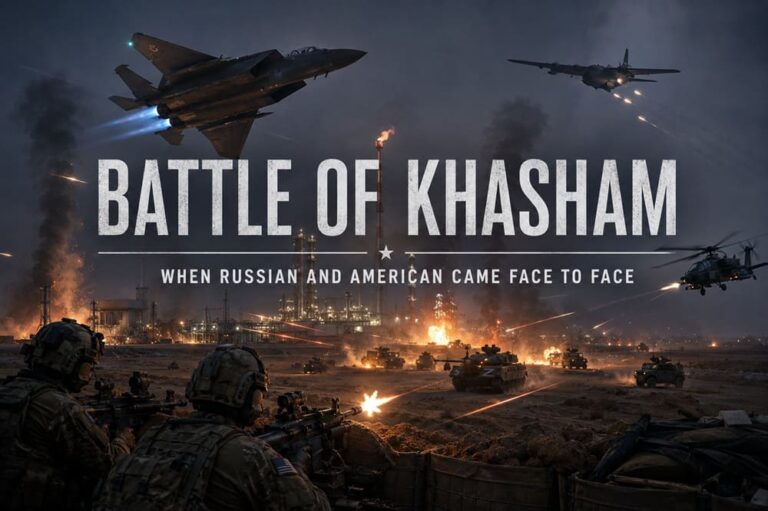
A third world war would probably look rather different from the second. War cannot be declared in a formal way. There might not even be a clearly identifiable opening battle. Instead, the initial signs could be interference with satellites, cyber attacks, failure of financial networks, anomalies of GPS, activity by submarines, disinformation and unexplained failure of infrastructure. Meanwhile, conventional fighting could only occur once this invisible phase had begun.
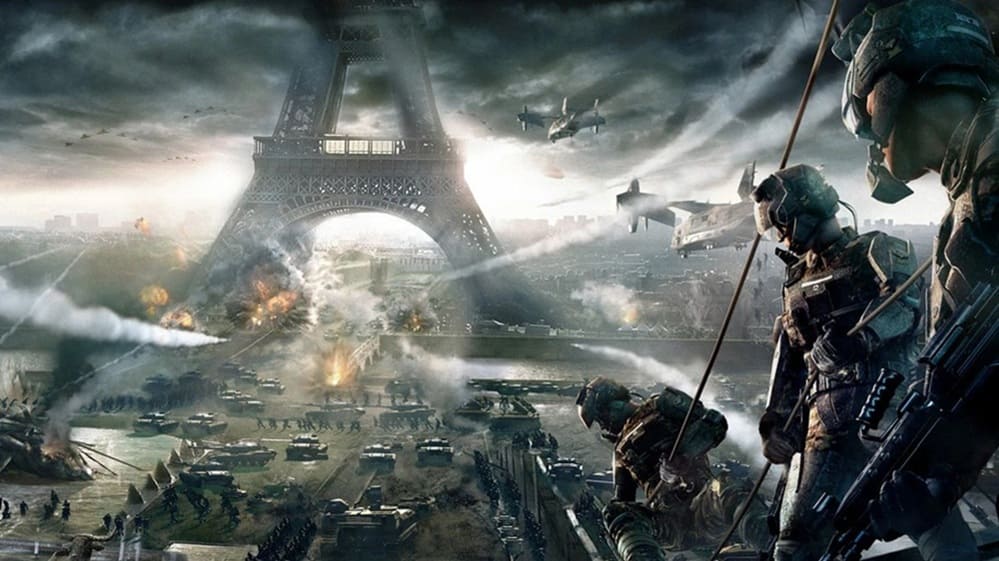
Modern warfare is increasingly a contest of integrated military, industrial, digital, economic and space systems. Gradually, NATO is creating the future military advantage in multi-domain operations, artificial intelligence, resilient digital networks, autonomous systems and rapid sensor-to-effector data flows. (NATO) The upshot is that World War III would likely not resemble 1939 but rather multiple wars being fought simultaneously on land, sea, air, space, cyberspace, and the electromagnetic spectrum.
The War May Start Before the Shooting
One of the most illustrative cases was that of 24 February 2022. Hours before Russian forces invaded Ukraine, the Viasat KA-SAT satellite communications network was hit by a cyberattack. The disruption hit Ukrainian communications, but it spread beyond the battlefield. Communication issues cut off thousands of European users and hit about 5,800 German wind turbines. This episode proved an important principle. An assault on the nervous system that supports military operations, rather than the direct destruction of frontline formations, could ignite future great-power wars.
Satellites provide navigation, communications, missile warning, intelligence, weather, timing signals and surveillance. Cyber operations can strike at the software that connects these systems. Ukraine also demonstrated the opposite principle: dispersed commercial infrastructure can provide resilience. Ukrainian forces used commercial satellite imagery, communications and data services to fill the gaps in conventional military networks. In the first three years of the conflict, Ukraine received over 50,000 Starlink terminals. Future armies may therefore fight partly through privately owned infrastructure. This is a radical change in warfare.
Missiles May Replace Air Raids
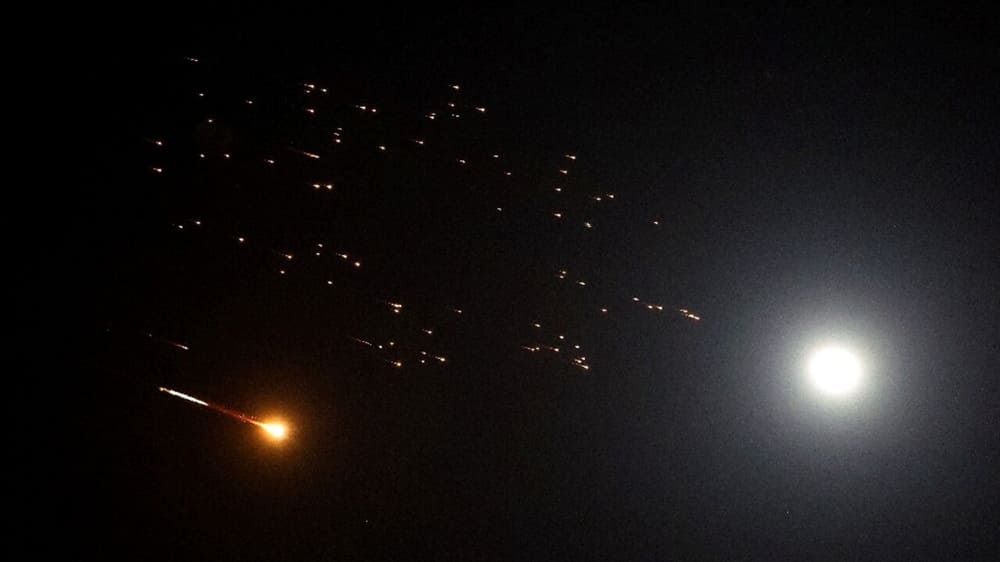
Strategic bombing requires hundreds of planes. Modern precision weapons can perform some similar missions without risking large bomber formations. A global conflict would probably see a mixture of ballistic missiles, cruise missiles, hypersonic weapons, one-way attack drones and long-range precision systems. It would be a math problem for defenders. A low-cost drone can compel defenders to expend a far more expensive air-defense interceptor. This means that even when most incoming missiles and drones are intercepted, repeated attacks can still deplete air-defense interceptor stocks—a problem that has already been demonstrated in Red Sea operations since 2023.
Houthi forces launched missiles and drones, forcing sophisticated Western warships to remain on constant alert and use precious defensive weapons to protect commercial traffic. A World War III would make this problem significantly worse. Air defense would become an industrial race between makers of attacking missiles and makers of defensive interceptors.
Industry Is the Real Weapon
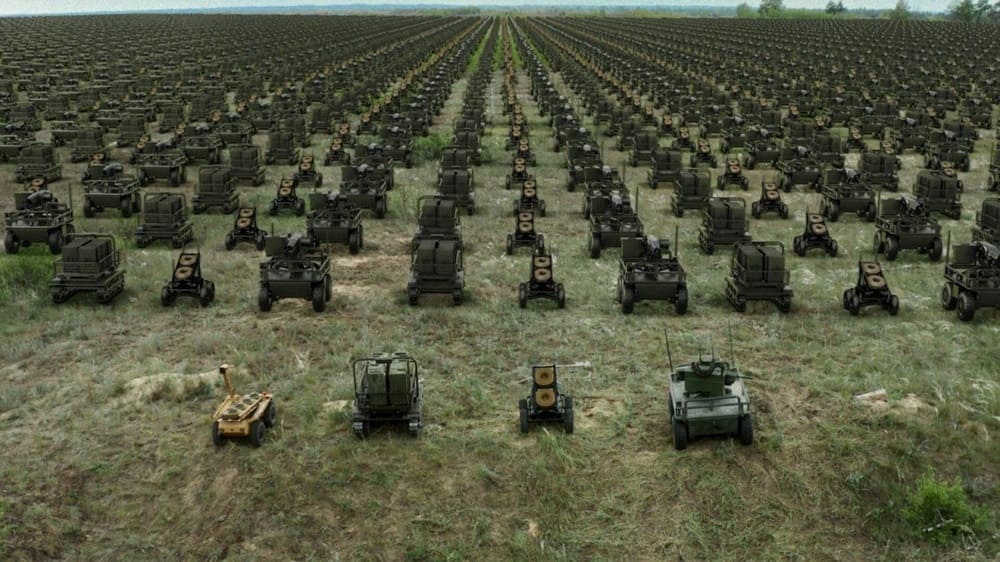
Today, precision weapons are a marvel of technology, but major wars consume equipment at a phenomenal pace. The fighting in Ukraine has revealed the scale of consumption of artillery munitions, drones, armoured vehicles, air-defense missiles and electronic warfare equipment. SIPRI estimates global military spending at $2.887 trillion in 2025. The United States spent around $954 billion. China was estimated to have spent $336 billion and Russia about $190 billion. These numbers convey us an important message.
A great power conflict would test more than existing arsenals. It would see if the arsenals could be replenished faster than national economies could destroy them. Strategically important would be factories making semiconductors, rocket motors, explosives, optical sensors, batteries and communications equipment. Software engineers would too. Ukraine showed that sometimes software updates can outpace electronic countermeasures faster than new hardware can get to the battlefield. Thus, in part, World War III would be a war of engineers.
The Nuclear Shadow Over Everything
The single most significant difference between world wars past and a future one is nuclear weapons. In January 2025, SIPRI’s June 2025 Yearbook release gives approximately 12,241 total warheads, 3,912 deployed, and around 2,100 deployed warheads on high operational alert, primarily by the U.S. and Russian forces. This figure does not mean that a world war would necessarily be nuclear. That is part of the rationale of nuclear deterrence. The risk is an escalation.
Classic attacks on strategic warning systems, communications satellites or command networks could be considered as preparations for nuclear operations. Cyberwarfare complicates the problem even further. Commanders would have to determine whether the information they were seeing on their screens was real, corrupted, spoofed or missing. Decision times may dangerously shrink. Artificial intelligence can speed up analysis, but that does not mean better decisions. A simple misunderstanding could turn a traditional conflict into a much more dramatic one.
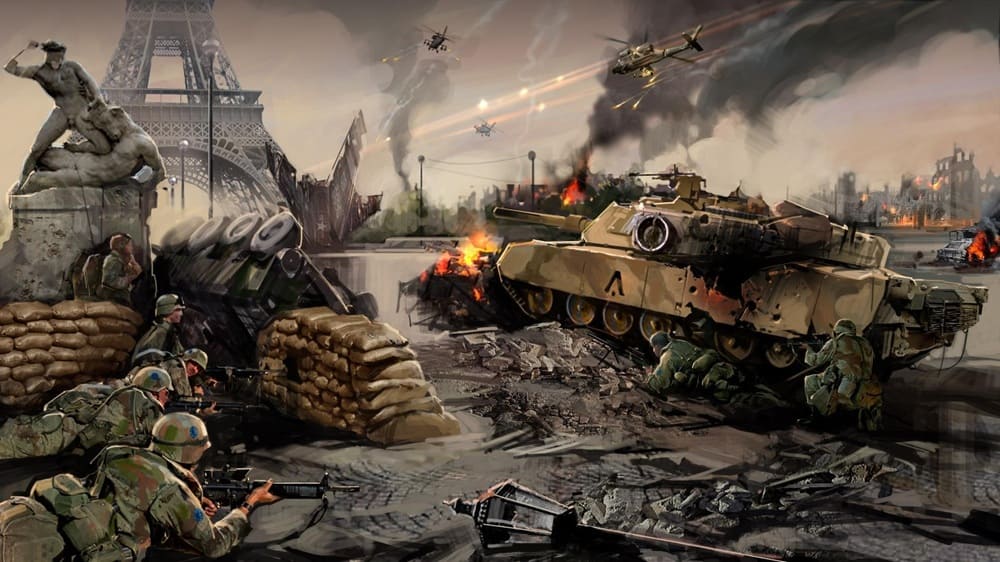
World War III: A War of Systems
There would still be tanks, fighter planes, submarines, artillery, and infantry in a future world war. However, the weapons are only a small part of the conflict. They would be supported by massive networks of satellites, algorithms, electronic warfare systems, fibre optic cables, cloud infrastructure, factories and logistics chains. Victory may be less about having one revolutionary weapon and more about keeping this whole architecture working while degrading the opponent. Drones have proven their value in Ukraine — commercial space systems.
The Red Sea conflict and the Israeli-Iranian tit-for-tat have exposed the harsh realities of missile defense economics. Recent cyber operations also demonstrated the vulnerability of civilian infrastructure in conflicts. Meanwhile, nuclear modernisation has improved deterrence and raised the costs of miscalculation. So World War III would probably not be one big battlefield. It would be more like an attack on a worldwide network. But perhaps the most dangerous weapon is not the one that destroys the most targets, but the one that causes the greatest escalation. A nuclear-armed state might perceive a single strike or even a single mistake as endangering its strategic survival.
References
- Stockholm International Peace Research Institute, SIPRI Yearbook 2026, June 2026. Global military expenditure, nuclear forces and strategic-risk assessment. (SIPRI)
- NATO, Alliacomputing, and cross-domain command are key areas of focus [026]. Digital transformation, AI, tactical edge computing, and cross-domain command are key areas of focus. (NATO)
- Center for Strategic and International Studies, Lessons from the Ukraine Conflict: Modern Warfare in the Age of Autonomy, Information, and Resilience, 2 May 2025. (CSIS)
- NATO, Fortifying the Baltic Sea: NATO’s Defence and Deterrence Strategy for Hybrid Threats, 5 May 2025. Critical undersea infrastructure and hybrid warfare. (NATO)
About the Author