How Quantum Computing Is Strengthening Military Power
Quantum computers are emerging as a strategic military technology that could revolutionise the way armed forces approach optimisation problems, secure communication, intelligence analysis, advanced materials development and ultimately attack existing cryptographic systems. Traditional computers have binary bits. Quantum computers have qubits that can be superposed and entangled.
This does not make quantum computers faster in the general case. Their advantage only holds for some mathematical problems for which quantum algorithms can reduce the computational complexity. For military planners, the importance is therefore less about raw processing speed and more about solving specific problems that are computationally prohibitive on classical machines.
Quantum Cryptanalysis Revolution
The most strategically disruptive and unique military application is cryptanalysis. The modern military networks use public-key cryptography, including RSA and elliptic-curve cryptography. In principle, a sufficiently large fault-tolerant quantum computer could efficiently solve the integer factorisation and discrete logarithm problems using Shor’s algorithm.
That engineering problem is still enormous. In a 2025 resource analysis, Google researcher Craig Gidney estimated that RSA-2048 could be factored in less than a week using fewer than a million noisy physical qubits, assuming aggressive error-correction and hardware-performance parameters. That was a dramatic drop from a previous estimate of about 20 million physical qubits.
Quantum-Ready Military Encryption
There is no public demonstration of a quantum computer operating with this cryptanalytic capability. But the military organisations cannot wait until such a machine is built. Information collected today can be strategically valuable for decades to come. In theory, encrypted traffic could be intercepted and stored until a quantum computer powerful enough to decrypt it is built. That’s why military cyber doctrine is already changing because of quantum computers.
In August 2024, NIST announced the first post-quantum cryptography standards (ML-KEM, ML-DSA and SLH-DSA). The algorithms are constructed to be secure against attacks from both classical and (future) quantum computers. Paradoxically, this means that the first military implications of quantum computing may be that militaries will have to replace encryption before their adversaries have operational quantum computers.
Quantum-Optimised Military Logistics
The combinatorial optimisation problems in modern warfare are enormous in scale. Think of an air campaign with hundreds of aircraft, tankers, weapons, targets, airbases, and maintenance constraints. The fuel states, the weapon configurations, the threat exposure and the mission priorities can vary from aircraft to aircraft. The number of possible combinations of allocations can be enormous. Quantum optimisation algorithms could eventually help calculate near-optimal solutions for:
- Aircraft and tanker scheduling
- Missile-target assignment
- Satellite tasking
- Ammunition distribution
- Maintenance scheduling
- Convoy routing
- Electronic-warfare resource allocation
- Intelligence-collection planning
The U.S. Air Force Research Laboratory is already fiddling with problems like these. AFRL’s Quantum Algorithms group has worked on constrained optimisation on gate-based machines and quantum annealing systems. Researchers have also performed quantum random walk experiments on an IBM 32-qubit processor and explored algorithms to maximise missions with limited resources.
On military variables, it is not only the speed of computation that matters. It is constricting decision space. A commander who can evaluate millions or billions of potential force-allocation combinations faster than an opponent in high-tempo operations might gain a significant advantage.
Quantum-Enabled Sensor-to-Shooter Chain
Future military command networks will increasingly depend on satellites, UAVs, radar, electronic intelligence, cyber sensors and autonomous platforms. The problem thus obtained is a data fusion problem. We need to take the thousands of observations and convert them into tracks, threat probabilities and weapon assignments before the targets are gone. Quantum machine learning and optimisation methods could speed up some parts of the process.
This is especially true for battlefield networks that can be modelled mathematically as nodes and links. Aircraft, sensors, communications relays, targets, and weapons are vertices in a huge dynamic graph. In the future, it might be a hybrid architecture that combines traditional computers for standard processing and quantum accelerators only for very complex optimisation problems. That is more realistic than replacing classical military computers entirely.
Quantum-Enhanced Weapons Development
Another potentially revolutionary capability is quantum simulation. In military engineering, it is often necessary to model precisely the interactions between atoms and molecules. But the computational complexity increases dramatically with the number of interacting quantum states. Such systems may be directly simulated by future fault-tolerant quantum computers.
Defence applications could include new battery chemistries to extend the endurance of autonomous systems; high-temperature materials for hypersonic vehicles and turbine engines; semiconductor materials to improve radar and electronic-warfare performance; corrosion-resistant alloys to extend the service life of naval platforms; and possibly new energetic or protective materials.
These capabilities may reduce the time from theoretical modelling to experimental validation in the research and development cycle. Thus, the strategic impact would extend far beyond computing. Quantum computers could also help engineers design better, tougher and more efficient conventional military hardware.
DARPA’s Quantum Benchmarking Initiative
DARPA’s Quantum Benchmarking Initiative (QBI) is a fascinating gauge of the current military mindset. In April 2025, DARPA announced that approximately 20 quantum computing companies have begun the first phase of the programme. QBI aims to answer the question of whether any technology can produce a fault-tolerant quantum computer for industrial purposes in perhaps a decade. DARPA wants quantum computing at utility scale – a device whose computational value is worth more than its running cost.
The programme’s target horizon goes through 2033. That’s a huge deal. The world’s most advanced militaries are not saying publicly that decisive quantum computers are already here. Instead, they are devising verification procedures to evaluate the practical utility of proposed architectures. That distinction helps to avoid confusing quantum technology with hype.
Quantum Sensors Could Arrive First
Before large quantum computers appear, some battlefield effects of quantum technology may be seen. Quantum sensors use atomic-level effects to detect very small changes in acceleration, magnetic fields, electric fields, gravity or time. The military uses it for navigation when GPS is denied, for electromagnetic spectrum monitoring and for very precise timing.
Quantum information science links these technologies to quantum computing, but they are not quantum processors. Accurate inertial navigation without constant satellite updates would significantly benefit naval and air forces because adversaries can jam, spoof, or deny GPS signals.
Top 5 Quantum Computers for Military Research
No publicly known system has been officially designated a “military-grade quantum computer” based on defence involvement, technical maturity, and operational availability:
| Rank | Quantum computer | Technology | Public capability | Defense relevance |
|---|---|---|---|---|
| 1 | D-Wave Advantage 2 | Quantum annealing | 4,400+ qubits | Worked at Davidson Technologies on U.S. government contracts supporting radar, logistics, resource deployment and national defence. |
| 2 | IonQ Forte Enterprise | Trapped ions | 36 algorithmic qubits | Commissioned at the U.S. Air Force Research Laboratory for quantum-computing and networking research. |
| 3 | Quantinuum Helios | Trapped ions | 98 physical qubits; up to 48 error-corrected logical qubits | Selected for DARPA evaluation; suited to materials simulation, cybersecurity and quantum AI. |
| 4 | IBM Quantum System Two | Superconducting | Up to 156 programmable Heron qubits | IBM is participating in DARPA’s programme to evaluate paths toward useful fault-tolerant computing. |
| 5 | Rigetti Cepheus-1-108Q | Superconducting | 108 qubits; 99.1% median two-qubit fidelity | A modular, high-speed platform for government optimisation, simulation and secure scheduling research. |
The D-Wave Advantage2 is by far the most publicly documented working example of a defence-focused quantum computer. But it is an annealing system, not a universal computer that could run Shor’s cryptanalytic algorithm.
Hidden Strategic Competition
The most sensitive military quantum programmes will likely keep their operational performance undisclosed. Thus, the public record tells us much more about research funding and experimental hardware than about intelligence applications, cryptanalytic targets or operational integration. However, the publicly declared programmes reveal some strategic priorities. First, the militaries are developing communications systems that will be ready for a post-quantum world.
Secondly, the quantum optimisation research often focuses on scheduling, resource allocation and graph problems that are directly relevant to military operations. Third, research in quantum networking points to a future interest in linking sensors and processors via architectures with properties that conventional networks do not possess. And finally, the cryptanalytic capability would almost certainly have exceptional intelligence value, so that the government estimates when an adversary’s encryption might become vulnerable are among the least likely to be revealed publicly. These are open-source deductions, not claims of classified capabilities.
Quantum Computing’s Limitations
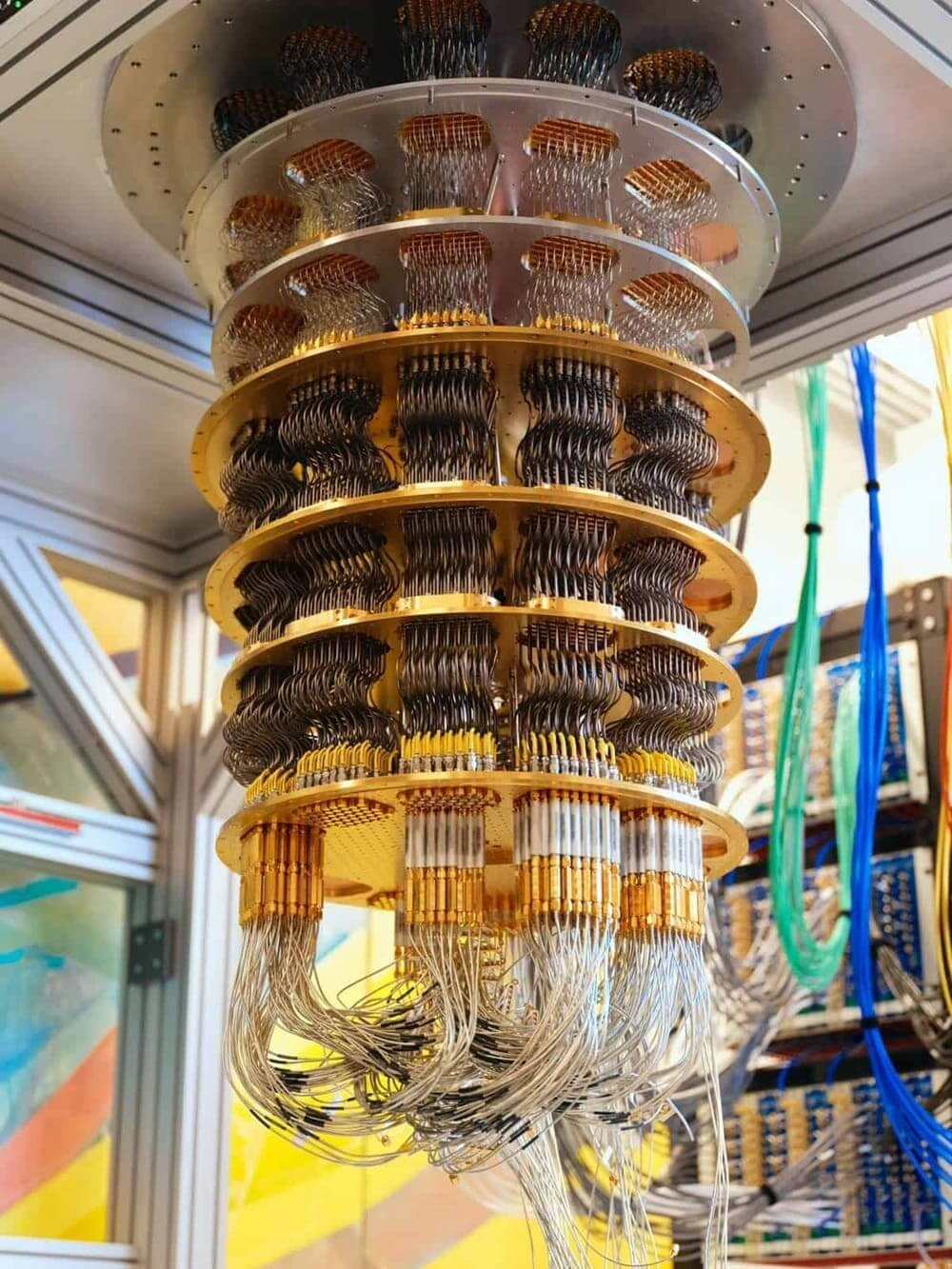
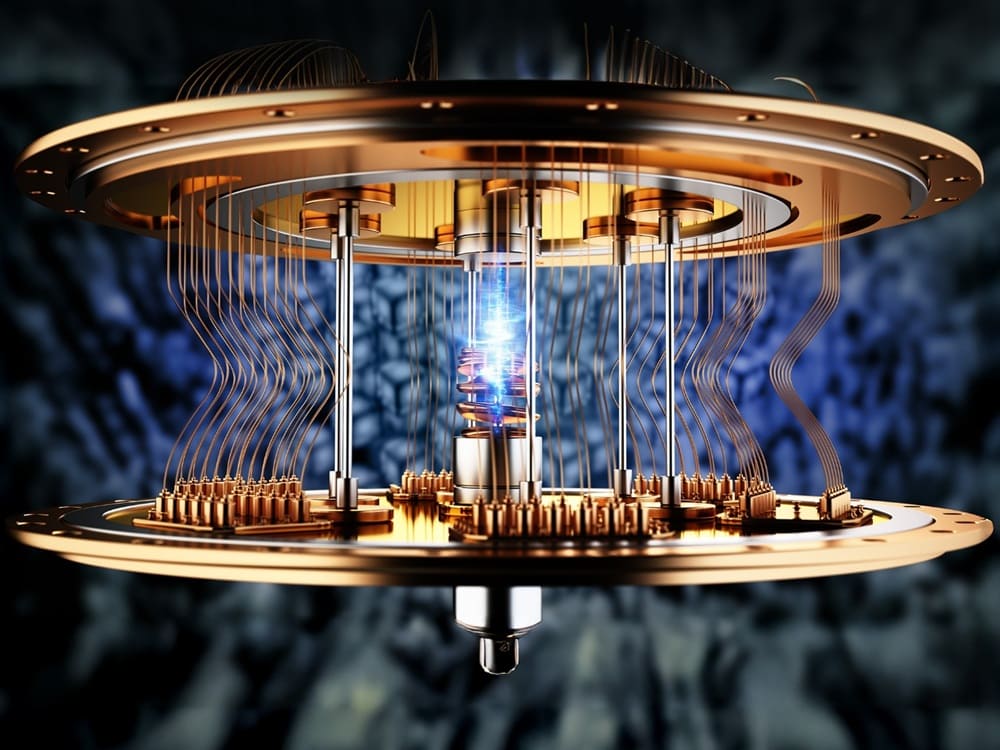
There is no quantum war on the horizon. Physical qubits are still very sensitive to decoherence, gate errors and noise from the environment. Useful fault-tolerant quantum computers require large quantities of error correction that can convert many physical qubits into far fewer reliable logical qubits. Many architectures also need advanced lasers, vacuum systems or cryogenic equipment.
With current technology, this makes it very impractical to install on tactical aircraft, armoured vehicles or small drones.” Thus, the first significant military quantum computers will likely be more akin to specialised strategic computing infrastructure linked to conventional command networks, rather than ruggedised battlefield laptops. Classical supercomputers will remain important.
Conclusion
Quantum computation is a force multiplier for the military, not a replacement for traditional computing. The greatest promise lies in problems where computational complexity is the operational bottleneck: cryptanalysis, logistics, force allocation, intelligence fusion, molecular simulation, and large-scale optimisation. So the crucial contest may take place before soldiers ever encounter a quantum computer in the field.
Militaries that invest today in quantum algorithms, quantum-resistant encryption, specialised personnel, and hybrid classical-quantum infrastructure will gain a strategic advantage if fault-tolerant systems become operational. Observers can still see traditional instruments of military power—aircraft, missiles, and ships. Quantum computing could increasingly be part of the invisible computational infrastructure that determines where they move, what they detect, how securely they communicate, and how efficiently they fight.
References
- DARPA — Quantum Benchmarking Initiative. Program evaluating whether utility-scale, fault-tolerant quantum computing can become practical by 2033. (darpa.mil)
- U.S. Air Force Research Laboratory — Quantum Algorithms. Research into quantum optimisation, scheduling, quantum walks and quantum machine learning. (AFRL)
- National Institute of Standards and Technology — Post-Quantum Cryptography Standards. Finalisation of the first three PQC standards in August 2024. (NIST)
- Gidney, C. — “How to Factor 2048-bit RSA Integers with Less Than a Million Noisy Qubits.” Updated resource estimate for quantum cryptanalysis of RSA-2048. (Google Research)
About the Author