Super Mirage 4000: The Perfect Fighter Nobody Wanted
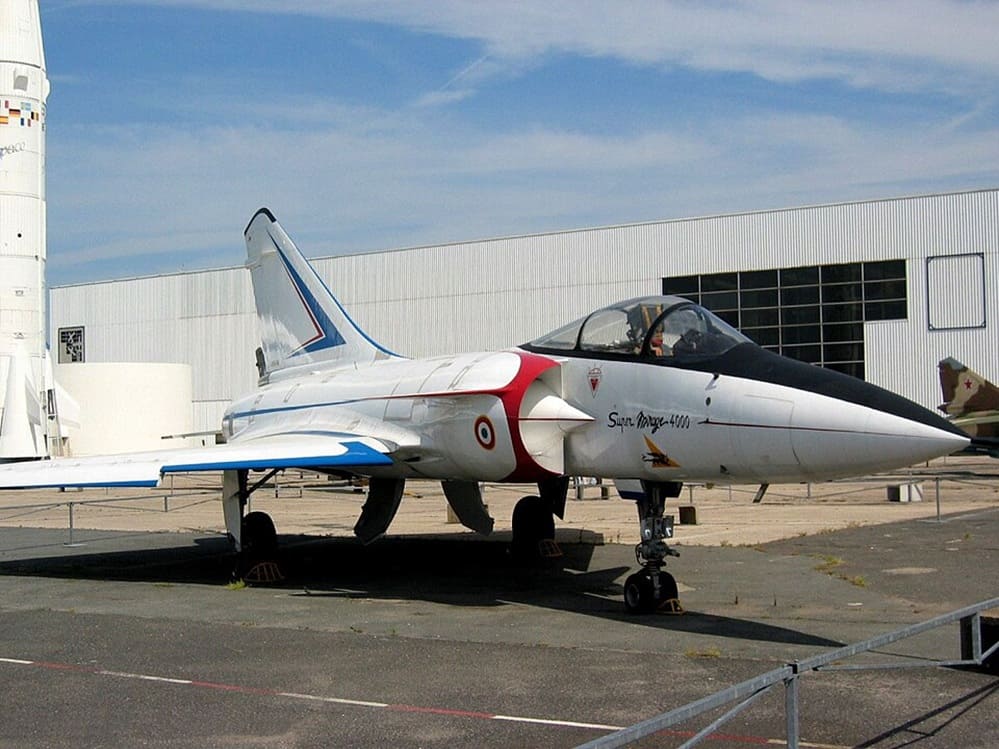
The Dassault Super Mirage 4000 had all the characteristics one would associate with a Cold War air-superiority fighter. It had twin-engine reliability, high acceleration, lots of fuel, Mach 2 performance and a big weapons load. Its aerodynamic configuration also foreshadowed features that later appeared on the Rafale.
However, only one prototype was ever produced. No air force asked for it. The Mirage 4000 was not a failure of engineering. It was a failure because the acquisition of combat aircraft depends on affordability, operational requirements, political alignment and logistical support. Air forces don’t buy satisfactory flight test results. They buy full combat systems.
France’s Heavy Fighter Experiment
In December 1975 France cancelled the twin-engined Avion de Combat Futur programme. For national air defence, it selected the smaller single-engined Mirage 2000. But Dassault believed foreign customers wanted something bigger to match the American F-15 Eagle. Launched in September 1976, the Mirage 2000 was accompanied by the Mirage 4000. Compared to most frontline fighters, French industry mostly funded the Mirage 4000.
A little-known agreement of June 21, 1978, gave Dassault the right to borrow M53 engines from the stocks of the French government. Marcel Dassault had personally championed the programme, which became the company’s last privately funded combat-aircraft prototype. The Mirage 4000 first flew from Istres on 9 March 1979. The first sortie went past Mach 1 with test pilot Jean-Marie Saget at the control. On its sixth flight, the prototype achieved Mach 2-plus.
Enlarging the Mirage 2000 Concept
| Specification | Mirage 4000 |
|---|---|
| Crew | One |
| Length | 18.70 metres |
| Wingspan | 12 metres |
| Wing area | Approximately 73 m² |
| Combat mass | Approximately 16,100 kilograms |
| Powerplant | Two Snecma M53 turbofans |
| Later rated thrust | 95 kN per engine |
| Maximum speed | Mach 2.2 |
| Operational ceiling | 20,000 metres |
| Planned external payload | Approximately 8,000 kilograms |
| Aircraft completed | One |
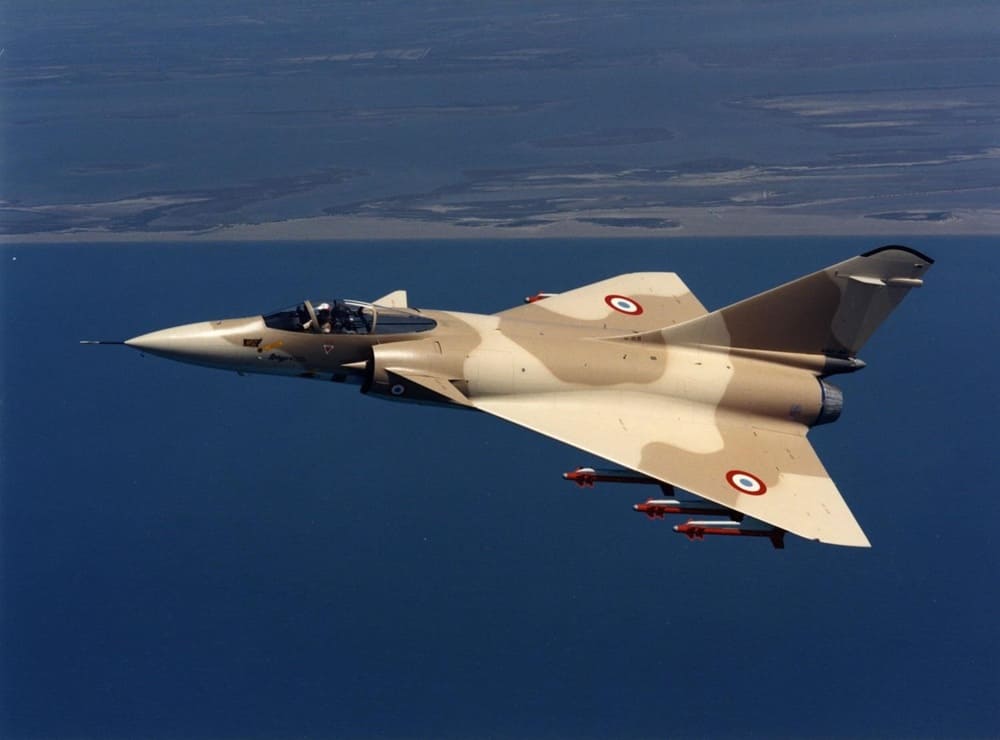
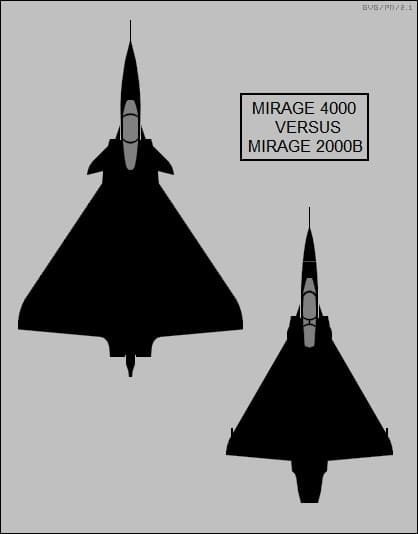
The Mirage 4000 retained the tailless delta configuration and lateral air intakes of the Mirage 2000. However, Dassault substantially enlarged the airframe. The big delta wing was particularly effective for a lot of internal volume to carry fuel. Dassault said the Mirage 4000 had about three times the internal fuel load of the Mirage 2000. And a probe for in-flight refuelling further extended its possible endurance.
The small, close-coupled canards were positioned well above the air intakes. At high angles of attack, the vortices from these surfaces energised the flow over the delta wing. These features improved pitch response and eliminated some trim penalties associated with conventional tailless deltas. An electronic flight-control system managed the aerodynamically sensitive configuration. The technology allowed Dassault to blend stability with quick reaction to control inputs.
Exceptional Performance
Later documentation shows two M53-P2 engines, each producing about 95 kN with afterburner. Earlier test phases used less powerful variants of the M53. Therefore, analysts should not apply the final thrust number to each prototype flight. It was specified to have a combat weight of 16,100 kilograms and two 95 kN engines with a theoretical thrust-to-weight ratio of around 1.20:
[\frac{190,000}{16,100×9.81}≈1.20]
That put the Mirage 4000 in the heavy-weight class of air superiority. It also demonstrated excellent vertical manoeuvrability and energy recovery after high-drag turns. The aircraft reached 50,000 feet and Mach 2 in three minutes and 50 seconds, Dassault said. Maximum rated speed was Mach 2.2, and practical ceiling was 20,000 m.
It made the Mirage 4000 one of the most potent fighter prototypes in Europe. But in a fight, speed is not the only factor. Sustained supersonic flight uses fuel quickly. External weapons add wave and interference drag. The Mirage 4000 also lacked stealth shaping, supercruise, and the integrated electronic-warfare architecture expected of modern fighters.
Not a Complete Weapon System
Dassault designed the Mirage 4000 to carry two 30 mm DEFA cannons, long-range Super 530 missiles, and short-range Magic missiles. The aircraft could also carry roughly eight tonnes of external stores. These figures were for proposed production arrangements. No prototype ever underwent a full operational weapons qualification programme. Dassault was not committed to a definitive radar, electronic warfare suite or cockpit configuration for production.
Published payload and combat-radius figures should therefore be taken as design estimates, not confirmed squadron capability. That’s a significant difference. A production fighter must demonstrate radar reliability, missile integration, electronic protection, maintainability and acceptable sortie-generation rates. The Mirage 4000 had excellent aerodynamics and propulsion but never had this level of operational validation. To call it ‘perfect’ is to exaggerate the evidence, then.
France Could Not Fund Both Fleets
Heavier performance in the French Air Force was less desirable than numbers. In 1983, a French Senate report set the minimum force at 450 combat aircraft. France needed 33 new fighters annually to maintain that strength. However, budget constraints limited Mirage 2000 production to only 21 aircraft annually between 1984 and 1988.
In these circumstances a larger twin-engined fighter would have diluted the strength of the fleet. Each Mirage 4000 had two M53 engines, not one. And it would have been a bigger fuel guzzler, requiring its supply, training, and maintenance structure. France could either have fielded a small number of heavy fighters or bought a lot of Mirage 2000s. So the Mirage 2000 had better combat value at the force level, while the Mirage 4000 was better at individual performance.
Case Study: The Saudi Opportunity
Before the prototype ever flew, there was interest from Saudi Arabia and pre-revolutionary Iran. One potential customer was quickly dispatched: the Iranian Revolution of 1979. Saudi Arabia was the programme’s best realistic chance. The kingdom required long-range interception, endurance and high-altitude performance. Technically the Mirage 4000 did fit these needs. However, Saudi procurement was about more than aircraft performance. Riyadh looked at political guarantees, training arrangements, infrastructure, access to weapons and long-term contractor support.
American F-15 purchases already covered this role. A CIA report, declassified in 1985, said Saudi Arabia was negotiating for 40 Mirage 2000s and 40 British Tornados. The document did not say that the Mirage 4000 was the best choice. This is important evidence that Saudi attention had shifted to the established production aircraft and government-backed support packages. The original Al-Yamamah deal eventually delivered 72 Tornados to Saudi Arabia. It was a huge financial and logistical gamble for a foreign operator to buy into an unproven programme with no French orders.
The Mirage 4000’s Hidden Legacy
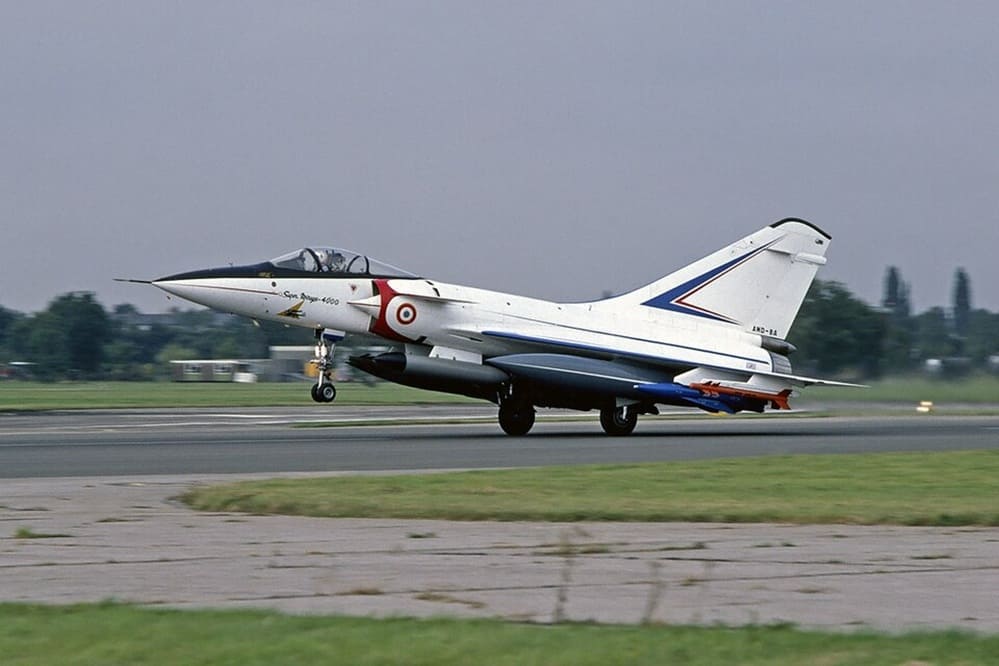
The prototype is said to have completed 336 sorties before its last on Jan. 8, 1988. The programme gave engineers a taste of fly-by-wire controls, canard-delta aerodynamics, twin-engine integration and composite structures. The composite vertical fin was an especially sophisticated feature and also served as a fuel-containing structure. “This innovation was a world first,” said Dassault.
The design permitted a reduction in structural mass, fatigue resistance and extra fuel volume. The experience gained from the Mirage 4000 strengthened the technological environment in which the ACX programme, which would later become the Rafale, evolved. The Rafale was not just a bigger version of the jet. But it distilled the same broad mix of twin engines, digital flight control, composites and close-coupled canards into a smaller, operational system.
Strategic Assessment
The Mirage 4000 was a competent fighter, but it was not well understood. It was a very special prototype for aeronautics, but there was no viable procurement ecosystem; For France, the cost was not justified over the Mirage 2000. Iran was no longer a customer, and Saudi Arabia opted for aircraft already in production and backed by political considerations. Understandably, other buyers were unwilling to finance development without a French commitment.
The failure is a lesson in one of the basic tenets of military aviation: the best fighter isn’t necessarily the fastest, most powerful plane. The ideal is the aircraft that a state can buy in numbers, arm effectively, keep in service through a war and modernise over decades. The Mirage 4000 won the performance argument. The more important contest was to create sustainable combat air power. The Mirage 2000 and the Rafale got it.
References
- Dassault Aviation — Mirage 4000: Origins, Characteristics and Performance
- French Senate — Military Programming Report, 1984–1988
- CIA Reading Room — Saudi Air Force Modernisation
- Dassault Aviation — Super Mirage 4000: Le Rêve inachevé
About the Author