
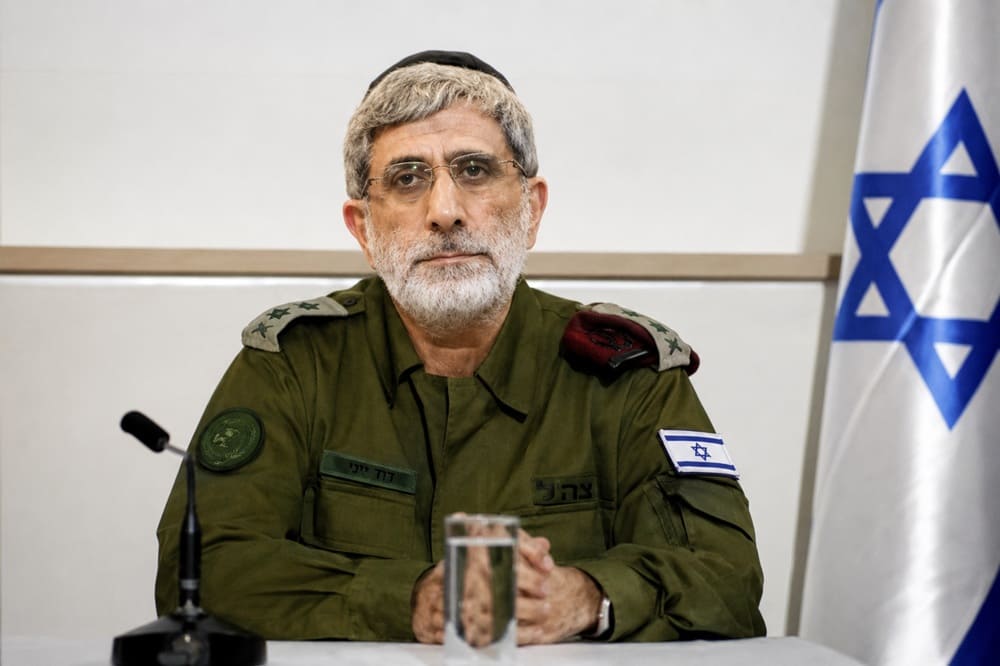
Esmail Qaani and the Mossad Agent Allegations
The allegation that Esmail Qaani was an agent of Israel’s Mossad represented an extraordinary counterintelligence accusation. They have been present in numerous episodes of the Iranian military crisis. But repetition is often substituted for evidence. As of now, there is no credible evidence in the public domain that Qaani became an Israeli agent.
The claim is not supported by any independent communication, financial paper trail, filed charge, court record, or named witness. Instead, the evidence shows how operational secrecy, Israeli targeting successes, and information warfare created a compelling narrative.
A High-Value Commander
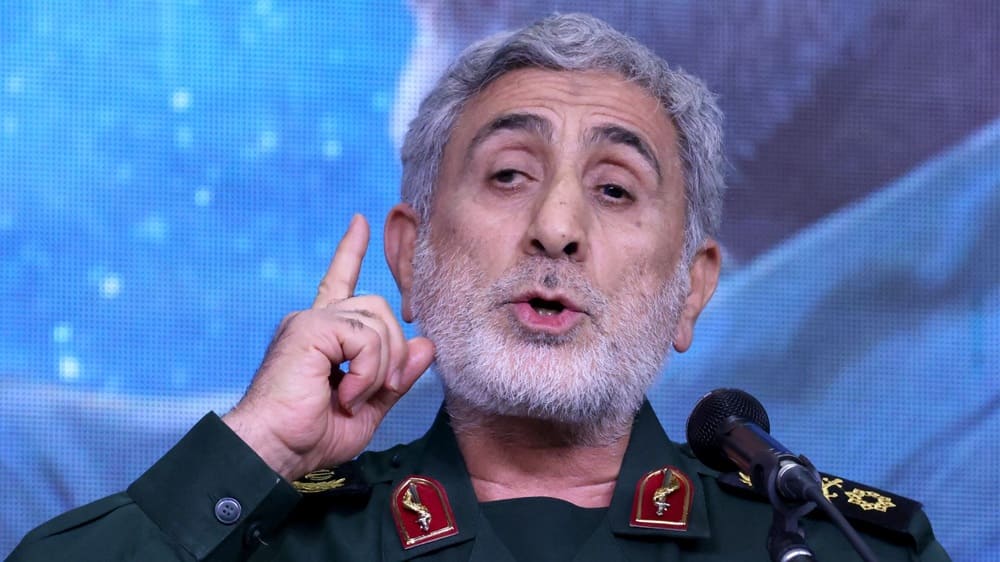
Qaani joined the Islamic Revolutionary Guard Corps in 1980 and fought in the Iran-Iraq War. He was made deputy commander of the Quds Force in 1997. Qaani succeeded Qassem Soleimani after the U.S. killed Soleimani on January 3, 2020. However, “Quds Force is running Iran’s foreign military relations and their proxy armies.”
Its commander handles highly sensitive information regarding such matters as movements, meetings, finance, arms transfers, and liaison arrangements. However, Qaani was a very different kind of figure than Soleimani. He was not so visible in public, and meetings with foreigners were usually private. He also lacked Soleimani’s command presence and personal relationships with Arabic-speaking partners, according to Reuters’ profile of the commander. This secrecy later made temporary absences appear suspicious.
The 2024 Rumour Cycle
The first major indictment came in the wake of Israel’s beheading campaign against Hezbollah in September 2024. A September 27 Israeli strike in Beirut killed Hezbollah leader Hassan Nasrallah. Another senior IRGC officer, Brigadier General Abbas Nilforoushan, was also killed at the command complex. Qaani was later reported to have gone to Lebanon following the strike.
Then, in early October, Israel struck again at the underground Hezbollah site. The operation targeted a presumptive Nasrallah successor, Hashem Safieddine. Two senior Iranian security officials told Reuters on Oct. 6 that the authorities had lost contact with Qaani. An official said that he was in the southern suburbs of Beirut then. No one officially accused him of spying. Their statements only established that communications had temporarily failed. However, Reuters documented the original disappearance.
Qaani Under House Arrest?
Middle East Eye published the report four days later, turning uncertainty into a counterintelligence scandal. It cited 10 sources in Tehran, Baghdad, and Beirut. The report said that during Iran’s investigation into the security breaches, Qaani and members of his team were under guard. The source, which has links to Hezbollah, was quoted as saying the breach was “100% Iranian.” Other reports said investigators placed Qaani under house arrest. But they had no proof that he had been in touch with the Mossad.
Another unconfirmed report claimed Qaani had a heart attack during interrogation. These different accounts were merged into a single story of arrest, torture, espionage, and possible death in online reports. There is no documentary evidence for the chain of information. Ten anonymous sources does not automatically mean ten independent intelligence streams. You can have different sources issuing information from a single political or security faction. This is known as circular reporting and can create a false sense of confidence.
The First Claim Collapses
On 15 October 2024, Qaani appeared publicly in Tehran. He attended the funeral of Nilforoushan, where Iranian media photographed him. Reuters’ photographic record confirmed his presence. The sight quashed reports that Qaani had died during questioning. It also denied the allegations of prolonged detention or serious hospitalisation. It has allowed for a short internal security review.
Qaani reemerged at a rally in Tehran in June 2025. Days later, a Persian-language social media account linked to Mossad said Qaani was not its agent. That curious denial did not add much to the evidence. Intelligence services can deny facts, spread humour, or use rumours for psychological purposes. The account’s intervention showed that the allegation had entered the information-war environment.
The 2026 Revival
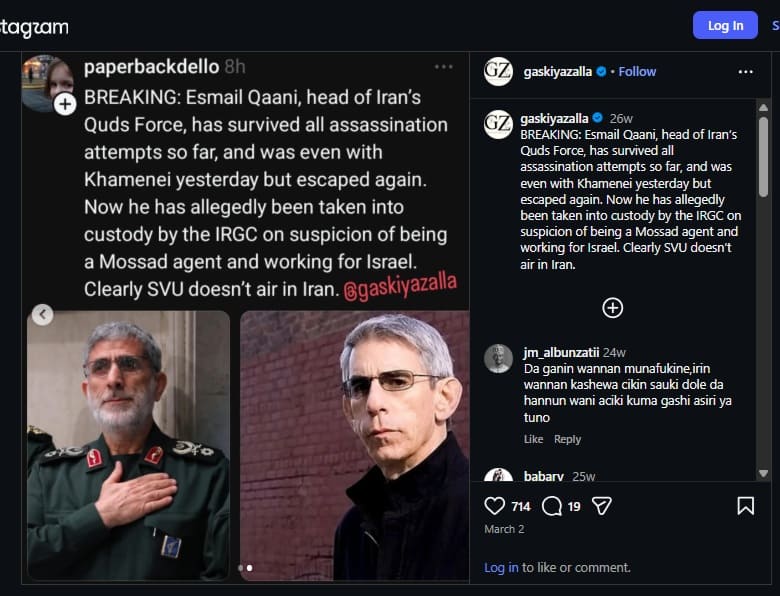
The allegations resurfaced after U.S. and Israeli airstrikes in February 2026 killed Khamenei and other Iranian officials. Social media accounts said Qaani had left a planned location just before the attack. Others would later say Iran arrested and executed him. No verified execution notice, burial record, judicial statement, or identified source has been reported.
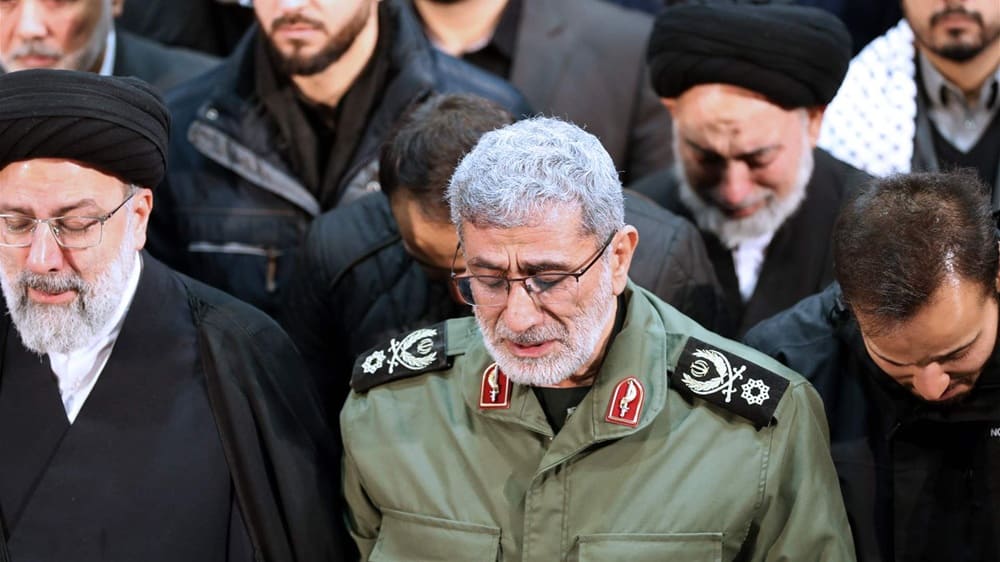
On March 10, Iran’s ambassador in Baghdad rebuffed them. “They are still running the show and running Iranian activities,” he said of Qaani. In July more definitive evidence appeared. AP journalists saw Qaani at the funeral prayers for Khamenei in Tehran on July 5, 2026. His presence belied the March execution story.
What Enabled Israel’s Strikes?
The claim sounded plausible, since Israel had caught protected commanders time and again. But that they were precision targets did not mean a senior mole was providing the coordinates. Multiple intelligence disciplines can be integrated into a modern find-fix-track-target-engage-assess cycle.
This includes human reporting, signals intelligence, cyber access, geospatial imagery, physical surveillance, and pattern-of-life analysis. You don’t have to hack the senior leadership of a command site—compromised couriers or insecure meeting notifications are just as effective.
Metadata Fusion and the Survivorship-Bias Trap
The content of the messages might still be encrypted, but metadata from mobile devices can expose relationships. By observing the repeated movements of vehicles, one can find the meeting place. A compromised scheduler can reveal timing even if it does not know the strategic purpose of a meeting. Israeli planners could also put together several incomplete indicators into a single targeting solution.
There is not much evidence to support the claims that Qaani repeatedly left buildings before attacks. This argument is guilty of the survivorship bias fallacy. Public reporting notes the dramatic escapes, but it does not provide a denominator for how many times Qaani escaped or how many safe houses he used. Analysts have no idea how many safe houses Qaani had been to or how often schedules changed on a routine basis.
The Counterintelligence Test
Any credible assessment of espionage would require evidence of access, intent, contact, and transmission. Investigators would look for authentic Mossad tasking, covert payments, communications metadata, manipulated meetings, compromised documents, or independent witnesses. No public disclosure makes the chain of evidence available. Qaani’s position allowed him access. However, access was not betrayal. His survival was suspicious, but it does not imply intent. Iranian denials do not equal innocence.
Mossad’s denial is not proof. The public appearances are simply a sign that Qaani was still alive and trusted to be part of significant state ceremonies. Bounded estimates are the most likely. Iran probably conducted a major security reassessment after the loss of Hezbollah and IRGC commanders. Qaani and his staff could have been questioned because their office was overseeing the Lebanese liaison channel. Investigating a commander doesn’t mean the investigators found guilt.
An Information-Warfare Victory
Even if the story that he was a Mossad agent was untrue, it may have had effects. Such allegations could undermine the trust relationship between Iranian officers and their partner organisations. They can result in internal investigations, communication breakdowns, staff turnover, and delayed command decisions. This tactic creates operational value without using the accused officer. And all a foe has to do is create suspicion between Tehran and Hezbollah.
Any additional security constraint adds to command latency and reduces coordination. The verdict of the analysis, therefore, is clear. The executions have been staged. There is no evidence to support interrogation. Most importantly, there is no credible public evidence that Esmail Qaani was a spy for Mossad. Open sources do not answer the question of what real intelligence breach is behind Israel’s targeting successes. However, why Qaani repeatedly finds himself at the centre of controversy and how he has consistently escaped the fate of other senior Iranian commanders remain unresolved mysteries.
References
- Reuters: Who is Esmail Qaani, Iran’s Quds Force commander?
- Reuters: Qaani out of contact after Beirut strikes
- Middle East Eye: Qaani questioned over Iranian security breaches
- Associated Press: Qaani attends Khamenei’s funeral prayers
About the Author