
The Unreliable AIM-7 Sparrow: From Vietnam to the Gulf War
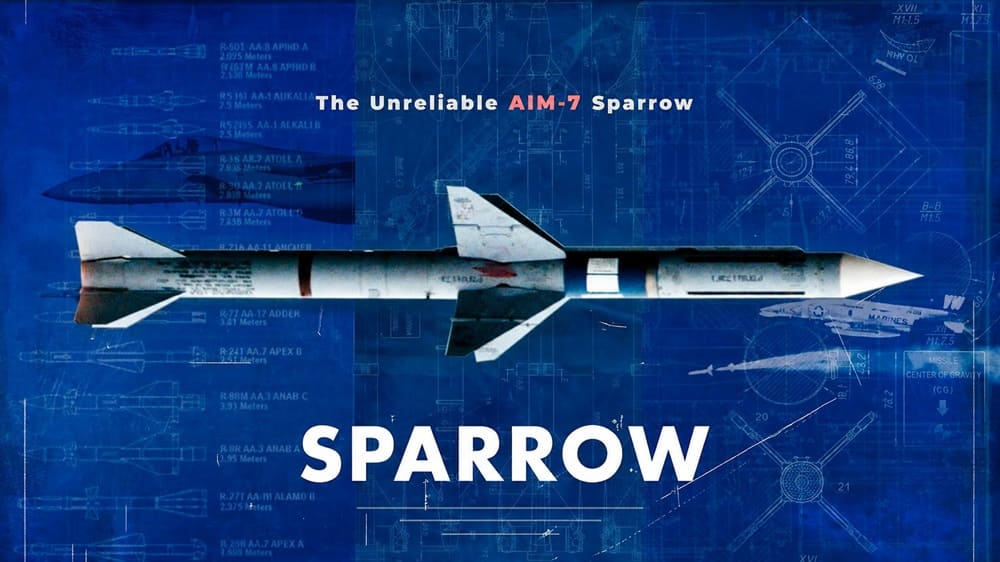
The AIM-7 Sparrow was one of the most important radar-guided air-to-air missiles of the Cold War. It was the armament of the F-4 Phantom II, F-15 Eagle, F-14 Tomcat, and several allied fighters. Yet its performance in battle was entirely unique. The Sparrow was meant to revolutionize beyond-visual-range combat. However, in Vietnam crews encountered engine failures, fuze failures, guidance problems, radar limitations, and restrictive rules of engagement.
The missile was improved for decades, but even the AIM-7M used in Operation Desert Storm sometimes failed to work after launch. The gap between testing and combat was especially large. Operational testing before the war predicted an AIM-7 would hit about 71% of its intended target. But the real results in Vietnam were far from that expectation. The Sparrow thus became a significant case study in weapons engineering. A technically sophisticated missile can’t make up for shortcomings throughout the kill chain.
How the AIM-7 Sparrow Worked
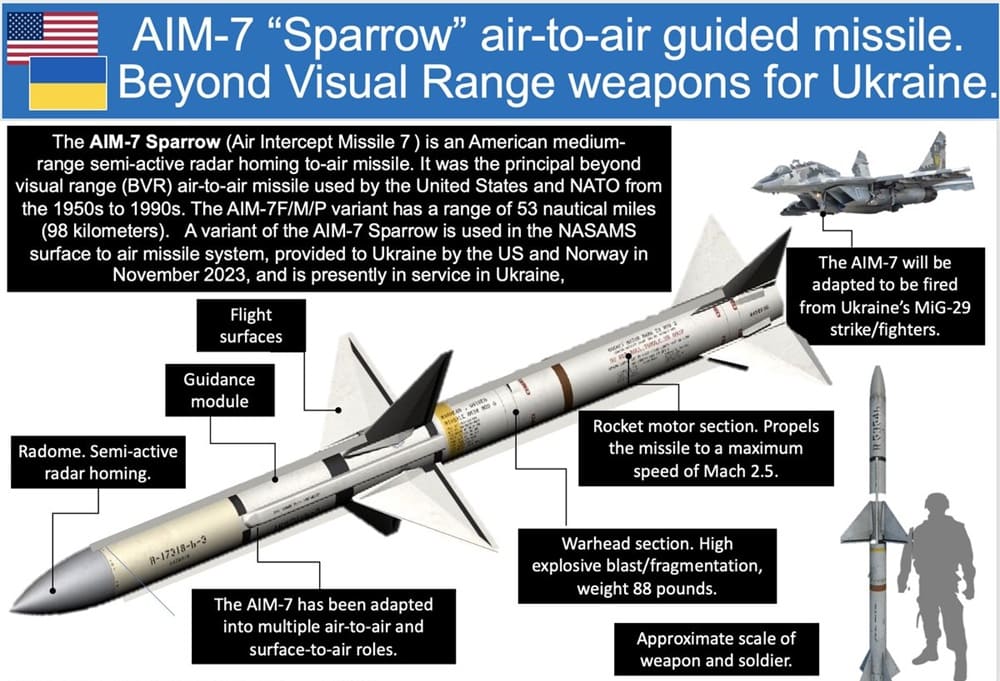
The AIM-7 used semi-active radar homing, or SARH. The missile did not have an autonomous radar for target search as featured in the later AIM-120 AMRAAM. Instead, the fighter illuminated the target with its radar. The Sparrow’s seeker was tracking radar energy bouncing off that aircraft. Thus, the guidance chain was as follows: The fighter’s radar illuminated the target, allowing the Sparrow seeker to detect the reflected radar energy. In most engagements, the launching fighter had to maintain radar lock until missile impact. A broken radar track could kill an engagement. This requirement imposed a basic tactical constraint. The shooter was electronically and geometrically coupled to its missile for most of the flight.
Modern active-radar missiles have greatly reduced that limitation. The AIM-7M measured 3.64 meters long by 0.20 meters in diameter. Its launch mass was about 225 kilograms. It was powered by the Hercules Mk-58 solid propellant motor and had an annular blast fragmentation warhead. Interestingly, the range, speed, and rocket-motor thrust of the Sparrow are still listed as classified on the USAF public fact sheet. This document also classifies inventory numbers. There is an odd little surviving layer of official secrecy around an otherwise well-documented Cold War weapon.
Built for a Different War
The issues with the Sparrow started with the original operating assumptions. In the 1950s, American missile programs were focused on fairly large, predictable aircraft. The main threat came from Soviet bomber formations. Early missiles were not for dirty, close-in work with small fighters. Vietnam had flipped the problem on its head. MiG-17s and MiG-21s often flew aggressively in combat. The planners had not foreseen engagements at lower altitudes and shorter ranges. The missile also had to cope with changing aspect angles, high angular rates, clutter, aircraft maneuvering, and rapidly changing closure rates.
The effectiveness of the Sparrow depended on the whole weapon system working in unison. If the launching aircraft lost lock-on or stopped painting the target, the missile could lose guidance. Even if the radar is working, the rocket motor may not be functioning. The proximity fuze could fail, and the radar and motor could still work properly. So, for a kill to happen, basically all kill chain components have to work at the same time.
Vietnam: From High Hopes to Single-Digit Success
This gap was made clear during Operation Rolling Thunder. A recent U.S. Air Force historical study suggests that some 330 AIM-7s were fired in Rolling Thunder. That’s just under 27 kills. This means the kill-to-launch ratio is about 8%. Historical study also tells us of big misses and equipment failures. Contemporary accounting practice is diverse, so we should understand the categories as overlapping.
The conclusion is that the missiles did not do what they were supposed to do. When the improved versions appeared, the performance was still disappointing. American crews fired 149 AIM-7s in the first seven months of 1972. They made only 20 MiG kills, or about 13%. By 1991, the improvement was enormous. It was still nowhere near one missile producing a kill.
| Combat period | AIM-7 launches/attempts | Kills | Approximate ratio |
|---|---|---|---|
| Rolling Thunder | ~330 | ~27 | ~8% |
| First seven months of 1972 | 149 | 20 | 13% |
| Desert Storm AIM-7M | 67 attempts | 23 kills | 34% |
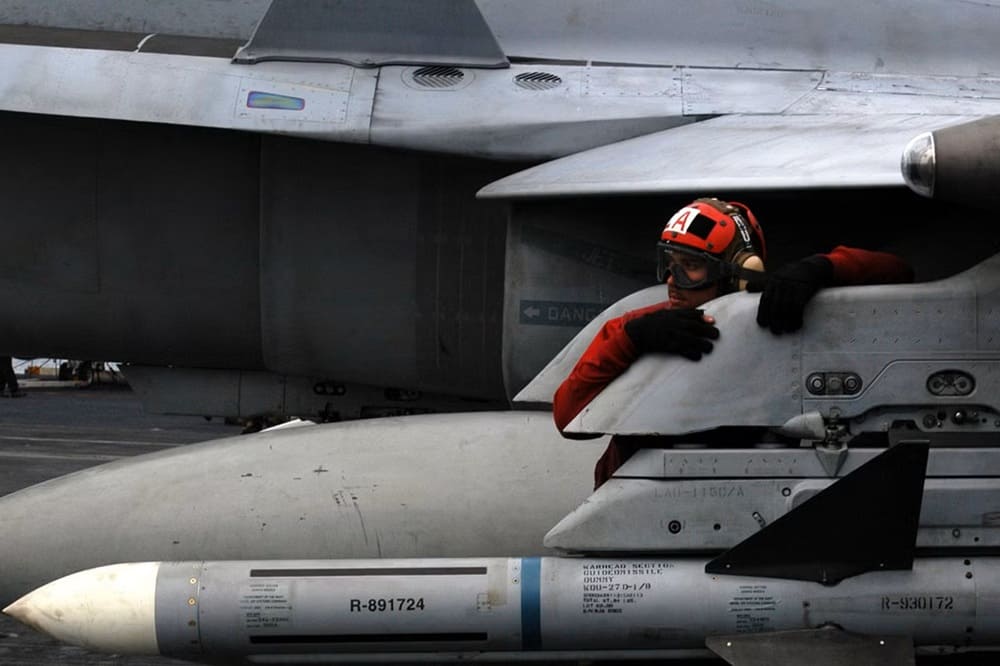
Case Study I: Opal Flight’s Four Sparrow Failures
On 5 November 1966, the forces fought an intense engagement. Four USAF F-4Cs of Opal Flight were escorting EB-66 electronic-warfare aircraft over the vicinity of Hanoi. North Vietnamese MiG-21s intercepted them. Opal 01 got behind a MiG and tried a Sparrow attack. The first AIM-7 suffered a rocket motor failure. The crew then prepared an AIM-9 Sidewinder, but a switch-setting error disabled the system. They returned to the Sparrows and launched a second AIM-7. The missile tracked the MiG but failed to detonate. Opal 01 repositioned, regained radar lock, and fired a third Sparrow missile.
The missile went right behind the MiG again, and it didn’t go off. The crew launched their fourth and last AIM-7. The Sparrow zoomed past the MiG and blew up right in front of it. The fragments caused enough damage to the aircraft that the North Vietnamese pilot ejected. So it took four tries with the Sparrow to get one kill. More important, the failures were different. One was propulsion. Others were apparently guidance- or fuze-performance-related. ‘The last missile was successful. Troubleshooting was much more difficult with diversity.
Maintenance Failures Before Combat
In fact, several Sparrows had reliability problems before the fighter was even in the air. One particularly noted history of the USAF describes missile trailers at Korat Royal Thai Air Base crossing a foreign-object-damage shaker device. The ridged surface was designed to shake vehicles and remove debris from their tires. Missile trailers were prohibited from crossing it. However, maintenance crews reportedly moved AIM-7 and AIM-9 missiles across the shaker, potentially exposing them to damaging vibration.
The missiles bucked violently in their mountings, potentially damaging internal electronics. The risk increased at altitude, where low temperatures caused metal components to contract. This contraction could separate weakened solder joints and interrupt critical electrical connections. This episode shows that you cannot assess a missile’s reliability based solely on its seeker design. Transportation, storage, vibration, electrical integrity, handling procedures, and environmental exposure impact combat performance.
Rules of Engagement Undermined BVR Combat
The main theoretical advantage of the Sparrow was its range. But Vietnam-era rules of engagement often kept the crews from taking advantage of it. Pilots had to have positive hostile identification before launch. Commanders were hesitant to clear BVR shots with radar guidance for fear of fratricide. If the crews visually identify the target, the engagement could take place in close-range maneuvering combat. This left the Sparrow in hostile surroundings. The minimum range was important because the missile needed time to separate, accelerate, stabilize the seeker, and arm the fuze. The difficult target maneuver widened the firing window even more. The problem was thus technological, doctrinal, and human.
Why the AIM-7M Improved Performance
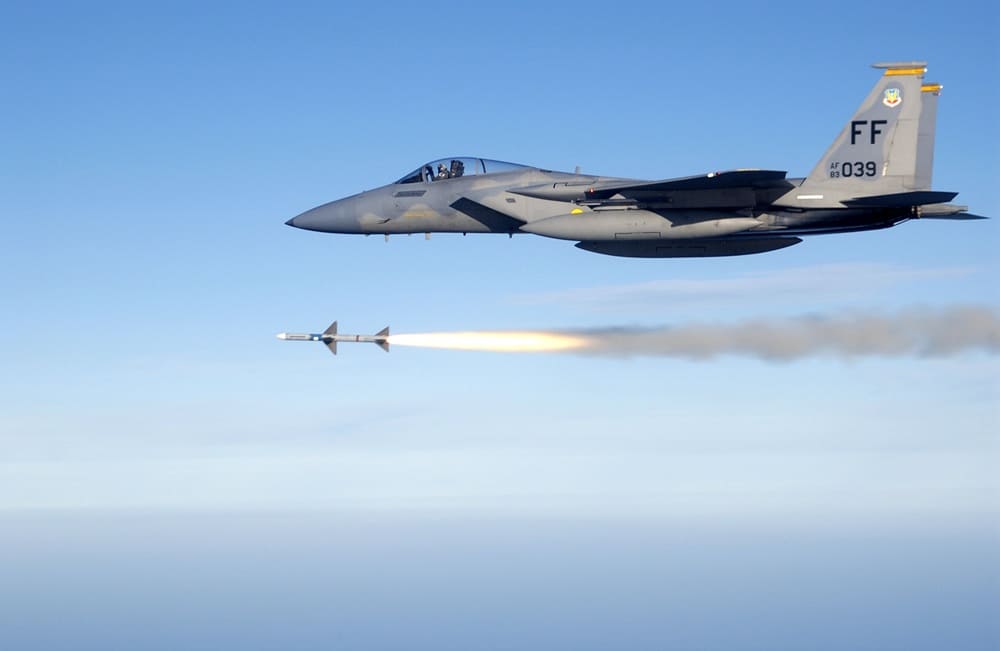
After Vietnam, the United States began to rework the Sparrow slowly. The AIM-7F was a significant improvement. The AIM-7M was introduced in 1982. The M-model was more effective at low altitudes, more resistant to electronic countermeasures, and more reliable. The H-Build software that followed included more guidance improvements. This was a significant advance in digital processing compared to earlier versions.
The missile has also been in combat, benefiting from a much improved ecosystem. The F-15C had a look-down/shoot-down pulse-doppler powerful radar. E-3 AWACS aircraft improved situational awareness. Enhanced identification procedures supported BVR engagement. American crews also had far more realistic air combat training. The missile itself had improved, but the greater advance came from improvements across the entire kill chain.
Case Study II: Desert Storm — Better, but Still Unreliable
Operation Desert Storm is often described as Sparrow’s redemption. That estimate remains largely accurate. But detailed combat experience showed that the AIM-7M still had failures. The official Gulf War Air Power Survey credited 67 AIM-7M attempts, with 23 kills. This results in a nominal kill-to-attempt ratio of around 34.3%. That was much better than Vietnam. However, simple aggregate statistics showed the arithmetic is 2.9 attempts per credited kill. The statistics also obscure individual engagements where multiple weapons malfunctioned or missed.
The 19 January 1991 MiG-25 Fight
The most important engagement took place on 19 January 1991. F-15C pilots Capt. Richard “Kluso” Tollini and Capt. Lawrence “Cherry” Pitts tangled with Iraqi MiG-25 Foxbats. “Most exacting was the engagement.” Pitts engaged one MiG-25, but it took several missiles to bring down the plane. Detailed after-action reports from pilots later indicated that engaging the first Foxbat required five missiles. Then Tollini attacked the second MiG-25. He positively identified the aircraft and selected an AIM-7. Tollini pressed the launch control. There was no sign of the expected missile acceleration. They couldn’t be certain, but investigators believed the motor on the Sparrow rocket never fired, he said.
He shifted to an AIM-9 Sidewinder. That missile went through or near the exhaust area of the MiG-25 and did not hit it. Tollini returned to the Sparrow. The second AIM-7 did what it was supposed to do, sped toward the maneuvering Foxbat, and struck the plane. The engagement reveals a remarkable fact. The AIM-7 malfunctions in real combat even when used by a technically superior F-15C with AWACS support and highly trained crews. Another target in the same engagement required multiple missile launches. The Sparrow had become far more capable, but it remained vulnerable to technical and operational failures.
Gulf War: 67 Attempts, 23 Kills
The tally from the Gulf War Air Power Survey of 67 attempts and 23 kills should not be taken as evidence of 44 simple guidance failures. Technically that would be wrong. There are a few reasons why a missile launch might not receive credit for a kill. The second missile can hit the target that’s already been hit by the first. Targets can also move out of optimal intercept geometry. Radar tracks decay. A missile can miss without any hardware malfunctions.
However, Gulf War data showed that the AIM-7M still required relatively high missile expenditure. A later USAF fact sheet credited Sparrow missiles with destroying 22 Iraqi fixed-wing aircraft and three helicopters. Official totals vary by accounting method, engagement dataset, and definition of success. A rigorous assessment must therefore distinguish probability of kill, hit rate, launch reliability, and overall engagement success. These measures are not interchangeable.
What Declassified Records Still Hide
The Sparrow’s combat record also raises an important intelligence question. The Gulf War Air Power Survey provides unclassified totals for AIM-7M performance, but parts of the original employment data remain unavailable. In the public version, some AIM-7M employment figures were redacted, limiting independent assessment of launch rates, engagement outcomes, and true missile effectiveness.
Meanwhile, the US Air Force fact sheet still refuses to release data on Sparrow range, speed, thrust, and inventory. Be suspicious of any article claiming to know any specific “secret” maximum ranges or classified seeker parameters. There is plenty of public domain material available to perform a rigorous technical analysis. They don’t confirm the made-up specs of classified
The AIM-7’s Lasting Lesson
The AIM-7 Sparrow was never a mere unreliable missile. It was an unreliable system at times in its working history. Vietnam showed weaknesses in electronics, propulsion failures, fuze problems, restricted firing envelopes, radar limitations, and unrealistic pre-war assumptions. Desert Storm represented a significant advance. The AIM-7M scored BVR kills, worked against low-altitude targets, and fit perfectly into the F-15/AWACS architecture. But there were still failed motors, misses, and engagements that required multiple weapons during the Gulf War combat.
This history led to the creation of the AIM-120 AMRAAM. AMRAAM added an active radar seeker and reduced the need for the launching aircraft to maintain illumination on the target. Thus, the AIM-7 is an important milestone in the history of air combat. Its failures revealed the limits of first-generation missile warfare. Subsequent success showed that continuing engineering development could improve combat performance. Most important of all, Sparrow taught a lesson that is still relevant to modern air forces: The missile’s advertised range does not make it a better weapon. So does the whole sensor-to-shooter kill chain.
References
- U.S. Air Force — AIM-7 Sparrow Fact Sheet. Technical specifications, AIM-7M improvements, Gulf War combat record, and officially classified parameters. (Afghanistan Military)
- Brian Duddy—”They Don’t Call Them ‘Hittles’: Air-to-Air Missile Reliability Problems During the Air War Over North Vietnam.” U.S. Air Force historical study, approved for public release. (U.S. Department of War)
- Gulf War Air Power Survey, Volume IV: Weapons, Tactics, and Training and Space Operations. U.S. Department of Defense Gulf War analysis, including AIM-7M employment statistics. (U.S. Department of War)
- Steve Davies and Doug Dildy—F-15 Eagle Engaged: The World’s Most Successful Jet Fighter. Detailed accounts of Desert Storm F-15 engagements and Sparrow employment. (Djvu Online)
About the Author