

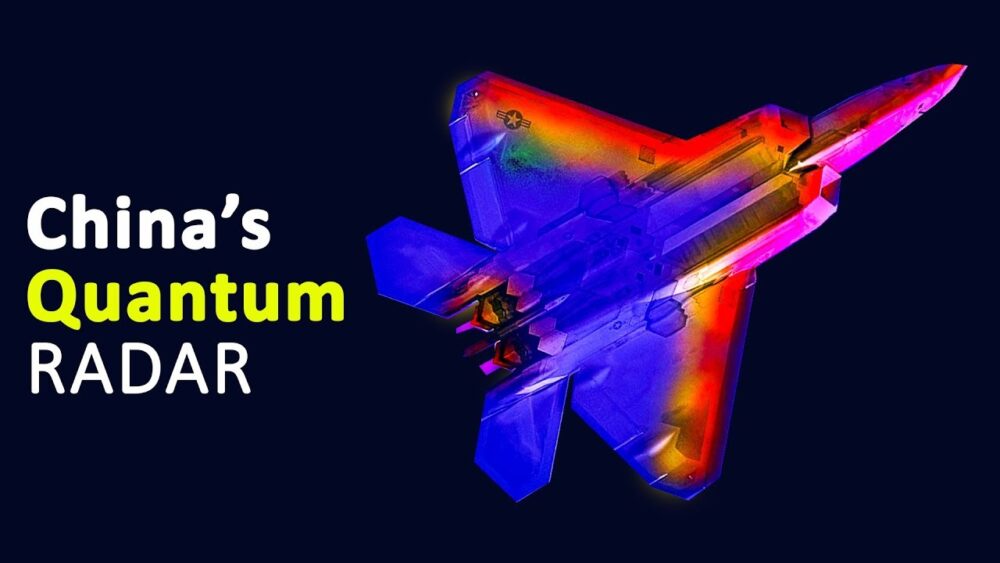
China Quantum Radar Claim — Hype vs Physics
The claim about China’s quantum radar keeps recirculating in viral posts: “A ‘quantum radar’ that can detect stealth aircraft at 100+ km, thus making low observability obsolete.” The story is believable; China has achieved world-class results in quantum communications, and quantum entanglement does exist. However, radar engineering quickly exposes exaggerated claims. A sensor’s battlefield value depends on range, signal losses, clutter, and false-alarm rates.
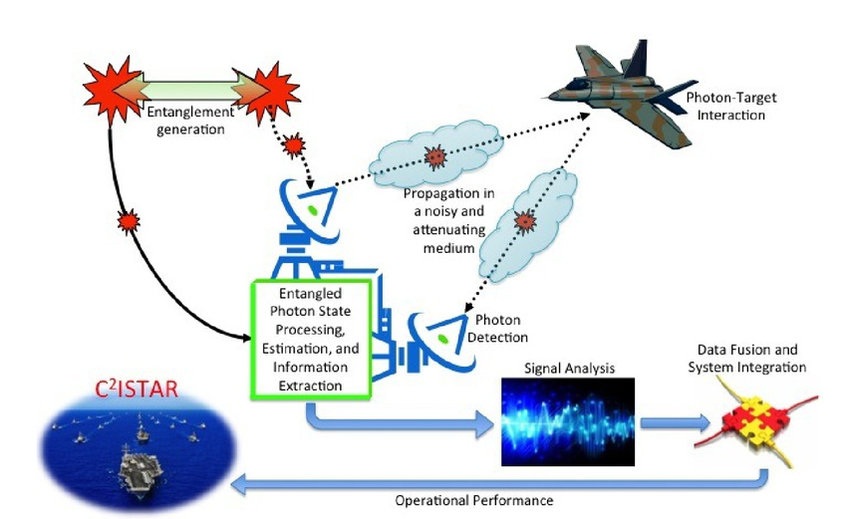
This is the ground model. In the open literature, the term “Quantum radar” is often used in association with quantum illumination. You produce paired signals, which are usually called ‘signal’ and ‘idler’. You send out the signal toward the target and keep the idler at the receiver. If weak correlations survive the noise, an advanced receiver may detect returns that classical methods could miss under specific conditions. Laboratory experiments have demonstrated this potential, but its practical scope remains far narrower than popular claims suggest.
Origin of the “100 km” Claim
The 100 km figure comes from media reports on a Chinese prototype in 2016 and is often cited in CETC-related reporting. The reporting called it a stealth counter. The crucial point is that the claim is unprovable. The open report did not provide the test details needed to verify the claim. It didn’t provide the test’s geometry or layout, and it didn’t specify the type or shape of the target.
The report also lacked important technical details, such as transmission frequency band, output power and full processing chain. It gave no false-alarm statistics and showed no consistent, repeatable results. These holes make it interesting but not convincing. Most analysts would therefore regard it as an unproven concept rather than a fielded operational capability.
Myth: “The Twin Knows Instantly”
Entanglement does not create a message channel that works faster than light. Quantum networks can distribute correlations over long distances, but they do not provide instantaneous signalling. And that matters, because many viral explainers have the wrong mental model: “one photon hits the target, and its twin immediately reports the outcome.” That’s not how sensing works.
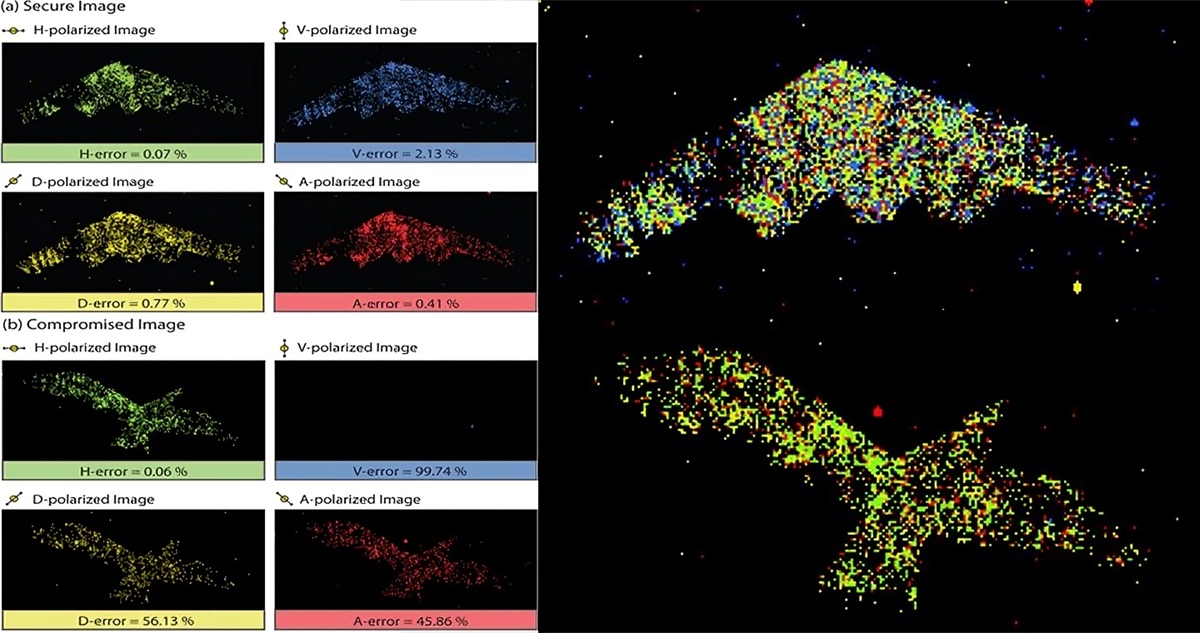
Another practical limitation for radar-like sensing is that once the outgoing signal interacts with the real world (air, clutter and especially a rough target surface), pristine entanglement typically does not survive. What may remain is a weaker correlation “fingerprint” that can still be useful. This fingerprint may be exploited statistically by a receiver. “True entanglement is lost, but some correlation can still be useful,” Phys.org quotes a summary of a prototype as saying.
What’s Been Demonstrated So Far
Researchers have provided real examples of quantum-illumination-style tests, including microwave prototypes, usually in controlled settings and often with the use of special equipment. The significance of these experiments is that they show that correlation-based detection can work in noisy environments.
However, a proof of concept is not a radar system for operational air defense. A fielded system must contend with weather, clutter, multipath, platform motion, electronic attack, calibration drift, maintainability, and cost. So the correct question is not “can it work? But will it work at military-relevant ranges and provide a high-quality track?
Range Limits: Losses and Thermal Noise
The statement about China’s quantum radar is, at some distances, outside the bounds of physics in general. Radar takes heavy losses on the way out and on the way back again. At room temperature, the conventional microwave bands are filled with plenty of thermal background photons in the environment, which destroys any quantum advantage unless the system design controls noise extremely well.
A 2024 peer-reviewed analysis of the range of microwave quantum radar bluntly states that the maximum practical range is inherently limited to less than 1 km for typical aircraft-class targets and to “tens of metres” in most cases when realistic loss and noise are introduced into the model. Other technical discussions consider performance in the kilometre range under optimistic assumptions. For example, an arXiv preprint finds conditions under which a two-mode-squeezed (entangled) radar could reach a couple of kilometres, with bandwidth and system parameters as critical constraints. Even that promising class is still far from the viral 100-kilometre story.
Does Quantum Radar Kill Stealth?
Stealth is not going away anytime soon, not in the simple way social media would have you believe. Stealth is not invisible. It is radar cross-section management across bands and aspects with tactics, emissions control, electronic warfare, stand-off weapons and decoys. Even if future sensors improve weak-return detection in a specific niche, stealth aircraft still have to contend with shaping, coatings, threat-aware routing, and coordinated jamming. Furthermore, detection is not the same thing as effective fire-control tracking. To produce an engagement-quality track, a defender requires stability, update rate, and confidence against deception and clutter. The kill chain has multi-sensor with active radar, passive RF, EO/IR and networked cueing inherent.
Countries Testing Quantum Radar
Many countries have ideas about “quantum radar”, usually in the broader context of quantum sensing and quantum illumination. State-linked Chinese defense electronics groups have spoken openly about prototype work, sometimes making long-range anti-stealth claims. Teams at universities in Canada have conducted popular studies of quantum radar and lab demonstrations to detect weak signals in heavy noise.
Conversely, defense-funded research programmes in the United States support quantum-assisted sensing, improved read-out techniques and next-generation detectors. In the UK and across Europe, national quantum programmes and large research hubs are funding enabling technologies – sources, receivers and timing – as these building blocks are essential before anyone can field a rugged radar system.
Methods, Metrics, and Replicability
If quantum sensing is to be militarily relevant, it must demonstrate its credibility through measurable and publishable methods:
Performance indicators
Don’t rely on one headline range number. Examine Pd–Pfa curves. Probability of detection versus probability of false alarm. These curves provide a more realistic measure of the operational radar performance.
Reality Check
Full details of the test conditions are required, including operating band, transmitter power, antenna aperture, dwell time, clutter environment, assumed target radar cross-section, jamming conditions and track-formation performance.
Engineering Practicality
Prefer systems that have been demonstrated to work at realistic operating temperature and bandwidth requirements. Hardware must also be serviceable, reliable and compatible with existing air defense command-and-control architectures.
Constant Research
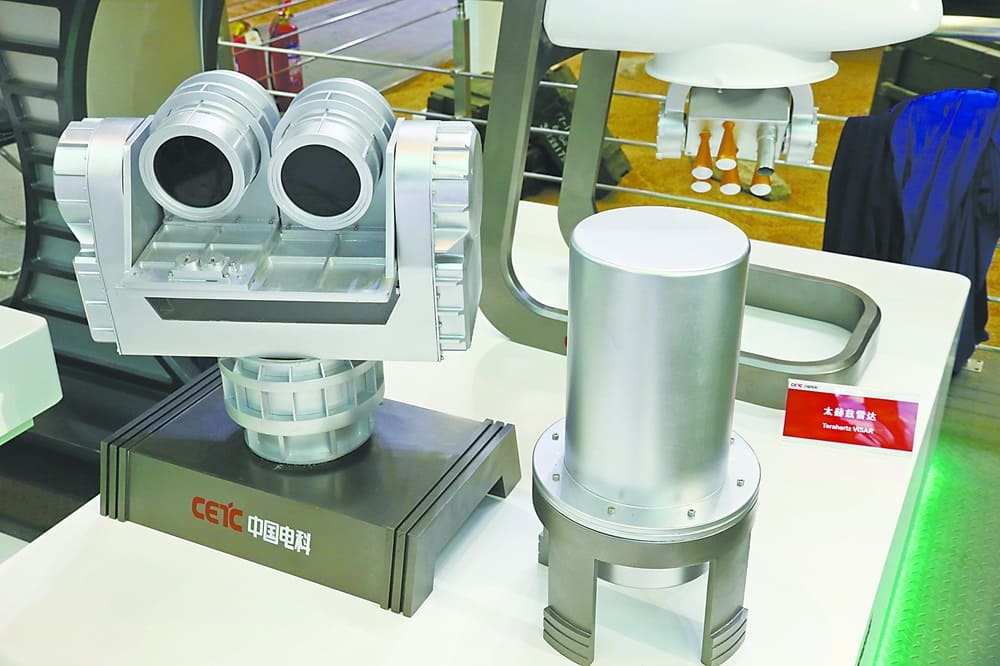
We still have no consistent, repeatable evidence to support the headline claim. But we should not ignore China’s progress. In November 2018, CETC unveiled a prototype of a quantum radar at the Zhuhai Airshow. The company had already spent several years developing it and had done experimental testing previously. That demonstration was eight years ago. China has almost certainly continued to invest in quantum sensing, counter-stealth detection, signal processing and related radar technologies.
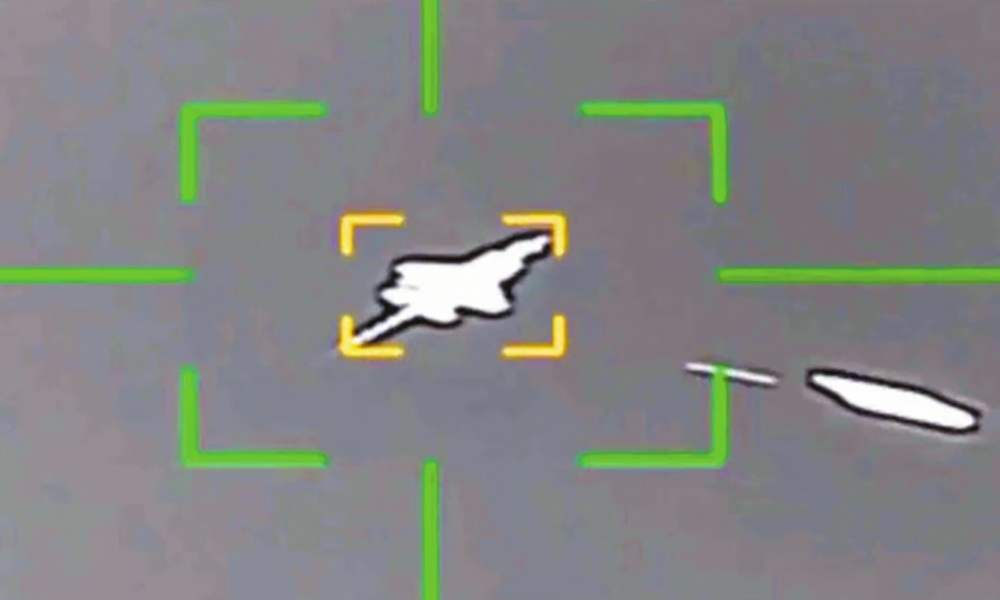
However, the specific progress is classified, so claims of an operational breakthrough cannot be independently verified. The question is of more interest in the light of recent combat over Iran. Iranian forces say they engaged F-35 stealth jets and say they shot down one with a missile. But there is no public evidence Iran actually shot down an F-35. Instead, the evidence is a confirmed report of a U.S. F-15E lost in combat over Iran.
Conclusion
So one can ask whether China’s advanced sensing technologies gave Iran an improved capability to track stealth aircraft. But attributing such events to quantum radar in particular is speculation without sensor data, wreckage evidence, radar logs or official technical disclosures. So China’s claimed 100 km quantum anti-stealth capability remains unproven in the public domain. But the 2018 prototype also makes it impossible to dismiss the technology as a recent publicity stunt. After years of sustained research, China may have capabilities far greater than it has revealed to the public. Stealth is certainly useful, but analysts should be cautious about its technological advantage.
References
- https://www.scmp.com/news/china/article/2021235/end-stealth-new-chinese-radar-capable-detecting-invisible-targets-100km
- https://www.mdpi.com/2072-4292/16/14/2543
- https://phys.org/news/2020-05-scientists-quantum-radar-prototype.html
- https://www.defenseone.com/ideas/2018/07/chinas-quantum-tech-quest-hype-reality-and-what-comes-next/149755/
About the Author