
The Yakovlev Mandrake was a Cut-Price Soviet U-2
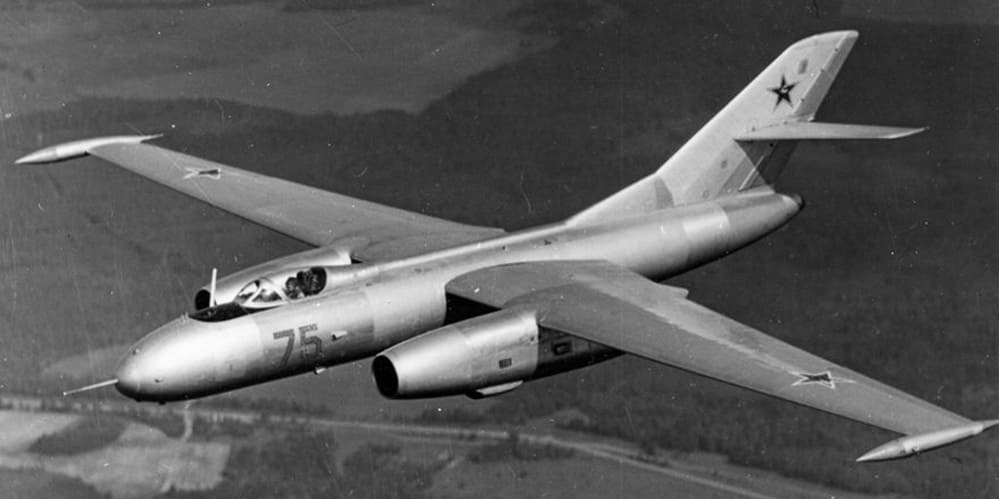
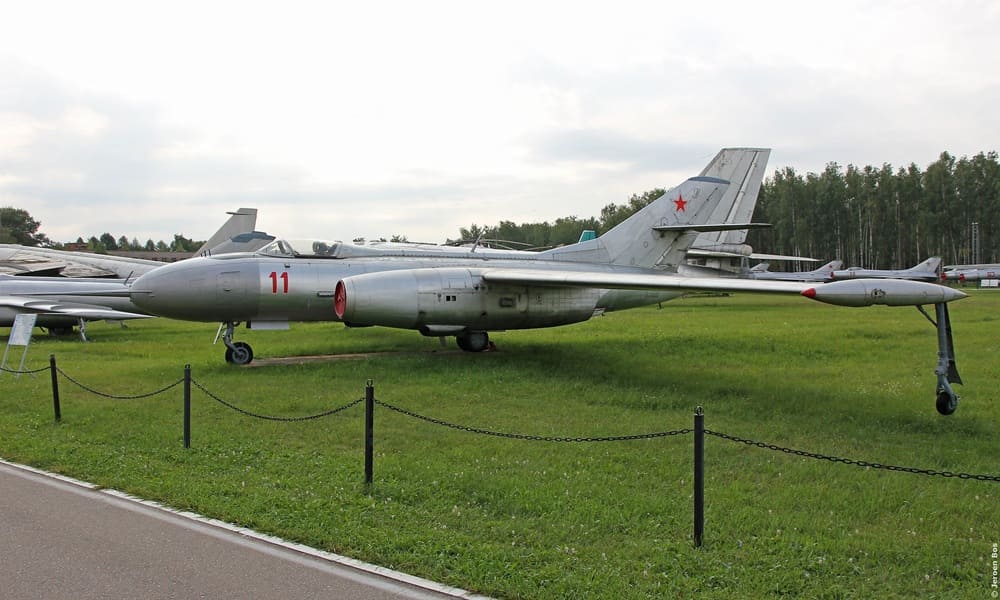
The Lockheed U-2 would go on to become one of the most iconic intelligence planes of the Cold War. What was less well known was the Soviet effort to put an aircraft into much the same stratospheric environment. The Yakovlev Yak-25RV, NATO reporting name Mandrake, was a uniquely Soviet approach, with the Yakovlev design bureau taking a family of interceptors and converting them into a long-winged strategic reconnaissance aircraft, rather than designing a dedicated reconnaissance aircraft from scratch.
Thus, the Mandrake being described as a “cut-price Soviet U-2” is a comment on its engineering philosophy, not any actual dollar cost. The Soviet Union chose a proven airframe concept, existing manufacturing experience, and an engine based on a fighter power plant. It was developmentally less complex but also significantly compromised.
Turning an Interceptor Into a Spy Plane
The Yak-25 was a twin-engine all-weather interceptor. Yakovlev’s design bureau created an entirely different Yak-25RV. The most obvious feature was a particularly straight wing, 23.4 m (77 ft) long, with an area of some 55 sq m (590 sq ft). The standard Yak-25 interceptor had a wingspan of approximately 11 metres. The span multiplied by more than two, the aspect ratio grew considerably, and wing loading dropped. The reconnaissance aircraft had a wing loading of some 175–178 kg/m² and a normal take-off weight of around 9800 kg. This performance was important at an altitude of 18 to 21 kilometres, where the air is only a fraction as dense as it is at sea level.
It was powered by a pair of high-altitude Tumansky R-11V-300 turbojets, each rated at around 3,900-4,000 kgf of thrust. It was derived from the R-11 engine family that powered the early MiG-21 fighters but was optimised for stratospheric operation. The finished aircraft was said to be capable of a maximum speed of about Mach 0.82, with an operational height of about 20,500 metres and a range of about 3,500 km. The machine itself weighed about 6,175 kilograms. Those numbers put it squarely in the high-altitude reconnaissance class.
Mandrake Versus U-2
It was more a similarity of concept than of structure with the American planes. The first U-2 had an 80-foot wing, or 24.4 metres, close to the Yak’s 23.4-metre wing. Both planes gave up a small amount of agility for aerodynamic efficiency, flying at the edge of subsonic speeds at extreme altitude. Later versions of the original U-2A could attain altitudes of over 70,000 feet and had a published range of some 2,220 miles, or 3,570 kilometres. But Lockheed designed the U-2 as a reconnaissance plane from the beginning.
Yakovlev didn’t. The Mandrake was still a heavier twin-engine interceptor’s architectural descendant. Two engines meant more nacelles, fuel plumbing, structural weight, and aerodynamic drag. The U-2 took a different path with very little weight around the one engine and a glider-like airframe. It explains why Soviet aircraft could reach the basic altitude regime of the U-2 but never the same combination of endurance, payload growth, and operational flexibility.
| Specification | Yakovlev Yak-25RV “Mandrake” | Lockheed U-2A “Dragon Lady” |
|---|---|---|
| First flight / service entry | 1 March 1959 / 1961 | August 1955 / 1956 |
| Crew | 1 pilot | 1 pilot |
| Powerplant | 2 × R-11V-300 turbojets | 1 × Pratt & Whitney J57-P-37A turbojet |
| Total thrust | 76.5 kN / 17,200 lbf | Approximately 49 kN / 11,000 lbf |
| Length | 15.93 m / 52.3 ft | 15.11 m / 49.6 ft |
| Wingspan | 23.40 m / 76.8 ft | 24.38 m / 80 ft |
| Wing area | 55 m² / 592 ft² | 55.7 m² / 600 ft² |
| Take-off weight | 9,800 kg normal | Approximately 7,260 kg maximum |
| Maximum speed | Mach 0.82; about 900 km/h at 15,000 m | 795 km/h / 494 mph |
| Operational range | 2,500 km at 20,000 m; approximately 3,500 km at lower altitude | Approximately 3,570 km / 2,220 miles |
| Service ceiling | 20,500 m / 67,300 ft | Above 21,300 m / 70,000 ft |
Flying Inside a 10 km/h Corridor
However, the most telling characteristic of the Yak-25RV was its excellent handling at high altitude. At altitudes above about 19,000 metres, in some cases the difference between stall-related instability and the upper allowable speed is said to be as little as about 10 km/h. This is the Soviet version of the infamous “coffin corner” of the U-2. The same problem was there for the American plane. Historical material from the U.S. Air Force indicates that early U-2 pilots had as little as 7 mph between stall and high-speed buffet at operational altitude.
Therefore, the Mandrake required constant monitoring. The tests also found engine problems close to the aeroplane’s ceiling. The behaviour of the high-altitude engine could pose a problem for sustained flights above approximately 19,600 to 20,100 metres. One test supposedly showed the aircraft was so aerodynamically efficient that the pilot had to deploy the landing gear to create drag and descend. These were not minor inconveniences. They illustrated the narrow margins of early stratospheric aviation.
Case Study: The U-2 Threat
The Yak-25RV cannot be viewed without the aircraft it was strategically meant to counter. The CIA’s first U-2 flight over the Soviet Union took place on 4 July 1956. In the words of U.S. Air Force history, the CIA eventually flew 24 U-2 missions over the USSR. The Soviets could see it on radar, but early interceptors and missiles struggled to reach it. That was true until May 1, 1960, when Soviet forces shot down Francis Gary Powers near Sverdlovsk.
The Soviet Union had demonstrated that the altitude sanctuary was not permanent. Development was underway even before the Powers shootdown and the Yak-25RV first flew on 1 March 1959. But the U-2 problem was a clear demonstration of the strategic value of high-altitude reconnaissance and also spurred Soviet work on systems designed to intercept high-altitude aircraft. The mandrake did prove useful in time on both sides of that equation.
The Spy Plane That Became the Target
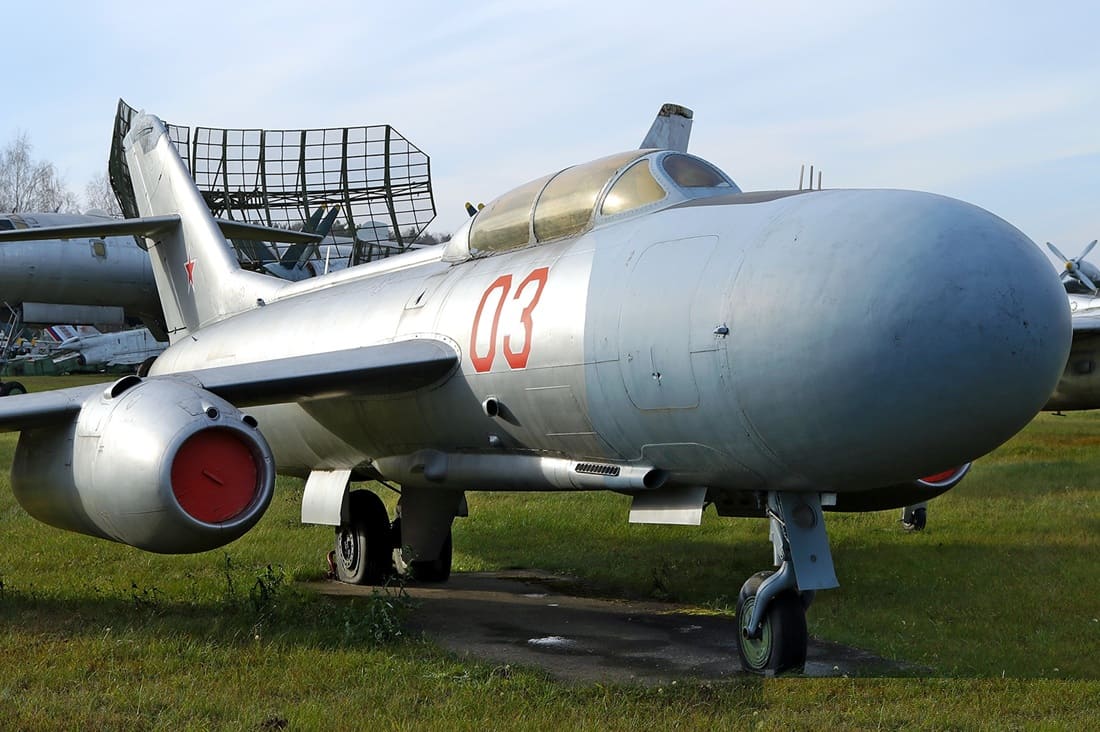
One of the most peculiar jobs of the Yak-25RV had nothing to do with espionage but rather with instructing Soviet air defences on how to kill aircraft like itself. Specialised versions were produced for high-altitude targets. The Yak-25RV-I was used for the training of crewed interceptors. The Yak-25RV-II could be used as a remote-controlled target.
Published data say that from 1961 to 1965, about 165 aeroplanes of the Yak-25RV family were built, including about 74 piloted aeroplanes and about 81 uncrewed target aeroplanes. This makes Mandrake a historical oddity. An airborne surrogate for the Western reconnaissance threat was the strategic reconnaissance design. In effect, Soviet pilots and air defence units could practise engagements against an aircraft whose altitude and aerodynamic behaviour approximated the targets they expected to encounter in wartime.
The Declassified Intelligence Mystery
Some of the most interesting Mandrake material is in a secret U.S. intelligence assessment, 1973. American analysts, discussing possible reconnaissance arrangements in the Middle East, also included the Soviet Mandrake as a high-altitude, subsonic reconnaissance platform, in addition to the supersonic MiG-25 and reconnaissance versions of the Tu-95. Most important, the CIA acknowledged that the United States had relatively few reliable details about the Soviets’ reconnaissance camera capabilities and mission profiles.
It was even possible to be uncertain as to the extent of Soviet photography on either side of the Mandrake’s flight path. That’s a big admission. Western intelligence had a decent idea how the aircraft would fly aerodynamically, but the piece that really made it intelligent, the sensors, was much less transparent. Western secondary sources also report the Yak-25RV to have flown operations in China, India, and Pakistan, but detailed records of such missions are sparse, and such claims should be taken with more caution than its well-documented technical specifications.
A Compromise That Worked
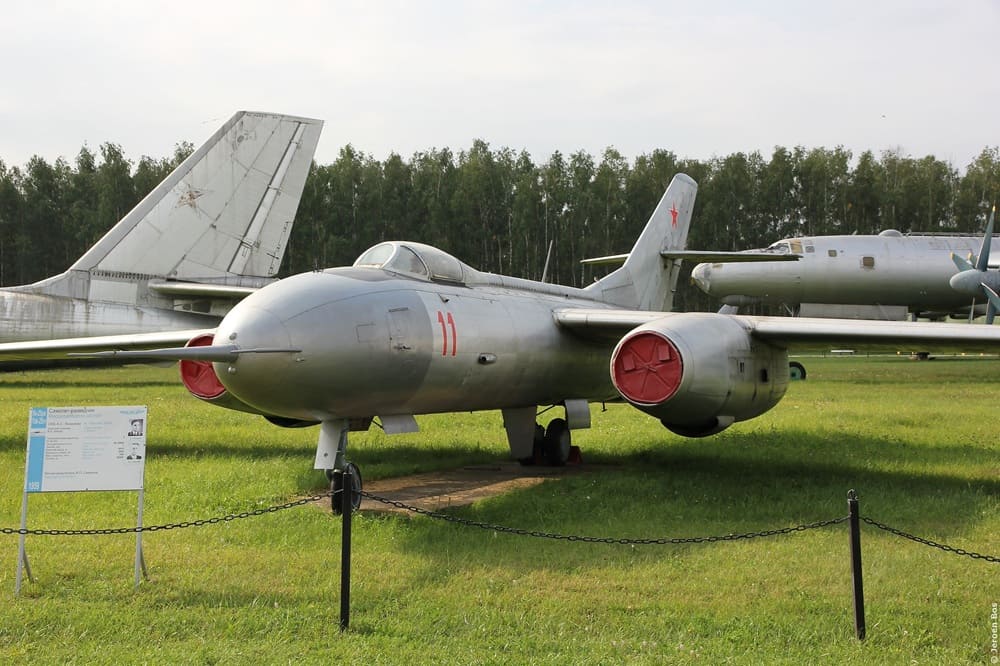
The Mandrake was not a Soviet U-2 at all. It didn’t have Lockheed’s clean-sheet efficiency and long-range sensor-development potential. The U-2 evolved into a more and more sophisticated reconnaissance system, with a suite of photographic, infrared, radar, and signals-intelligence payloads. Instead, the Yak-25RV was a bridging solution. A Yakovlev airframe heritage, an enlarged high-aspect-ratio wing, and fighter-derived engines were all that was required to enable Soviet reconnaissance crews to operate Soviet reconnaissance crews above 60,000 feet without a whole new aircraft program. There were disadvantages to that approach: engine problems, demanding handling, limited range, and little margin of performance.
However, the USSR also produced a useful aircraft quickly. It might be used for reconnaissance, atmospheric, and special intelligence. It might also be a realistic target for the Soviet air defense system. The later MiG-25R/RB would offer a very different solution, based on massive speed rather than glider-like aerodynamic efficiency. Thus, the Yak-25RV is a somewhat neglected aircraft that deserves more notice. It was not a direct clone of the U-2 or technologically equivalent. It was more in the Soviet way, a pragmatic attempt to reach the same strategic altitude with the available machinery and technology—and the compromises that came with it.
References
- Central Intelligence Agency. Reconnaissance Platforms and Operational Coordination, declassified assessment, 24 October 1973. The document discusses the Mandrake as a Soviet high-altitude reconnaissance platform and U.S. uncertainty regarding its sensor capability.
- National Museum of the United States Air Force. U-2 Mission: Lockheed U-2A; Flying the U-2. Official historical material covering Soviet overflights, U-2 performance, and extreme-altitude handling.
- GlobalSecurity.org. Yak-25RV Mandrake. Technical and historical data covering development, R-11V-300 engines, altitude testing, and Yak-25RV variants.
- Gordon, Yefim, and Dmitriy Komissarov. Soviet Spyplanes. Pen & Sword Aviation. Technical discussion of the Yak-25RV’s aerodynamic configuration, engine development, and high-altitude performance.
About the Author