
When a MiG-21 Rammed an RF-4C
In the early Cold War, Moscow claimed absolute sovereignty over its airspace—but not outer space. The Soviet Air Defense Force (PVO) had layered radar coverage, interceptor regiments, and surface-to-air missile belts to keep intruders out and protect strategic targets. By the early 1960s these measures had created a hostile environment for reconnaissance flights over much of the USSR, but exploitable gaps remained along the periphery.
However, as the risk gets higher, intelligence work usually does not stop. Rather, it changes location, timing, and methods. This was the heart of RF-4C Interception 1973, an event that combined geopolitics, deniable partnerships, and split-second airmanship.
PVO: Turning Airspace into a Weapon
The PVO value was more than just a “wonder system.” It was a marriage. Ground controllers provided radar cueing. Controllers vectored fighters into an intercept geometry. Missile sites added no-go rings that forced intruders to be low, quick, or both—just the regime that adds to pilot workload and compresses reaction time.
The Soviet approach was also based on discipline and procedures. The crews practiced fast scrambles and radio discipline. Meanwhile, that culture mattered when an unknown track appeared near sensitive installations, because the system could go quickly from detection to engagement.
Shah-era Iran: Covert Cooperation
Iran was a close U.S. security and intelligence partner under Shah Mohammad Reza Pahlavi. Washington had the Iranian geography for collection and could keep its political fingerprints light in this context. The bigger operation—sometimes linked to Project Dark Gene—had a few open-source accounts that pointed to Iranian participation being part of the “plausible deniability” layer as well: Iranian crews flew, with US support in the background or in the second seat.
In this light, the 1973 RF-4C interception is less of a one-off dogfight. It was an unintended consequence of a system that was meant to push the envelope but preserve attribution.

1968: RF-5A Border Probes
Open-source descriptions of Soviet air defense and associated reconnaissance operations mention that clandestine Iranian RF-5A Freedom Fighter flights began in 1968 with the goal of collecting intelligence while evading Soviet interceptors. The accounts differ in specifics, but they share a common theme: the flights were testing the PVO’s endurance and response by flying close to Soviet border regions.
Importantly, these missions didn’t even have to go deep to be useful. Even brief entries could cause the Soviets to emit radar, employ interception tactics, and reveal their communication patterns, information as valuable as photographs.
Phantom Era Begins (1971)
A report on these operations from 1971 describes an expansion to include RF-4 Phantom reconnaissance versions, including aircraft on loan to Iran, and training support to prepare crews for more demanding sorties. The Phantom had a better sensor capacity than the RF-5A, and its performance gave crews more tactical options.
However, those advantages also led planners to more risky profiles against higher value targets. That’s where the 1973 RF-4C interception is almost certain. Sensor ambitions are rising, and flight plans are getting close to defended nodes. Finally, at an awkward moment, a track shows up on the wrong radar scope.
RF-4C Intercept, 1973
Open-source accounts of the incident say that on 28 November 1973 a Soviet radar detected an RF-4C reconnaissance jet inside Soviet airspace piloted by IIAF Major Shokouhnia on the front seat and USAF Colonel John Saunders on the rear. The Soviets answered quickly.
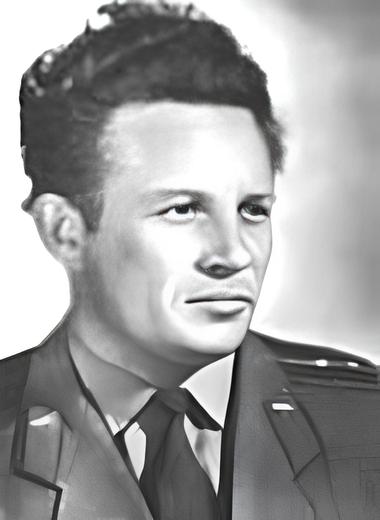
Captain Gennady Eliseev of the 982nd Fighter Aviation Regiment intercepted the Phantom in a MiG-21SM. The chase then turned into a high-speed pursuit that revealed the grim reality of air defense: even “simple” interceptors can be deadly if ground control keeps them in the fight.
Weapons Fail, Orders Escalate
Eliseev launched two R-3S (K-13) missiles, both infrared-guided. Neither succeeded after the RF-4C crew subjected them to strenuous maneuvers. Then the MiG’s gun jammed, it appeared, and Eliseev had no good weapon at close quarters. By that time, reports say, Soviet ground control had issued an extreme order: stop the intruder “at any cost.”
So with his missiles spent and his gun useless, Eliseev had no choice but to make physical contact. That choice in the 1973 RF-4C intercept is the defining moment. It was not just the bravery of the pilot but also the enforcement mentality of the system that defined that moment.
Ramming the Phantom
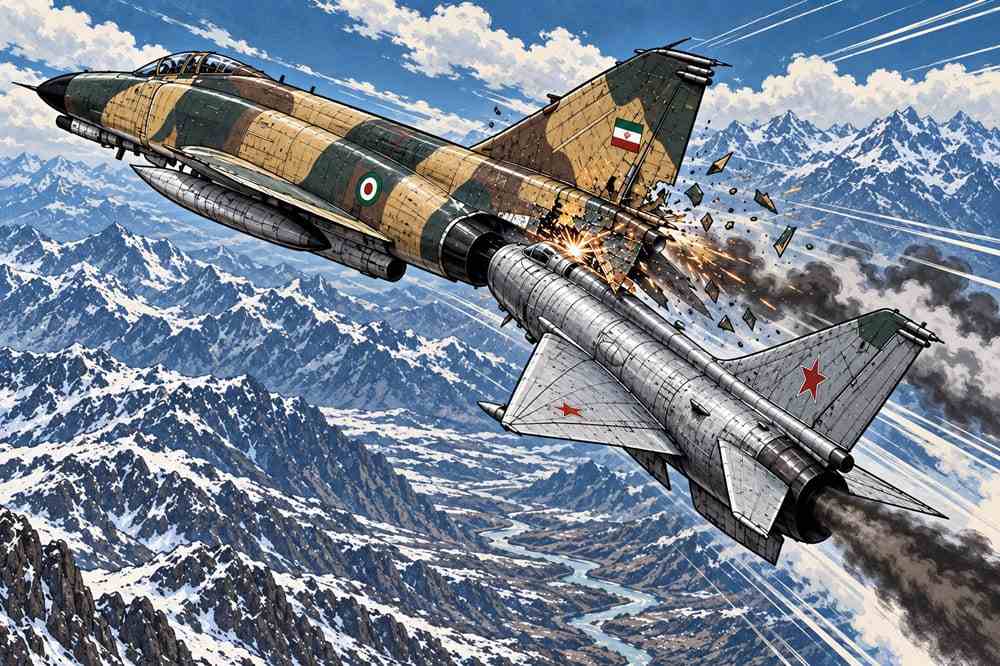
Soviet pilot Eliseev, in his MiG-21, rammed the tail area of the Phantom, crippling the RF-4C. Shokouhnia and Saunders were ejected, survived the descent, and Soviet forces captured them on the ground.
However, Eliseev failed to make it; his MiG-21 also lost in the crash. Later, the Soviet authorities posthumously honored Eliseev. According to open-source data, the Hero of the Soviet Union was awarded on December 14, 1973.
“Navigation Error” and a Deal
The crew were allegedly taken prisoner after straying across the border during a training flight. After their capture the crew said they had crossed the border by mistake. The badly damaged aircraft wreckage left the Soviets with no easy public ‘smoking gun’ to demonstrate intent in open diplomatic channels. Then events offered a cleaner exit.
The story is linked to a report that a Soviet reconnaissance satellite had landed in Iran, near Abadan, and that an exchange was arranged between both sides, with the film in the capsule being provided for the captured aviators. Details may differ, but the outline is the same: both states wanted to de-escalate and close the file.

What Analysts Still Learn
The 1973 RF-4C interception has a dramatic story that reveals much more than it seems. And it still has relevant practical lessons to teach:
- Integrated control is better than raw performance. A series of radar-control-interceptor loops can keep up with an intruder even if he comes in low and at high speed.
- The output is governed by rules of engagement. A system that values sovereignty enforcement might look for escalation options that an outsider would consider irrational but that are consistent with the doctrine.
- There is only so much plausible deniability. Mixed crews and carefully constructed cover stories reduced the political exposure but not the probability of radar lock-on.
- History can be made of hardware failures. Two never-launched missiles and a misfiring gun turned a simple interception into a fatal crash.
Bottom line
The billions the Soviet Union invested to make airspace violations costly. The 1973 RF-4C kill proved this point in the most brutal way. Iran and the U.S. have used geography, sensors, and deniable partnerships to collect intelligence.
However, one mission still resulted in capture and death. Integration mattered less than the newest gear, snap decisions, and the political necessity of pulling back from the brink in the end.
References
- https://en.wikipedia.org/wiki/Project_Dark_Gene
- https://www.casematepublishers.com/9781804510278/defending-rodinu/
- https://theaviationgeekclub.com/the-story-of-the-soviet-mig-21-pilot-that-rammed-an-iranian-rf-4c-with-mixed-usaf-iiaf-crew-flying-a-clandestine-operation-inside-the-ussr/
- https://www.trenchart.us/p/flying-together-in-rf-4-recon-jets
About the Author