
Soviet Project 33 and the JF-17: A Quiet Lineage
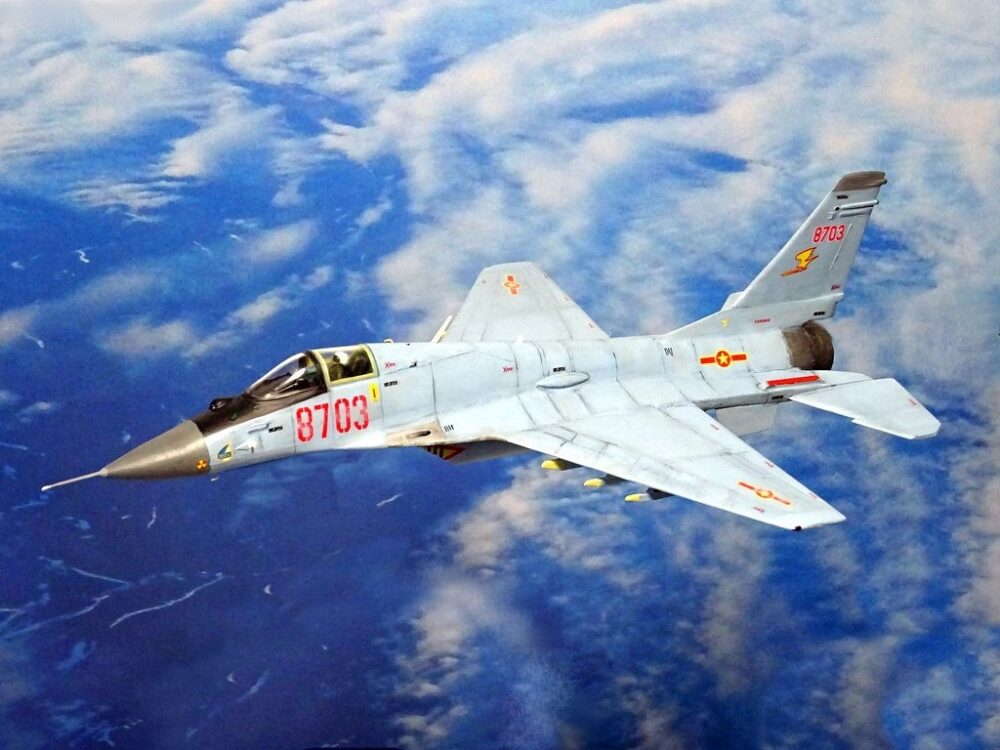
The JF-17 Thunder is often referred to as the operational successor of Soviet Project 33. That statement is true to some degree, but it does distort the family tree of a few programs. The documented relationship has been one of Russian design assistance, a common line of propulsion and light-weight-fighter economics. It does not prove that Pakistan and China only revived a finished Soviet plane.
Project 33 never made it to flight test. The FC-1 (later designated JF-17 by Pakistan) was the product of China’s Super-7 work and Pakistani operational requirements. Before Mikoyan joined that program, Chengdu had started its own design effort. The most plausible conclusion is therefore “selective technical influence” rather than direct airframe ancestry.
What Project 33 Actually Was
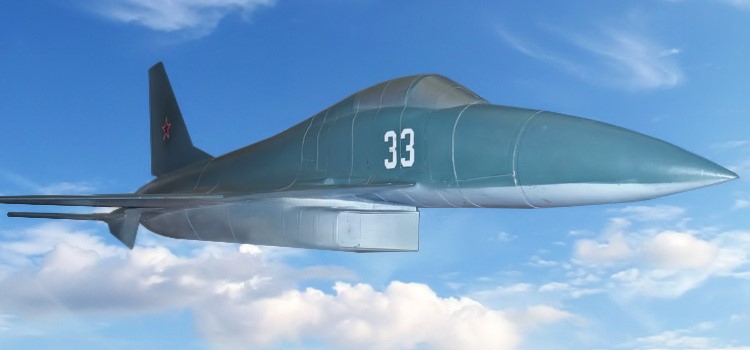
Mikoyan developed Izdeliye 33, or Product 33, during the late 1970s and early 1980s. Some Western publications call it the MiG-33, although Mikoyan never officially assigned that designation to a production aircraft. In the 1990s, Mikoyan also briefly called an export proposal for the MiG-29M the “MiG-33.”
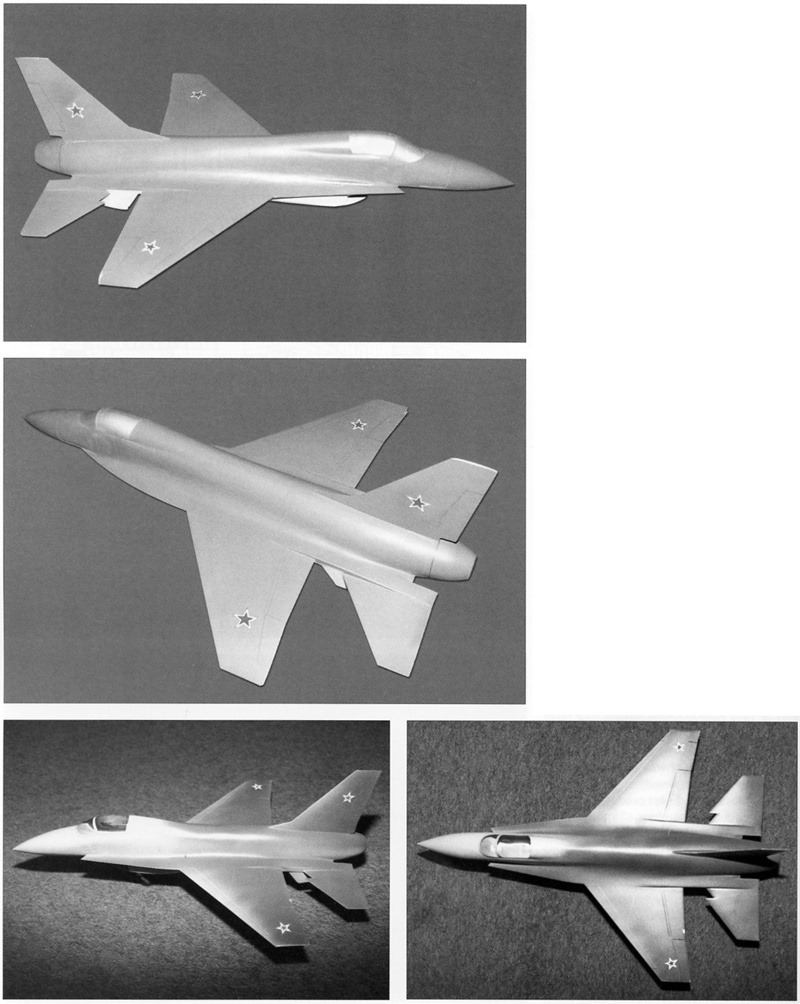
This reuse of the name produced a lasting confusion. Project 33 was a requirement for a small, inexpensive, single-seat fighter and attack aircraft. It had a single vertical tail, thin extensions to the root of the leading edge, and two small ventral fins. It had a single Klimov RD-33 afterburning turbofan fed by a ventral intake split around the nose-wheel well.
There are two surviving configurations of the model, with minor variations, including a probable cannon position. The program had passed a paper sketch but not a flying prototype. Published archival research documents wind tunnel work on a 1.5 m model. It also says Soviet authorities never ordered a prototype.
The doctrine was revised to oppose single-engine fighters, and the MiG-29 program was given priority. There is no documentary evidence of a credible nature to support claims that Project 33 flew in 1984 or went into state trials. Archival research on Soviet fighter projects describes models and tunnel testing, not flight hardware.
The Chinese and Pakistani Route
The JF-17 was a different institutional path. Chengdu developed the J-7 (based on the MiG-21) and then the Saber II and Super-7 upgrade concepts. The Super-7 studies were done with Grumman before the Sino-American cooperation broke down in the post-1989 period. Chengdu continued to work on the FC-1. The best evidence is a contemporary report of 1995. Chengdu has been developing the FC-1 since 1991 and had reached detailed design, it said.
Engineers had already built partial mock-ups of the forward and rear fuselage sections before Mikoyan formally joined the program. This suggests that the project had existed for several years. Pakistan funded the program and defined its operational requirements. It required a cheap replacement for its F-7P, A-5C, Mirage III, and Mirage 5 fleets. Pakistan and China formalized joint development in 1999. The first FC-1 prototype rolled out in May 2003 and flew that August. Basic flight testing ended in 2007.
The Least-Known Russian Connection
Mikoyan MAPO officially connected with Chengdu in June 1995. The Russian bureau helped design the aircraft and sent engineers to China. In the same contemporary account FC-1 was said to be similar to an earlier Mikoyan light dog fighter. It identified the planned powerplant as an 80-kN class RD-93 engine.
Flight International’s 1995 report is therefore evidence of real Russian participation, not merely visual speculation. The Russian work packages concerned are not disclosed. There is no contract annex, drawing register, or declassified engineering record to support a wholesale transfer of Project 33.
Later reports state China bought its aerodynamics data, but no primary evidence is yet available in the public domain. Analysts should distinguish between the plausible transfer of calculations or tunnel results and the unsupported assertion that Chengdu acquired a complete and production-ready design. Propulsion is the most obvious technical bridge, Project 33 – 1 RD-33, JF-17 – 1 RD-93.
The RD-93 is a member of the RD-33 family with the accessory gearbox relocated for a different installation. Early reports from the program cited 80 kN, or 18,300 pounds-force. The Pakistan Aeronautical Complex now lists maximum thrust as 19,000 pounds-force, or about 84.5 kN. The JF-17’s clearest Soviet technical connection lies in its RD-33-family engine architecture.
Airframe Comparison
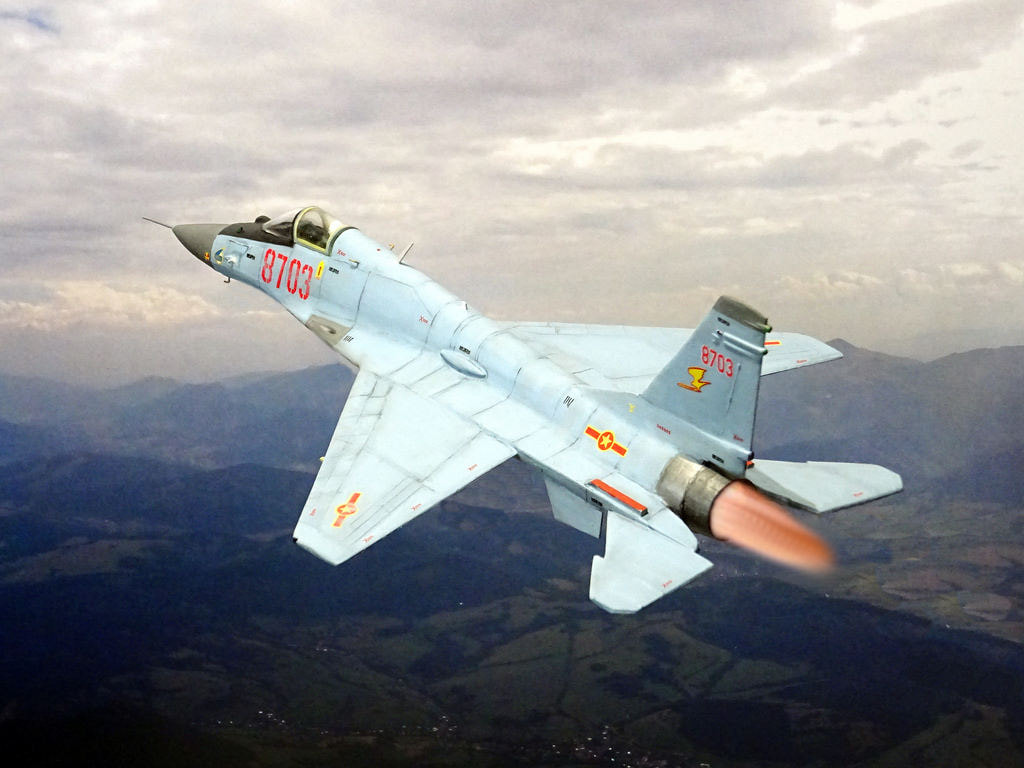
At first glance there are similarities. Both are single-engine, lightweight, single-seater fighters with a single fin, root extensions, conventional tailplanes, and ventral stabilizing fins. These features are useful for similar missions but do not show a common structure. The differences are more telling. The main ventral intake was Project 33. Side-splitting intakes of the JF-17.
The latter configuration employs fixed inlet bumps to control the boundary-layer flow, without the use of conventional splitter plates. Different requirements give rise to different fuselage volume distributions, wing planforms, undercarriage configurations, fuel arrangements, and system architectures. Official JF-17 figures provide the quantification. The aircraft measures approximately 47 feet in length and 31 feet in wingspan. Maximum take-off weight is 13500 kg, and empty weight is 7965 kg. 8 stations took stores, 3400 kg.
That payload represents 25.2 percent of maximum take-off weight. The empty weight to max weight ratio is about 59 percent. Performance is Mach 1.6, service ceiling 55,500 feet, and ferry range 1,880 nautical miles. Pakistan Aeronautical Complex also records a 58-percent Pakistani share of airframe co-production. The mission systems decouple the two concepts further. The basic design of Project 33 was that of a short-range fighter.
The JF-17 Block III features three-axis, quad-redundant digital fly-by-wire controls, active electronically scanned-array radar, tactical data link, integrated self-protection jamming, and helmet-mounted cueing. It can carry air-to-air missiles with active radar homing, anti-radiation weapons, anti-ship missiles, and precision-guided munitions. These form part of a later Chinese-Pakistani systems architecture.
Case Study: Concept to Combat
The history of production tells us where the critical change took place. The PAC took delivery of its first locally built aircraft in November 2009 and now has seven JF-17 squadrons. China and Pakistan took a lightweight concept and made it a repeatable manufacturing/upgrade process. Project 33 missed both project milestones. Externally, Nigeria is a test of operations.
On 20 May 2021, it inducted 3 JF-17s. In January 2023, Nigeria’s air chief said the JF-17, A-29, and drone aircraft had been instrumental in successes against insurgents. No specific sortie or weapons data for the JF-17 was released, so stronger claims would be beyond the evidence. Nevertheless, the Nigerian Air Force statement confirms battlefield employment by an export customer.
Conclusion
Project 33 may have influenced the FC-1, but the available evidence does not establish direct airframe ancestry. Chengdu engineers may have drawn on the abandoned Soviet study’s aerodynamic and propulsion research while developing the FC-1. However, the JF-17’s documented lineage primarily traces back to Chengdu’s Super-7 program and joint Pakistani-Chinese requirements established after 1995.
To summarize, Mikoyan was involved with the FC-1 program, and both designs used the RD-33 family of engines. But the JF-17 is an entirely different Chinese-Pakistani bird. It is a misnomer to call the JF-17 a direct copy and an industrial achievement to convert Soviet, Chinese, Western, and Pakistani inputs into an operational multi-role fighter.
References
- Tony Buttler and Yefim Gordon, Soviet Secret Projects: Fighters Since 1945, Midland Publishing, 2005.
- Flight International, “Mikoyan Joins Chengdu on Fighter,” 21 June 1995.
- Pakistan Aeronautical Complex, “JF-17 Thunder Aircraft.”
- Nigerian Air Force, “We Have Operationalized the Use of Modern Platforms in the Battlefield,” 21 January 2023.
About the Author