

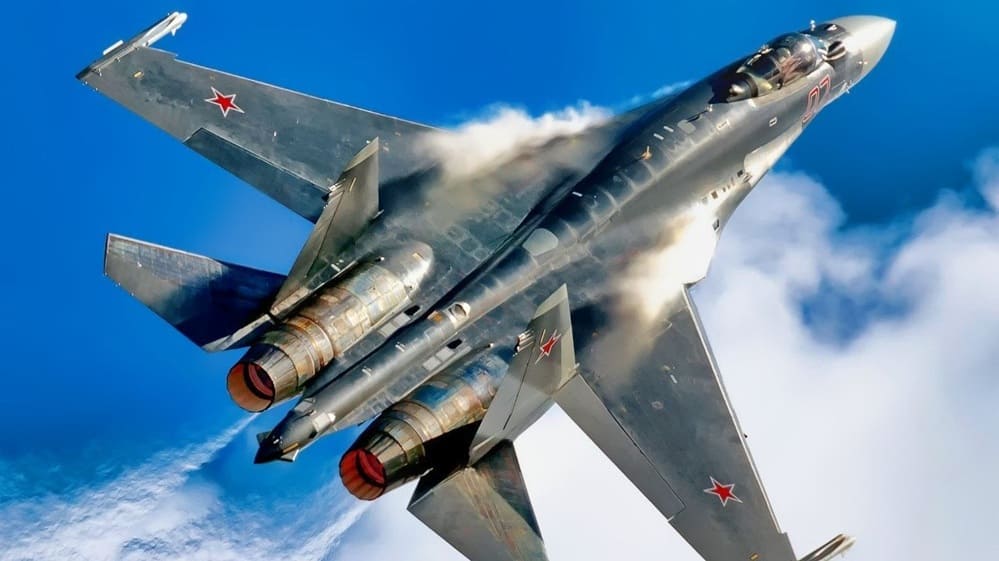
Why the Su-35 Faces Serious Export Hurdles
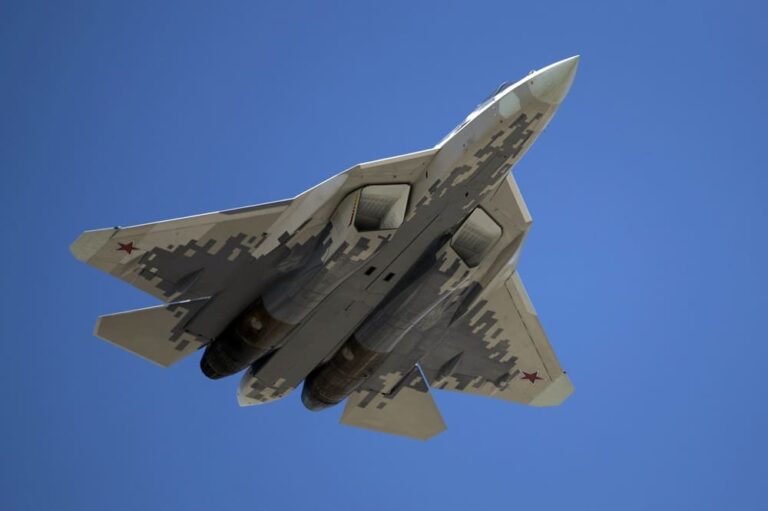
The Sukhoi Su-35 is a “4++ generation” Russian air superiority fighter with long range, powerful radar, a large weapons load and remarkable manoeuvrability. Still impressive are its published performance figures: a top speed of Mach 2.25 and a 3,600-kilometre flight range. Service ceiling of 18,000 metres. External payload of 8,000 kilograms. 12 weapon stations. But fighter procurement is about more than just aerodynamic performance. Governments will consider sensor architecture, electronic survivability, weapon maturity, lifecycle costs, industrial support, interoperability and political exposure. The Su-35 has structural shortcomings in these areas that have complicated several prospective export deals.
In other words, the Sukhoi Su-35S “Flanker-E” is a thrust-vectoring, long-range-radar-equipped air superiority platform, often described as the best example of fourth-generation-plus fighter development, designed to fill the capability gap until the Su-57 is ready. However, the story of its exports is much more nuanced than Rosoboronexport’s narrative suggests. Between 2018 and 2022 the programme lost three major signed contracts in a row. It has suffered documented combat attrition and production shortfalls in Ukraine between 2022 and 2025. It is only in 2025-2026 that the export balance improves, but even this recovery is based on geopolitically fragile foundations. The article examines the technical baseline of the aircraft, the sanctions regime that constrains the programme, and the operational evidence that is now informing the assessment of its worth by potential customers.
Technical Baseline
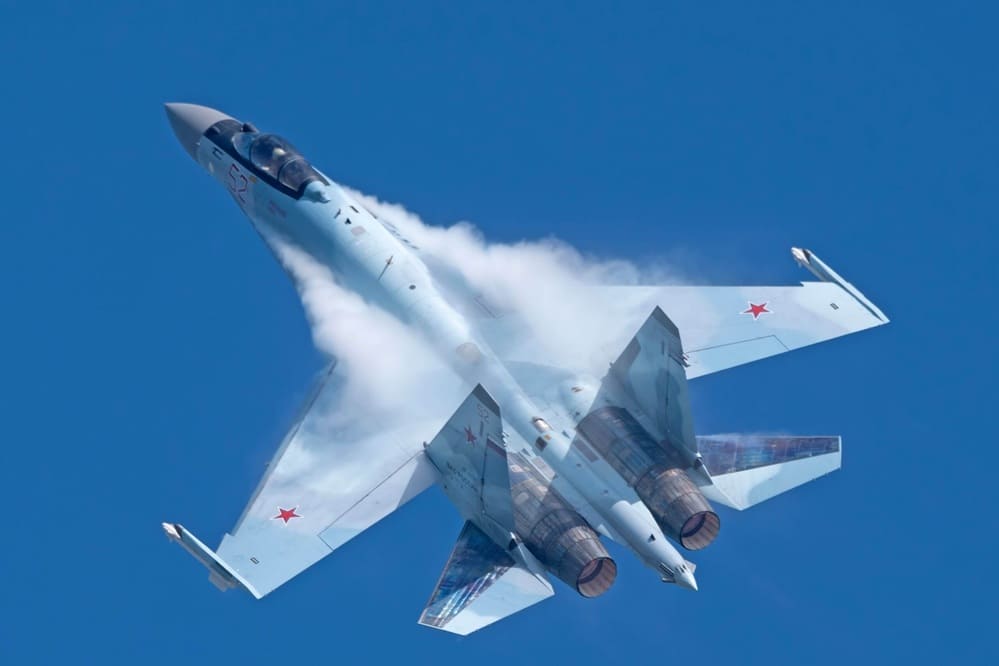
The Su-35S uses twin Saturn AL-41F1S (‘izdeliye 117S’) turbofans. Each engine produces about 142 kN with afterburner and approximately 86 kN dry. Its 3D thrust-vectoring nozzles improve manoeuvrability across a wide flight envelope. The engine has a rated life of around 4,000 hours. Its recommended overhaul interval is approximately 1,000 hours. The primary sensor is the N035 Irbis-E passive electronically scanned array radar. Its 900 mm antenna combines 60° electronic steering with 60° mechanical slewing. This arrangement provides a total field of regard of 120°.
Open sources report detection of a 3 m² target at 350–400 km in narrow-search mode. They also report detection of a 0.01 m² stealth-class target at about 90 km. The radar can track up to 30 targets simultaneously. It can also engage up to eight targets at once. The airframe uses composite and aluminium-lithium structures to reduce weight but is not a low-observable design. Its RCS is generally estimated to be in the 1–3 m² range. The aircraft compensates for a lack of stealth with sensor reach and kinematic performance rather than signature reduction.
Powerful Radar, Ageing Architecture
The N035 Irbis-E radar is one of the best Su-35 systems. Russian sources said it could track 30 airborne targets, shoot down eight of them simultaneously, and, in optimal conditions, detect a target of three square metres at about 350 kilometres. But Irbis-E sports a passive electronically scanned array, or PESA, not an active electronically scanned array. A PESA radar uses a single high-power transmitter but electronic beam steering. An AESA “distributes” the gearbox across hundreds or thousands of solid-state modules. The difference affects reliability, waveform agility, electronic protection and emissions control. AESA arrays can divide their aperture for search, track, jam, and communications functions. Gradual degradation also occurs through the failure of individual modules. A typical central-transmitter PESA has fewer simultaneous operating modes and less graceful degradation.
The Irbis-E compensates for these limitations with high peak power and mechanical movement of the antenna. Meanwhile, strong emissions could also add more detectable energy to sophisticated electronic-support systems. So the alleged max range of the radar doesn’t necessarily equate to first-look or first-shot advantage against low-observable aircraft with networked sensors. China’s turn illustrates this point. AESA radars are now used in its production fighters, including the J-10C, J-16, J-20 and J-35. As a result, the Su-35’s sensor architecture is no longer the technological leader for some potential Asian customers.
Limited Low-Observable Characteristics
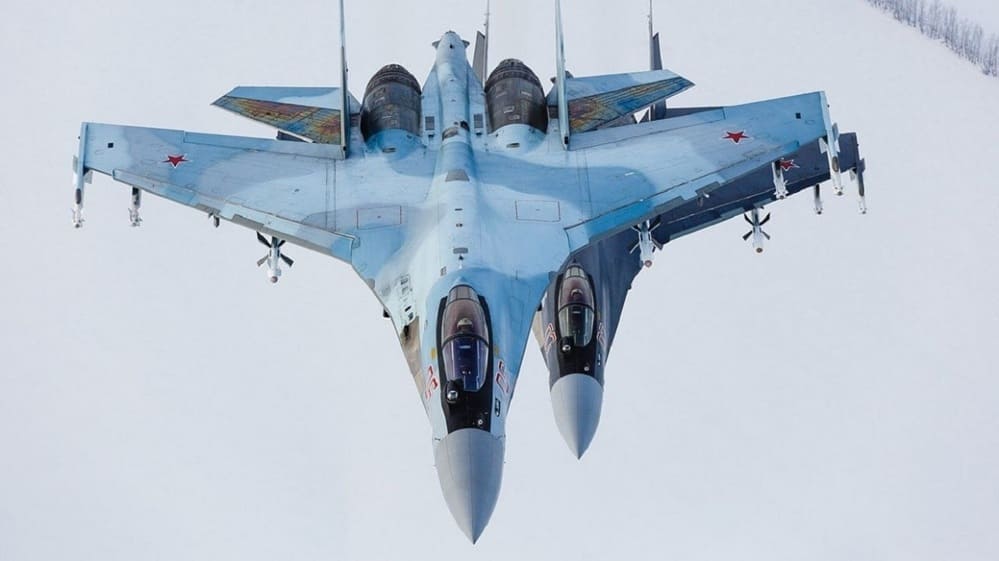
The Su-35 keeps the large basic layout of the Su-27 family. Russian designers beefed up the airframe, increased internal fuel capacity and added digital flight controls. But the aircraft was not designed for a full reduction in radar signature. Large engine inlets, visible compressor geometry, external missiles and a large number of pylons give it a very different survivability model from internally armed fifth-generation aircraft. There is no public radar cross-section authority. The Su-35’s design makes it more reliant on electronic warfare, long-range weapons and stand-off tactics. The thing is, modern integrated air-defense systems combine multiple radar bands, passive sensors, airborne early-warning aircraft and shared track data. Extreme manoeuvrability may defeat some mini terminal engagements. It can’t beat long-range detection, and it doesn’t remove the necessity to operate outside of hostile surface-to-air missile range.
Electronic Warfare Is Not Invulnerability
The Su-35 has an integrated self-defense suite and can be fitted with Khibiny-series electronic warfare systems. These systems could disrupt missile guidance and radar tracking. But combat experience demonstrates that electronic countermeasures do not generate an impenetrable shield. The Russian Su-35 and Su-30 patrols have been flying at altitude behind Russian air defenses, and they have been dangerous. They have fired R-77-1 and R-37M missiles at Ukrainian aircraft while remaining within friendly surface-to-air missile cover. That said, Russia has all but stopped deep-penetration missions with crewed aircraft since March 2022. RUSI estimates that by late 2025, some 20 Su-35 and Su-30-family types had lost or suffered damage beyond economical repair.
“Some were lost on the ground, some in combat, and some due to accidents or friendly fire.” One particularly telling incident occurred in September 2023, when Russian air-defense systems allegedly shot down one of Russia’s own Su-35s. The British government later mentioned the event in an official statement. Friendly fire incidents expose weaknesses outside the aircraft itself. They can cite identification problems, command and control procedures or datalink integration or air defense coordination. Export customers must buy the entire operational ecosystem, not just the airframe.
Long-Range Missiles, Mixed Performance
The Su-35 with the R-37M added has a larger theoretical threat radius. High-altitude launches give the missile a lot of energy, especially against tankers, airborne early warning planes and non-manoeuvring targets. But the fight results still don’t quite match up with the advertised range numbers. RUSI found that Russian Su-35s, Su-30s and MiG-31s periodically launched R-37Ms against Ukrainian aircraft in 2026, but they scored only a handful of air-to-air kills over four years. The evidence shows the missile or aircraft is effective. Electronic warfare, defensive manoeuvres, target warning systems, launch geometry and rules of engagement all come into play. Thus, it does indicate that maximum kinematic range is not a reliable no-escape zone.
Engine and Sustainment Burden
The Su-35 is equipped with two AL-41F-1S engines, which feature high thrust and three-dimensional thrust vectoring. They are particularly effective for rapid acceleration and for favourable behaviour after a stall. However, twin-engined heavy fighters have significant fuel, maintenance and infrastructure requirements The Su-35 can take off at a maximum weight of 34.5 tonnes and needs specialist engine servicing, radar test equipment, electronic-warfare support, weapons-storage facilities and a steady supply of Russian components. For small fleets these requirements become serious. A country that flies only 11 or 12 aircraft still needs to have the training, simulators, ground equipment, spare engines and specialist maintenance capacity in place. Thus, the effective programme cost can be many times the advertised unit price of an aircraft.
Sanctions and Component Dependency
The Su-35 export programme’s largest structural problem is not a conventional design flaw but rather a supply-chain vulnerability. Under the 2017 Countering America’s Adversaries Through Sanctions Act, Washington must sanction major purchasers of Russian defense equipment. Its extraterritorial reach has repeatedly influenced procurement decisions. This pressure intensified because export-configured Su-35 avionics and radar subassemblies had previously depended partly on Western European and Israeli components. After 2014, those supply lines faced disruption, and after 2022, they tightened further. Contemporary reports suggested Russian industry could not replace key scanned-array and avionics components with domestic alternatives quickly enough. This delay reportedly contributed to the collapse of at least one customer agreement.
Egypt and the CAATSA Barrier
Egypt reportedly signed a contract for 20-24 Su-35s, worth about $2 billion, making it one of the most attractive potential buyers of the aircraft. The pictures reportedly showed finished Egyptian airframes at the Komsomolsk-on-Amur plant, and sources claimed that Cairo had started making payments. However, Washington warned that the purchase could trigger sanctions under Section 231 of the Countering America’s Adversaries Through Sanctions Act. The acquisition could harm bilateral security cooperation, expose Egypt to sanctions and complicate its wider defense relationship with Washington, a United States Senate record said. The risks extend beyond the aircraft deal and could affect financial activities, access to American equipment, diplomatic relations, and future military assistance.
Export Failures and China’s Caution
Egypt’s exit was part of a broader trend, with Indonesia and Algeria leaving between 2018 and 2022. Indonesia called off a near-final deal to buy around 11 aircraft under pressure from CAATSA and worries about its broader ties with the United States. Algeria is reported to have expressed concerns about the radar and avionics, which are of export standard, and has instead opted to upgrade its existing Su-30MKA fleet. China is the biggest confirmed export customer for the Su-35, having received 24 aircraft by 2019 under a 2015 contract worth about $2.5 billion. It was partly because China was developing its own turbofan programme and was interested in the AL-41F1S engine, an analyst said. Beijing did not place a follow-on order, and regional reports indicated that Chinese assessments rated the Su-35’s radar, navigation suite, and electronics as inferior to the indigenous J-16, with range being its most obvious advantage.
Combat Attrition Over Ukraine: The Data
Since February 2022, open-source tracking has provided a contested but sobering picture. The Oryx OSINT project has visually confirmed the loss of eight Su-35s as of January 2026, while Ukraine’s General Staff claims are about two to three times higher, which fits the larger trend of exaggerated Ukrainian claims against a Russian air force that also makes disputed shoot-down claims. Whether the exact number is 10 or something else, RUSI says that Russian factories have delivered only 10 of the 12 Su-35s ordered for 2024, which indicates that the production base is under stress.
A stress intensified by Ukrainian strikes such as the 2025 Flamingo cruise-missile attack on the Skif-M tooling plant in Belgorod that supplies precision components for Su-35 and Su-57 machining. An August 2025 claim that a Ukrainian F-16 shot down a Su-35 with an AIM-120 AMRAAM would be a first if confirmed and would undermine the beyond-visual-range advantage that the combination of Irbis-E and R-37M is supposed to provide. In 2024, a spokesman for one of the plants, speaking from Komsomolsk-on-Amur, said that the aircraft had not been performing as well as hoped in Ukrainian airspace.
The Fragile 2025–2026 Reversal
Confirmed export orders for 2025 were up fourfold, to 96 aircraft from 24. Algeria ordered 18 aircraft for approximately $1.5 billion, with deliveries starting in February 2025; an Iranian order for 48 aircraft was revealed in a leaked Russian government procurement document (which also included 12 Su-30SM2s, with the first batch of around 20 currently in production but delayed due to the reconstruction of Hamadan airbase); and Ethiopia placed a smaller order for six aircraft. This development is a real turnaround, but the underlying clients show that the programme still relies on states that are under sanctions pressure or that are taking aircraft as a stopgap. Algeria is supposed to be trading future high-end procurement for the Su-57 or Chinese J-35, and Egypt’s cancelled airframes were just resold; there is no new demand.
The Quiet Supply-Chain Problem
Industrial resilience is one of the most important and least talked about issues. A RUSI investigation in 2025 found Russia to be highly dependent on foreign machine tools, specialised materials, electronic components and skilled technical personnel. Russia is still able to produce the Su-35. Domestic deliveries continued in 2026. Export customers must receive decades of support. Sanctions, limitations on payments and wartime domestic demand may slow the delivery of spare parts, upgrades and replacement aircraft. Now this lifecycle uncertainty may be a bigger export barrier than any single aerodynamic or electronic deficiency.
Strategic Outlook
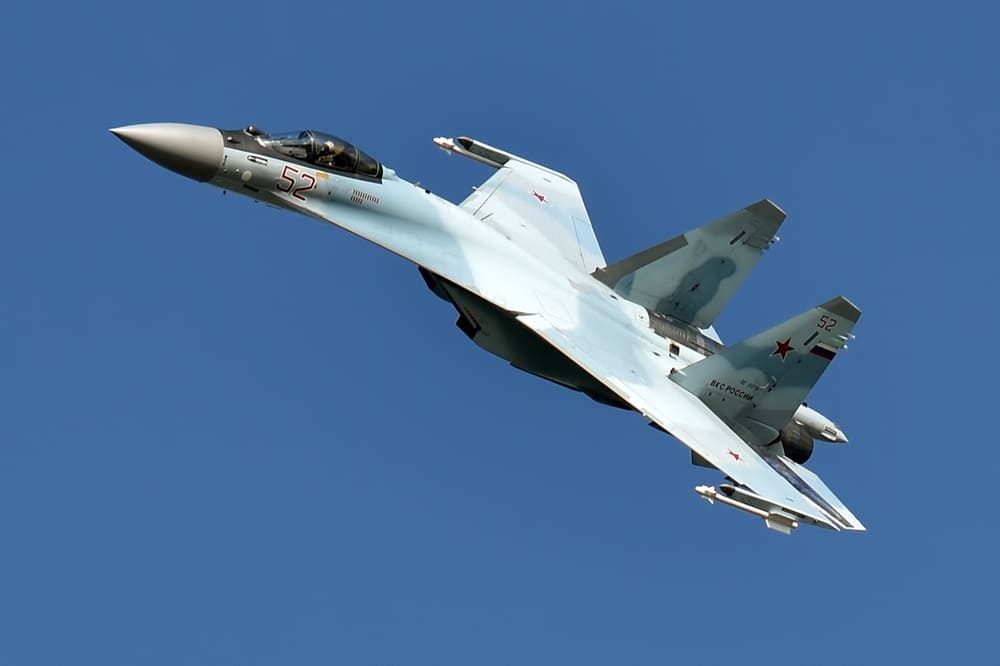
The Su-35 is a highly capable fighter. It remains fast, heavily armed, manoeuvrable, and deadly when integrated with Russian long-range missiles, ground-based radars, and surface-to-air defenses. The problem with its exports is that competitors are offering increasing numbers of AESA radars, reduced operating expenses, easier financial arrangements, broader weapons integration and politically safer support arrangements. The Su-35 doesn’t feature the signature reduction and sensor fusion one would expect from a true fifth-generation fighter. The aircraft is in a shrinking segment of the market, more expensive and demanding than light fighters, but less survivable and networked than modern stealth aircraft.
Conclusion
The main obstacle for the Su-35 export is not some catastrophic technical flaw. Instead, it is the sum of an ageing PESA radar architecture, a relatively large radar cross section, challenging maintenance requirements, questionable missile performance, susceptibility to sanctions, and ongoing supply chain weaknesses. For states already blocked from Western defense markets, the Su-35 can still offer a big boost in range, payload, agility and air-combat ability. But for those states that want to maintain military connections with the United States or Europe, the aircraft’s impressive aerodynamic performance might not be enough to offset the political, financial and lifecycle costs.
The Su-35’s export problems reflect three connected pressures: a strong Western extraterritorial sanctions regime, a production network that has historically relied on scarce foreign components, and a combat record since 2022 that has narrowed the gap between advertised capability and proven survivability. The published growth in orders in 2025-2026 proves that demand is still there, from governments willing to take on sanctions and sustainment risks. However, this revival of interest has not changed the structural constraints that led three prospective customers to either walk away or put major procurement agreements on hold in the past.
References
- Military Watch Magazine — reporting on Su-35/Su-57 export orders, Algeria, Iran, and Ethiopia deliveries (2026)
- Shephard Media, Defence Blog — CAATSA-driven cancellations by Indonesia, Egypt, Algeria
- 19FortyFive, National Security Journal, Euromaidan Press, Kyiv Post, SOFX — Su-35 combat losses and production data, citing Oryx and RUSI
- The National Interest, GlobalSecurity.org — AL-41F1S engine and China procurement analysis
- Airforce Technology, FlyAJetFighter — Irbis-E radar technical specifications
About the Author

Bla bla bab bab bla
Without saying single word…