
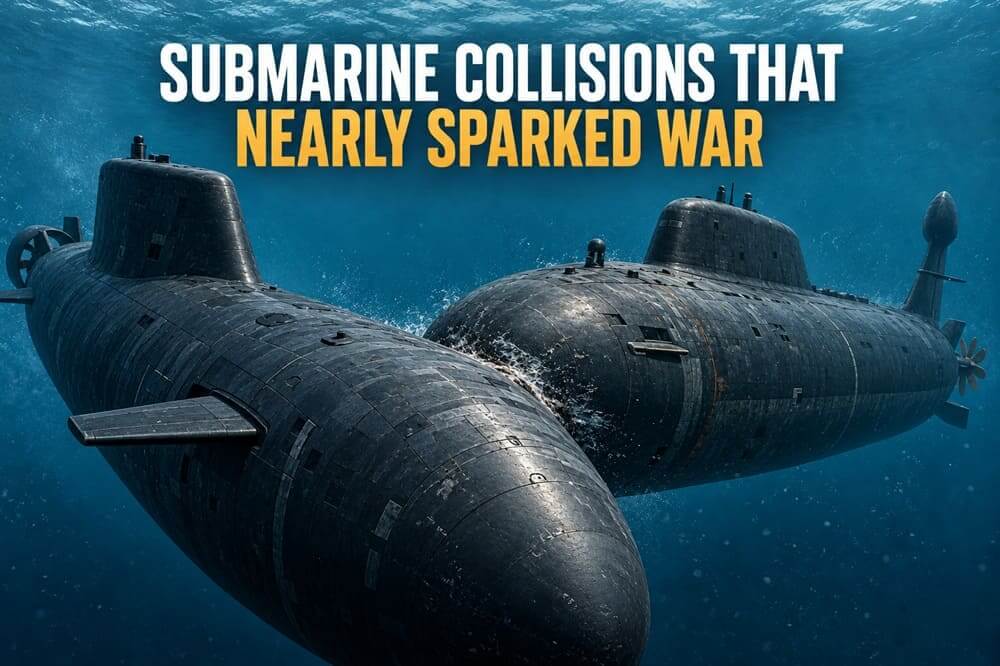
Submarine Collisions That Nearly Sparked War
One of the lesser-known threats in underwater warfare is a submarine colliding with one from competing nuclear powers. Unlike ordinary maritime accidents, in several Cold War collisions one submarine was covertly shadowing, or trying to classify, another submarine. Nuclear-powered vessels sometimes are only hundreds of metres away, thanks to stealth, passive sonar, hydrodynamic blind spots, and aggressive intelligence collection. How widespread the problem is remains to be seen, since many patrol reports remain classified.
Christopher Drew, co-author of Blind Man’s Bluff, later said researchers found about 12 to 15 collisions between American and Soviet submarines during the Cold War. Some of the reported incidents have not been independently confirmed. But several have been well documented. The technical paradox is simple. The life of a submarine is acoustic stealth. However, ships using active sonar can more easily avoid collisions. Active sonar can tell you range and bearing, but using it also tells the sub’s position. Intelligence submarines thus depend mostly on passive methods of detection. This scenario is like driving at night, under water, without headlights.
Why Advanced Submarines Collide
Passive sonar listens for incoming acoustic energy and does not send a pulse toward a target. In good conditions, it can provide good bearing information, but estimating the range is harder. Shallow water is worse. The surface-generated noise, seabed reflections, shipping, and changing salinity and temperature layers can degrade the acoustic performance. A technical review of the 1992 USS Baton Rouge collision concluded that a quiet submarine operating in shallow northern waters might not be detected until it was only a few hundred metres away.
A 10-knot surface wind would add to the background noise. Traditional hull-mounted sonar also had a major geometric problem in that the submarine itself could block sound from astern. In the Baton Rouge analysis, the authors modelled an aft sector of ~60 degrees, where the fixed array was of very limited effectiveness. Towed arrays help to overcome this weakness, but they introduce different limitations when turning and during close manoeuvring. The collision energy is surprisingly high, too, at low speeds. Picture a 7,000-tonne submarine lumbering along at five knots. The translational kinetic energy is roughly
E = 1/2mv^2 ~ 23 MJ
Not all of this energy is transferred to the other ship. However, a relatively slow collision can turn into a strategic emergency if the pressure hull is deformed, the sonar is destroyed, the ballast tanks are damaged, or the missile compartments are compromised.
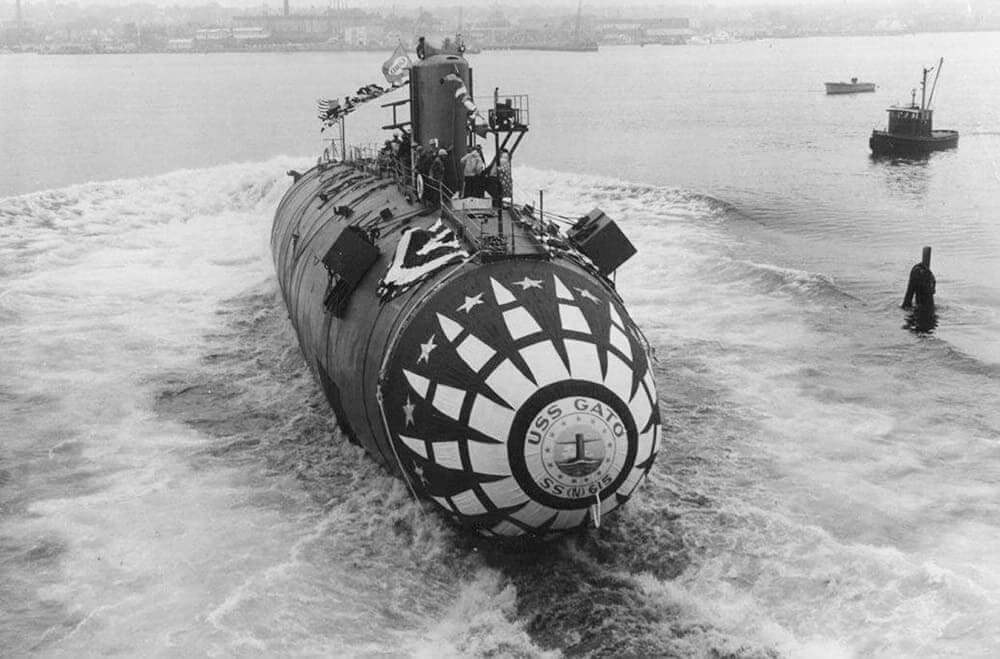
Case Study I: USS Gato and Soviet K-19 — 1969
On 15 November 1969, the American nuclear attack submarine USS Gato collided underwater with the Soviet ballistic-missile submarine K-19 in the Barents Sea. It is said that the collision took place some 60 metres below. The collision badly battered K-19 in the vicinity of the bow. Forward sonar gear was destroyed, and the covers over the forward torpedo tubes were damaged.
The Soviet submarine blew its emergency ballast and headed for port. In contrast, USS GATO suffered significantly less damage and remained in the fight. The incident had immense strategic importance. K-19 wasn’t a normal submarine. It was a nuclear-powered strategic-missile platform. In the Cold War, an inexplicable violent attack on such a vessel might have been considered hostile antisubmarine activity. The danger was there before either government could know what had happened.
Case Study II: USS Tautog and K-108 — 1970
Even more remarkable was a sighting on June 20, 1970, near the Soviet submarine base at Petropavlovsk-Kamchatsky. The Sturgeon-class nuclear attack submarine USS Tautog was trailing the Soviet Echo II-class submarine K-108, undetected. At last the two ships began to close dangerously. K-108 crossed the American submarine and struck Tautog’s sail. Then the Soviet sub’s propulsion plant struck the American ship. Both submarines survived, and there were no injuries to the crews. The incident was kept secret for decades. Later reports indicated that when the Tautog returned to Pearl Harbour, a piece of a Soviet propeller was embedded in the damaged sail.
The first American crewmen believed K-108 had gone down. It had indeed survived and returned to Petropavlovsk. The incident showed how dangerous tailgating can be. The shorter the distance, the higher the value of intelligence. American operators could record machinery signatures, propeller characteristics, and tactical behaviour more accurately. But the margin for error disappeared at the same time. These acoustic recordings were of considerable intelligence value. Western submarines are capable of building libraries of unique machinery signatures, sometimes called acoustic “fingerprints” by sonar operators, that can be used to identify individual submarine classes later on.
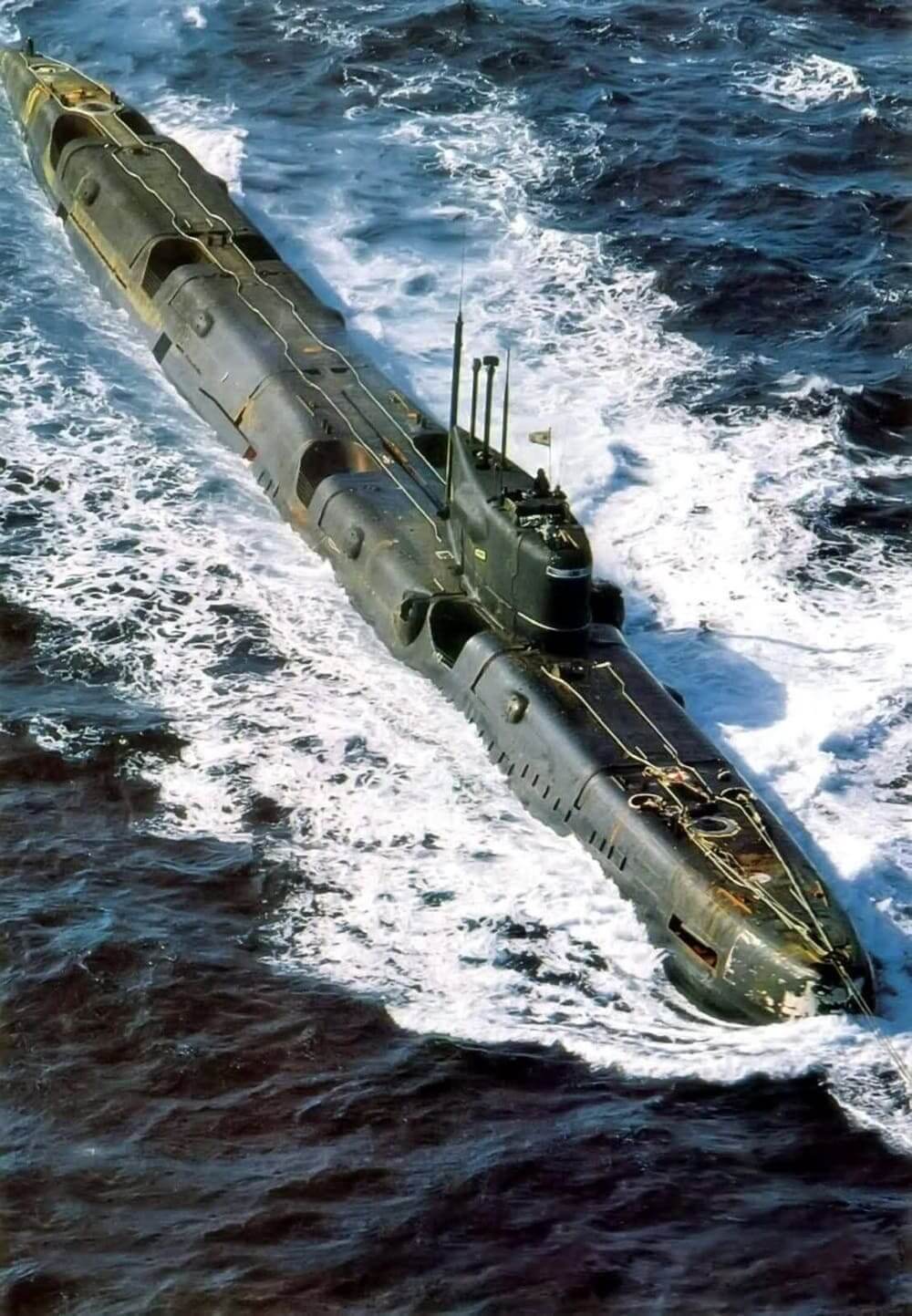
Case Study III: USS Baton Rouge and K-276 Kostroma — 1992
The Cold War was over, in name, but the spying underwater never stopped. On 11 February 1992, the Los Angeles-class USS Baton Rouge collided with the Russian Sierra I-class K-276, later named Kostroma, near the Kola Peninsula. The site itself became a political lightning rod. Washington said the American submarine was in international waters. Moscow said the collision occurred in Russian territorial waters. The Pentagon confirmed Baton Rouge was on an intelligence-gathering mission. Contemporary reports say the American sub was at periscope depth when the Russian sub surfaced into it. According to the technical analysis, the incident happened at 20:16 Moscow time.
The Russians were reported to have focused damage around the sail. The USS Baton Rouge returned with scrapes and dents and minor damage to a ballast tank. There were no fatalities. More revealing was what it told us about the limitations of sonar. A study published by the MIT Defense and Arms Control Studies Program states that the passive detection range between two quiet submarines could be as little as a few hundred metres under these shallow water conditions. The researchers concluded that it is not necessarily true that either submarine saw the other before impact. Improved sonar did not make collision impossible. A greater quietness could create a new problem: two very stealthy submarines could be difficult to detect from each other.
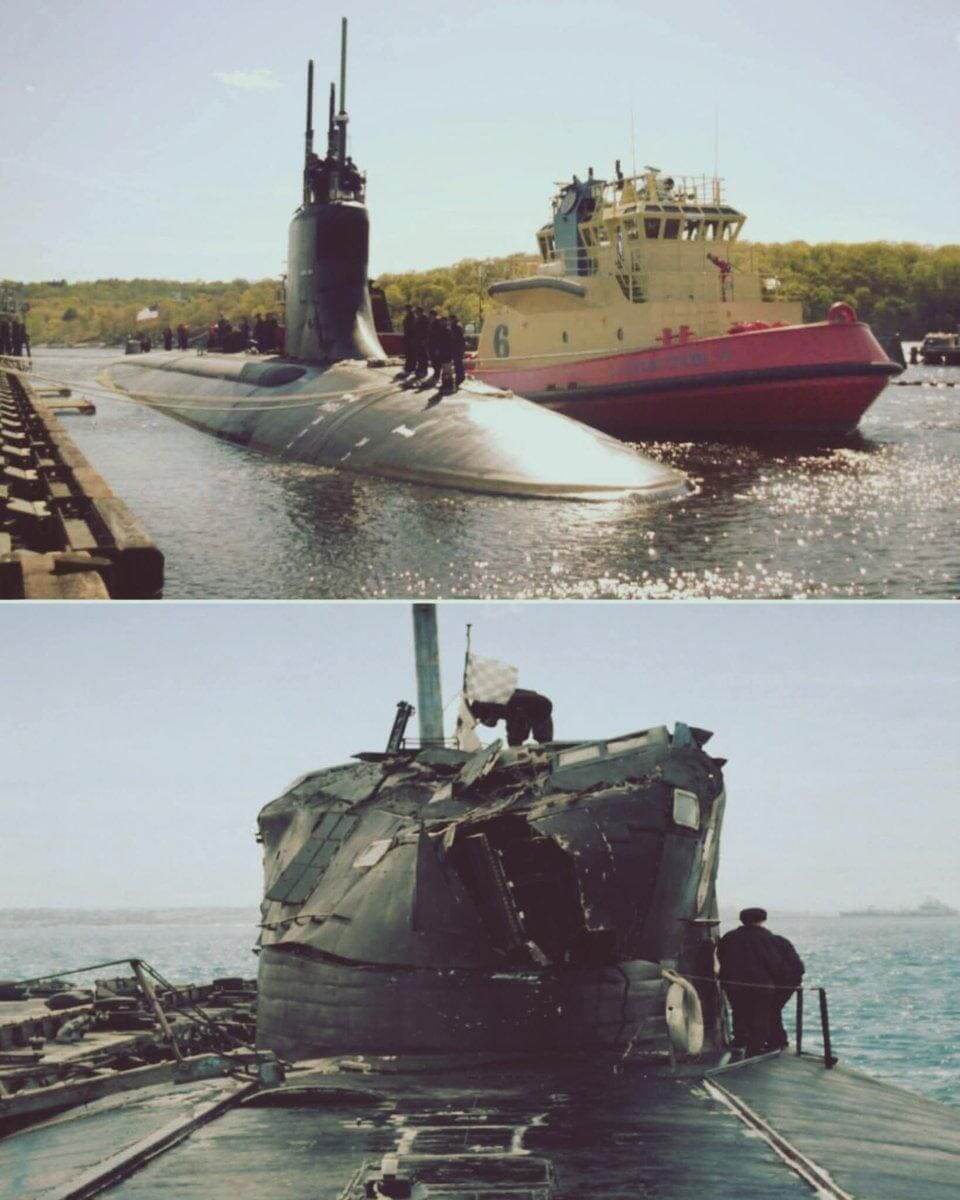
Case Study IV: USS Grayling and K-407 Novomoskovsk — 1993
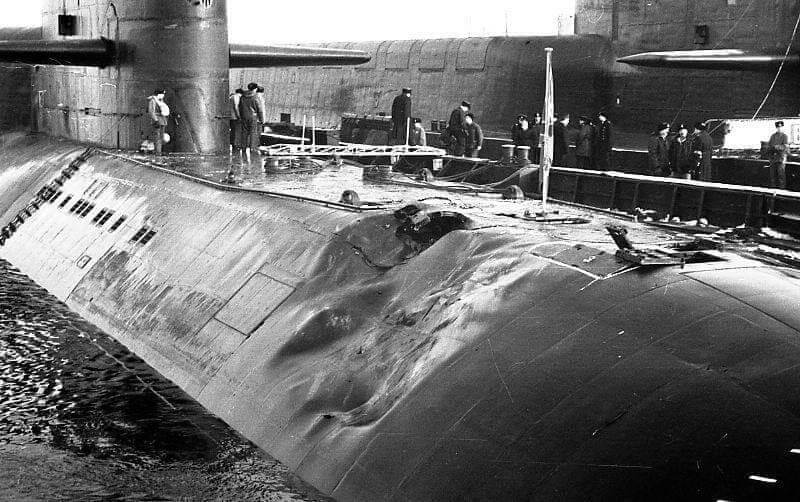
Thirteen months later, there was another confrontation involving an American and Russian nuclear submarine. On 20 March 1993, another Sturgeon-class attack submarine, the USS Grayling, collided with the Russian strategic submarine K-407 Novomoskovsk some 105 nautical miles (195 km) north of the Kola Peninsula. The White House claimed publicly that Grayling had only superficial damage. Russian sources named the Delta IV ballistic-missile submarine as Novomoskovsk.
Contemporary reports suggested the US vessel had apparently been trailing the Russian SSBN. Both subs returned under their own power, and no casualties were reported on either side. The incident was perhaps worse for the strategic position than an SSN-to-SSN collision. A ballistic missile submarine adds to a nation’s nuclear deterrent. An unidentified strike against an SSBN in the midst of a political crisis can create uncertainty as to whether the strike was accidental, an intelligence operation, or a deliberate strike.
Declassified Undersea Espionage
The most sensitive piece of history is why American submarines were operating so many times close to Soviet bases. Open sources and later declassified accounts, such as Holystone, have identified intelligence programmes. Missions included photographing Soviet ships, tracking submarine acoustic signatures, observing missile tests, and other forms of technical intelligence collection. Some U.S. submarines also participated in special operations against Soviet undersea communication cables.
That is why collisions were not merely a random encounter over millions of square miles of ocean. Attack submarines would deliberately enter areas where Soviet submarines were operating, specifically where they were coming out of or going into strategic bases. The idea was to approach close without being detected. That was a dangerous formula. Max. intelligence + min. separation + min. acoustic emissions = max. collision risk. Modern submarines have better processing, flank arrays, better tow arrays, and far more capable combat systems. However, the physics is still the same. The less acoustic energy, the quieter the opponent. Even in shallow water there are echoes.
The ownship machinery is still making noise. Passive sonar still provides imperfect range information. So the historical record is a valuable lesson on how to operate. Command of the sea does not eliminate uncertainty. Occasionally, command of the sea can increase that uncertainty. During the Cold War, USS Gato, USS Tautog, USS Baton Rouge, and USS Grayling actually made physical contact with submarines of the strategic enemy they had been built to counter. Some of those Soviet or Russian submarines carried nuclear weapons or were part of the nuclear deterrent. Not one of the crashes led to a war. And the scary thing is, it could have been so easy.
References
- Miasnikov, Eugene. “Submarine Collision off Murmansk: A Look from Afar.” MIT Defense and Arms Control Studies Program; reprinted in The Submarine Review, April 1993. (Arms Control Centre)
- Sontag, Sherry, and Christopher Drew. Blind Man’s Bluff: The Untold Story of American Submarine Espionage. Public Affairs, 1998.
- “Submarine Manoeuvre Control”. U.S. Naval Institute Proceedings, Vol. 118/7, July 1992. (U.S. Naval Institute)
- Gellman, Barton. “U.S. and Russian Nuclear Subs Collide.” The Washington Post, 22 March 1993. (The Washington Post
About the Author