
Avro Arrow
Canada’s decision to scrap its indigenous fighter programme, the Avro Canada CF-105 Arrow, and buy the McDonnell Douglas, now Boeing, CF-18 Hornet is a vivid example of the politics, money, and military strategy that go into defence purchases. This momentous decision changed the course of Canadian aviation history and initiated a debate that continues to this day.
Avro Arrow: Symbol of Progress
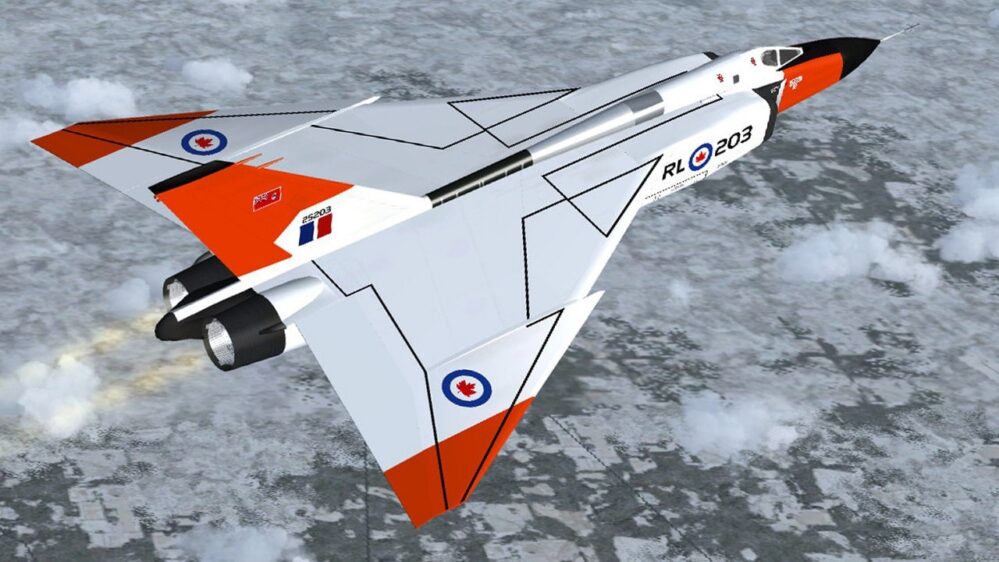
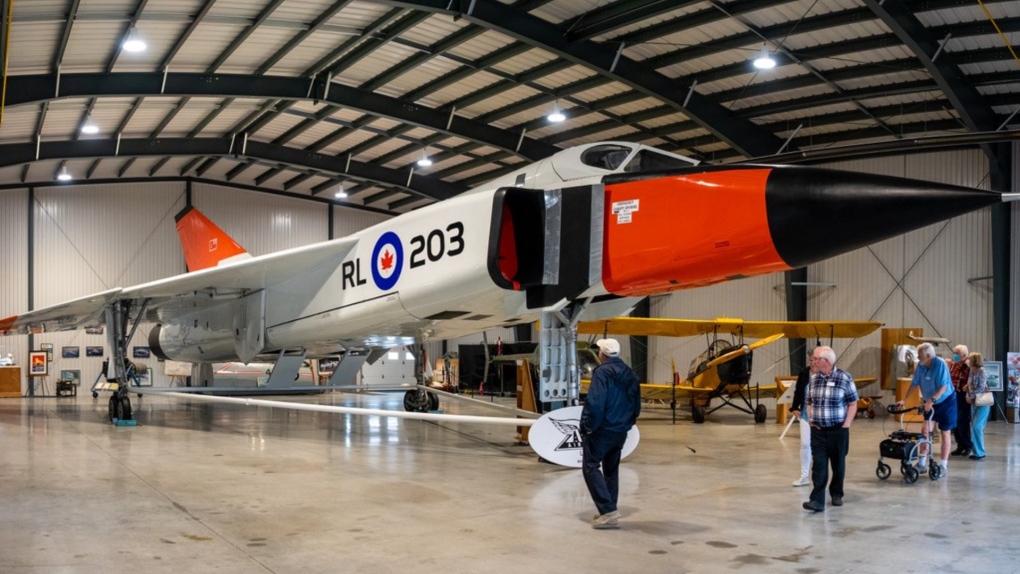
In the 1950s, Canada sought to improve its defenses against the Soviet threat. This resulted in the modern Avro CF-105 Arrow supersonic fighter, designed to defend Canadian airspace. The Arrow was known for the following:
- Mach 2+ Speed: Possibly more than double the speed of sound.
- Advanced Technology: With advanced radar and missile systems.
- Delta-Wing Design: Designed for high-altitude interception
Why the Arrow Was Cancelled
The Arrow was a groundbreaking design but was abruptly cancelled by then Prime Minister John Diefenbaker in 1959 . There were a couple of things.
- The project costs were above budget, and its feasibility was questioned.
- Changing Defense Needs Ballistic missiles meant that interceptors were no longer the main priority.
- Coordination with the US: Canada chose to coordinate its defenses with the US through NORAD and adopted American BOMARC missiles.
- Political influences: The U.S. pressured Canada to abandon the Arrow in favour of American systems.
Path to the CF-18 Hornet
In the late 1970s Canada needed a new fighter jet to replace its ageing CF-104 Starfighter and CF-101 Voodoo fleet. Rather than building a domestic aircraft production capability from the ground up, Canada chose to acquire an existing multi-role fighter through the New Fighter Aircraft Program (NFAP).
Why Canada Did Not Build Its Own Fighter
- Money Issues: Building a domestic fighter would have cost a lot of money, similar to the issues faced by the Arrow programme.
- Technological gaps: Canada did not have the resources or expertise to compete with aerospace powers like the US or Soviet Union.
- Operational Requirements: Canada, as a member of NATO and NORAD, had to have systems interoperable with its allies.
- Risk Reduction: Development uncertainties were lowered by selecting a proven design such as the CF-18.
Choosing the CF-18 Hornet
However, after carefully reviewing several options—including the F-16 Fighting Falcon, Dassault Mirage F1, and Panavia Tornado—Canada ultimately selected the McDonnell Douglas CF-18 Hornet in 1980.
Why the CF-18 Was Suitable
- Twin-engine: Needed to fly over large, remote areas of Canada where single-engine reliability is suspect.
- Multirole Capability: The Hornet’s fighter and ground-attack capabilities fulfil Canada’s dual defence requirements.
- Compatibility: Built for U.S. systems under NORAD, enabling better joint operations.
- Weather Modifications in Canada: The CF-18 had improved landing gear and more technology to manage Canadian weather.
Avro Arrow vs CF-18 Hornet Specifications
| Specification | Avro Canada CF-105 Arrow Mk 1 | CF-18 Hornet |
|---|---|---|
| Manufacturer | Avro Canada | McDonnell Douglas, now Boeing |
| Primary role | All-weather interceptor | Multirole fighter |
| Crew | 2 | 1 in CF-18A; 2 in CF-18B |
| Engines | 2 × Pratt & Whitney J75 turbojets | 2 × General Electric F404 turbofans |
| Afterburning thrust | 18,000 lb per engine | Approximately 16,000 lb per engine |
| Maximum speed | Mach 2.0 | Mach 1.8 |
| Service ceiling | 53,000 ft or 15,240 m | Approximately 50,000 ft or 15,240 m |
| Combat radius | 483 km | Approximately 540 km, depending on mission profile |
| Maximum/ferry range | Not specified in the RCAF profile | Approximately 3,700 km |
| Length | 23.71 m | 17.07 m |
| Wingspan | 15.24 m | 12.31 m |
| Height | 6.48 m | 4.66 m |
| Wing area | 113.8 m² | Approximately 37.2 m² |
| Empty weight | 22,211 kg | 10,455 kg |
| Maximum take-off weight | 31,144 kg | Approximately 23,500 kg |
| Internal gun | None | 1 × 20 mm M61A1 Vulcan |
| Weapons carriage | Internal weapons bay | Nine external weapon stations |
| Typical armament | Up to four Falcon or Sparrow II missiles | Air-to-air missiles, guided bombs and air-to-ground weapons |
| Operational status | Cancelled before service entry | Operational with the RCAF |
Could Canada Build Another Fighter?
It was possible, but difficult, to start a domestic fighter programme in the 1970s or 1980s.
- High Costs: Canada’s defense budget did not have the funds for a new fighter.
- International competition in Aerospace has come a long way, and it will be a challenge for Canada to get back into the market.
- Allied obligations: Canada’s commitments to NATO and NORAD made it more logical to procure a compatible and proven design.
American Influence on the Avro Arrow’s Destruction
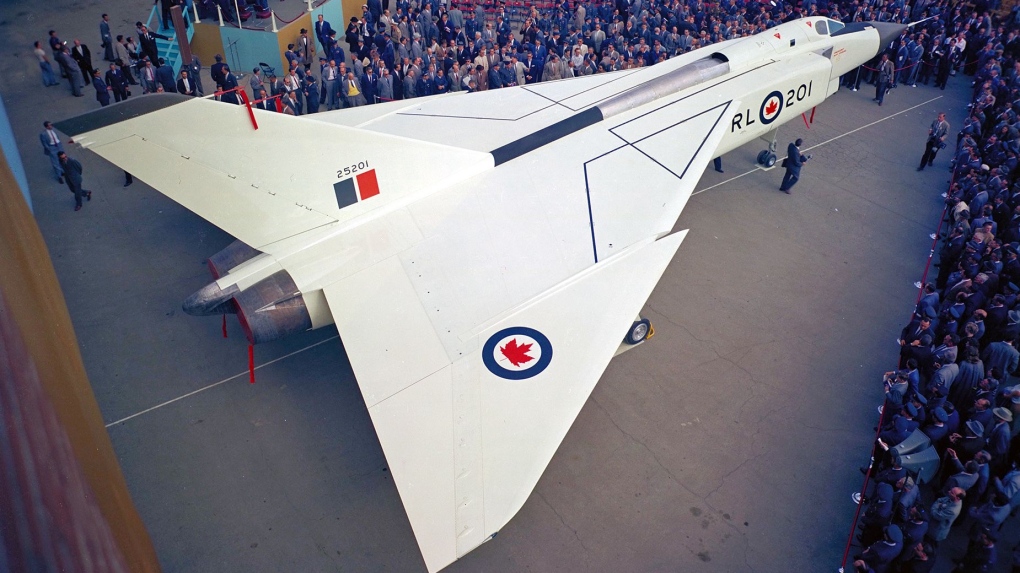
American pressure helped kill Canada’s Avro Arrow programme, but Washington never ordered cancellation. Through NORAD , Canada’s air-defence strategy became ever more closely integrated with that of the United States. NORAD favoured SAGE radar, BOMARC missiles and American-built interceptors. This clever ploy helped to erode political support for the expensive CF-105 Arrow, designed to kill Soviet bombers. U.S. authorities also refused to buy the aircraft, killing the export market needed to reduce unit costs. Simultaneously, advances in intercontinental ballistic missile development led to the conclusion that the crewed interceptor was doomed.
By 1959, John Diefenbaker’s government cancelled the Arrow and its Iroquois engine and went ahead to purchase American BOMARC missiles and F-101 Voodoo fighters. So the United States didn’t destroy the Arrow directly. But U.S. defence policy, procurement decisions and technological dominance created conditions that made cancellation more politically and financially feasible, seriously damaging Canada’s aerospace industry and dispersing many skilled engineers to U.S. firms.
Legacy of the Arrow and Hornet
The Arrow is still a potent symbol of Canadian ambition and ingenuity. For many it’s a missed opportunity for Canada to assert itself as a leader in aerospace technology. Canada has been operating the CF-18 since the 1980s. It has flown many missions around the world, and it has done well for NORAD and NATO. But with the age of the aircraft, Canada is looking to replace it with the Lockheed Martin F-35 Lightning II.
Conclusion
This change is a real-world solution to defense requirements, as demonstrated by Canada’s switch from developing its own fighter aircraft to buying the CF-18 Hornet. The CF-18 has proved itself. The loss of the Avro Arrow is a clear illustration of the difficulties and choices of military procurement. The Arrow remains for many Canadians a powerful symbol of what might have been.
References
- “The Avro Arrow: Canada’s Supersonic Dream”, Canadian Aviation Review, 2023.
- https://www.tandfonline.com/doi/full/10.1080/01402390701676535
- https://en.wikipedia.org/wiki/CIM-10_Bomarc
- “CF-18 Hornet in Canadian Service”, Global Defence Insights, 2022.
- “Canada’s Fighter Jet Procurement History”, Military Aviation Journal, 20
- https://ingenium.ca/aviation/en/collection-highlight/mcdonnell-douglas-cf-188b-cf-18b/
About the Author