
SR-71 Titanium: The Secret Soviet Supply Deal
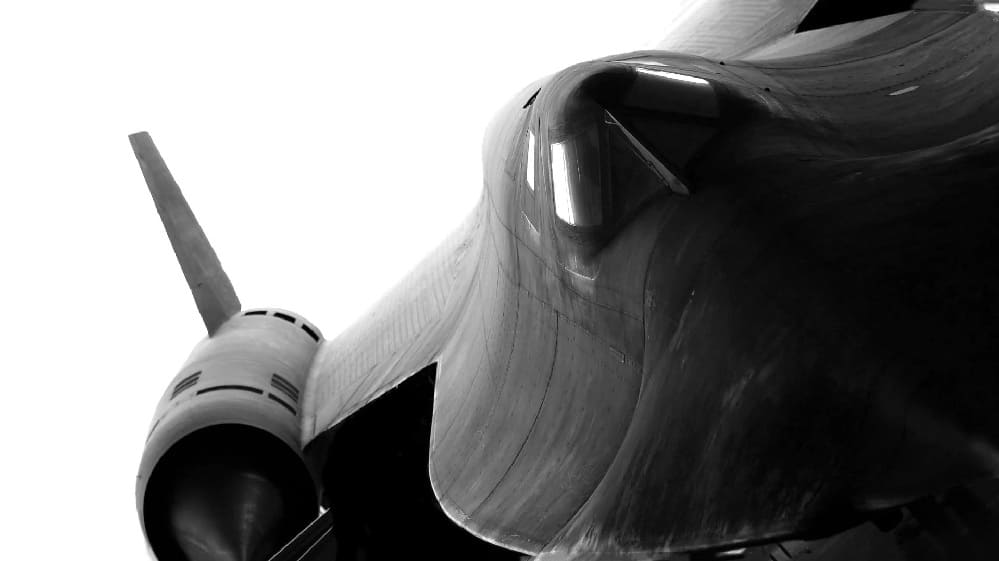
The SR-71 titanium story is still one of the most biting ironies of the Cold War. In the 1960s, the United States secretly bought Soviet titanium for a Blackbird programme that was used to spy on Moscow and its allies. The SR-71 was the most advanced version of the Blackbird family to enter service, developed by the super-secretive Skunk Works division of Lockheed Aircraft Corporation. It was the fastest air-breathing crewed reconnaissance aircraft in the world. The CIA secretly purchased Soviet titanium for its A-12 OXCART programme, which later produced the YF-12 and the SR-71. Therefore, the material supported the wider Blackbird family rather than a single aircraft.
Secret Facts of SR-71
The SR-71 Blackbird was constructed with a heavy titanium frame, much of it later mined out of Soviet ore via middlemen, an extraordinary irony for a plane built to spy on the USSR. The panels had been fitted with deliberate expansion gaps, the airframe having grown several inches in prolonged Mach 3 flight. The JP-7 fuel leaked on the ground and then acted as a heat sink in the air. And less well known, cadmium-plated tools could contaminate and make titanium brittle. The chlorine in the tap water attacked the welded parts, so Lockheed had to invent special tools and use distilled water.
The J58 engines used triethylborane for ignition, which gave off a green flash. Each mission carried only a small amount of supplies. Engineers filled the tyres with nitrogen and reinforced them with aluminium powder to withstand extreme temperatures. They also developed an astro-inertial navigation system that tracked stars in the upper atmosphere. This system enabled the aircraft to navigate accurately without radio signals while flying higher and faster than conventional reconnaissance aircraft.
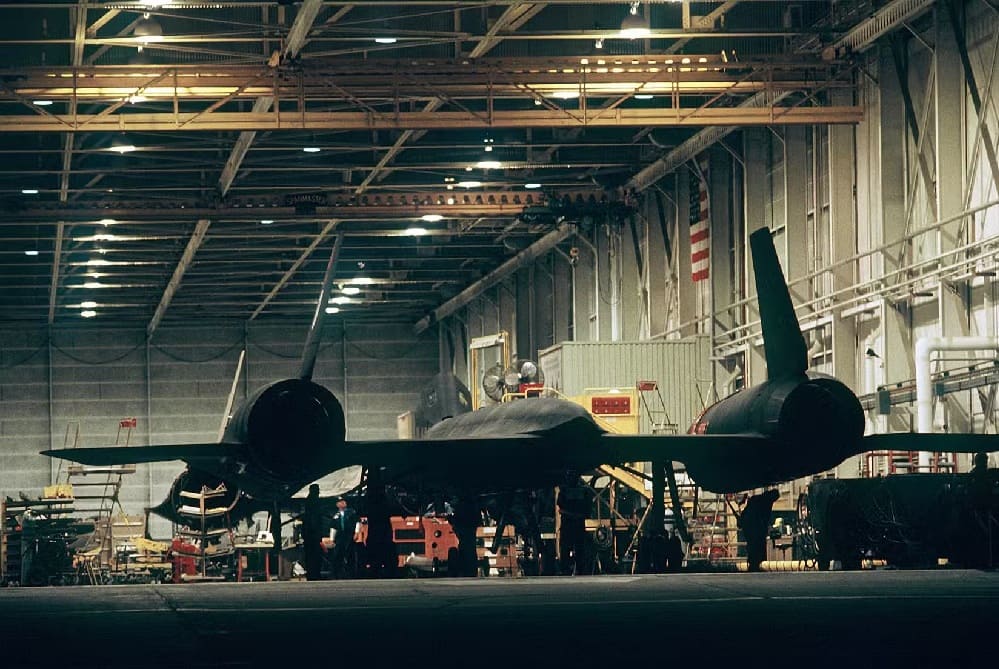
SR-71 Blackbird Specifications
| Specification | SR-71A Blackbird |
|---|---|
| Primary role | Long-range strategic reconnaissance |
| Manufacturer | Lockheed, Skunk Works division |
| First flight | 22 December 1964 |
| Crew | Two: pilot and reconnaissance systems officer |
| Length | 107 ft 5 in (32.74 m) |
| Wingspan | 55 ft 7 in (16.94 m) |
| Height | 18 ft 6 in (5.64 m) |
| Loaded weight | Approximately 140,000 lb (63,500 kg) |
| Fuel capacity | Approximately 80,000 lb (36,300 kg) |
| Fuel type | Specialised JP-7 aviation fuel |
| Engines | Two Pratt & Whitney J58 afterburning turbojets |
| Thrust | 32,500 lbf per engine with afterburner |
| Designed cruise speed | Mach 3.2—more than 2,200 mph (3,540 km/h) |
| Official speed record | 2,193.167 mph (3,529.56 km/h) |
| Service ceiling | Above 85,000 ft (25,900 m) |
| Official altitude record | 85,068.997 ft (25,929 m) |
| Range | More than 2,900 statute miles (4,667 km) |
| Armament | None |
| Defensive capability | Speed, altitude, electronic countermeasures and threat-warning systems |
| Reconnaissance systems | Optical cameras, side-looking radar and electronic-intelligence sensors |
Mach 3 Demanded a New Material
The Blackbird occupied a class of its own. Lockheed designer Clarence “Kelly” Johnson summarised the engineering challenge: “Everything had to be invented.” Everything.” “Lockheed Martin’s Blackbird history details the scale of this engineering effort. Modern aircraft could achieve similar speeds in brief bursts with afterburners. But the SR-71 could maintain speeds above 2,000 mph for hours. One official reading was over 2,193 mph. Not a short-duration spike of temperature. You had a long duration of aerodynamic heating from sustained Mach 3 flight.
In some of the leading-edge regions, temperatures were over 1,000 degrees Fahrenheit, or about 538 degrees Centigrade. That level of thermal load would degrade conventional aluminium structures. Titanium alloys were as strong as stainless steel but lighter and more heat-resistant. Titanium survived repeated heating and cooling cycles too. As the stories go, titanium comprises some 92% of the structure and 93% of the structural weight. The difference is due to the different methods used by individual sources to measure the titanium content of the aircraft.
How the SR-71 Sourced Titanium
The United States lacked sufficient domestic supplies of the required titanium-bearing ore, particularly rutile, during the programme’s critical phase. Meanwhile, the Soviet Union was the major available supplier. Direct purchases would have exposed a highly classified aerospace requirement. Consequently, SR-71 titanium reached America through third countries, intermediaries and front companies. Retired pilot Colonel Rich Graham said these networks moved Soviet rutile into the United States. An official US Air Force account also confirms that a front company purchased titanium from the Soviet Union.
Ben Rich, an engineer at Skunk Works who later ran the division, spelt out the essence of the deception in the transaction in his book, ‘Skunk Works’. The Soviet suppliers, it seems, never grasped that their exports were helping to build an aircraft intended for strategic reconnaissance against themselves. So the SR-71 titanium was an intelligence operation, as well as a materials operation. Washington had to hide both the aircraft’s design and the industrial supply chain that made it possible.
Did Moscow Think It Was for Pizza Ovens?
According to the widely repeated account, an American front company told Soviet suppliers that it required the titanium for manufacturing pizza ovens. Later aviation articles and documentaries claimed that Soviet officials accepted this commercial explanation. Available official histories from Lockheed Martin and the US Air Force corroborate the covert purchases of Soviet titanium. However, neither source records the pizza-oven story. None of the cited released contracts, intelligence files or contemporary procurement records support that explanation. Publishers should view the pizza claim as an anecdote, not a fact. That’s a big difference. Well documented are covert SR-71 titanium purchases through clandestine intermediaries. Unless better primary evidence comes to light, the pizza-oven story is Cold War lore.
Titanium-Complicated Manufacturing
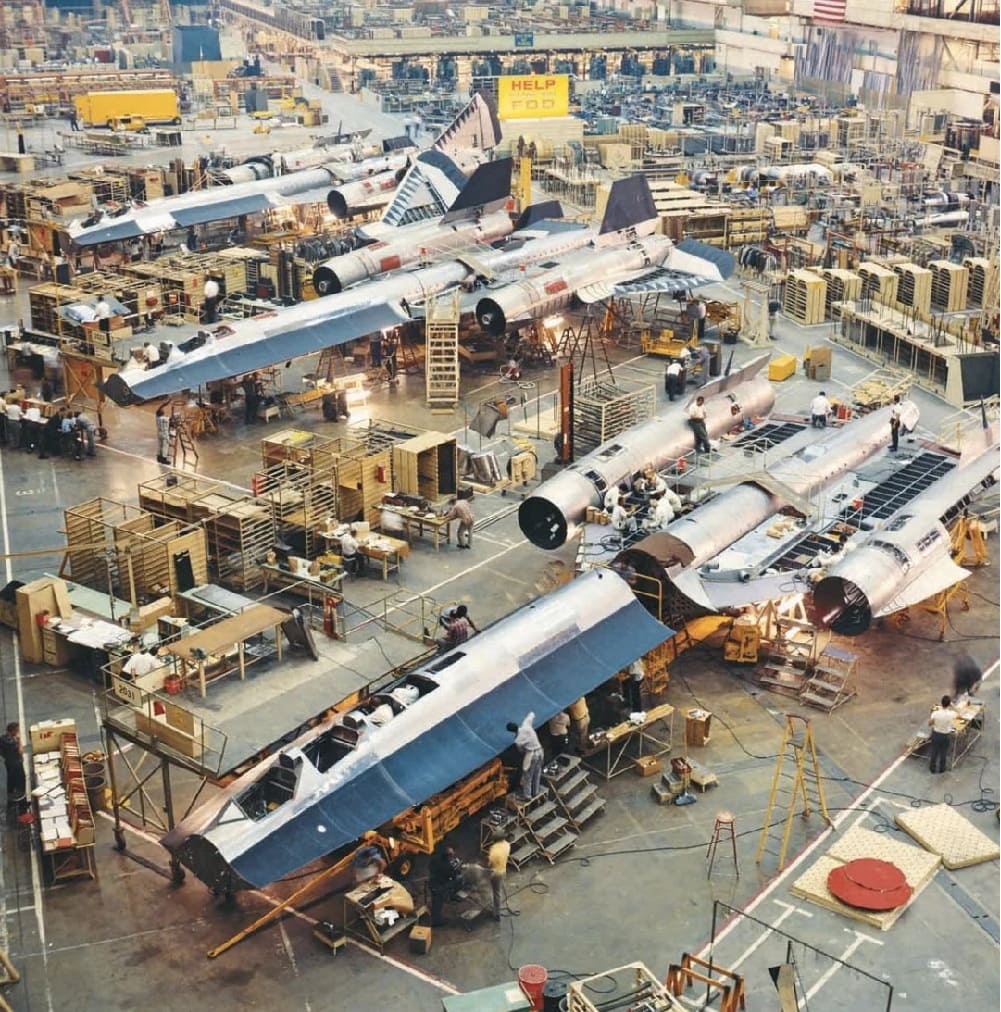
The ore was an answer to the first problem. However, titanium was difficult to machine, form and assemble. Mishandling or contamination can damage, crack or embrittle components. So Skunk Works retrained its machinists and re-engineered its production methods. Engineers found that contact with conventional cadmium-plated steel tools could contaminate and embrittle the titanium. So Lockheed brought in special tools, including titanium tooling for some jobs.
Production teams also implemented tighter inspection and quality-control procedures. The aircraft was built to accommodate thermal expansion. During long periods of high-speed flight the structure would become very hot and expand considerably. Designers had to add the ability to move around between panels, joints, seals and fuel tanks. The Blackbird was not simply an aluminium aeroplane refitted with a stronger metal; it needed a complete hot-structure design philosophy.
Operational Intelligence Gains
The investment paid off in terms of mind-blowing strategic reach, starting with intelligence gathering in the Yom Kippur War of 1973. SR-71 missions also included Israel’s 1982 invasion of Lebanon and helped evaluate the US raid on Libya in 1986. In 1987, the aircraft helped locate Iranian Silkworm anti-ship missile batteries. The US Air Force retired the SR-71 in January 1990.
However, for decades it was peerless in speed, altitude and sensor reach. The Blackbird is part of the larger history of reconnaissance and denial of the Cold War. Defense News Today’s account of the SH-37 Viggen and Su-15 encounter shows how Soviet interceptors pursued intelligence aircraft. Meanwhile, the CIA’s Nanda Devi surveillance project illustrates another covert attempt to collect strategic intelligence.
Why the SR-71 Was Never Shot at
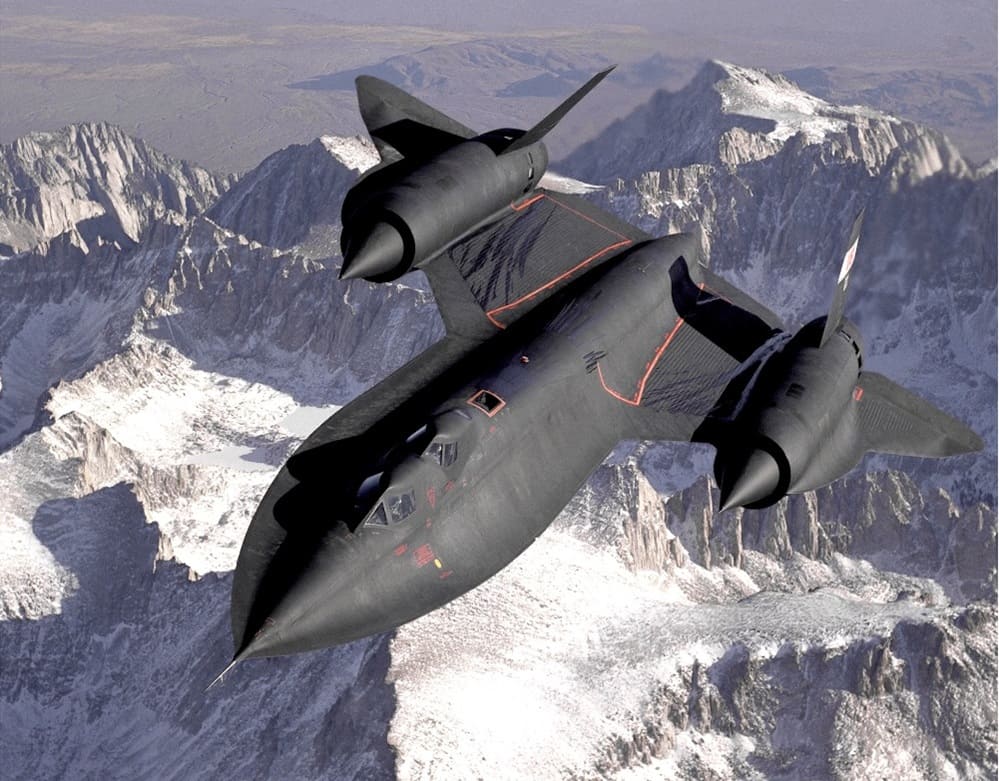
Enemy forces never shot down an SR-71 Blackbird during its operational career. The U.S. Air Force states that hostile forces fired more than 1,000 missiles at the aircraft, primarily surface-to-air missiles, without scoring a hit. Some secondary sources refer to nearly 4,000 missile launches, but the higher figure is not official. A separate publicly verified total for air-to-air missiles does not exist.
Repeated attempts at tracking, lock-on or positioning by Soviet MiG-25 and MiG-31 interceptors and other fighters against the aircraft were made but confirmed air-to-air launches are still poorly documented. By flying above 80,000 feet at better than Mach 3, the Blackbird survived using speed, altitude, electronic countermeasures and route planning. Radar-warning systems picked up a launch, and crews rolled and accelerated. The SR-71’s combat-survivability record was unmatched: Of the 32 planes built, 12 were lost in accidents, none in combat.
Strategic Impact
The SR-71 titanium operation demonstrates that sophisticated military systems are as much about clandestine supply chains as they are about aerodynamic design. Faced with the lack of strategic materials, Washington turned to a combination of foreign sources, advanced metallurgy, and corporate cover. Above all, the verified story needs little embellishment. The stuff that made America’s premier Mach 3 reconnaissance family possible came from the Soviet Union. The pizza-oven claim is a colourful addition, but the secret buy is better explained than that. Ultimately, SR-71 titanium turned an enemy’s raw material into a lasting symbol of American aerospace engineering.
References
- SH 37 Viggen vs Su-15: Baltic Cold War Crash
- CIA Nuclear Device in Himalayas—Nanda Devi Mystery
- Lockheed Martin—Fastest Plane in History: The Blackbird
- US Air Force—Speaker Recounts Blackbird Legacy
About the Author