
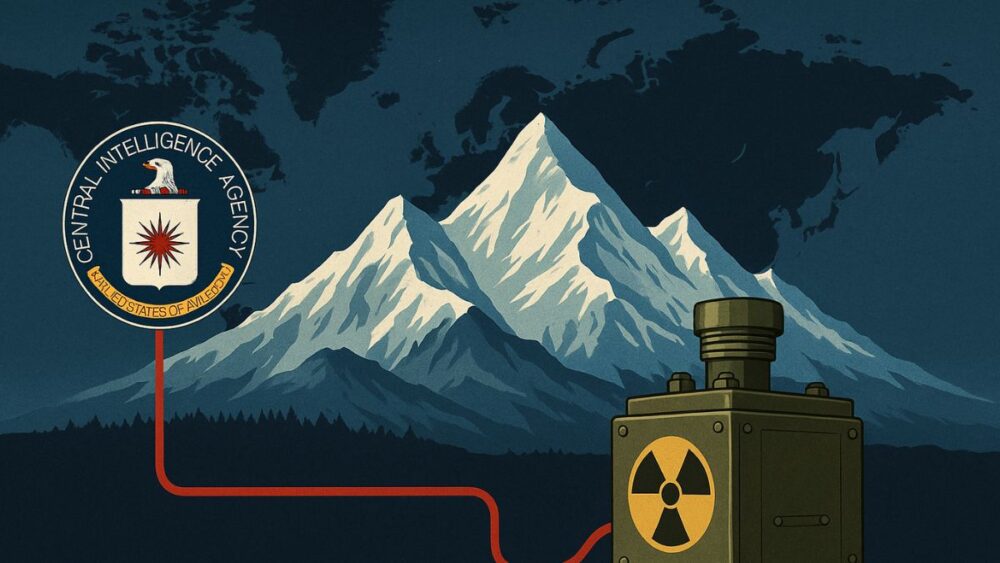
CIA Nuclear Device in Himalayas — Nanda Devi Mystery
During the Cold War, Washington wanted a clearer picture of the rapidly evolving Chinese nuclear and missile programmes. There were still gaps in the satellites; politics and geography still hampered collection from the air. US intelligence devised a blunt workaround: park a high-altitude listening post on a Himalayan giant and let physics do the rest.
That decision led to the CIA’s story about a nuclear device in the Himalayas, which continues to make officials and locals nervous. In 1965, American climbers and their Indian partners attempted to place a surveillance package high on Nanda Devi (about 7,817 metres/25,646 feet). The goal was straightforward: to gather telemetry and signals on Chinese tests and missile activity.
CIA’s Lost Nuclear Device
Technically, the plan was built on altitude and line-of-sight. If the ridge were high enough, it could ‘see’ further across the terrain. It might also cut down on interference. Planners also hoped a remote location would be deniable and difficult to tamper with, in theory at least.
However, theory has its costs in the Himalayas. The ’65 team climbed higher until a violent storm forced a life-or-death retreat. The climbers cached the payload close to the upper camps and returned. When a return party arrived the following spring, they found the cache site gone, presumably taken by avalanche and icefall.
Nuclear Power: The Core Enabler
The surveillance package had to operate on a steady diet of electricity in sub-zero temperatures without recharging. That need led to a radioisotope power generator. RTGs use thermocouples to convert heat from radioactive decay into electricity. The US has been using plutonium-238 for a long time because it produces a steady amount of heat.
The field reports on the generator state that it is a SNAP-19C-type unit and that it weighs about 50 pounds. Furthermore, some sources claim that the complete set of instruments is significantly heavier. Anyway, when the storm came, nobody could safely take the generator down.
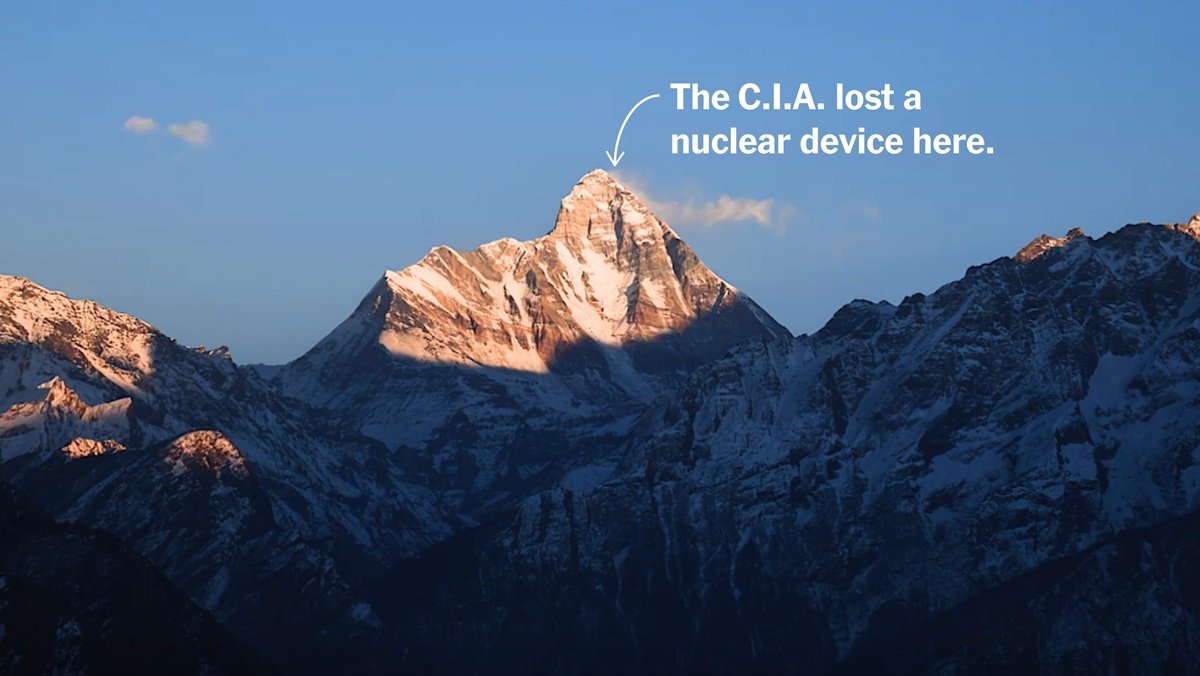
What kind of nuclear device it was
It was not a nuclear bomb, and it could not ‘go off’. The device was a SNAP-19C radioisotope generator, a rugged, long-life nuclear battery designed to power a secret listening post in the harsh cold of the Himalayas. It was not a chain reaction. The Device generated heat from the slow decay of plutonium-238.
Simple thermocouples converted the heat to electricity. And that is why planners liked it. It will run for years without fuel, without moving parts, and without sunlight. The fuel is contained in sealed capsules designed to withstand accidents, but it is a radiological hazard should the capsules ever crack or corrode.
Nearly Impossible Recovery
After the disappearance teams, radiation and metal detection reportedly searched the area. Furthermore, glaciers do not “stand still.” They creep, break and coat things in metres of snowpack and debris. Thus, a single catastrophic cycle of avalanches can render a well-defined search grid meaningless.
The current concerns are two-fold and related: environmental release and misuse. First, previous reporting and subsequent evaluations repeatedly indicated the apparent low immediate risk of contamination, including field checks conducted many years after the mission. But the mystery remains because the device was never found.
Cover-up Blowback
The engineering may have been defensible on paper, but the politics were combustible. The mission was inactive for years, then resurfaced in 1978 when the US press reported nuclear-powered instruments on Himalayan peaks and that one unit had been lost near the Ganges headwaters. The disclosure angered India and embarrassed the United States.
The concept did not die with the first failure, as 1978-era reporting described follow-on efforts, including a later placement on a nearby peak (Nanda Kot). That detail is important because it shows the incident was not a one-off stunt but part of a serious collection debate within the Cold War toolkit.
Climate Change Rekindled Fears
Timelines change due to glacier melt. The Himalayan CIA nuclear device situation drags on. Buried material may be exposed or transported downslope into new meltwater channels as the ice melts back. In addition, low-probability scenarios are also considered as communities downstream rely on glacier-fed rivers in the larger Ganges basin.
That said, an RTG is NOT ‘loose powder’ material. Fuel is normally constructed by designers in rugged forms to prevent dispersal in harsh environments. You should treat any worst-case scenarios with caution unless measurements support them. The situation is simpler: no recovery, no closure, and uncertainty remains a permanent feature.
Conclusion
Officials who might ever reopen the case will look to the practical variables, not the rhetorical ones. First of all, where would you look after 60 years on a moving glacier system? Secondly, what sensor suite can detect a small heat or shielded radiation signature through metres of ice and rock? Third, what political model would be suitable for a recovery operation in a sensitive border area?
References
- https://m.economictimes.com/news/defence/cia-nuclear-device-lost-in-nanda-devi-to-spy-on-china-a-cold-war-secret-buried-in-indias-himalayas-is-still-a-grave-danger-to-humanity/articleshow/125957852.cms
- https://www.washingtonpost.com/archive/politics/1978/04/13/cia-put-nuclear-spy-devices-in-himalayas/61cf72f2-dfdc-4586-a695-11a6d823a097/
- https://www.energy.gov/ne/articles/what-radioisotope-power-system
- https://science.nasa.gov/planetary-science/programs/radioisotope-power-systems/about-plutonium-238/
About the Author