
China Turning Pakistan Into a Military Nightmare for India
China’s Dominance in Pakistan’s Military Modernisation
SIPRI’s March 2026 assessment confirms that Pakistan accounted for 4.2% of global major arms imports during 2021–2025, while India accounted for 8.2%. China’s industrial advantage allows it to provide Pakistan with relatively affordable weapons, associated infrastructure, and long-term logistical support.
| Military indicator | Latest verified figure |
|---|---|
| China’s share of Pakistan’s arms imports | 80% (2021–2025) |
| Pakistan’s arms-import growth | 66% over the preceding five-year period |
| Pakistan’s global arms-import ranking | 5th |
| China’s exports directed to Pakistan | 61% |
| Chinese-origin Type 054A/P frigates | 4 commissioned |
| Hangor-class submarine program | 8 planned; first commissioned in 2026 |
| India–Pakistan estimated nuclear inventories. | 190 and 170 warheads, respectively, in January 2026 |
Sources: SIPRI Arms Transfers Fact Sheet 2026, SIPRI Yearbook 2026, and Pakistan Navy modernization reports. Arms-import percentages measure transfer volume, not expenditure. Unlike isolated equipment purchases, this arrangement supports joint manufacturing, technical training, and continuing upgrades. However, Chinese supply dependence also creates vulnerabilities involving spare parts, proprietary software, engines, ammunition, and maintenance support.
J-10C Fighters: Lessons from the May 2025 Air War
The India-Pakistan conflict of May 7-10, 2025, was a major test for China’s sophisticated military technology. Pakistan used Chinese-made J-10C fighters armed with PL-15 beyond-visual-range (BVR) air-to-air missiles against Indian aircraft, including French-made Rafales. Reuters reported that American officials assessed that Pakistan’s J-10 fighters shot down at least two Indian aircraft, including a Rafale. A subsequent investigation identified “significant” factors, including intelligence failures regarding the range of the PL-15 and about Pakistan’s networked targeting capabilities. Apparently, Indian pilots planned for a range of about 150 km for the missiles. Pakistani aircraft apparently fired missiles from distances of about 200 km and beyond. But the maximum range of a missile is not the same as the no-escape zone, where the target has limited chances to defeat an incoming weapon through maneuvering or countermeasures.
The report added that Pakistan has incorporated airborne, ground-based, and other sensors in its Data Link 17 architecture, allowing fighters to be handed external targeting data without having to keep their radars on. This can reduce a fighter’s electromagnetic signature and improve situational awareness. However, the accuracy of sensors, electronic protection, latency in communication, and reliable identification of hostile aircraft limit its effectiveness. India admitted to some aircraft losses but denied the higher numbers claimed by Pakistan. India also struck directly at Pakistani military installations. Both sides then reported disputed losses of enemy aircraft. Therefore, the engagement cannot prove the universal superiority of Chinese systems over Western aircraft.

JF-17 Block III: The Future of Pakistani Airpower
China’s single most important contribution to Pakistan’s defense-industrial independence is the jointly developed JF-17 Thunder. The newest Block III version of the aircraft is now in service, and it has an active electronically scanned array, or AESA, radar, upgraded avionics, electronic warfare capabilities, and advanced air-to-air weapons. The KLJ-7A AESA radar is electronically steered and does not mechanically rotate the antenna. This technology allows for rapid target updates, improved multi-target tracking, and potentially improved resistance to electronic interference.
In April 2025, the display of a JF-17 Block III with four PL-15s confirmed the integration of a weapon that was once mainly associated with the J-10C. This development enables Pakistan to employ longer-range air-to-air weapons on more than one type of fighter. The JF-17 also provides an industrial gain to Pakistan through assembly, maintenance, upgrades, and manufacture of parts at Pakistan Aeronautical Complex, Kamra. In January 2026, Reuters reported the estimated price of the JF-17 to be about $30-40 million, and Pakistan was considering increasing annual production capacity from about 20 aircraft. However, these production plans still depend on financing, parts, and export orders.

Chinese Air Defense: Building a Layered Shield
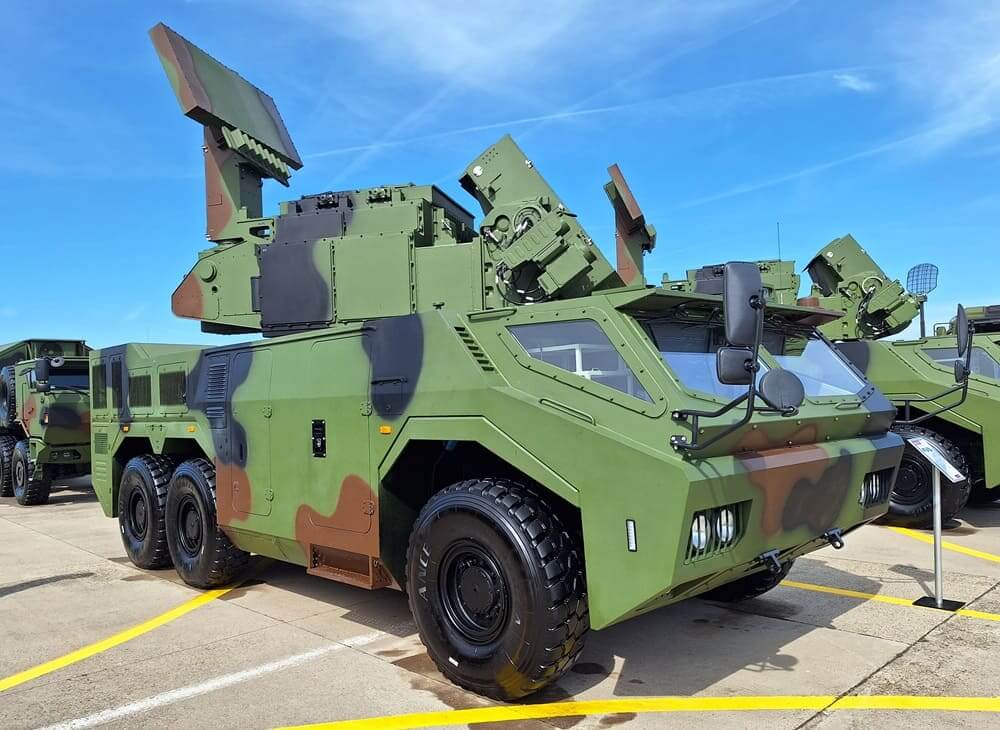
China is also upgrading Pakistan’s integrated air-defense capabilities. In 2021, Pakistan inducted the HQ-9/P long-range surface-to-air missile system. The Pakistani military’s statements have indicated engagement ranges of more than 100 kilometres against suitable airborne targets. However, engagement ranges against small, low-flying cruise missiles can be significantly shorter because of radar horizon limitations and smaller target signatures. In September 2026, Pakistan publicly displayed the Chinese HQ-17AE short-range air defense system. Janes cites manufacturer descriptions that say an HQ-17AE vehicle carries eight ready-to-launch missiles and can engage up to four targets at the same time.
It combines phased-array radar, command equipment, and vertical-launch missiles. These systems, alongside medium-range LY-80 systems and other defenses, offer layered, overlapping protection against aircraft, drones, and some guided weapons. The main technical obstacle is integration. Independent radar systems are not necessarily a unified network. To defend effectively, you need interoperable communications protocols, identification systems, electronic warfare coordination, and engagement management.
Land Warfare: VT-4 Tanks and Precision Artillery
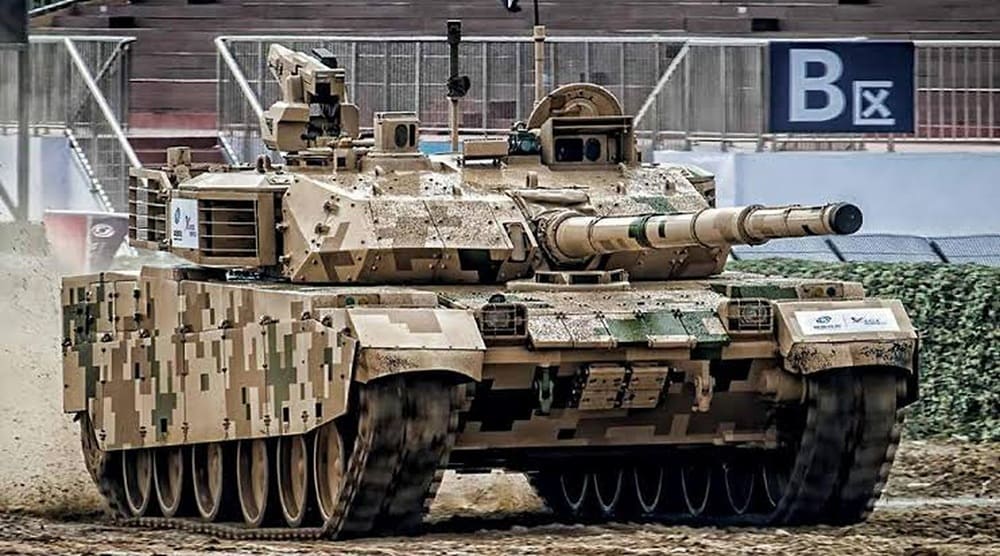
China has also influenced Pakistan’s armoured and artillery formations. Haider is a locally produced Pakistani version of the Chinese VT-4 main battle tank. It weighs around 53 tonnes, has a 1,200-horsepower engine, and has a 125 mm smoothbore cannon. ‘A total of 100+ Haider tanks have been manufactured in Pakistan,’ a representative of Heavy Industries Taxila told Jane’s at the ADEX 2026 exhibition, held from September 30 to October 2. The representative said that the annual production capacity is of the order of 50 tanks and domestic content is estimated at 60-65%, but he did not give the breakdown of the components.
Pakistan has also procured Chinese SH-15 wheeled self-propelled howitzers. The 155mm/52 caliber system features computerized fire control and semi-automatic loading. Its maker advertises a maximum firing range of around 53 kilometres with suitable munitions. The systems increase tactical mobility and reduce the time from positioning to firing. But their effectiveness in battle depends on reconnaissance, counter-battery detection, ammunition availability, and survival.
Hangor Submarines: China’s Naval Challenge to India
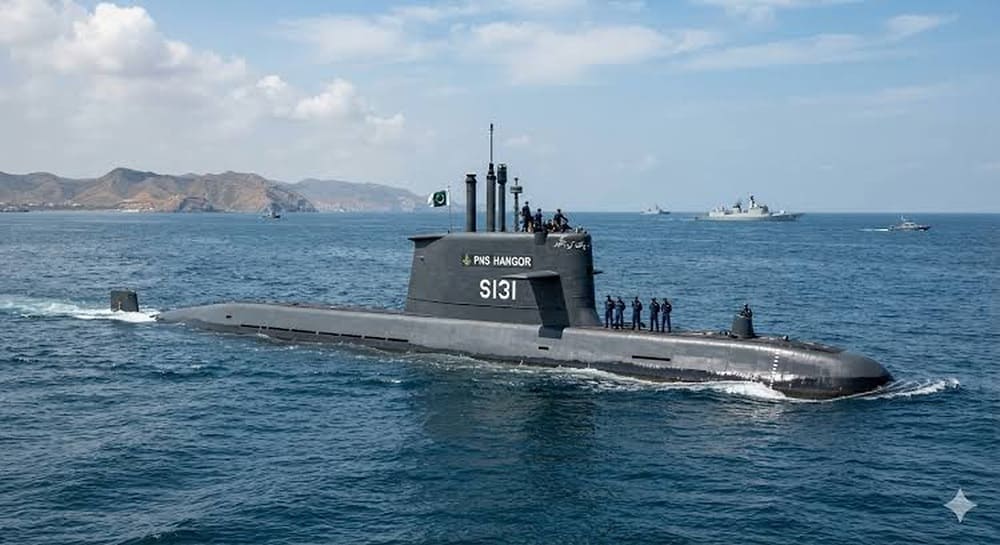
China’s role in the Pakistani naval modernization is especially important, as underwater warfare makes it difficult to operate the navy without being larger than its competitors. Pakistan’s Hangor programme comprises eight submarines: four were constructed in China, and four are to be built in Karachi under a technology-transfer agreement. The lead ship, PNS Hangor, was commissioned in April 2026 and arrived in Karachi in June. Pakistan announced on Sept. 27, 2026, that the submarine had successfully fired an anti-ship cruise missile at a designated target in the North Arabian Sea.
The Hangor is based on China’s Yuan-class design and has air-independent propulsion (AIP), which allows it to stay submerged for longer periods and to snorkel less than a conventional diesel-electric submarine. AIP does reduce exposure, but it does not give the sustained high-speed endurance of nuclear propulsion. Pakistan has ordered four Chinese-built Type 054A/P frigates that will give it a modern surface fleet with naval radars, guided missiles, and anti-submarine capabilities. Together these platforms add to the surveillance and anti-submarine warfare capability of the Pakistan Navy in the Arabian Sea.
Space-Based Surveillance and Electronic Warfare
With China’s help, Pakistan’s space modernisation is now entering a new phase. Pakistan is to launch five remote sensing satellites (PRSC-EO1, PRSC-S1, HS-1, PRSC-EO2 and PRSC-EO3) in 2025-2026. The Pakistan space agency said PRSC-S1, which was launched July 31, 2025, is a synthetic-aperture radar satellite. The PRSC-EO3 was launched into orbit on 25 April 2026, at an altitude of about 550 kilometres above the Earth. Such platforms have a potential dual-use intelligence value through observation of infrastructure, analysis of terrain, and detection of changes.
However, owning a satellite is not the same thing as having continuous military surveillance or real-time fire-control-quality targeting. The true value of intelligence is a function of resolution, revisit intervals, ground processing, tasking authority and secure dissemination. Similarly, the Indian claims of Chinese live intelligence provided to Pakistan in 2025 lack adequate support from publicly available independent evidence.

Agency SUPARCO
Karakoram-2026: Advancing Military Interoperability
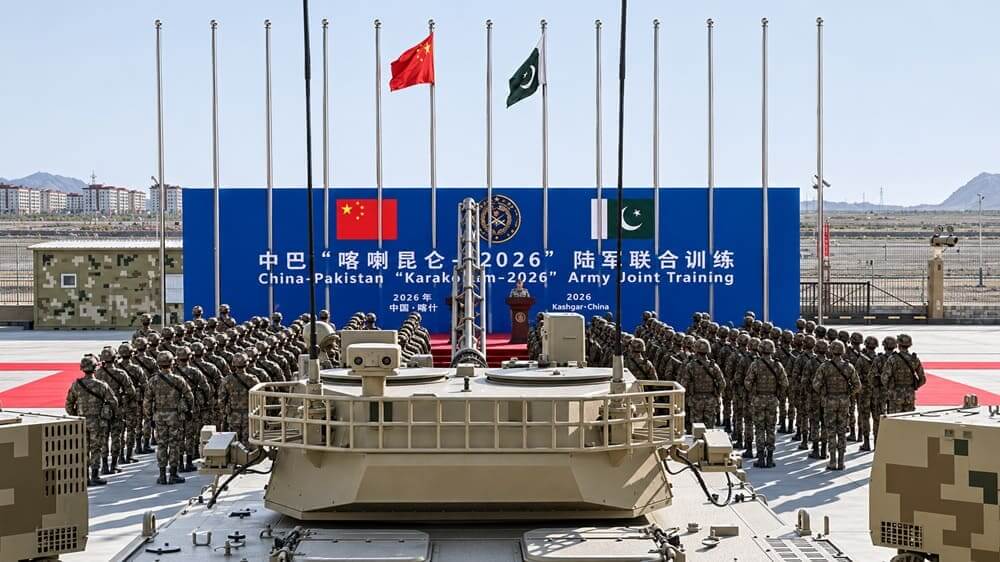
The bilateral military relationship is more and more about operational training. The nine-day Karakoram-2026 joint army exercise in Xinjiang ended, China’s Ministry of National Defense confirmed on Oct 22. Joint command, mixed-force formations and synchronised tactical operations were part of the activities. The drills also included training in counter-terrorism and drones at high altitude. The drill points to growing familiarity between Chinese and Pakistani troops. Meanwhile, joint training is not a unified wartime command, nor is it a binding Chinese pledge to join an India-Pakistan conflict.
J-35 Stealth Fighters: The Next Strategic Leap?
In June 2025, Pakistan publicly disclosed a Chinese offer for 40 J-35 fifth-generation fighters, KJ-500 airborne early-warning aircraft and HQ-19 ballistic-missile-defense systems. These systems could transform Pakistan’s air surveillance, stealth strike, and missile defense. However, there was no public evidence that the J-35, KJ-500, or HQ-19 had been operationally inducted into Pakistani service as of October 31, 2026. A declared offer, procurement proposal, or apparent radar installation is not equivalent to deployed combat capability.

Strategic Balance: China’s Edge and India’s Response
Undoubtedly China has contributed significantly to enhancing Pakistan’s conventional capabilities, but there are still major asymmetries. India’s defense budget for 2026-27 was around INR 7.85 trillion, compared to Pakistan’s budget of around PKR 3.01 trillion. The figures are in different currencies and budget lines, so analysts must make adjustments before comparing them directly. In addition, India has substantial indigenous and foreign-supplied military capabilities, including Rafale fighters, BrahMos missiles, S-400 air defense systems, modern surface combatants, and nuclear-powered submarines.
SIPRI estimated India’s nuclear stockpile at 190 warheads and Pakistan’s at 170 as of January 2026. The rough figures are a reminder of the need to control escalation. The bigger strategic problem, however, is that China has not made Pakistan invulnerable. Instead, Beijing is assisting Islamabad in bridging some of the technology gaps and increasing the price of Indian military planning. When sensors, communications, weapons, and commanders all work together effectively, a networked adversary can threaten superior platforms. Conversely, technological dependency, budgetary limitations, and lack of interoperability could compromise the most advanced imported equipment.
Conclusion
China is making Pakistan not only a bigger weapons holder but also a more sophisticated rival. The 2025 air war demonstrated the significance of long-range missiles and networked targeting. The deployment of PNS Hangor in 2026, the enhancement of Chinese-origin air defenses, and progress in indigenous tank production are all indicators of the broadening scope of the partnership. India’s key challenge is to prepare for coordinated threats in air, land, sea, space and electromagnetic spectrum without assuming that Chinese-Pakistani cooperation necessarily translates into a unified military command. In a future crisis, the deciding factor may not be the number of fighters or the advertised range of missiles, but the reliability, survivability, and adaptability of the systems that connect them.
Editorial note: This analysis relies on publicly documented capabilities, official statements, and defense-industry reporting available as of October 2026. Classified specifications, undisclosed operational data, and contested battlefield claims have not been presented as facts.
References
- SIPRI — Trends in International Arms Transfers, 2025 (March 2026). Authoritative statistics on Chinese weapons exports and Pakistan’s arms imports.
- Reuters — How Pakistan Shot Down India’s Cutting-Edge Fighter Using Chinese Gear (August 2025). Investigative reporting on the PL-15, J-10C, and networked air operations.
- Janes — Pakistan’s First Hangor-Class Submarine Conducts Maiden Anti-Ship Missile Firing (September 2026). Technical evidence of Pakistan’s emerging submarine capability.
- Chinese Ministry of National Defense — Karakoram-2026 Joint Army Training Concludes (October 23, 2026). Official confirmation of recent bilateral military training and command integration exercises
About the Author