
The $85 Billion U.S. Exit from Afghanistan
Images from Kabul’s fall on 15 August 2021 reinforced the narrative: Taliban fighters displayed M4 carbines and drove American-built Humvees, fuelling claims that the United States had left behind $80–85 billion in military equipment. But the reality is more complex. The Pentagon did not waste $85 billion worth of American operational weapons.
That figure was largely the product of decades of spending on Afghanistan’s security forces. They took salaries, training, fuel, maintenance, infrastructure and logistics into account. The Department of Defence estimated that when the Afghan government fell, some $7.12 billion of U.S.-funded military equipment given to Afghan forces remained in Afghanistan. However, for the Taliban, the equipment was still a huge windfall.
Origin of the $85 Billion Claim
By 2022, the U.S. had spent roughly $88.6 billion on building and supporting Afghan security forces. But some of this spending was on military hardware purchases. The DoD says it has spent about $18.6 billion on purchases of equipment since 2005. Much of this equipment was already destroyed, consumed, lost or retired before August 2021. It is estimated that $7.12 billion is still in Afghanistan. That makes a difference. The Taliban did not wake up one day with an $85 billion military arsenal akin to the procurement budget of a major conventional military. It acquired parts from a worn Afghan inventory with various serviceability levels.
What Equipment Remained?
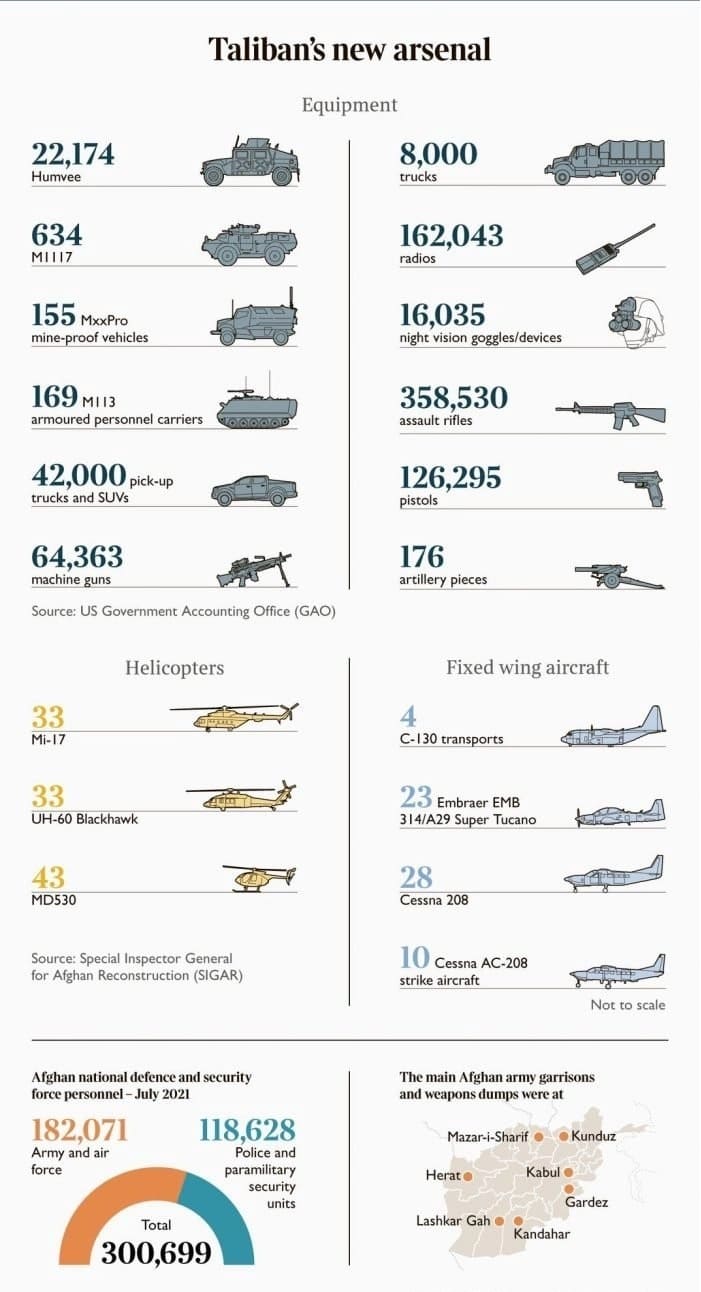
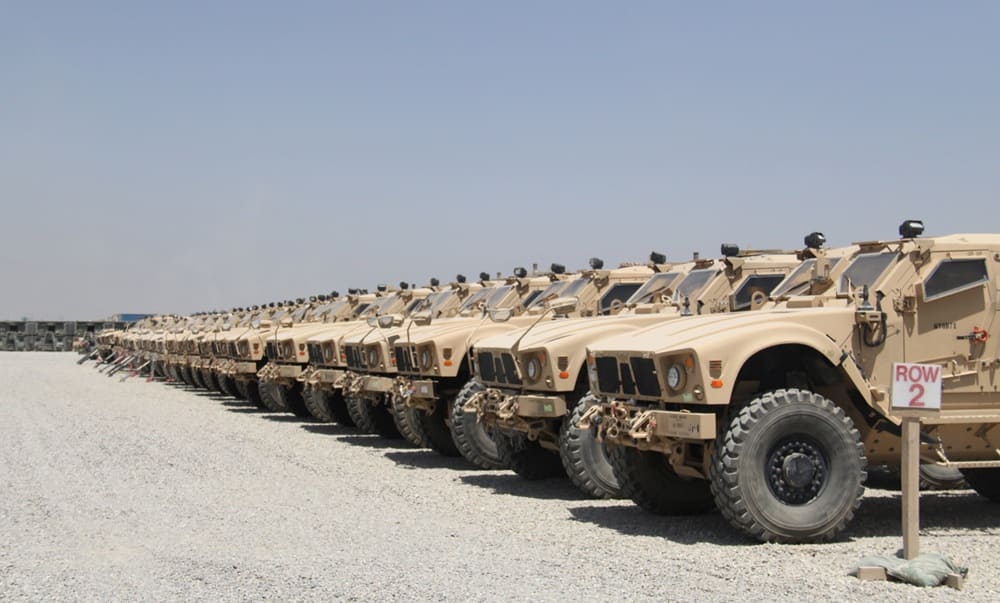
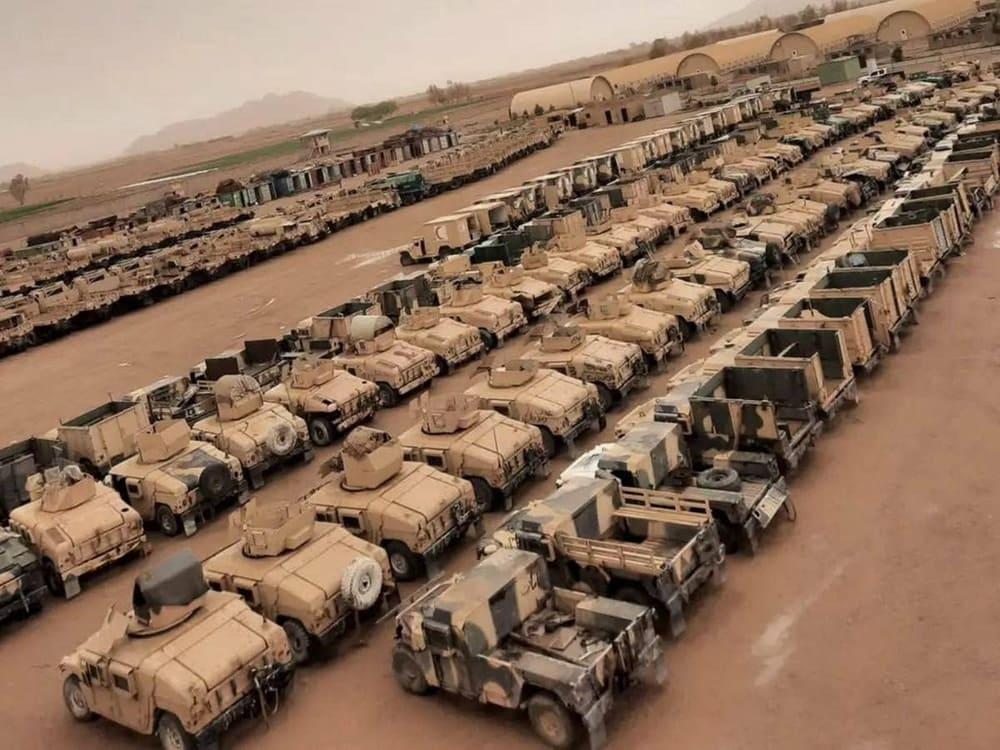
There was still a lot of inventory left. About $4.12 billion worth of ground vehicles remain in Afghan inventories, according to DoD figures. These included Humvees, mine-resistant ambush-protected vehicles and other tactical vehicles. Aircraft were about $923.3 million, and aircraft munitions another $294.6 million.
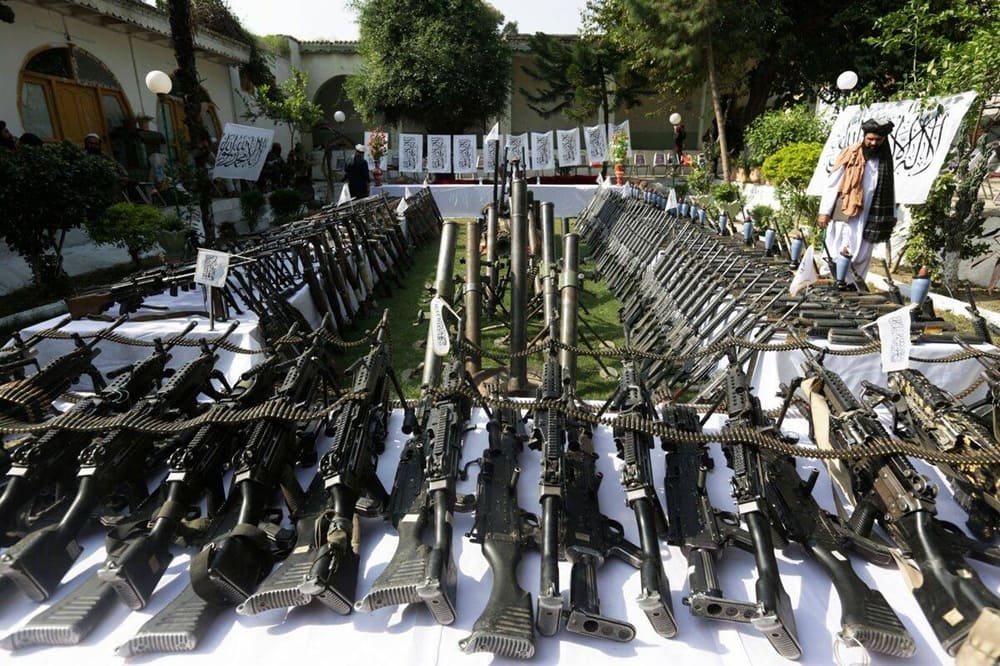
The United States has bought 427,300 weapons for the Afghan forces since 2005. When the Afghan government collapsed, the Department of Defence estimated that 316,260 weapons, valued at about $511.8 million, were in Afghan inventories. They included pistols, rifles, sniper rifles and machine guns. Other categories of captured items might have held greater tactical significance than their monetary worth might indicate.
They included:
- Night-vision equipment
- Thermal and optical sights
- Tactical radios
- Communications systems
- Explosive ordnance disposal equipment
- Surveillance equipment
- Mortar ammunition
- Body armour and other equipment were also important.
Night-vision technology was particularly important. It could transform Taliban units accustomed to operating with relatively basic equipment into forces capable of conducting much more effective nocturnal operations.
The Aircraft Problem
The initial capture of Taliban aircraft looked spectacular. The DoD logs indicate that two weeks before the fall, the Afghan Air Force had 162 aircraft provided by the U.S. in its inventory. 131 of these aircraft were usable. But the Taliban didn’t capture this entire force intact. Afghan pilots flew 64 aircraft to Uzbekistan and Tajikistan during the collapse.
They are reported to include A-29 Super Tucanos, UH-60 Black Hawks, Mi-17 helicopters, C-208s, AC-208 attack planes and C-12s. This operation was one of the most important equipment denial operations in the final days of the Afghan government. The United States later offered 6 A-29s, 1 AC-208, 4 C-208s, 11 PC-12s and 14 Mi-17s of the former Afghan fleet to be transferred to Uzbekistan rather than being handed over to the Taliban.
What U.S. Forces Destroyed in Kabul
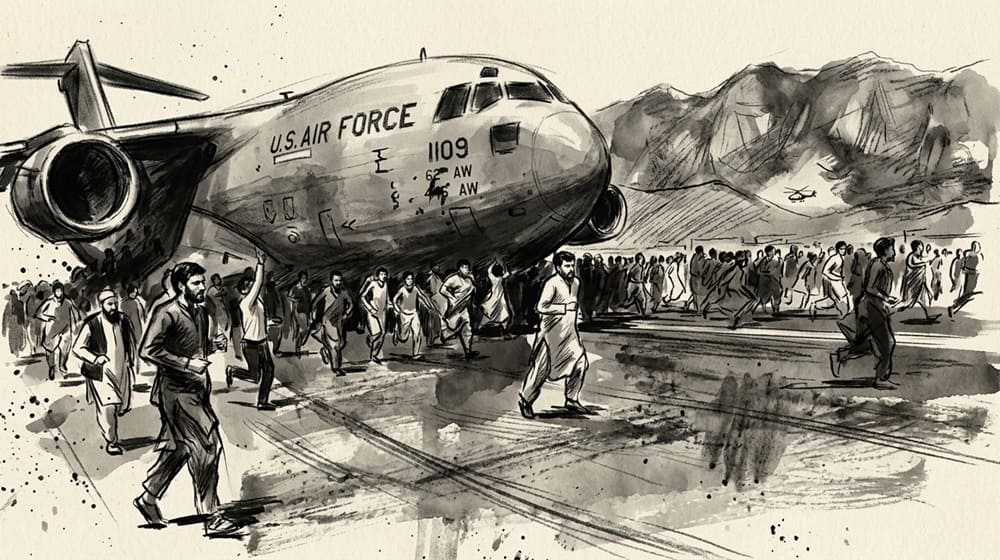
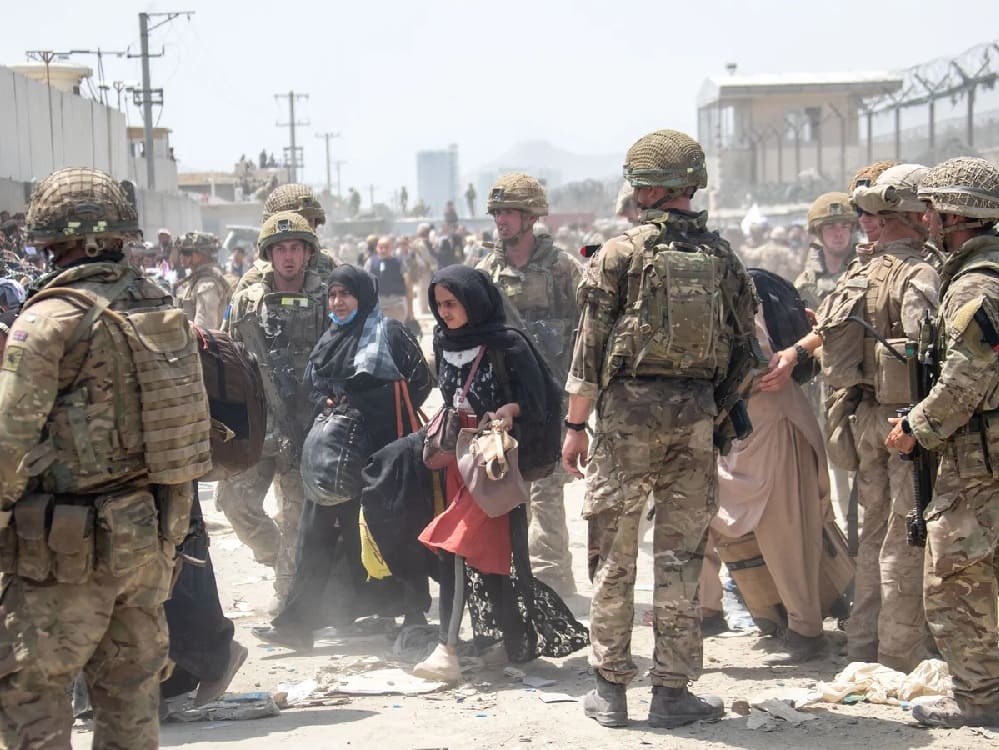
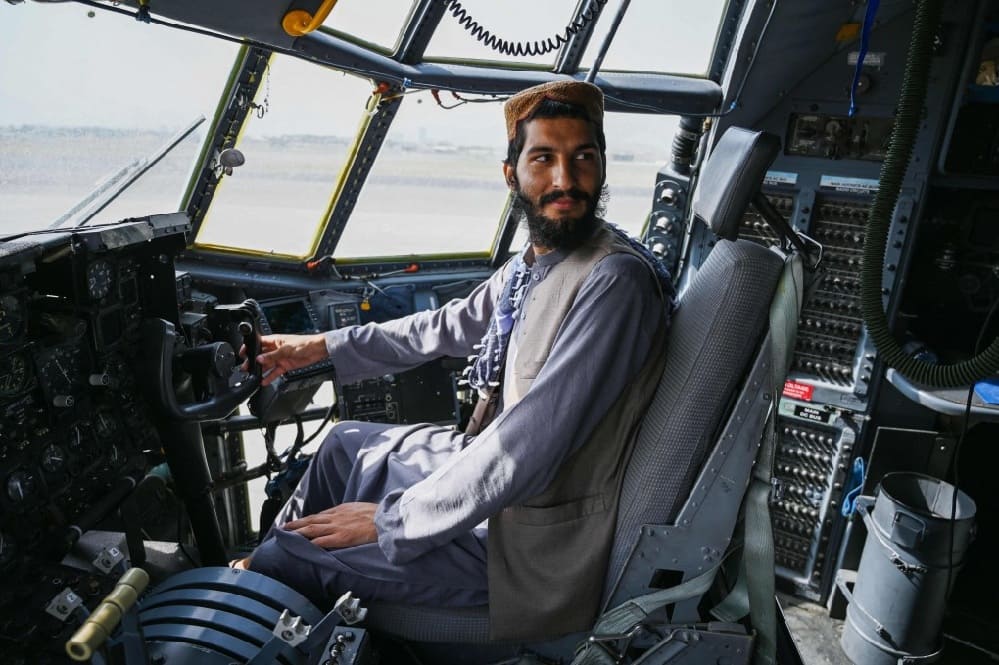
U.S. personnel also performed emergency demilitarisation before exiting Hamid Karzai International Airport. SIGAR said U.S. and coalition forces destroyed about 70 MRAP-style tactical vehicles and 80 aircraft. Technicians are alleged to have damaged cockpits and avionics, removed or destroyed sensitive equipment and interfered with aircraft systems. That was not the same as just blowing up every aircraft.
Its purpose was to take it out of immediate operational use. That division would be important later on. The Taliban began to cannibalise wrecked aircraft for spare parts. Former Afghan technicians and pilots were also reactivated. Intelligence reports by early 2022 indicated that the Taliban had repaired some of the aircraft. In the subsequent operations, the Taliban forces employed helicopters against the armed opposition.
The Maintenance Problem
Being able to capture a UH-60 is not the same as being able to fly an American-supported UH-60 fleet. A logistics ecosystem is required for modern military systems. Aircraft need scheduled inspections, special tools, qualified engineers, replacement engines, avionics modules, lubricants, tyres and thousands of individual spare parts. Foreign contractors used to do those jobs for the Afghan military. These operations led to what military logisticians would call a falling mission-capable rate.
Cannibalisation can keep some planes in the air. However, every plane stripped for parts reduces the fleet. Armoured vehicles have the same issue. A captured HMMWV is fairly easy to keep in working order. Keeping up with sophisticated aircraft and specialised electronic equipment is becoming increasingly difficult. This case illustrates why some expensive aircraft may have had less long-term combat value than small arms, optics, and night vision equipment.
Case Study: American Weapons and the TTP
One of the clearest documented cases of post-2021 weapons proliferation involves the Tehrik-e-Taliban Pakistan (TTP). Weapons from the former Afghan military have fallen into the hands of the Taliban, as well as private caches and black markets across the region, following the fall of Kabul. Some of these were diverted to militant groups fighting against Pakistan.
A 2024 monitoring report by the UN Security Council was particularly important. The Member States said Taliban commanders had provided the TTP with large quantities of sophisticated weapons. The inventory includes M24 sniper rifles, M4 carbines with Trijicon ACOG sights, and M16A4 rifles with thermal sights. The UN report also said the use of night-vision equipment made attacks against Pakistani security forces more lethal. The combination is a major tactical upgrade over standard AK-pattern rifles. With an ACOG on your M4, you can zoom in on your target and identify it at medium range.
Fighters can use thermal sights to view personnel through darkness and some forms of visual concealment. Another big plus for night vision devices is in the carrying out of raids, ambushes and defensive operations. The proliferation network may have been more organised than just mere battlefield looting. According to a United Nations monitoring report in 2023, the sale and transportation of weapons supported TTP fighters in Afghanistan. Member States have stated that the Taliban authorities issued certificates to TTP personnel for purchasing and carrying weapons under Taliban protection.
How U.S. Weapons Reached Regional Militants
Also highlighted in the same report were failings in the weapons accounting of the Taliban. Some sources alleged that local commanders kept some of the captured equipment as war trophies. Weapons were given as gifts, sold for money, or distributed to reinforce personal loyalties. The setting offered chances for sophisticated equipment to leave formal Taliban inventories. More physical evidence of the larger proliferation problem came from a Washington Post investigation. The U.S. government said it had given 63 weapons captured from militants in Pakistan to Afghan forces. Most were M16-family rifles; some were M4 carbines. The inquiry also said that Pakistani security forces had encountered militants armed with American-style night-vision equipment. Such technology can negate the traditional advantage of government forces in night operations.
So the strategic effect is not just a question of how many rifles got passed over. Somebody with an M4 and a good optic and night-vision device on him makes a huge difference in his ability to surveil and engage. Insurgent cells are better at long-range ambushes, night-time infiltrations and precision attacks. Meanwhile, there’s one important distinction. There is no public evidence that all of the TTP’s U.S.-origin weapons came directly from Taliban government stockpiles.
Weapons could also be diverted through smugglers, corrupt officials, private traders, and captured battlefield stocks. But credible evidence from UN reporting shows that militants are diverting equipment from former Afghan military stocks. It also highlights reported Taliban support for TTP weapons procurement in particular. The Afghan withdrawal created a secondary security problem. The weapons acquired in the early stages of fighting the insurgents in Afghanistan have increased the technological sophistication of the insurgent groups operating elsewhere in the region.
Case Study: American Weapons and the BLA
The proliferation of ex-Afghan military equipment has also affected the insurgency in Baluchistan. The Baloch Liberation Army (BLA) has weapons that the United States initially provided to Afghan security forces. The first major incident occurred in February 2022 when BLA militants attacked the Frontier Corps’ installations in Noshki and Panjgur in a coordinated manner. Pakistani officials and other accounts at the time said the militants had U.S.-origin rifles and other sophisticated equipment in the fighting. However, no outside source could then pinpoint the exact chain of custody of those weapons. More convincing evidence emerged following the attack on the Jaffar Express on 11 March 2025.
BLA militants attack a passenger train in Balochistan, taking hundreds of passengers hostage. Pakistani authorities said security forces killed 33 attackers in the operation. The forensics of the weapons recovered following the attack left an unusually large trail. Pakistani officials gave The Washington Post serial numbers for three U.S.-made rifles, which they said the attackers had seized. Investigators found that at least two rifles came from U.S. stocks previously supplied to Afghan forces, according to U.S. government records.
The recovered weapons included a U.S.-made Colt M4A1 carbine manufactured in 2018 and originally destined for Afghanistan. Seven years later, investigators recovered it at the site of a major BLA attack, demonstrating how battlefield equipment crossed borders after the collapse of the Afghan force that originally received it. It’s not just the gun. Magnified optics, thermal sights, infrared aiming devices and night vision are standard on the modern M4 and M16 platforms.
U.S. Weapons Resurface in BLA Attacks
These attachments may significantly improve target detection and engagement in low-light environments. The broader proliferation problem is difficult to quantify. In their counterterrorism operations, Pakistani security officials continued to find U.S.-made rifles and night vision equipment, Reuters reported in February 2026. By June 2025, the Pakistani military reported recovering 272 U.S.-made rifles and 33 night-vision devices, but this figure encompassed broader militant activity and cannot be solely attributed to the BLA. Reuters has also not been able to verify independently the origin of each sophisticated weapon shown after attacks by the BLA.
There is no public evidence to prove the Taliban systematically armed the BLA or that every American-pattern rifle in the hands of BLA militants came from stocks of the former Afghan government. Investigators documented U.S.-supplied weapons, originally sent to Afghanistan, in a major BLA operation inside Pakistan. Thus, the Jaffar Express case is a better illustration of the strategic impact of weapons proliferation than the pictures of the Taliban military parades. Equipment designed to bolster Afghanistan’s security forces sometimes left Afghanistan. Some of the weapons passed through illegal regional networks and reappeared in another insurgency years after the fall of the Afghan government.
The Classified Element
However, the public record lacks an important part of the story. SIGAR said the DoD’s public reporting did not show the number and types of aircraft the U.S. provided outside of the Kabul Airport before the final withdrawal. SIGAR said it provided those details to Congress in classified form. Open-source analysts should therefore be careful not to claim that open sources provide the particulars about the final disposition of the aircraft. There are known gaps.
From Captured Arsenal to Taliban Military
SIGAR’s final forensic assessment determined that by December 2025, a significant portion of the core of the Taliban security apparatus included U.S.-funded equipment, weapons and military infrastructure. Later images of Taliban military parades demonstrated the symbolic value of the captured hardware. Humvees, armoured cars and aircraft allowed an insurgency that had once depended on pickup trucks and motorcycles to masquerade as a conventional army. But appearances can be deceptive. Having military hardware does not equal having integrated combat power.
Enhanced Insurgent Capabilities
After 2021, the Afghan government officials provided night-vision and optical equipment from Afghan stockpiles to the TTP, which significantly enhanced the TTP’s capability to operate at night. The UN Security Council monitoring report for 2024 states that Taliban commanders have supplied the TTP with M24 sniper rifles, M4 carbines fitted with Trijicon ACOG sights, and M16A4 rifles with thermal optics and night-vision devices.
These systems negate the government’s traditional advantage at night by enhancing target detection, identification and engagement. The tactical implications are substantial. 5.56 mm carbines with ACOG sights increase positive identification of targets at medium ranges, and thermal sights detect human heat signatures without visible illumination. In very low ambient light, image-intensifier devices (e.g., PVS-14 monoculars) enable movement, surveillance, and aimed fire.
A 2023 UN report said member states reported militants used weapons of NATO origin, infrared indicators and night-vision systems to accurately fire sniper shots at 800 to 1,000 metres. Meanwhile, a separate Washington Post investigation in 2025 found that 63 weapons taken from militants in Pakistan had been provided by the United States to Afghan forces. The strategic payoff is out of proportion to cost: a small TTP assault team with modern optics can conduct infiltration, ambushes and stand-off attacks at night with much greater lethality than insurgents who rely on iron sights and flashlights.
The Strategic Lesson
Afghanistan has demonstrated that military hardware and institutions are inextricably linked. The United States has supplied the Afghan army with aircraft, armoured vehicles, precision optics, communications equipment and advanced weapons. However, many systems depended on foreign contractors, supply chains and expertise. The kit itself survived the collapse of the Afghan political and military architecture, but the support structure disappeared. The Taliban inherited billions of dollars worth of hardware, but not the whole American logistics system that came with it.
So the worst ongoing danger is somewhere else. Rifles, machine guns, ammunition, thermal sights, night-vision devices and communications equipment are relatively light on infrastructure. They can be shifted, obscured and maintained via the channels of irregular warfare. Then the strategic legacy of the abandoned Afghan arsenal may be less about how many Black Hawks the Taliban can fly and more about how many resilient weapons and sophisticated optical systems continue to flow through Afghanistan and the bigger region. Hence, small arms in the hands of insurgents are much more lethal compared to big-ticket items.
References
- U.S. Department of Defence, Lead Inspector General, Operation Freedom’s Sentinel/Operation Enduring Sentinel Report to Congress, April–June 2022. (U.S. Department of War)
- Special Inspector General for Afghanistan Reconstruction, Taliban Access to U.S.-Provided Funds and Equipment in Afghanistan, SIGAR 23-04-IP (SIGAR)
- Special Inspector General for Afghanistan Reconstruction, Why the Afghan Security Forces Collapsed, SIGAR 23-16-IP (SIGAR)
- United Nations Security Council Analytical Support and Sanctions Monitoring Team reports S/2023/370 and S/2024/92 (Digital Library)
About the Author