
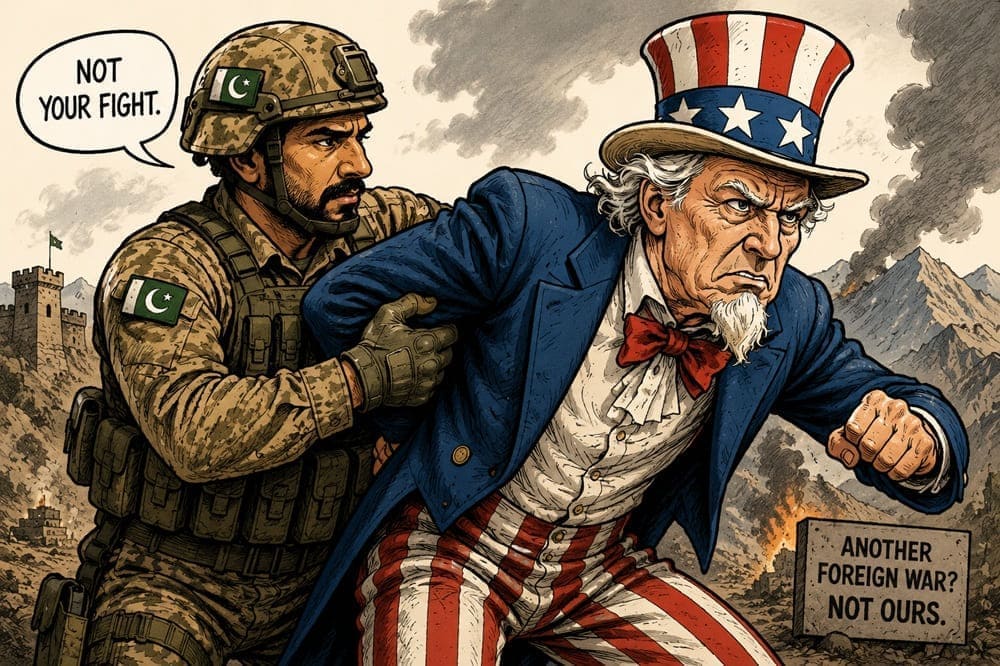
Pakistan Strategic Deterrence Limits US War Power
The statement that Pakistan will not allow the US to win any war comprehensively requires careful definition. Pakistan cannot win a global conventional war against the U.S. But Pakistan can spoil Washington’s plans for a clean political win in any conflict involving South Asia, Afghanistan, Iran, the Arabian Sea or China’s western flank. That matters because modern war doesn’t end with air strikes. It ends when force produces a stable political outcome at an acceptable cost.
Hence, Pakistan is less of a global rival and more of a regional veto player. The U.S. still has a massive military size. SIPRI reported US military spending at $954 billion in 2025; in comparison, Pakistan spent $11.9 billion. Pakistan also raised its defense allocation to around PKR 3 trillion for the fiscal year 2026-27 in June 2026. However, Pakistan’s strategic deterrence rests on geography, nuclear risk, resilient forces and denial capacity—not budget parity.
Pakistan’s Strategic Veto
From the Cold War to the crises in Somalia, Afghanistan and Iran, Pakistan continued to test the limits of American power. Washington used Pakistan as an instrument for intelligence, Afghan resistance and containment of the region during the Cold War, but Islamabad always guarded its interests. The Pakistani peacekeepers were central to the UN operations in Somalia, and the casualties they suffered affected the course of the mission.
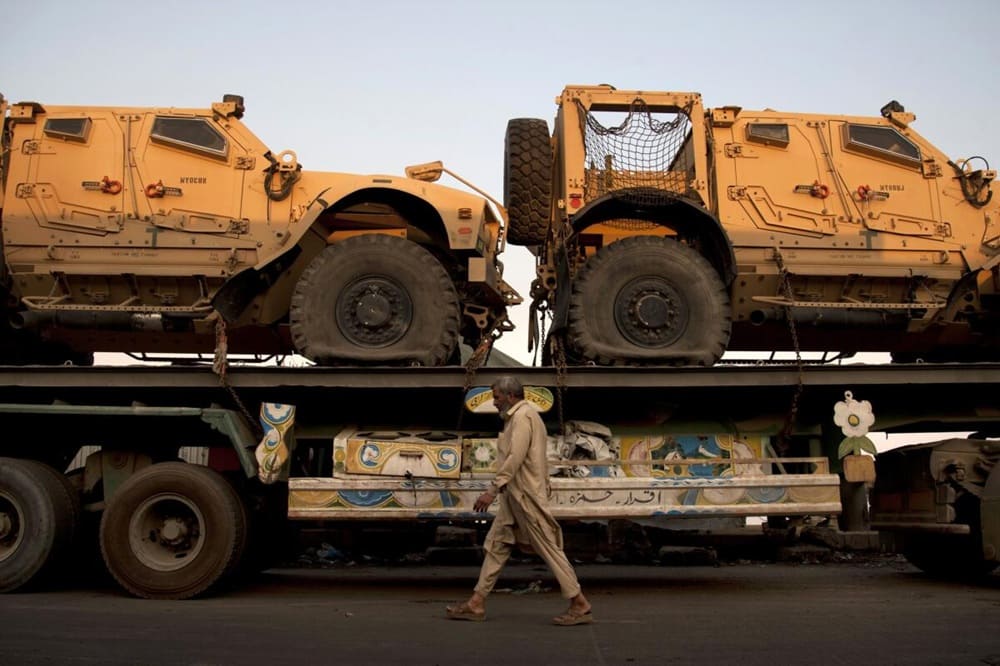
After 2001, NATO’s access to Afghanistan was through Pakistani routes, demonstrating Pakistan’s power over US logistics. Pakistan had avoided being a springboard for escalation over Iran. Pakistan didn’t beat the United States. It simply prevented Washington from using its military power as it wished.
Pakistan’s Geographic Leverage
Pakistan’s geography offers tremendous strategic benefit. It links Afghanistan to the Arabian Sea, Iran and India, and the Karakoram corridor to China. It also is close to energy routes that define Gulf security. Any US campaign in Afghanistan, Iran or Central Asia will have to factor in Pakistani airspace, ports, roads, intelligence channels and political reaction. That makes Pakistan more than just a neighbour. Pakistan is part of the combat operation. Afghanistan showed this role.
NATO and US forces supplied Afghanistan by land through Pakistani ground routes via Khyber and Chaman. Pakistan shut down NATO supply lines in 2011 after the Salala incident. These routes accounted for almost half of all NATO land shipments into Afghanistan, Reuters reported. So the coalition moved more cargo through longer northern networks. The pressure point wasn’t the firepower; it was the logistics. That episode showed how Pakistan could ratchet up the price of a US-led war without directly confronting the United States.
Pakistan’s Strategic weight Over Washington
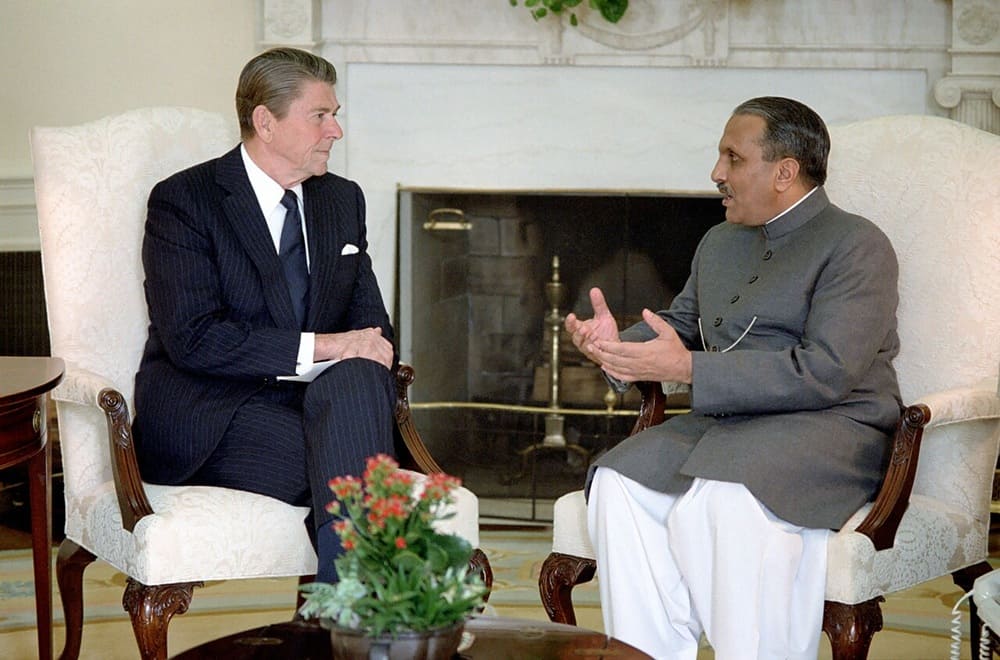
Washington frequently accuses Pakistan of playing a double game, but the strategic value of that country has repeatedly narrowed America’s choices. Geography, access to intelligence, Afghan routes, nuclear risk and regional influence all make Islamabad too important to punish too much. When the US abandoned Pakistan after earlier crises, China stepped in with investment, defense co-operation and diplomatic cover. That experience still shapes American caution. Washington understands that putting too much pressure now could drive Pakistan into the arms of Beijing and possibly even Moscow. In that sense, Pakistan’s leverage is not emotional rhetoric; it is a significant strategic reality the US cannot easily ignore again.
Pakistan Back on US Radar
Pakistan reaffirmed its role as a medium-sized military power by setting the bounds of America’s long-term investment in India as a counterweight to China. Meanwhile, Pakistan, a country much smaller in size and with a defense budget multiple times lower than India, still showed credible military weight against the world’s fourth-largest economy. During the Biden administration, Washington largely ignored Islamabad, favouring New Delhi as its preferred regional partner. Meanwhile, recent events have reminded US policymakers that they cannot dismiss Pakistan. Though its economy may be weak, its geography, nuclear deterrent, combat experience and regional influence make it a serious military force in South Asia.
Pakistan, Israel and the Politics of Strategic Distance
The complexity and essentially indirect nature of the relationship between Islamabad and Israel have injected another dimension into Pakistan’s strategic importance. Pakistan does not maintain formal diplomatic relations with Israel, but there are periodic reports of quiet backchannel contacts, alongside overt political hostility, reflecting a relationship defined by caution, ideology and security considerations.
Pakistan is important to Washington because it is the only Muslim country with nuclear weapons, a large conventional military, advanced missile capabilities and significant strategic influence in South Asia and the broader Muslim world. It gives Pakistan a unique role in any regional equation involving Israel, Iran, the Gulf and the United States.
The U.S. recognises that a direct military standoff or a prolonged proxy contest between two of its key partners would be destabilising. Thus, Washington has a vested interest in preventing escalation, managing regional rivalries and ensuring that Pakistan’s military heft does not pose a direct challenge to the security environment of Israel. In this sense, Pakistan’s importance extends beyond South Asia; it also plays a crucial role in the broader Middle Eastern balance of power.
Nuclear Risk Reshapes War
The best defense for Pakistan is its nuclear deterrent. An open-source estimate suggests the stockpile will be about 170 warheads in 2025. Pakistan has aircraft, ballistic and cruise missiles for delivery. It also has shorter-range systems to stop large-scale conventional breakthroughs. The force does not threaten the U.S. nuclear triad. Instead, it limits escalation around the Pakistan territory and command system.
Any US operation that endangered Pakistan’s nuclear security, state cohesion or command-and-control nodes would be an extreme risk. Thus Pakistan’s strategic deterrence raises the political costs of coercion even before the outbreak of war. In a crisis, Washington would have to balance nuclear signalling, Indian reactions and Chinese interests as well as military targets.
Pakistan’s Denial Forces
Pakistan too has a large conventional military. Pakistan’s active force is about 660,000 personnel, according to Reuters, citing data from 2025. This includes about 560,000 in the army, 70,000 in the air force and 30,000 in the navy. The same report said there were over 6000 armoured vehicles, more than 4600 artillery guns and more than 400 combat aircraft.
These numbers do not make Pakistan a world power. However, they give Islamabad depth for mobilisation, border defense, internal security, strategic force protection and limited escalation. Practically speaking, Pakistan will not engage in a symmetry war with the US. Instead, it would scatter assets, bolster bases, shift missiles and complicate air operations. It is not a strategy of conquest; it is a strategy of denial.
Air and Missile Networks
The Pakistan Air Force is on its transition to a network-enabled combat capability. JF-17 Block III, J-10C fighters, airborne early warning and beyond-visual-range missiles are now forming the force, but F-16s still matter. Mobile air defense, data links, electronic warfare and dispersed basing add to survivability. This isn’t about having air superiority over the US Air Force. The goal is to slow down and complicate the enemy’s planning.” So a better adversary needs to use more sorties, munitions and time.
Washington at one point levered the Pressler-era sanctions to squeeze Pakistan, suspending F-16 deliveries and using access to advanced American aircraft as leverage. Today, the irony is not hard to miss. The US is now ready to help Pakistan upgrade its F-16 fleet and to allow Bahrain to transfer its second-hand F-16s to Islamabad. The strategic message is clear: Washington once punished Pakistan through the F-16 programme, but it now seems unwilling to let that capability die.
Pakistan’s Maritime Denial
The Pakistani navy has also acquired strategic heft. Pakistan commissioned the first of eight Hangor-class submarines in 2026, with the wider programme continuing through later deliveries. Four boats will be built in China and four in Pakistan under a transfer of technology deal. It has air-independent propulsion, sophisticated sensors and modern weaponry. These submarines will not compete with a U.S. carrier strike group, nor are they intended to. Fortunately, their true significance is elsewhere. They provide Pakistan with a credible nuclear strike option from the seas, completing the land, air and sea nuclear triad of the country.
The addition of a submarine fleet with nuclear-capable cruise missiles would enhance second-strike survivability, making Pakistan’s deterrent more difficult to neutralise in a first strike. Strategically, the value is not in fleet-to-fleet competition with the U.S. Navy but in assured retaliation and long-term nuclear resilience. But they do enhance sea denial around Karachi, Gwadar and the northern Arabian Sea. They also complicate planning for blockades, special operations, and coercive naval signalling. Hence, Pakistan would face higher operational risk with maritime pressure.
China Limits Isolation
Washington again abandoned Islamabad after Pakistan’s nuclear tests, imposing sanctions and limiting defense cooperation during a sensitive strategic transition. Meanwhile, the same pressure simply hardened Pakistan’s deterrent, diversified its suppliers and reduced dependence on American goodwill. In hindsight, the policy had the opposite effect of what Washington desired — instead of eroding Pakistan’s strategic autonomy, it helped fast-track a more self-reliant defense posture. China offers stronger strategic backing to Pakistan. It’s Beijing that supplies the fighters, the frigates, the submarines, the air defense systems and the industrial backup.
The China-Pakistan Economic Corridor also links Pakistani security to China’s western access and Indian Ocean interests. So, a US-Pakistan crisis would not be a narrow bilateral contest. This does not mean that China would automatically come to Pakistan’s defense. However, Beijing could provide intelligence, spare parts, diplomatic cover, cyber assistance and rapid resupply. That prospect complicates Washington’s ability to manage escalation. It also reduces the impact of sanctions and arms cut-offs. Once a Chinese official said Pakistan is the Israel of China.
Masters of Regional Balance
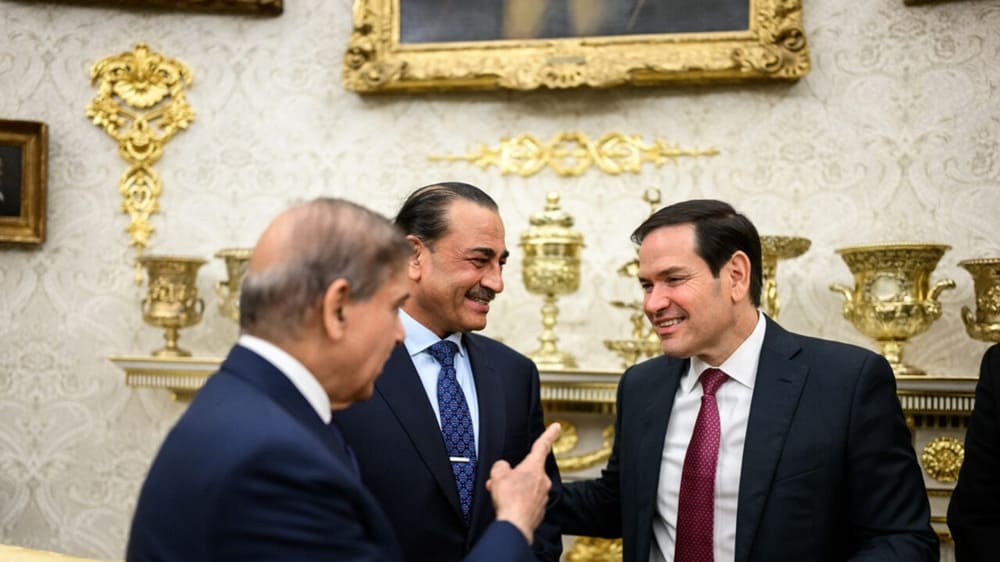
Pakistan has been a prize for the great powers and a strategic specialist since its birth. Its geography, depth of military, intelligence networks and access to sensitive areas make it impossible to ignore. Pakistan has learned the painful lesson of pitting competing powers against each other, from the Cold War to the War on Terror to the current China-US rivalry.
It has worked with Washington when interests align, deepened its all-weather partnership with Beijing, maintained historic defense and financial ties with Riyadh and still kept channels open with Iran. Simply put, Pakistan is much maligned in public but much needed in private.
Limits of Pakistan’s advantage
However, Pakistan’s leverage is not limitless. Debt pressure, IMF conditionality, domestic militancy, political instability and pressure on the Afghan and Indian border limit Islamabad’s freedom. Pakistan also has to partner Washington in finance, trade, diplomacy and crisis management. So Pakistan would prefer to have resistance under control, not open war.
It could deny bases, limit overflights, affect intelligence, increase nuclear risk, strengthen ties with China, and hold the contested Arabian Sea hostage. The more sobering answer is straightforward: Pakistan cannot outplay the United States on the world stage. But Pakistan’s strategic deterrence can make any US war in the vicinity of Pakistan politically costly, militarily uncertain and strategically incomplete. However, from time to time, starting with the USSR and continuing through the present-day Iran crisis, we have witnessed this thoroughly.
References
- https://www.sipri.org/media/press-release/2026/global-military-spending-rise-continues-european-and-asian-expenditures-surge
- https://thebulletin.org/premium/2025-09/pakistan-nuclear-weapons-2025/
- https://www.reuters.com/world/asia-pacific/pakistan-budget-projects-fy27-total-spending-1877-trillion-rupees-raises-defence-2026-06-12/
- https://www.reuters.com/world/china/pakistan-navy-add-advanced-chinese-submarines-2026-04-30/
About the Author