

Reverse-Engineering the F-35: Why Copying Fails
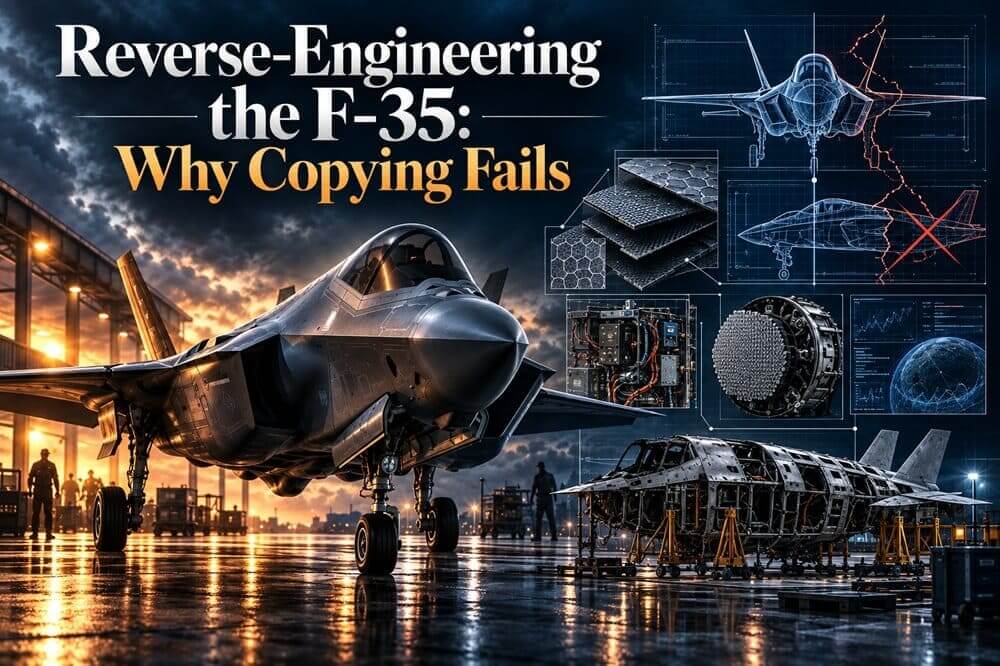
Sounds deceptively simple. Take an enemy plane, disassemble it, measure each component, and construct an identical copy. In military history, there are examples of this approach working surprisingly well. Engineers have reverse-engineered aeroplanes, missiles, engines, radars and electronic gear from captured systems. For example, Chinese reverse engineered the Soviet Mig-21 into their F-7 fighter. But the F-35 Lightning II is a different level of technology. The intelligence return from recovering an F-35 would be substantial. Engineers may look at the structures, materials, apertures, cooling provisions, methods of manufacture and the way the components are packaged.
They may also be able to measure physical tolerances and assess subsystem integration. However, none of these steps would automatically produce another F-35. The aircraft is a tightly integrated industrial ecosystem, not a hodgepodge of individual parts. Its combat capability comes from stealth manufacturing, software, sensors fusion, propulsion, mission data, electronic warfare, maintenance infrastructure and quality control. Reverse engineering an F-35 would be like taking one broken product and trying to reconstruct an entire aerospace industry with it.
Crash Wreckage Isn’t a Blueprint
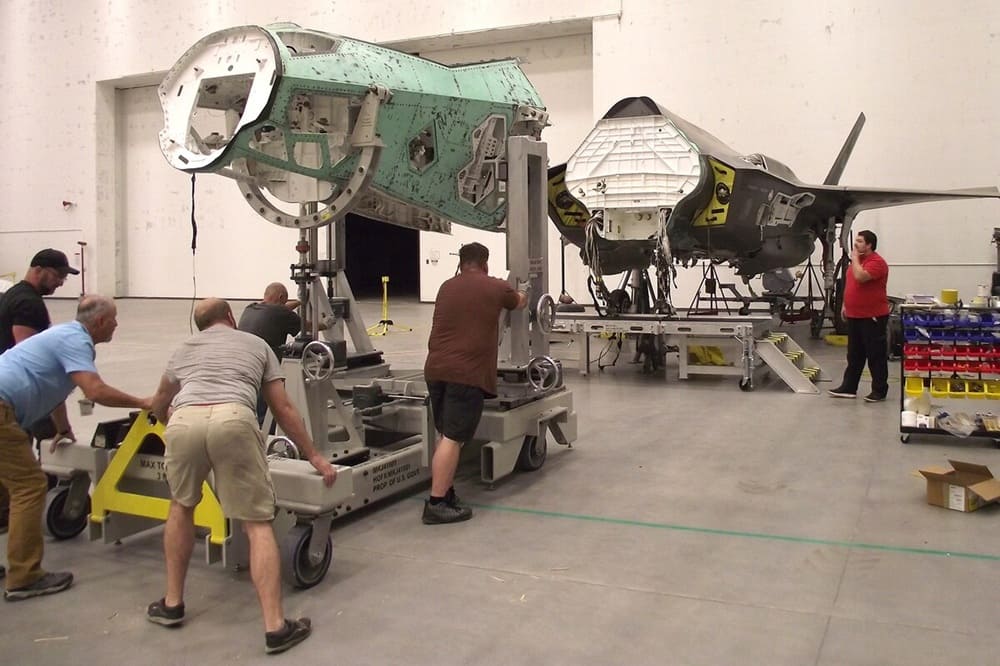
A recovered aircraft shows engineers what was built, but not how to reproduce it consistently. This distinction is important for advanced aerospace manufacturing. The investigator may measure the thickness of the composite panel. However, the wreckage does not provide the exact cure temperature, pressure cycle, resin formulation, surface preparation procedure, inspection threshold, or allowable manufacturing deviation. The same problem exists for metal parts. The size and approximate alloy composition of a turbine blade are also inherently concealed.
It does not inherently reveal the casting process, heat-treatment sequence, controls for crystal growth, coating deposition method, inspection standards or acceptable defect limits. These processes determine how well a part can withstand hundreds to thousands of cycles of operation. This is why industrial espionage does not always lead to immediate technological parity. Technical drawings accelerate development. They can’t just replicate decades of manufacturing experience that comes from failed prototypes, qualification tests and production improvements. Knowing the process may be more important than knowing the geometry for the F-35.
Why it used to be easier to reverse engineer
Military history has dramatic successes in reverse engineering. During the Second World War, several American bombers landed in Soviet territory. The Soviet Union reverse-engineered the Boeing B-29 as the Tupolev Tu-4. Soviet engineers also developed the K-13 air-to-air missile after obtaining an AIM-9 Sidewinder. These successes are examples of how captured hardware can accelerate military development.
Meanwhile, those systems came from a time when engineers built more functionality into the hardware. In contemporary combat aircraft, capability is distributed among hardware, software, manufacturing processes, cryptographic systems, databases, networks and external support infrastructure. So an F-35 is a layered technology that you cannot reassemble just by measuring physical parts.
Stealth is a manufacturing discipline.
One of the most obvious is the low observability of the F-35. Geometry still matters for aircraft. Engineers align edges, protect engine parts, internally move weapons, insert sensors into the airframe, and adjust electromagnetic reflections. However, stealth engineering is much more than an external shape. Low-observable performance is a function of the materials, joints, panel interfaces, apertures, coatings, fasteners, surface tolerances and manufacturing consistency. Radar absorbing structures (RAS) should have predictable electromagnetic properties under vibration, temperature variation, moisture, aerodynamic loading and repeated maintenance.
Samples from the recovered wreckage could be studied in a foreign lab with spectroscopy, microscopy, X-ray techniques and chemical analysis. It would learn a great deal. But to identify ingredients does not necessarily mean to reproduce a production process. Engineers can make two coatings with similar chemistry behave in different ways, depending on factors such as particle distribution, layer thickness, curing parameters, surface preparation, and application methods. A copier may look like an F-35 but have entirely unique radar characteristics.
| Vendor | Country (HQ) | Tier/role | Major F-35 deliverable (examples) |
|---|---|---|---|
| Lockheed Martin | United States | Prime contractor/system integrator | Overall air vehicle design, final assembly, integration, upgrades |
| Northrop Grumman | United States | Principal partner | Centre fuselage, AN/APG-81 AESA radar and a communications system |
| BAE Systems | United Kingdom | Principal partner | Structures for the aft fuselage, empennage (tail surfaces), and airframe |
| Pratt & Whitney (RTX) | United States | Propulsion prime | The F135 engine powers all F-35 variants. |
| Raytheon (RTX) | United States | Major sensor supplier | Electro-Optical Distributed Aperture System (EODAS/DAS) |
| Honeywell | United States | Major subsystem supplier | PTMS stands for Power and Thermal Management System. |
| Collins Aerospace (RTX) | United States | Major subsystem supplier | Landing gear and other major aircraft systems (programme-supplied subsystems) |
| GKN Aerospace | United Kingdom | Major structure supplier | Canopy and some composite/metal structures and wiring packages |
| Martin-Baker | United Kingdom | Escape system supplier | US16E ejection seat (common across F-35 variants) |
| Moog | United States | Flight controls/actuation supplier | Actuation systems and controls/actuation parts related to STOVL |
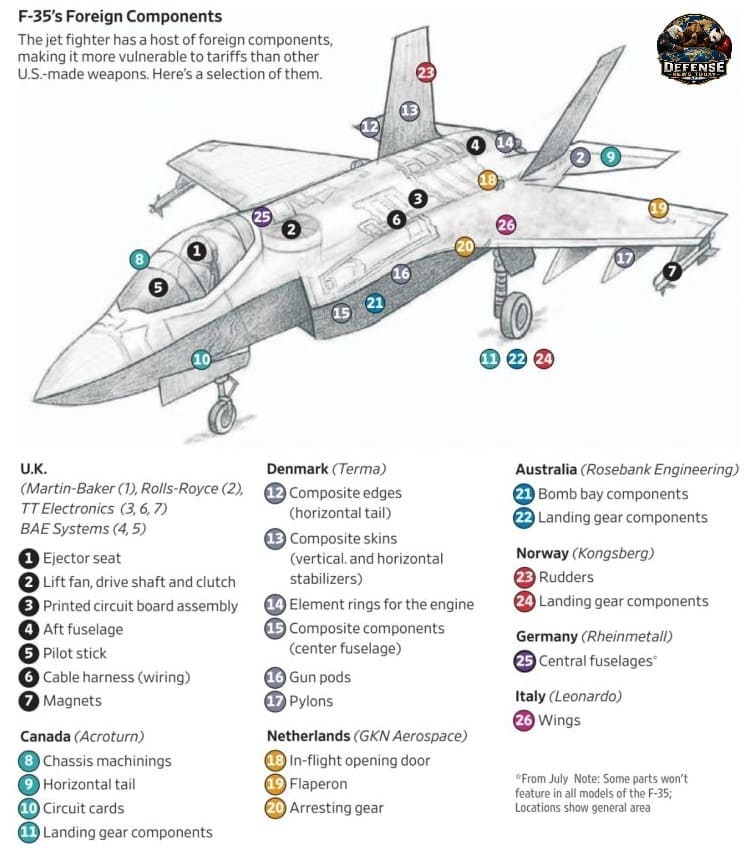
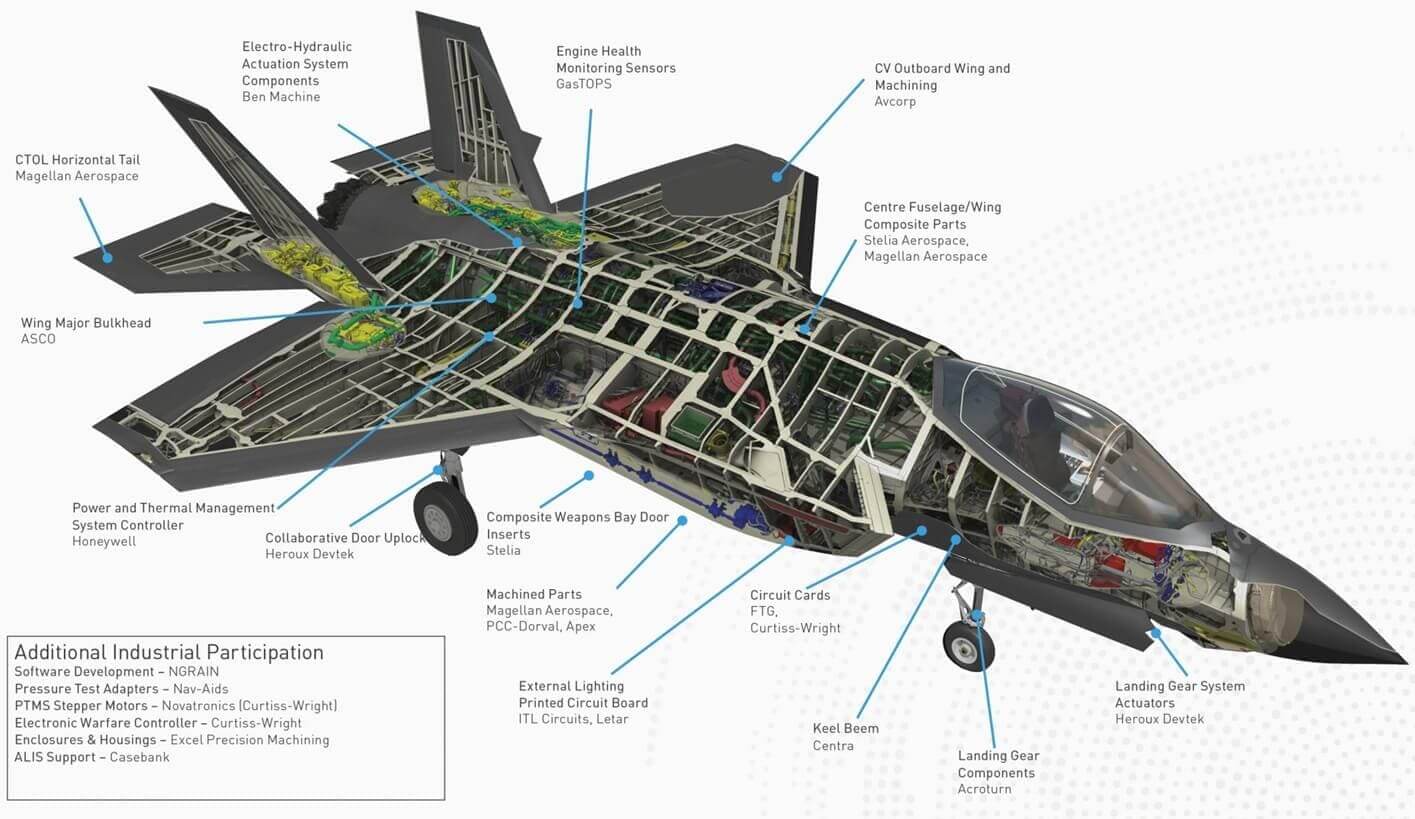
For some of the secondary vendors and third-party providers, please refer to the image below.
Most Valuable Secrets Could Be Invisible
Once taken apart, a fifth-generation fighter may keep the most sensitive information hidden. Information on radar cross-section characterisation, electronic warfare parameters, mission data files, software source code, threat libraries, cryptographic material, test databases and manufacturing specifications may be worth more than a single bracket or panel. Public documentation provides a more telling example. The F-35 has over eight million lines of software code, according to the U.S. Government Accountability Office.
GAO also found that the Department of Defense itself had trouble obtaining enough technical data and access to source code for certain sustainment activities. The result suggests an important reverse engineering problem. If the customer flying the aircraft needs complicated contractual arrangements to obtain technical data, an adversary examining wreckage has a much harder problem. A crashed computer doesn’t just give away its source code.
The F-35 is a software-defined combat aircraft.
The F-35 software does much more than drive the cockpit displays. The software provides flight control, radar operations, communications, electronic warfare, sensor fusion, weapons integration, diagnostics, navigation, and mission management. More importantly, these systems are interacting with each other all the time. It would take more than a few software modules to replicate the aircraft, if a software engineer wanted to. That would involve interface definitions, timing requirements, verification tools, test environments, hardware simulators, threat models, cybersecurity architecture, configuration-management systems, and a lot of flight-test data. Another challenge is the integration of software.
A radar may perform well in stand-alone testing, but when integrated with infrared sensors and electronic support systems, it may produce false tracks. Every millisecond matters. Poor synchronisation can lead to duplicate tracks, incorrect threat identification, delayed target solutions, and confusing information in the cockpit. There also is no credible public evidence to back claims that F-35 software automatically “deletes itself” if anyone attempts to reverse engineer it. Instead, security is implemented through protected software environments, controlled access, encryption, compartmented information, configuration control, and limited mission-system data.
Software Technology Packages
| Software Name | Technology | Main Role |
|---|---|---|
| Operational Flight Program (OFP) | Integrated airborne mission software | Integrates and controls major avionics and combat functions. |
| Mission Systems Software | Integrated avionics software | Coordinates radar, sensors, EW, navigation, weapons and communications. |
| INTEGRITY-178B | Real-Time Operating System (RTOS) | Provides a secure, deterministic platform for critical avionics software. |
| Sensor-Fusion Software | Data-fusion algorithms | This software combines multiple sensor inputs into a single tactical picture. |
| AN/APG-81 Software | AESA radar-processing software | Controls radar detection, tracking, targeting and mapping functions. |
| AN/ASQ-239 Software | Electronic warfare software | Detects, identifies and analyses electromagnetic threats. |
| DAS Software | Infrared sensor-processing software | Provides missile warning, tracking and spherical infrared awareness. |
| Mission Data Files (MDFs) | Threat-data database | Supplies threat and emitter information to EW and mission systems. |
| Flight-Control Software | Digital flight-control system | Controls aircraft stability, control surfaces and pilot commands. |
| F135 FADEC Software | Full Authority Digital Engine Control | Manages F135 engine performance, limits and propulsion control. |
| C / Embedded C++ | Programming languages | Used within embedded avionics development environments for real-time and mission-system software. |
| AdaMULTI / MULTI IDE | Integrated development environment | Supports development, debugging and verification of safety-critical embedded software. |
| Tech Refresh 3 / Block 4 Software | Next-generation avionics and mission-software architecture | Supports upgraded computing, new sensors, weapons and future F-35 capabilities. |
Sensor Fusion Matters More Than Sensors
That’s why stealing bits of the F-35 wouldn’t get you very far. Sensor Architecture of the F-35 The systems include radar, electro-optical sensors, infrared coverage, electronic warfare receivers, navigation information and off-board data. The fighter is equipped with spherical infrared coverage through the aircraft’s Distributed Aperture System. The helmet-mounted display can give the pilot threat warnings and imagery. But you can’t get that capability by putting a bunch of infrared cameras on another plane. The tricky part is figuring out if multiple sensors are looking at the same object.
The system must be able to relate measurements made at different angles, frequencies and distances. It must have strong tracks against interference, manoeuvring targets, electronic countermeasures and incomplete data. The F-35’s sensor fusion takes many inputs and automatically blends them into one tactical picture for the pilot. This capability is highly algorithm, computing architecture, calibration, software testing and accumulated operational data dependent. A copier could copy the radar hardware successfully, but not the information advantage that integration provides.
F135: Metallurgy Meets Reverse Engineering
The external dimensions of a blade are not enough to provide all the parameters to manufacture thousands of blades with predictable fatigue characteristics. Micro defects can determine whether an engine reaches its expected life or suffers catastrophic failure. The F-35B adds another level of complexity. It has a short take-off and vertical landing configuration, and the main engine is fitted with a lift system and a vectoring exhaust system. The proper coordination of mechanical and software aspects is required in transitional flight for these systems. Such an architecture would have to be extensively ground and flight tested to recreate.
Mission Data Measures Stealth Effectiveness
Fifth-generation warfare also relies heavily on intelligence work done before the plane leaves the ground. Mission-data systems include information that can identify and characterise potential threats. The electronic warfare systems must be able to differentiate between hostile radars, friendly emitters, civilian transmissions, background electromagnetic noise, and deceptive signals.
This scenario is another problem for reverse engineering. In theory, a foreign power could copy an electronic-warfare receiver, but it would not have the validated data needed to use it effectively. Using the wrong libraries can lead to false alarms or not knowing about dangerous systems at all. The aircraft may be physically capable but operationally unreliable. That’s why the power of modern armies is increasingly a matter of databases and software pipelines as well as machinery.
F-117 vs F-35: Copying Stealth
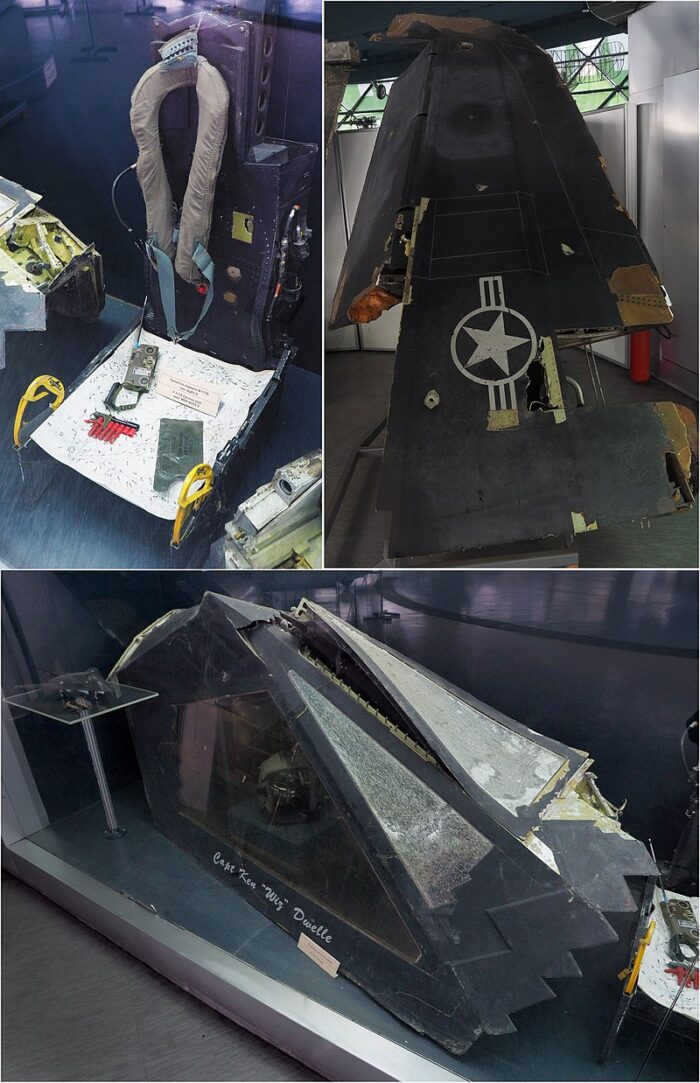
Building a copy of a crashed F-117 is a different engineering problem than building a copy of an F-35. The F-117 Nighthawk was designed in the 1970s and utilised a lot of faceted shaping, radar-absorbent materials, carefully treated edges and relatively limited onboard computing compared to today. Thus, investigation of recovered debris may provide useful information on its geometry, structural layout, coatings and radar-reduction philosophy. A faithful reproduction of the plane would, however, be difficult without the precise manufacturing process and material specifications.
The F-35 is a whole different tech ecosystem. Its combat effectiveness depends not only on airframe shaping but also on advanced composites, embedded sensors, sensor fusion, mission computers, electronic warfare systems, secure datalinks, low observable manufacturing tolerances, and millions of lines of software. A recovered F-35 may be able to share some components, materials and methods of building it, but not the industrial processes, source code, encryption architecture, algorithms, testing standards or knowledge of how to produce the aircraft. An F-117 could be reverse engineered to provide some insight into an earlier generation of stealth design. For reverse engineering an F-35, it is not enough to simply copy the shape of an aircraft. You’d have to rebuild a whole digital, industrial and software ecosystem.
Case Study: UK’s F-35B crash in 2021
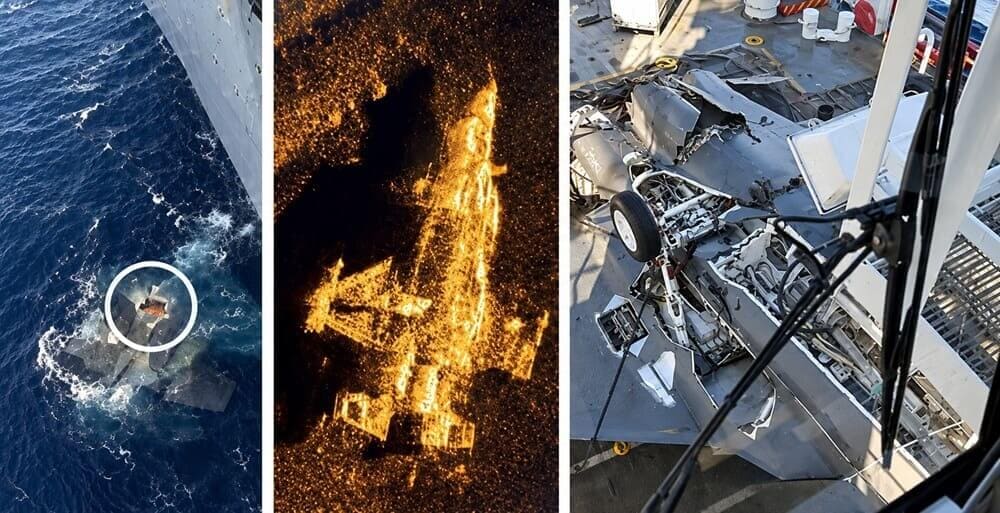
A useful real-world example is the crash of a British F-35B ZM152, which shows how seriously governments treat the wreckage of advanced aircraft. The F-35B ZM152 crashed on 17 November 2021 while taking off from HMS Queen Elizabeth in the Med. The pilot ejected safely. The plane crashed into the sea and was subsequently located upside down on the seabed at a depth of around 2,000 metres. The British authorities then arranged a salvage operation and recovered the aircraft and various parts.
There was an essential principle to the recovery. Even if the aircraft can no longer be put into operation, the wreckage of modern combat aircraft has intelligence value. Investigators can gain knowledge of materials, sensors, manufacturing practices, electronic packaging and other engineering characteristics. But recovering those components doesn’t give the development databases, qualification history, source code, production tooling or industrial processes that support them. The wreckage is an intelligence source, not a complete set of blueprints.
Supply Chains Are in the Arsenal
Another overlooked problem is the scale of manufacturing. A lab was able to reconstruct many parts successfully. The real challenge is to keep hundreds of aircraft in the air. The world of military aviation requires interchangeable parts, repeatable tolerances, documented materials, traceability, nondestructive inspection, configuration control, supplier certification and continuous engineering support. One poorly manufactured fastener or poorly bonded structure can have fleet-wide consequences.
A fifth-generation aircraft relies on thousands of specialised industrial relationships. The system includes semiconductor manufacturers, composite experts, engine suppliers, sensor companies, precision machine shops, software labs, coating specialists and maintenance operations. Ultimately, the F-35 is an industrial policy programme, not a reverse-engineering project for an aircraft.
Economic Barriers May Outweigh Technical Ones
Price is the last hurdle. GAO reported in 2024 that projected F-35 sustainment costs increased from about $1.1 trillion in 2018 to $1.58 trillion in 2023, a 44% increase. The GAO said the Department of Defense also expects to spend more than $2 trillion on acquisition and sustainment costs over the programme’s life. The numbers are indicative of a mature programme with established manufacturers, test infrastructure, trained personnel, databases and international partners.
To do that by reverse engineering would mean independently developing many of the same capabilities. So a country that could clone the F-35 in its entirety would have the aerospace know-how to develop its own fifth-generation fighter. That’s a big strategic question. Why spend decades duplicating your enemy’s technology when you could instead focus all those scientists, factories, and budgets on developing the next generation?
F-35 and J-35 Similarities Don’t Mean Cloning
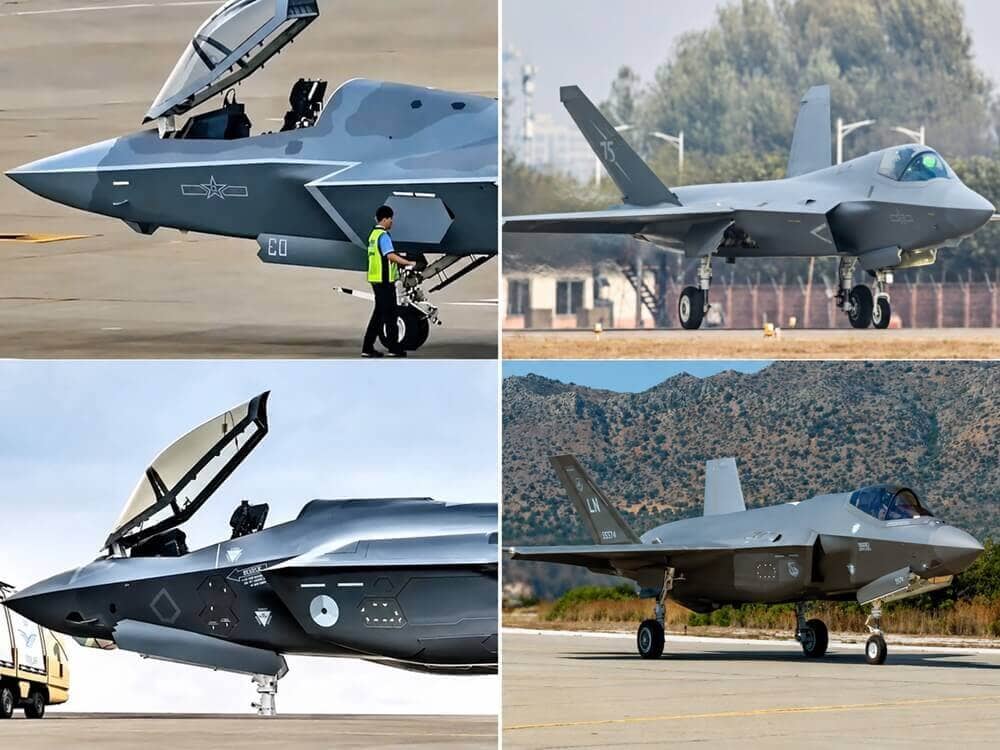
Several OSINT sources claim that the J-35 is often referred to as a “Chinese F-35.” This description is oversimplified. Although the two aircraft are not identical twins, they do share some broad fifth-generation design principles, such as internal weapon carriage, edge alignment, reduced radar signature and integrated sensors. However, these are traits that increasingly define the stealth fighter category as a whole. The J-35 is a twin-engine design, part of the family of designs derived from the FC-31. The F-35 is powered by a single F135 engine and has three major variants, including the STOVL F-35B.
Some public-domain allegations of cyber-espionage against Western aerospace programmes are worth investigating. They don’t show China got a complete manufacturing recipe for the F-35. If you have drawings or engineering information available, such data can help reduce the development time. There would be no automatic delivery of metallurgy, production quality, flight test experience, mission software, electronic warfare libraries, manufacturing tolerances, or decades of operational feedback.
Conclusion
It’s a significant intelligence opportunity if they can obtain an intact F-35. Engineers would be exposed to structures, materials, component packaging, thermal management, low-observable construction, sensors and manufacturing philosophy. They could also help speed up research in many areas at home.” But the goals of intelligence exploitation and industrial replication are different. There isn’t one radar, or engine, or coating or computer that makes the F-35 powerful. It’s the integration of thousands of technologies and processes.
A successful clone would require advanced metallurgy, composite manufacturing, precision machining, low-observable materials, semiconductor fabrication, secure software development, propulsion technology, sensor fusion, electronic warfare databases, flight testing, maintenance infrastructure and industrial quality control. A wreck could tell where it was heading. It wouldn’t reveal every detail of the process. That is the biggest reason it would be very difficult to reverse engineer an F-35. A lot of the real tech is not in the aircraft, so you can’t just steal fifth-generation capability from a crashed aircraft.
References
- U.S. Government Accountability Office, GAO-23-105341 — F-35 Aircraft: DOD and the Military Services Need to Reassess the Future Sustainment Strategy.
- U.S. Government Accountability Office, GAO-24-106703 — F-35 Sustainment: Costs Continue to Rise While Planned Use and Availability Have Decreased.
- Pratt & Whitney — F135 Engine Technical Overview.
- UK Defence Safety Authority — Service Inquiry into the Loss of F-35B Lightning ZM152, 2021.
About the Author

Spot on with this write-up, I absolutely think
this website needs much more attention. I’ll probably be
returning to see more, thanks for the info!