
Why India Rejected Russia’s Su-57
India and Russia collaborated for more than a decade on a fifth-generation fighter before India withdrew from the Fifth Generation Fighter Aircraft (FGFA) programme in 2018. India exited the joint FGFA programme in 2018, and Russia returned with increasingly attractive offers for the Su-57E. The decision was remarkable, as India was already flying hundreds of Russian-origin combat aircraft and had built an extensive industrial relationship with Sukhoi through the Su-30MKI. But the withdrawal was not only a rejection of the combat capability of the Sukhoi Su-57.
This was a more fundamental disagreement over stealth performance, propulsion maturity, avionics, technology transfer, development risk, industrial workshare and strategic autonomy. Russia soon returned with a much more forceful proposal. At Aero India 2025, Moscow offered to build the export Su-57E in India by adapting HAL’s existing Su-30 production facilities. Rosoboronexport also promised what it called a full technology transfer. At that point, the Indian Air Force had only 31 fighter squadrons, against an authorised target of 42. Meanwhile, India’s long-term focus is increasingly shifting toward an indigenously developed Advanced Medium Combat Aircraft, or AMCA.
The FGFA Problem
India and Russia signed an intergovernmental agreement on the FGFA concept in 2007. They signed a preliminary design deal in 2010 for $295 million each. The preliminary design was completed in 2013, but the programme then bogged down in talks over costs, intellectual property and the allocation of engineering duties. The Russian T-50, which became the Su-57, was never intended for India. Dozens of changes were planned for the Indian aircraft.
The open-source program reporting uncovered some 43 India-specific changes to sensors, to networking, to avionics, to software and other systems. India also considered a two-seat layout for long-range missions. HAL was seeking a big job in mission computers, navigation, displays, electronic countermeasures and software. The conflict was thus over something more strategic: acquiring machines and who was to understand and control the technology. That was the difference in the end.
Stealth Concerns
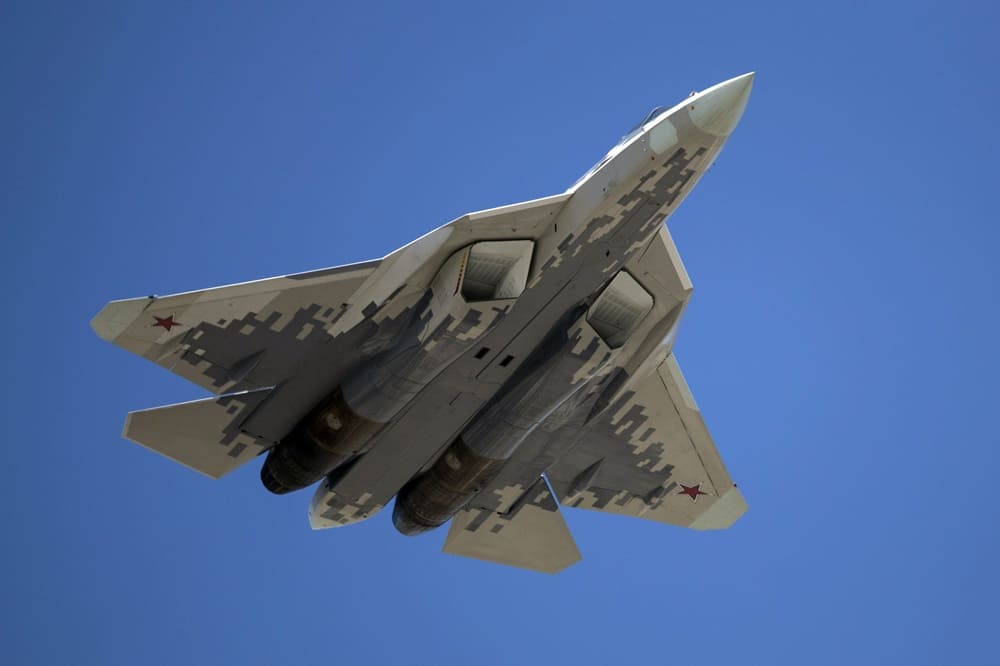
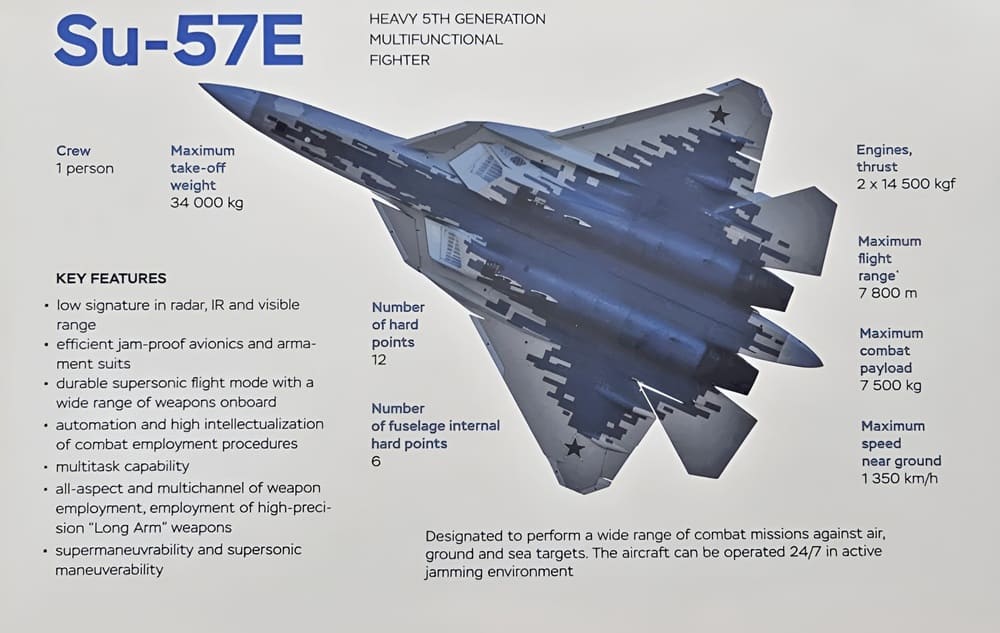
The Su-57 is not designed to be stealthy, that’s for sure. It has extensive planform alignment, internal weapon bays, composite materials, and radar-absorbent treatments. Fifth-generation stealth, however, is not a binary thing. An aircraft does not have to be low observable in all frequencies, aspects and operating conditions equally. Indian concerns were, it was said, very much focused on the question of whether the Russian aircraft delivered the low-observability performance needed for the investment required. Among its objections, reports on the 2018 withdrawal specifically cited stealth, radar, sensors and combat avionics.
Technically, Su-57 is a different design philosophy from F-35 and others. The aircraft features large control surfaces, high angle of attack capability and powerful propulsion, combining signature reduction and excellent aerodynamics. Its widely spaced engines also afford considerable control authority and internal volume. However, the conventional circular engine exhausts and the usual aft-engine layout complicate some aspects of signature reduction. As for the operational radar cross-section of the Su-57 under controlled conditions, there is no known credible public source. Therefore, the numerical RCS values obtained from the internet should be considered as speculative. The question for India was not the stealth of the Su-57. The question was, was the signature-to-cost ratio worth spending billions more dollars on another foreign design?
Engine Risks
Another problem was drive. The first batch of production Su-57s were powered by the AL-41F1 family of engines, while Russia was developing a second-stage powerplant for the aircraft to reach its design potential. This step was important, as supercruise is more than an advertised top speed. A true 5th-generation fighter needs enough dry thrust with operational fuel, internal weapons and mission equipment. In addition to sortie generation, this maturity also affects infrared signature, acceleration, electrical generation and life-cycle cost.
India already has significant experience of operating Russian fighter engines on its fleet of Su-30MKI aircraft. So it knew that the purchase price was only part of the overall picture. For many decades, mean time to overhaul, component life, maintenance manpower and supply chain reliability can dominate fleet economics. In effect, by committing to the FGFA before the propulsion system was finalised, Russia transferred some of the development risk to India.
Sensors Mattered More Than Manoeuvrability
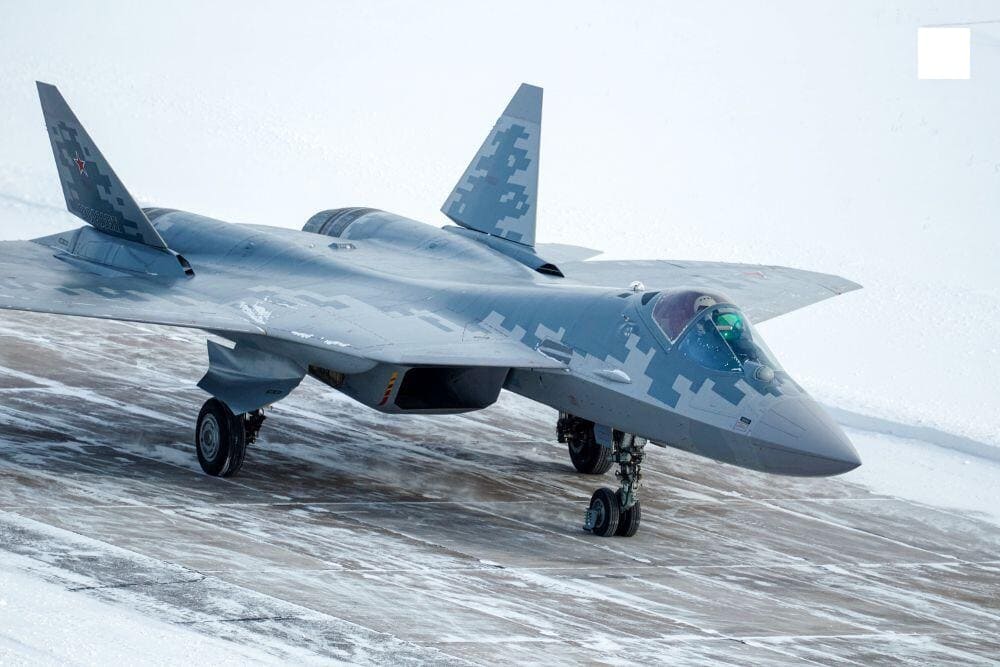
Technically, the Su-57 sensor concept is ambitious. The N036 Byelka uses an active electronically scanned array in the X-band for its radar architecture, as well as other arrays and electro-optical and infrared sensors. This architecture, in principle, provides excellent angular coverage and supports detection, tracking and electronic warfare functions. But fifth-generation warfare is less about the specs of individual sensors and more about sensor-to-sensor fusion.
Radar, infrared search and track, electronic support measures, data links, identification systems and off-board information have to produce a single tactical picture with minimum pilot workload. This is an area where the software is as important as the aerodynamic performance. India wanted far more control over its combat avionics, mission computers and software, as these systems determine whether the aircraft can take on Indian weapons and evolve on its own over a 30- to 40-year service life. The spectacular aerodynamic platform without sovereign access to its digital architecture can be strategically constraining.
Technology Transfer Dispute
One of the less known aspects of FGFA was the meaning of joint development. India wanted more deals in which HAL manufactured components under licence, with deeper intellectual property to redesign them. The early investment in design in 2010 indicated that New Delhi wanted real engineering engagement. However, they still disagreed on design access, technology and workshare. This is also why it matters that Russia’s offer was significantly more ambitious than the earlier one.
Russian officials in public presented the package as involving a full transfer of technology and floated the idea of building the Su-57 in India using an upgraded version of HAL’s Su-30 production infrastructure at Aero India 2025. At the time, Reuters reported about 260 Su-30s were in service with the Indian air force. It made economic sense to provide. India already had Sukhoi production capability, tooling, trained engineers and a huge Russian aircraft support ecosystem. But by then, the strategic goal for India had changed. The fifth-generation fighter was no longer all it wanted to build. It wanted to know how to build a Sukhoi fighter.
Case Study: From FGFA to AMCA
So the most important outcome of the FGFA experience is the AMCA. On 27 May 2025, India’s defence minister signed off in principle on a new AMCA implementation model. The Aeronautical Development Agency will implement the programme in partnership with Indian industry. Public and private firms will be allowed to compete either on their own or in consortia. That alters the strategic calculus entirely. Every rupee spent on FGFA would strengthen an imported aircraft ecosystem. Conversely, an AMCA investment builds Indian expertise in computational fluid dynamics, radar-absorbent structures, flight-control laws, mission software, AESA integration, electronic warfare, and weapons integration.
Now they’re adding propulsion to that plan, too. On 14 August 2026, Reliance Industries announced a partnership with Rolls-Royce to design and manufacture a fighter engine for India’s combat aircraft programme. The AMCA prototype is expected to roll out in 2028, Reuters said. Separately, Safran has proposed a tie-up with India’s GTRE for a higher-thrust engine for later AMCA variants. That development bolsters the strategic rationale for rejecting yet another foreign fifth-generation dependency.
The Su-57 Was Still Capable
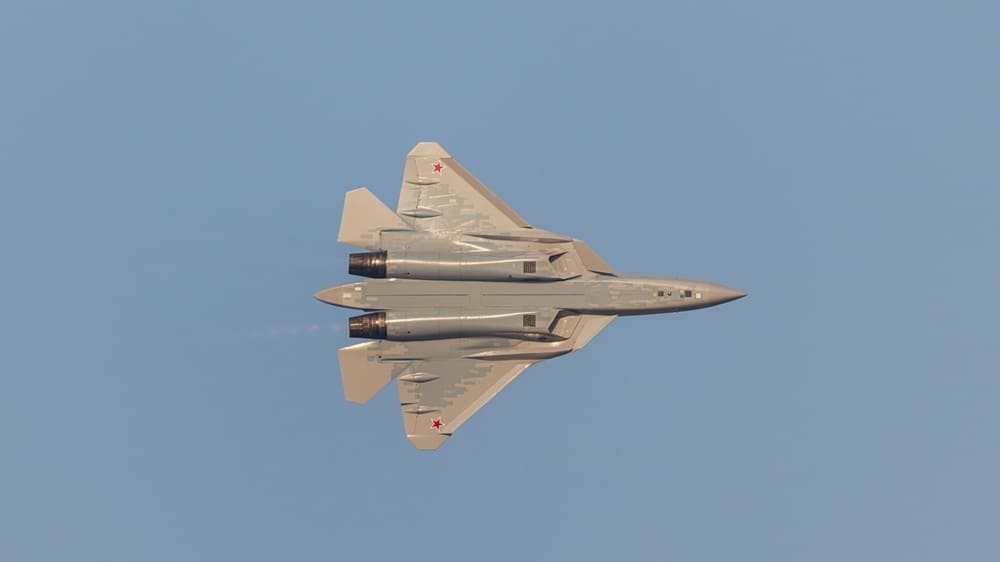
Thus, India’s decision should not be construed as proof of the Su-57’s uselessness. It is an aircraft with internal weapons carriage, advanced sensors, high kinematic performance and a high degree of aerodynamic sophistication. Since India withdrew from the FGFA, Russia has continued to develop the platform, meaning that the Su-57 today is not the same as the prototypes India was considering over a decade ago. Ironically, Russia officially presented the Su-57E at Aero India 2025 and continues to advertise it as a combat-proven fifth-generation platform. India had other calculations. New Delhi had to balance the earlier acquisition of operational capability against another decades-long reliance on a foreign design.
Final Assessment
The Su-57 story becomes a window into how India views modern air power. The real question was never Su57 vs AMCA. It was an aircraft purchase, or aerospace independence. India dropped the FGFA after spending money and over a decade of diplomatic effort because the programme no longer offered the mix of stealth, technical maturity, technology access and industrial control that New Delhi felt a true joint-development programme should have. The decision is a very risky one. The AMCA will take years to mature, and China is already fielding the J-20 and continuing to expand its advanced combat-aircraft fleet.
India’s lack of fighter squadrons adds to the pressure. As a result, IAF is half-heartedly looking at the Su-57 again as per the news. The IAF was flying only 31 squadrons against a sanctioned strength of 42 by 2025. Buying the Su-57E may have closed that capability gap sooner. However, it seems India is willing to take short-term operational risk for long-term technological independence. That was the main reason why India moved away from the Russian Su-57 route. India thought that the benefit of having fifth-generation aircraft was less than the benefit of gaining the ability to design, modify, manufacture and eventually export them.
About the Author