Bradley vs BMP-3
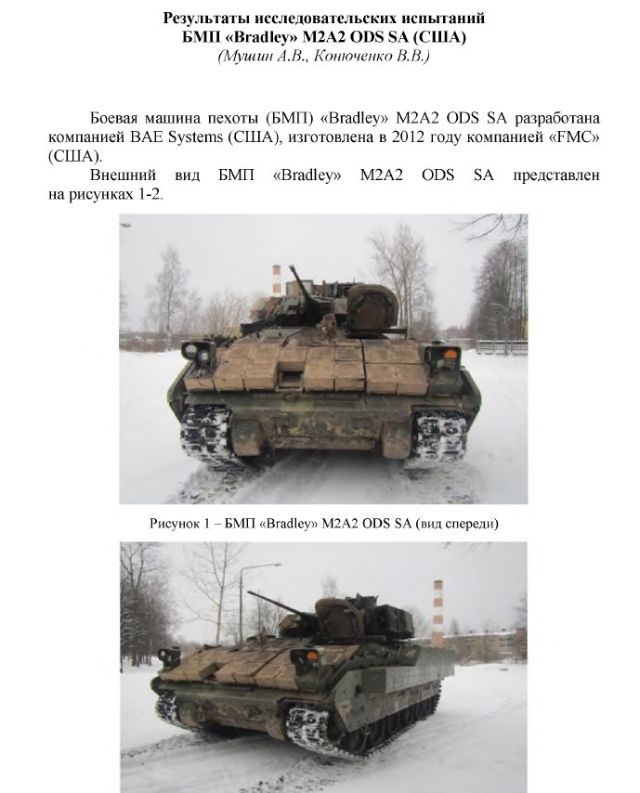
On 6 April 2025, a Russian military report provided an unusually candid assessment of the country’s own BMP-3 armoured vehicle capabilities. The 38th Research Institute of Armoured Vehicles, based in Kubinka near Moscow and under the Russian Defense Ministry, published a detailed study titled “Results of Research Tests of the BMP ‘Bradley’ M2A2 ODS SA [USA].” The paper of the researchers A.V. Mushin and V.V. Konyuchenko examined an American M2A2 Bradley infantry fighting vehicle previously operated by Ukrainian forces and later captured by Russia. Armoured vehicle researcher Andriy Tarasenko published the study’s key findings on his Telegram channel. The American-made Bradley is much better than the Russian BMP-3 in such important aspects as protection, firepower and comfort of the crew.
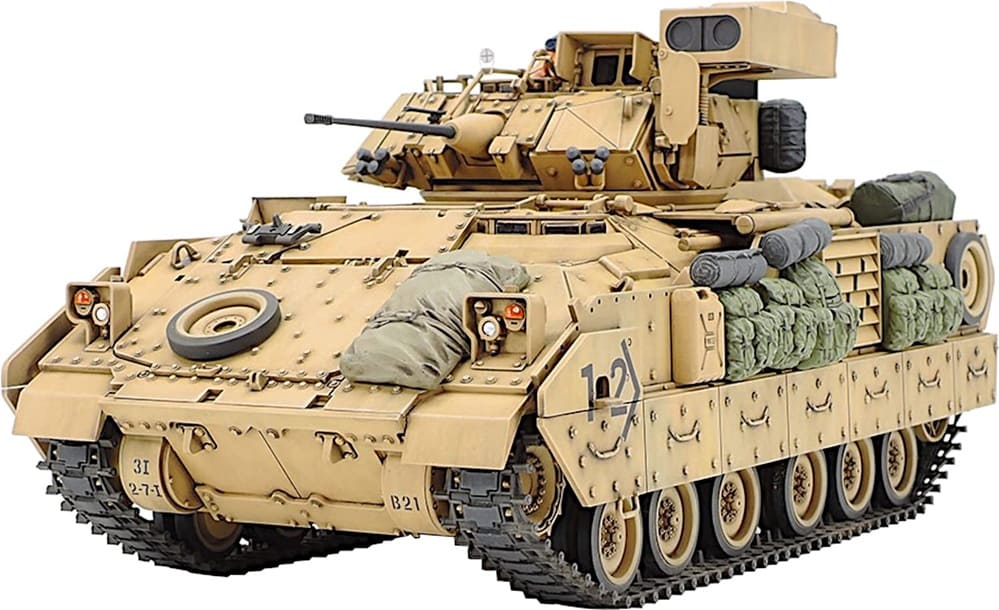
The report from a prominent Russian military institution prompted American observers to reassess Moscow’s armoured warfare capabilities and the broader technological competition shaping modern combat. The report looked at the M2A2 Bradley ODS SA version, which is similar to US military stocks. Developed in the 1980s, it was part of the Bradley family of infantry fighting vehicles. It was designed by FMC Corporation (now BAE Systems Land & Armaments) to carry infantry into battle and provide heavy fire support. The ODS SA [Operation Desert Storm Situational Awareness] upgrade, a product of lessons learned during the 1991 Gulf War, included upgrades to its electronics, optics and survivability. The Bradley is powered by a 600-horsepower Cummins VTA-903T diesel engine and can reach a top speed of about 40 miles per hour on roads. It weighs around 30 tonnes.
Engine vs Engine
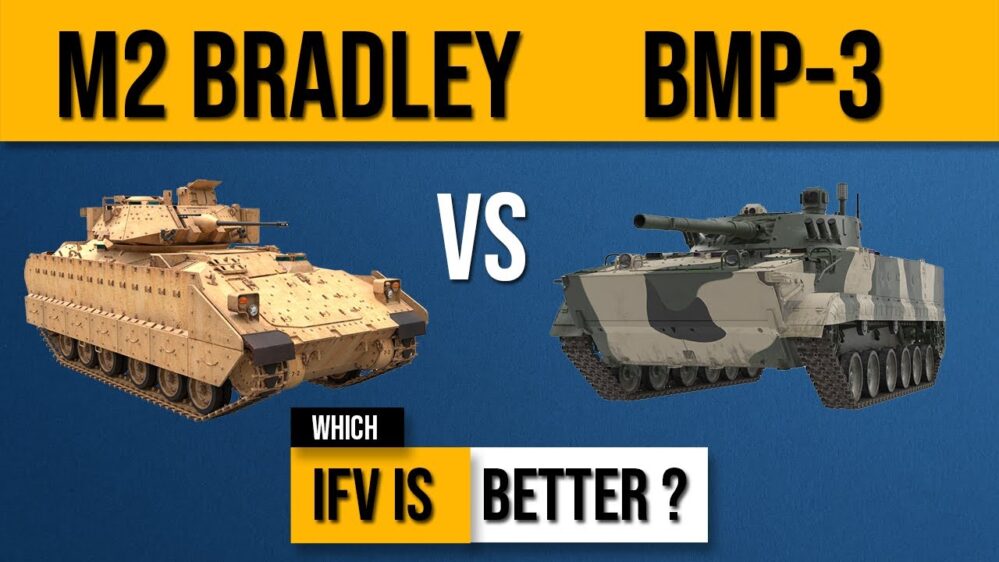
Its weapons include a 25mm M242 Bushmaster chain gun, which can fire up to 200 rounds per minute; a 7.62mm coaxial machine gun; and twin TOW missile launchers for anti-tank roles. The vehicle is protected by steel and aluminium armour. Extra protection can be added by fitting Bradley Reactive Armour Tiles (BRATs). It’s effective against anything from small arms to rocket-propelled grenades. It carries seven infantrymen + a crew of three (commander, gunner and driver). However, its designers prioritised protection over the lower weight and greater agility that some competing vehicles offer. But the BMP-3, Russia’s main infantry fighting vehicle since the late 1980s, is based on different principles. It is manufactured at the Kurganmashzavod plant and weighs around 18.7 tonnes.
The BMP-3 has a 500-horsepower UTD-29 engine and can hit 43 miles per hour on land and 6 miles per hour across water — something the Bradley can’t do. Armament looks forceful: a 100mm 2A70 rifled gun, firing both shells and guided missiles; a 30mm 2A72 autocannon; and a 7.62mm PKT machine gun. The BMP-3 is similar to the Bradley in that it carries three crew members and seven dismounted soldiers. Meanwhile, its lighter weight and ability to operate on land and water mean that its armour is thinner. Usually steel can be reinforced with optional add-ons. The BMP-3 is capable of fighting with a large number of weapons, but its armour has long been a problem, especially against modern anti-tank weapons. The Russian study did not shy away from these distinctions. In several tests, Tarasenko’s summary says, Bradley’s armour performed better.
BRAT Reactive tiles
BRAT was particularly effective at mine avoidance, with a two-layer aluminium and steel hull, a polymer anti-mine mat, and shock-absorbing seats. The report said the Bradley’s front armour can stop 30 mm 3UBR8 armour-piercing rounds, but the BMP-3’s front armour cannot. BRAT reactive tiles protected the Bradley’s sides and resisted cumulative grenades such as the PG-9VS and, to a lesser extent, the more powerful PG-7VL. For example, in March 2024, two anti-tank missiles struck a Bradley but failed to explode. One struck the turret’s reactive armour, while the other hit the side. The Bradley was not heavily damaged. In contrast, the BMP-3 is susceptible to the same threats unless fitted with extra dynamic protection, which the report said is not standard.
The Bradley’s M242 Bushmaster could fire twice as fast as the 30mm 2A42 and 2A72 cannons of the BMP-3, giving the M242 Bushmaster a longer effective range and more hits on targets. The study found Bradley’s 25 mm sabot rounds penetrated twice as deep as the BMP-3’s 30 mm shells. That gave it a significant advantage in fighting armoured vehicles. “The BMP-3’s 100mm gun can fire either an explosive shell or a missile. But it has trouble against fast or heavily armoured targets. It has outdated optics and shoots slower. Russian analysts also pointed to Bradley’s superior combat accuracy. Its thermal sights and laser rangefinder were said to improve targeting. The Bradley’s modern fire control system is obviously better than the old BMP-3 system.
Russia’s Ministry of Defense
The Bradley primarily met the crew’s comfort and maintenance requirements. The front-mounted engine and rear ramp give you more room inside. Troops can move from fighting areas to troop areas. The design allows for these movements. The BMP-3 can’t do that because the engine is in the back and the hatches are small. The report commended the Bradley for its simple maintenance and repair requirements. This design saves labour and time and provides more access to the engine, generator and gun barrel. Ukrainian soldiers also confirmed this conclusion. Telegram news source Voenni shared commendations for the 47th Assault Brigade in 2024. Their Bradley was not damaged in a mine blast, the crew reported. Some maintenance is easier on the BMP-3, but the cramped quarters make extended missions difficult.
The Russian report highlighted this limitation, particularly during prolonged combat operations. Its unusually candid conclusions also raise an important question: why did the Russian Ministry of Defense permit their publication at such a sensitive stage of the war? Russia once called the BMP-3 a “best-in-class” machine, and it is an IFV, a tank killer, and an amphibious carrier all rolled into one. The change is a sign of mounting pressure within the Russian military system. Some analysts say it is a sign of a deeper change in the defense industry. Western sanctions have been targeting Russian arms makers since 2014, but now the situation is worsening, with the toll in Ukraine rising. Oryx says Russia would have lost more than 760 BMP-3s by early 2025. That’s a lot, and it shows the limits of the vehicle. The report calls for western-style armour screens, improved 30 mm shells and new crew layouts.
According to Oryx
All these developments mean that Russia may steal ideas from its enemies to modernise. This wasn’t the first time. The Soviets, using the American B-29 as a model, built the Tu-4 bomber. Then, during the Cold War, they also copied radar and tank designs. This Bradley study may revive that strategy. But the situation is more complicated today. Russia has serious problems with the economy and the shrinking industrial base. In January 2025, Rostec admitted that sanctions limit access to high-tech components. Kurganmashzavod, the BMP-3’s manufacturer, now works 12-hour shifts and has tripled production. They’re trying to replace battlefield losses as fast as possible. However, Moscow has yet to prove that it can translate these findings into meaningful improvements. The evidence from the Ukraine battlefield supports the Russian inferences.
Drone footage has captured some of the biggest fights in the Bradley series. Ukraine’s 47th Brigade destroyed a Russian T-90M tank near Avdiivka in January 2024 with M2A2s. The brigade’s Telegram channel said the tank’s armour was destroyed before it could react. A November 2024 video showed a Bradley under fire extracting troops. It took three hits, but it kept going, and that shows just how tough it is. The Russian study praised the vehicle’s survivability and firepower against the BMP-3, which drones, artillery and anti-tank missiles often outgun. Oryx confirmed the loss or capture of 376 BMP-3s by mid-2024. On January 6, 2023, the United States offered more than 100 Bradley vehicles as part of a $2.85 billion aid package. And that’s how the vehicles made their way to Ukraine. “The M2A2 ODS SA variant came in batches with better optics and TOW missiles, which are more suited for Ukraine’s flat, open terrain.
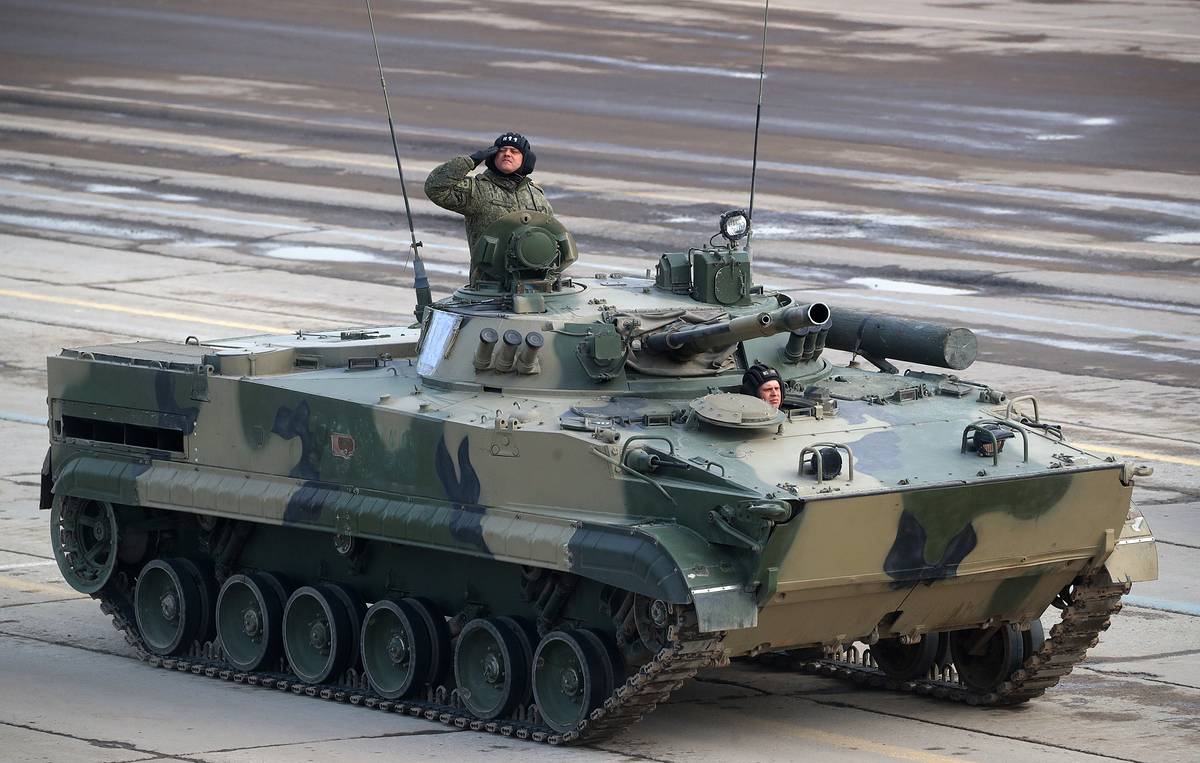
Two Different types of IFVs
The BMP-3, for its part, has been a significant element of the Russian forces since the fall of the Soviet Union. As of early 2025, there are more than 760 in service, according to the International Institute for Strategic Studies’ Military Balance report. Soviet designers developed the BMP-3 in the 1980s, prioritising speed and amphibious mobility over protection against modern battlefield threats. In Ukraine, Javelin missiles and loitering munitions have destroyed dozens of BMPs. There are two pivotal advanced types of IFVs in the world. The Bradley and BMP-3. The Bradley and its descendants, like the M2A4, show the American way — safety and firepower for the crew.
Several Nato allies have different standards, like Germany’s Marder and the UK’s Warrior. Russia designed the BMP series (the BMP-1, the BMP-2, and so on) to be mobile and flexible. Soviet tactics emphasised rapid strikes and amphibious operations across both land and water. Other countries have taken a more mixed approach. Sweden’s CV90 is both heavily armoured and agile. China’s ZBD-04A is based on the heavy gun design of the BMP-3 and modern electronics. The call for change As the Russian report notes, the change indicates that Moscow recognises the limits of its approach. But closing that gap will take more than one study. Americans get a rare look inside the mind and heart of the Russian military in this news. From Iraq to Afghanistan, the Bradley has served as a workhorse in U.S. wars. Now even the enemy respects it.
Conclusion
The Bradley will be more famous for its performance in Ukraine. Oryx reported that by early 2025, there had been 144 tank losses, which is much less than the number of BMPs lost by Russia. However, it’s not just a story of how Americans won. It has a competitor admitting weakness and calling for change, even as its industry is already collapsing under the pressure of the war. What now? Will Russia modernise its IFVs, or will it continue using obsolete models because of budget limitations? The answers could also change the next phase of armoured warfare elsewhere in the world.
References
- “Russian Study of Captured M2A2 Bradley Finds It Superior to BMP-3” — Militarnyi, 6 April 2025. Covers the Russian 38th Research Institute study and its principal findings.
- “Ukrainian Combat Employment of the Bradley Fighting Vehicle” — U.S. Army Armour, 2026. Provides Bradley specifications, weapons, engine details and operational observations from Ukraine.
- “More Than $3 Billion in Additional Security Assistance for Ukraine” — U.S. Department of Defence, 6 January 2023. Confirms the initial package of 50 Bradley IFVs, TOW missiles and 25 mm ammunition.
- “Attack on Europe: Documenting Russian Equipment Losses During the Russian Invasion of Ukraine” — Oryx. Provides visually documented Russian equipment losses, including BMP-3 vehicles.
About the Author