F-111 Influence on Su-24 Design
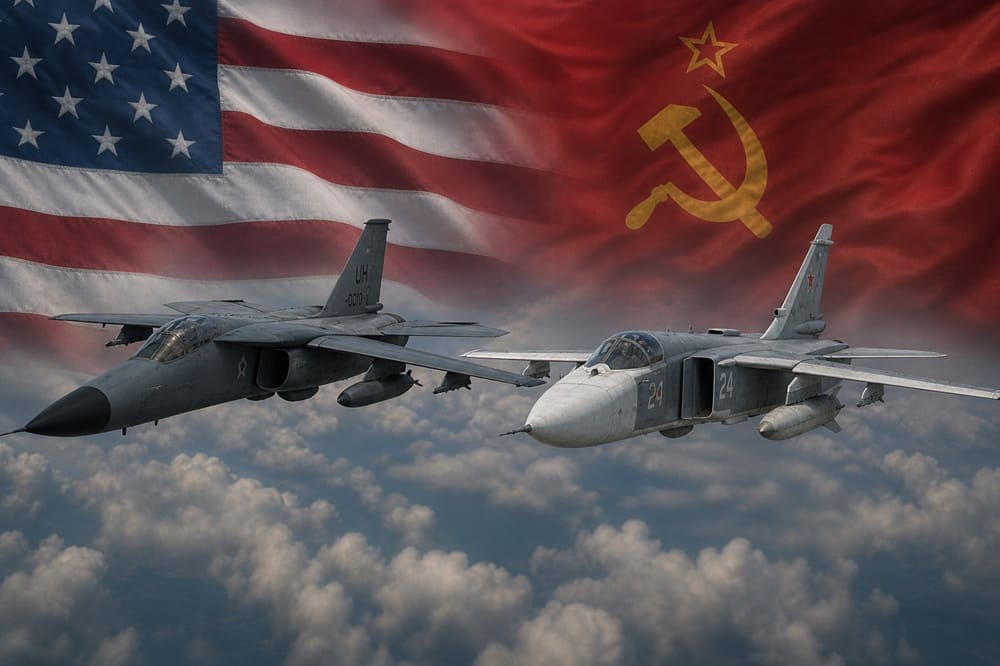
One of the most compelling cases of Cold War aerospace learning is the influence of the F-111 on Su-24 development. The Soviet Union didn’t just copy the American General Dynamics F-111. Rather, Soviet designers examined its apparent design logic and assimilated its operating concept, using those lessons in the Sukhoi Su-24.
When F-111 Shocked Soviet Designers
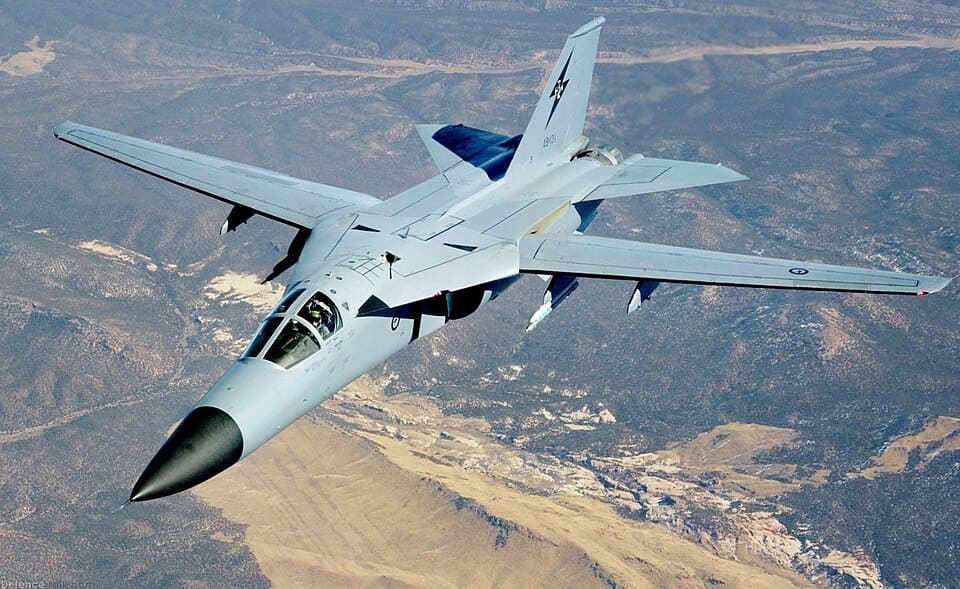
The 1960s F-111 brought the wonderful idea. It could fly fast, low, and far with a heavy strike load. It also had variable-sweep wings that allowed it to perform well at different speeds and altitudes.
This capability was of paramount importance to the Soviet planners. The F-111 proved a strike aircraft could avoid radar and fly under enemy detection zones. It changed Moscow’s calculus on deep-strike missions against NATO targets.
F-111 Imagery Shapes Samoilovich
Oleg Samoilovich, one of the key designers at Sukhoi, reportedly studied detailed photographs and intelligence material related to the F-111. From these pictures, the Soviet engineers could see the aircraft’s exterior, the shape of its wings, the arrangement of its cockpit, and the position of its intakes.
But photographs could not tell everything. They didn’t reveal full avionics architecture, structural materials, radar software, or manufacturing techniques. Still, they taught Sukhoi engineers about the F-111’s design philosophy.
Visual Clues to Soviet Engineering
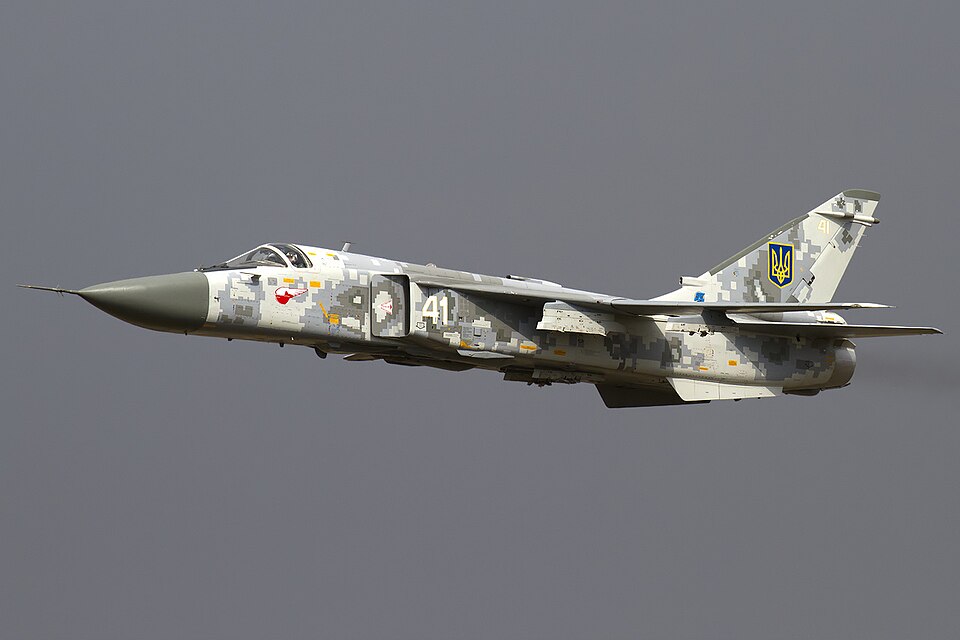
The influence of the F-111 on the Su-24 manifested itself in several ways. Both planes featured variable-sweep wings. They both put two crew members next to each other. Both were intended for all-weather, low-altitude penetration missions.
But the Su-24 was still a Soviet aircraft from an engineering perspective. Sukhoi built it to Soviet production standards, airbase conditions, maintenance culture, and tactical doctrine. So the Su-24 was an adapted answer, not a straight clone.
Variable Wings & Low-Level Speed
The most obvious similarity was the swing-wing arrangement. The F-111 used variable sweep to combine take-off performance, low-level stability, and supersonic dash ability. Sukhoi therefore adopted the same broad concept for the Su-24.
This gave the Su-24 more flexibility than the strike fixed-wing aircraft. It could operate from shorter runways and at lower sweep angles. It could fly faster on penetration missions with the higher sweep angles. Thus, the design met Soviet requirements for tactical strike operations.
Avionics: Hardest to Copy
The F-111’s true power wasn’t just its airframe. The terrain-following radar and navigation-attack system allowed crews to fly dangerous low-level routes in bad weather and darkness.
Soviet engineers knew the truth, but they couldn’t copy it from pictures. Instead, they developed the Puma PNS-24 navigation and attack system for the Su-24. It lacked some of the sophistication of Western systems but provided the aircraft with a credible all-weather strike capability.
Side-by-Side Crew Layout
The cockpit also showed the effect of the F-111 on the Su-24. The side-by-side crew arrangement enhanced pilot and navigator-operator coordination. This was important for fast, low-altitude missions where workload could be extreme.
The layout also enhanced communications for radar navigation, weapons delivery, and threat response. Thus, the cockpit design of the Su-24 was adapted to the demanding mission profile, and Sukhoi chose it.
Soviet Adaptation
To say that the Su-24 is a copy of the F-111 is to oversimplify the story. The F-111 was the inspiration for the mission model, but Soviet engineers had a different aircraft with different constraints.
The Su-24 had Russian engines, Russian avionics, Russian weapons, and Russian production techniques. In addition, it emphasized toughness and maintainability. The final aircraft exemplified Soviet doctrine: deliver heavy firepower, operate in difficult conditions, and support theater-level strike missions.
Su-24 Combat Effectiveness
The Su-24 was introduced as a major Soviet tactical bomber. It furnished the USSR with a serious low-level strike platform for carrying conventional and nuclear weapons. It lacked some of the sophistication of the F-111, but it gave the Soviet Air Force a practical answer to NATO deep strike aviation.
The Su-24 demonstrated that intelligence-based learning can shorten development paths. It also indicated that strong engineering teams could use visual analysis to guide aircraft design.
Conclusion
The F-111 did not mechanically influence the Su-24; it influenced it conceptually. Oleg Samoilovich and Sukhoi’s engineers analyzed F-111 imagery to comprehend a new strike-aircraft philosophy. Then they took that idea and adapted it to Soviet industry and doctrine.
Ultimately, the Su-24 was not a Soviet F-111. It was a Soviet answer to that same question: how to hit deep, fast, and low in a heavily defended battlespace.
References
- https://www.airvectors.net/avsu24.html
- https://www.globalsecurity.org/military/world/russia/su-24.htm
- https://www.nasa.gov/history/general-dynamics-f-111/
- https://defensenewstoday.info/
About the Author