

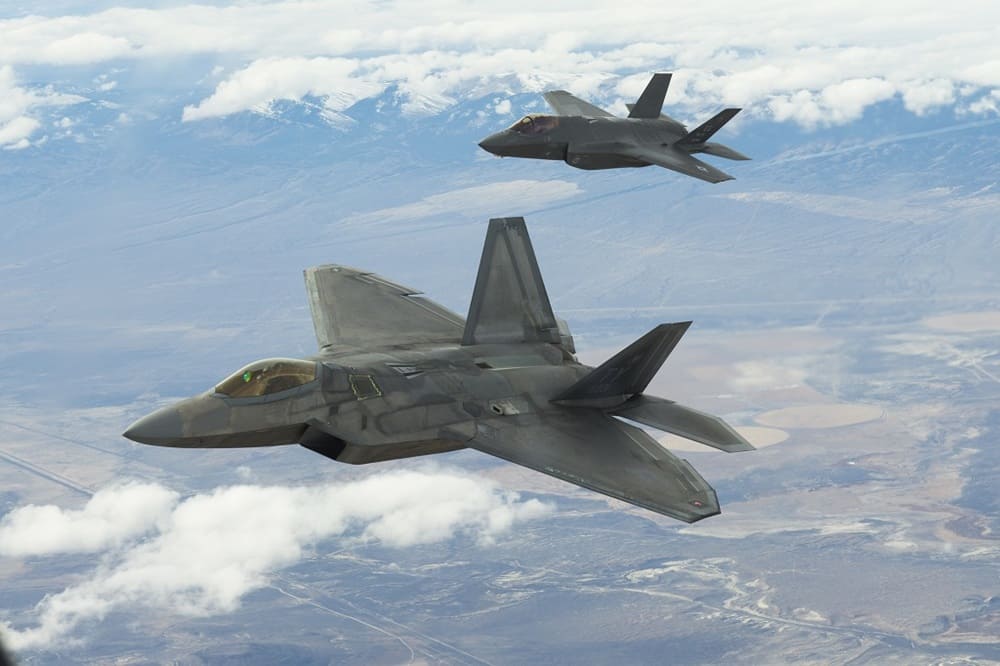
F-22 and F-35 Software: Inside the Code War
In the modern era, thrust, stealth shaping, radar range and missile kinematics are not the sole arbiters of air superiority. These are still important factors, but they are no longer the real nature of fifth-generation combat aircraft. Now, the software is the key factor. The F-22 Raptor and F-35 Lightning II are more than just computers strapped to aeroplanes.
They are networked computing systems that happen to fly at supersonic speeds. This change is important because the F-22 and F-35 software transforms raw sensor data into tactical judgement. It combines radar returns, infrared detections, EW signals, navigation inputs, datalink messages and weapons cues into actionable combat data. It also allows the pilot to react more quickly than an adversary with legacy, federated avionics.
Digital Dominance
The F-22 Raptor pioneered this software-first approach through integrated avionics and the Common Integrated Processor. The F-35 moved the concept into a more complete combat ecosystem. It combined sensor fusion, secure networking, off-board support systems, and continuous modernisation. Together, both aircraft show air warfare’s shift from mechanical power to digital dominance. However, the same software that provides them an edge also makes them vulnerable. The F-35’s Technology Refresh 3 upgrade clearly demonstrates this problem.
Delays can be disastrous when hardware and mission code fall out of sync. Fusion logic, cockpit displays, and test infrastructure must also align. The Raptor’s upgrade path offers another lesson for legacy software cultures. Aircraft built in pre-agile software cultures need open architecture to stay relevant. So the real F-22 and F-35 story is not about stealth alone. It is architecture, code scale, processing power, fault tolerance, cybersecurity, testing delays, and update speed. In the 21st century, better software is a decisive combat multiplier.
From Avionics to Intelligence
You can’t understand the software of the F-22 and F-35 without understanding what came before. Federated avionics were used in early fighters such as the F-15, F-16 and early F/A-18s. In that model each major system was in a separate piece of hardware. The radar had a dedicated processor. A separate navigation unit was used for navigation purposes. Electronic warfare controllers detected and countered threats. Other boxes took care of communications, identification, weapons control, flight management and pilot displays. Each subsystem was independent.
Then the pilot had to expand the tactical picture. It was the Cold War approach. But it imposed severe restrictions. The aircraft did not fly as a single digital organism. Instead, it was like specialists speaking through a bottleneck. MIL-STD-1553 was a common serial data bus used by many legacy systems. It had a common bandwidth of about 1 megabit per second. This rate was sufficient for the older avionics systems. The fifth-generation sensor fusion was not sufficient. Today’s fighter jets need to move a lot of data really fast. They need to correlate the radar tracks with the IR detections.
Synchronisation in Real Time
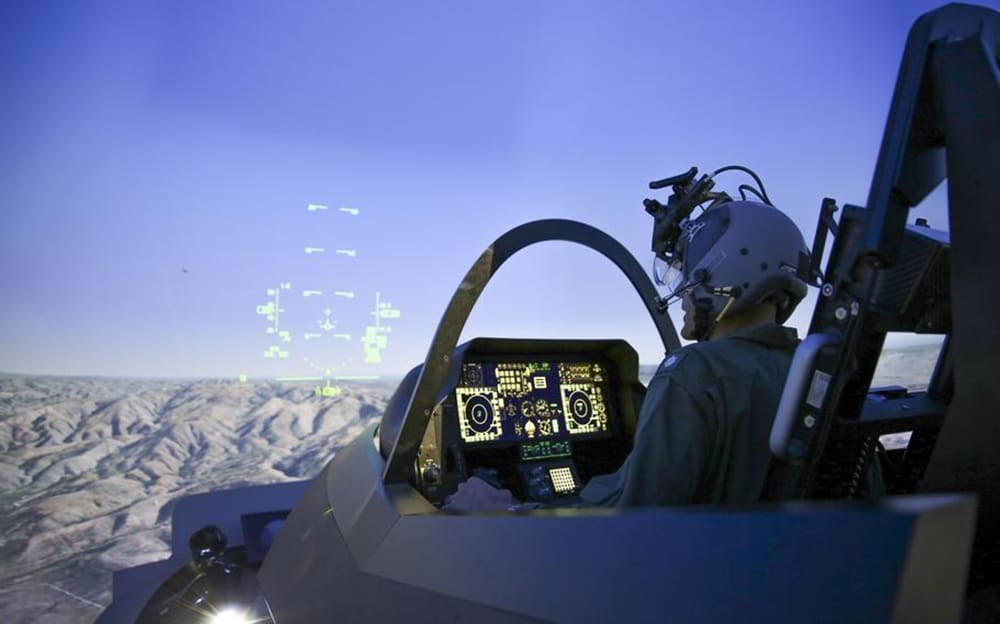
They also need to link electronic warfare signals to enemy emitters. Weapons, sensors, navigation, and datalinks must remain synchronised in real time. The F-22 was a revolutionary break from earlier fighters. It introduced a more integrated native architecture. This architecture was centred on high-speed data movement and common processing. The Raptor was not just a collection of separate black boxes. It used shared computing resources and software-configured functions. That marked a major change in design philosophy. The aircraft no longer relied on discrete subsystems that fed slowly into a central authority.
It created one computational nervous system. As a result, the F-22 could synthesise tactical information more clearly. This gave the pilot a cleaner and less cluttered combat picture. The F-35 refined the same concept. It took core ideas from F-22-era research and expanded them into a broader multi-role system. The aircraft had to serve the US Air Force, Navy, Marine Corps, and allied operators. Its software therefore had to support many mission sets. These included air combat, strike, electronic warfare, intelligence gathering, and close air support. It also had to support carrier operations and short take-off and vertical landing requirements. The fifth-generation revolution is the shift from black boxes to integrated intelligence.
F-22 CIP Explained
The digital heart of the F-22 is the Common Integrated Processor, or CIP. It replaced the old model of one separate box for each avionics function. Instead, the Raptor uses common, programmable modules. Software can configure these modules for many mission tasks. The aircraft does not depend on single-function black boxes for key avionics roles. These roles include navigation, communications, threat warning, and fire control. Instead, those functions run on common processing hardware. This design gives the aircraft flexibility, resilience, and growth potential. It also helps the F-22 adapt to future mission needs.
Much Needed Extra Bandwidth
The F-22 architecture uses two common integrated processors. These CIPs handle heavy processing and high-speed input-output functions. They communicate through the High-Speed Data Bus, or HSDB. The HSDB is a fibre-optic backbone with roughly 50 megabits per second of bandwidth. That is 50 times the bandwidth of MIL-STD-1553. This extra bandwidth is critical for modern combat. Information now arrives quickly from multiple sources. The Raptor must process radar data, electronic warfare reports, and track files. It must also process weapons parameters, identification data, and cockpit symbology. All of these tasks must happen in real time. For that mission, the HSDB provides a faster internal communications backbone.
Software Layers
A stack of software layers sits above the physical hardware. The avionics operating system provides kernel-level services for embedded applications. It manages low-level execution, processor resources, and real-time scheduling. The avionics system manager sits between the hardware and mission applications. Mission software runs above that layer. This layered structure separates mission software from the physical processors. Therefore, the aircraft can redistribute tasks after individual module failures.
It can also provide graceful degradation of critical functions under software control. This is one major lesson from the F-22 and F-35 software story. Fault tolerance is not an afterthought. It is a design principle. Even if a module fails in battle, the fighter keeps processing. It must keep flying, sensing, warning, and fighting. The F-22 proved the value of a common computing environment for fifth-generation aircraft. It also indicated that air superiority increasingly depends on real-time software architecture. Airframe performance alone is no longer enough.
F-22 Software Upgrades
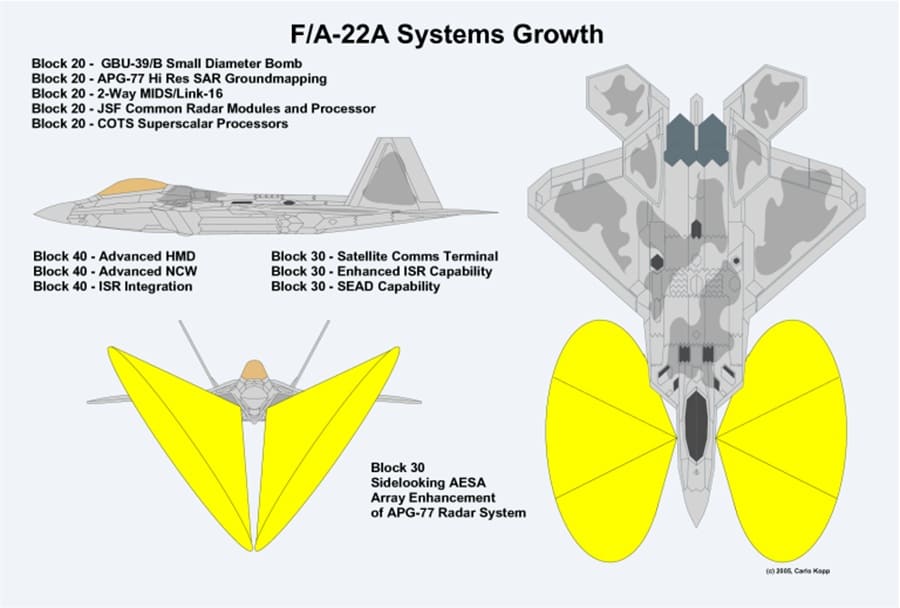
The Raptor’s software did not arrive as one giant release. Engineers developed it through incremental capability blocks. This approach reduced risk by adding functions in controlled stages. Block 1 supported basic flight qualification. Block 2 introduced single-sensor integration. Later blocks expanded multi-sensor integration and deeper fusion. This step-by-step model reflected lessons from earlier fighter programmes, including the F-16. It also avoided the risk of delivering all mission software at once.
The F-22’s incremental approach matters because fighter software remains deeply interconnected. A radar algorithm can affect track management. A weapons update can affect display logic. An electronic warfare change can affect threat prioritisation. A data-link update can affect fusion and pilot workload. Stable software blocks helped the Raptor programme grow its capabilities while controlling technical risks. This lesson later became important for the F-35 programme. The F-35 suffered from concurrency, where aircraft production advanced before software development finished.
F-22 & F-35 Programming Languages
The key difference was that the F-22 was mostly Ada-based, which was consistent with the DoD requirements of the day. The F-35 was the first major DoD programme to use C++ as the primary language, but only a very limited, safety-hardened subset (JSF AV C++) was used. The language was designed to eliminate the classes of bugs that C++ is prone to in real-time systems.
| Language | Aircraft | Role / Usage |
|---|---|---|
| Ada (Ada83/Ada95) | F-22 (primary), F-35 (legacy) | Primary flight-critical language for the F-22 — fly-by-wire, flight control, avionics, and mission systems. ~5% of the F-35 codebase was carried over from the F-22. |
| C++ (JSF AV C++) | F-22 & F-35 | Partially replaced Ada on the F-22 during development. Primary language on F-35 with a strict safety-hardened subset (JSF AV C++) — bans exception handling, recursion, and dynamic memory allocation |
| C | F-35 | Used alongside C++ for lower-level embedded systems and hardware-interfacing components |
| Assembly | F-22 & F-35 | Low-level hardware interfacing, processor initialisation, boot sequences, real-time interrupt handling |
| JOVIAL | F-22 (legacy) | Legacy DoD language inherited from earlier avionics systems, phased out in favour of Ada and C++ |
| CMS-2 | F-22 (legacy) | Legacy Navy avionics language used in inherited subsystems and replaced progressively by Ada |
Modernisation Increments Structure
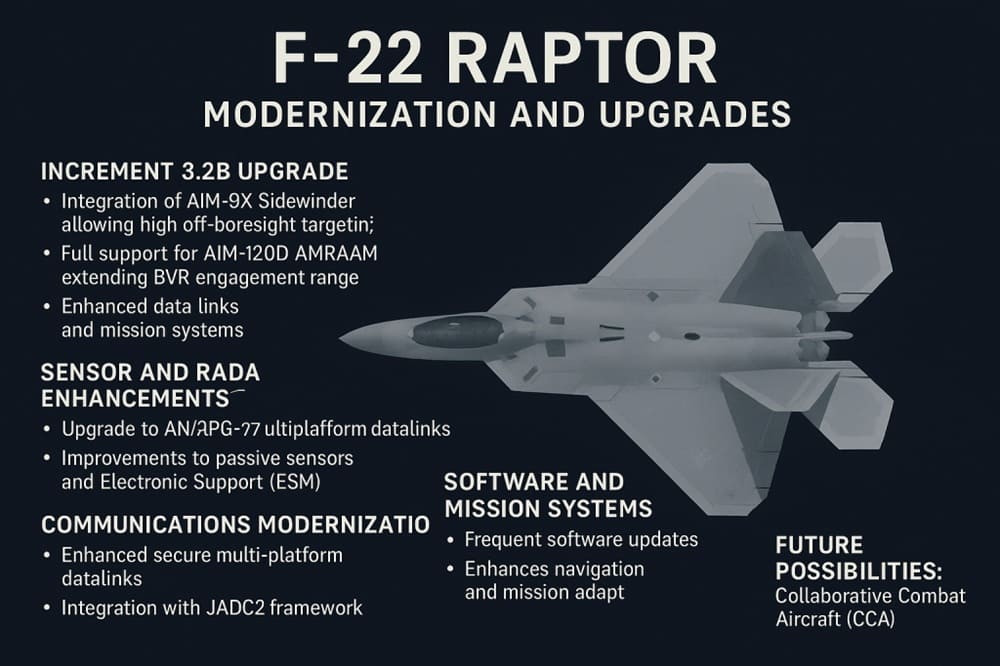
The Raptor then evolved through major modernisation increments. Inc. 3.1 added significant new mission functions, including improved ground mapping and radar-related capabilities. Whereas Inc. 3.2 continued the shift towards stronger combat performance. Inc. 3.2A improved electronic warfare behaviour and accelerated radar algorithm processing. 3.2B became especially important, enhancing the lethality of AIM-9X and AIM-120D missile employment. It strengthened range, guidance support, precision, and resistance against enemy jamming.
These updates helped the Raptor remain credible against more advanced air threats. This pattern shows how F-22 and F-35 software became a continuous combat variable. A fighter’s hardware may remain physically similar, yet its mission value can change significantly after software upgrades. Radar modes, electronic warfare logic, weapons integration, and cockpit cues all depend on code. The Raptor therefore did not freeze after entering service. It kept evolving through mission software, processing updates, and weapons-related improvements.
The F-22 Software Shift
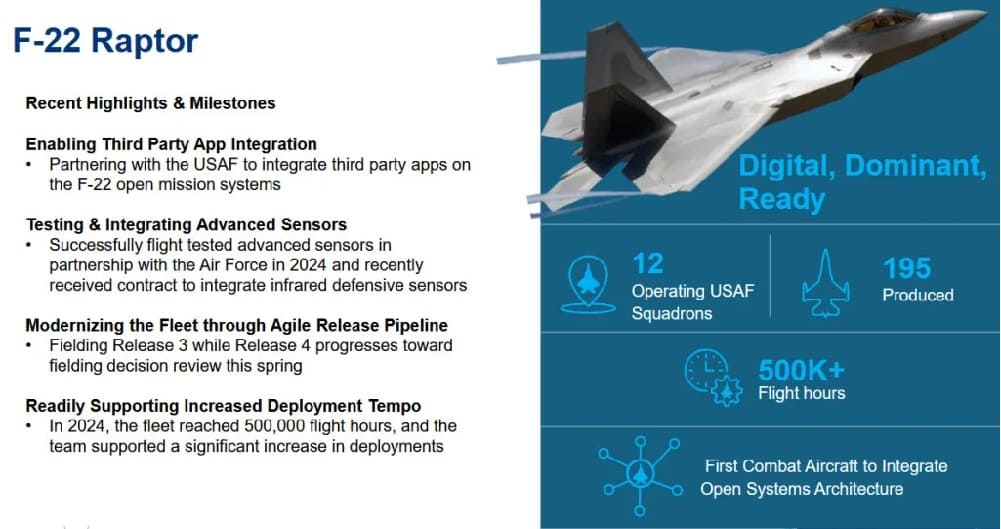
The biggest recent development for the F-22 was in 2021. The aircraft mission computers were changed to open processor modules for military-hardened commercial off-the-shelf (COTS) systems. The update included support for a Modular Open Systems Architecture (MOSA) by Lynx. At the same time, the F-22 broke away from the older waterfall-style increments. It changed to yearly numbered releases of the software.
This was a change of government and something more. It was a new way of distributing software. The waterfall model has long, sequential development cycles. It often waits for the big capability packs to show up. That can work for stable requirements, but modern threats don’t often wait. Faster, smaller, and more frequent updates, delivered through agile releases, are essential. This change proved critical for the F-22.
Diminishing Single Vendor Control
The aircraft was put into service before DevSecOps culture became the norm for today’s defense software. So, modernisation had to re-engineer both the delivery pipeline and the hardware. The plan was to streamline the Raptor upgrade. It also wanted to reduce reliance on single-vendor control and allow more software providers to compete. And in a fast-changing threat environment, that flexibility is very valuable.
Air combat software has to adapt to new radars, new missiles, new electronic warfare systems, new data links and new concepts of autonomy. The F-22’s annual release model better allows the aircraft to soak up those changes. This also makes the Raptor a useful precursor to the F-47 and future air combat systems. And the F-22 is no longer in production, but its software modernisation offers important lessons for sixth-generation designs.
F-22 Agile Software Delivery
The most obvious example of the new software direction for the F-22 came on 18 March 2026 at Edwards Air Force Base. Defense Unicorns (Airgap Software Company) joined forces with the Software Directorate of the Air Force Sustainment Center to demonstrate continuous software delivery for the F-22 Raptor. For the first time in the aircraft’s history, software was installed and upgraded in minutes on the F-22’s open mission system compute enclave.
It was a giant milestone. This is significant because fighter software updates aren’t a quick process. They may involve long depot cycles, rigorous certification, controlled distribution, and lots of manual effort. That pace can create a dangerous gap if the opposition adjusts quickly. Continuous software delivery doesn’t mean that you won’t need to test. This statement does not imply that untested code is deployed in combat.
Companies involved in software development
The open software environment and continuous delivery work are publicly attributed to the F-22, the U.S. Air Force’s Air Combat Command Federal Lab, Edwards AFB; the 309th Software Engineering Group; and the Air Force Sustainment Center Software Directorate. They’re not companies, but they are part of the aircraft’s software-modernisation chain.
F-22 Software Development Companies
| Company | Software Role |
|---|---|
| Lockheed Martin | Prime contractor: overall software architecture, mission systems, avionics integration |
| Boeing | 70% of mission software, avionics integration, training systems |
| Northrop Grumman | APG-77 radar software, jointly with Raytheon; mission/sensor systems support |
| Raytheon / RTX | APG-77 radar software, jointly with Northrop Grumman; weapons integration, including AMRAAM |
| BAE Systems | Avionics supplier; software-linked avionics support |
| Curtiss-Wright | COTS processor modules for F-22 avionics upgrades; radar module supplier since 1999 |
| Defense Unicorns | Airgap-native software delivery using Unicorn Delivery Service; installed/upgraded F-22 Open Mission Systems software in minutes in March 2026 |
| TRW | Avionics software supplier; later absorbed into Northrop Grumman |
F-35 Software Development Companies
| Company | Software Role |
|---|---|
| Lockheed Martin | Prime contractor: overall software architecture, mission systems, avionics integration |
| Northrop Grumman | APG-81 radar software, Distributed Aperture System sensor software and integration |
| Raytheon / RTX | EODAS/DAS sensor suite, electronic warfare, communications systems, and precision weapons integration, including AMRAAM and StormBreaker |
| BAE Systems | Fuel management, electronic warfare, navigation, cockpit display software; 13–15% workshare |
| L3Harris Technologies | TR-3 Integrated Core Processor: processes sensors, EW, communications, guidance, cockpit and helmet display data; panoramic cockpit display electronics |
| Collins Aerospace / RTX | Gen III Helmet Mounted Display System software; GPS, landing systems, air data sensing software, and avionics sustainment |
| Curtiss-Wright | Flight Test Instrumentation software for F-35 TR-3; radar module supplier since 1999 |
| Lynx Software Technologies | LYNX MOSA.ic framework for TR-3 modernisation; low-level operating system for TR-3 Integrated Core Processor and Panoramic Cockpit Display |
| Green Hills Software | INTEGRITY-178B safety-certified RTOS and AdaMULTI IDE: foundational software environment for safety/security-critical flight software |
Critical Enablers
However, it can shorten the path from development and verification to deployment to operation. Defence Unicorns described the demo as a “critical enabler” for quickly fielding capabilities into the fleet. In its Series B, the veteran-owned software company based in Colorado reportedly achieved a valuation of $136 million. This is significant because it indicates a larger shift in defense software, with non-traditional vendors becoming more involved in aircraft upgrades.
The demonstration also illustrated secure, airgap-native software delivery concepts. This development is important because fighter aircraft often operate in disconnected environments. To be useful as a combat software pipeline, it must not assume constant access to the cloud. So the F-22 demonstration in March 2026 was not just a technical experiment. It demonstrated how future fighters could receive tactical algorithms, mission apps and software-defined capability much more quickly.
GRACE modernises the F-22.
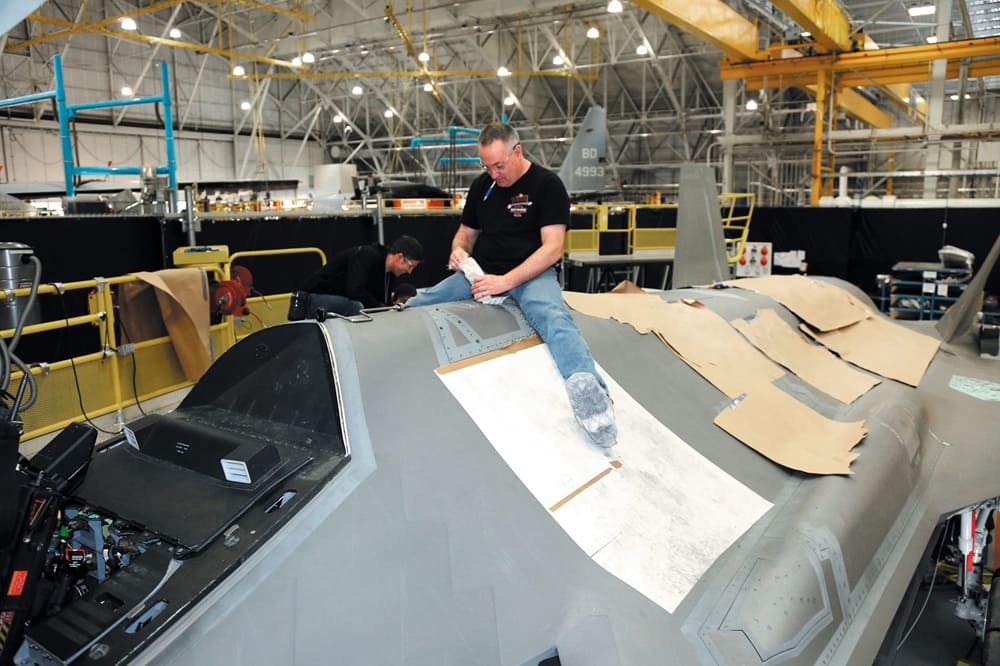
Another major F-22 software development is the Government Reference Architecture Compute Environment, or GRACE. GRACE allows non-traditional F-22 software to be installed on the aircraft. It also adds processing power and new pilot-interface options. The F-22 modernisation effort also aims to place hardware and software updates on a single code baseline. The source compares this ambition with Apple’s iPhone operating system. In that model, devices receive updates through a common software baseline. Such an approach could simplify fleet upgrades and reduce fragmented Raptor configurations.
GRACE matters because it addresses a core legacy fifth-generation problem. Closed architecture blocks innovation. When new capability depends on proprietary integration, update cycles become slow and costly. A government-owned reference architecture defines clearer interfaces and reduces vendor lock-in. The wider F-22 upgrade effort is also important. The source cites about $7.8 billion in investments before 2030. This includes about $3.1 billion for research and development. It also includes $4.7 billion for procurement. The modernisation package includes several key elements.
Embedded GPS
It includes a new operational flight programme and the modernisation of embedded GPS/inertial navigation systems. It also includes advanced radar electronic protection and Mode 5 Identification Friend or Foe (IFF). The package adds the MIDS-JTRS two-way Link 16 terminal. The Link 16 upgrade is especially important. The original F-22 had limited stealthy ability to transmit freely. Improved two-way networking helps the Raptor share tactical pictures with F-35s and fourth-generation aircraft. This matters during coalition operations. Modern air combat is a collective sensing enterprise.
One platform might fire first. Another platform might see it first. Data sharing without compromising survivability becomes a major combat advantage. The F-22’s software-defined modernisation also supports crewed-uncrewed teaming. Block 30/35 Raptors are being developed as testbeds for future air dominance concepts. These ideas could inform the F-47 and Collaborative Combat Aircraft. In that role, the Raptor is more than a legacy fighter. It becomes a software testbed for the next era of air dominance.
F-35’s Processing Brain
Where the F-22 introduced integrated avionics, the F-35 expanded the idea into a larger multi-role software ecosystem. Its central computing architecture uses the Integrated Core Processor, or ICP. The ICP manages the aircraft’s complex information flow. It hosts two main types of processing modules. A signal-processing module runs most of the sensor software. A general-purpose processor handles mission management software. Both sit in a common rack. This separation of concerns is important.
Sensor processing often requires strict real-time performance. Radar, infrared, and electronic warfare data cannot wait while lower-priority tasks consume resources. Mission management logic also needs flexibility, although it does not always demand the same timing precision. By separating these functions, the F-35 architecture protects latency-sensitive processing while allowing broader mission logic to operate efficiently. This reflects serious systems engineering discipline.
Different functions at different times
The F-35’s avionics roots also trace back to 1980s work on the F-22. Northrop Grumman worked with the U.S. Air Force Research Laboratory to combine multiple black-box systems into a software-programmable unit that could perform different functions at different times. This technology lineage directly shaped the F-35’s avionics and communications approach. The F-35 then took the concept further.
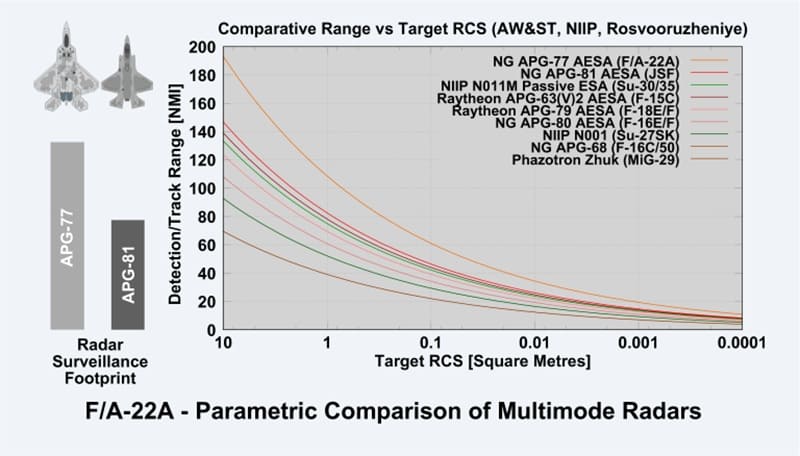
It needed to fuse data from the AN/APG-81 AESA radar, AN/AAQ-40 electro-optical targeting system, AN/ASQ-239 electronic warfare suite, AN/AAQ-37 distributed aperture system, and the full communications, navigation and identification suite. That scale makes F-35 software extraordinarily demanding. It must manage onboard sensors, off-board data, pilot displays, weapons, mission files, electronic warfare responses, and security boundaries at the same time. This complexity is why the F-35 is often described as a flying sensor-fusion platform. Its airframe provides it access. Its software turns access into tactical dominance.
F-35’s 24 Million-Line Ecosystem
You have to understand the scale of the F-35 software to understand the programme. The aircraft carries about 8.3 million lines of source code that enables its warfighting capability. It also relies on about 16 million additional lines of code in off-board support systems. So the bigger F-35 ecosystem has a lot more software than just the plane.
“Mission planning, logistics, support, maintenance, reprogramming and data systems all factor into the ability to operate. The software estimate also ballooned significantly. The early programme expected that a full operational ecosystem would require closer to 15 million lines of code. By 2012, the estimate had risen to about 24 million lines. That’s a 60 per cent increase in scope. This extension was to predict many subsequent difficulties. More interfaces, more code. More interfaces, more testing.
Mission Complexity
More testing means more labs, more flying hours, more regression checks, more cybersecurity assurance, and more configuration control. The F-35 has a software footprint that is many times bigger than the F-22. The source said it is about four times the software scale of the Raptor and an order of magnitude larger than previous aircraft. This is not to imply that the F-35 is a poorly designed aircraft.
Complex missions require complex software. But complexity is dangerous when schedules, production, hardware upgrades, and testing capacity become misaligned. The F-22 and F-35 software comparison represents two points on the same revolution. The Raptor demonstrated that integrated avionics could dominate air combat. The Lightning II changed that paradigm to a global multi-service, multi-role digital environment.
How Sensor Fusion Wins
The most operationally significant software capability of the F-35 is sensor fusion. The system combines radar data, infrared sensors, electronic warfare systems, passive sensors, navigation data and off-board inputs to create a single tactical picture. The goal is simple: return the pilot back to being a tactician, not a systems manager. In the past, pilots had to scan many displays, warnings and sensor returns.
The F-35 pilot sees the image fused. That’s got a lot of tactical worth. The radar screen may be the first sign of a hostile aircraft. Then an infrared sensor could verify it. The electronic warfare suite can pick up its emissions. The fusion engine takes those reports and merges them into one object. The pilot doesn’t see a confusing pile of raw data. Instead, the pilot sees a prioritised tactical picture.
Information Collection and Distribution
It reduces the workload, speeds up reaction time and shortens the decision cycle. The F-35’s fusion engine does three main things. First it builds a unified picture from all the sensors. Secondly, it adds sensors to plug information gaps. Third, it sends the picture to other F-35s and networked nodes so that formation members share the same tactical picture. That’s a significant difference with the older planes.
The F-35 doesn’t just collect intel. It processes, compares, prioritises and distributes all of this information. In practical combat terms, it can enable one aircraft to detect another and the other to fire at it. It may allow passive targeting. Pilots can benefit from knowing which threats matter first. It can also support coalition operations by turning the aircraft into a sensor node for the larger force. So F-22 and F-35 software should not be called support equipment. It is part of the weapons system.
F-35 Sensors: DAS, APG-81, EOTS, and ASQ-239
The software needs the data from the F-35’s sensors to fuse. Each sensor provides different information and requires a lot of processing. Six mid-wave infrared sensors are mounted around the aircraft in the AN/AAQ-37 Distributed Aperture System. Together they provide full 360-degree spherical coverage. This provides the F-35 the ability to detect aircraft, missiles, launches and infrared events in the vicinity of the airframe.
The source makes a significant performance claim for the system: DAS can detect ballistic missile launches at ranges of more than 800 miles. The detection gives the aircraft early warning and situational awareness far beyond the normal range of fighter engagement. The AN/APG-81 AESA radar is capable of active target detection and tracking. The radar can track 23 targets simultaneously within 100 miles in less than 9 seconds, the source said. This performance is where the F-35’s powerful air-to-air and air-to-ground sensing capability comes in.
Software-Dependent Abilities
The AN/AAQ-40 Electro-Optical Targeting System has forward-looking infrared and infrared search and track capabilities. It helps with targeting and identification and precision strike. The AN/ASQ-239 electronic warfare suite adds another layer. It has 360-degree radar warning, electronic support measures and electronic attack capabilities. The aircraft is equipped with antennas, which are mounted on the fuselage and on the wing edges. The ASQ-239 feeds emitter tracks into the fusion system as well.
These tracks are fused with radar and DAS data. So the passive electromagnetic image is superimposed on the active sensor image in the pilot’s mind. This is particularly useful in contested environments. The F-35 can detect enemy radar emissions, jamming activity and missile guidance behaviour without releasing any detectable energy. But this ability is very software-dependent. The software configurations limit the electronic warfare capabilities, which in turn limits the aircraft’s tactical value. This was a big problem in the TR-3 crisis.
MILS Security Partitioning
The F-35 software architecture also uses modularity and security partitioning. Public discussions often mention Multiple Independent Levels of Security, or MILS. It is described as a framework for enabling secure modularity. This matters because the F-35 operates across U.S., allied, and coalition environments. It manages sensitive mission data, threat libraries, weapons data, and electronic warfare files. It also handles networked inputs from wider combat systems. A compromise in one area should not compromise the whole aircraft. Therefore, security partitioning is not a luxury. It is a military necessity. Today’s adversary is targeting software, not just aircraft.
They may try to steal design data or sabotage mission files. They may also compromise supply chains, corrupt updates, or study electronic warfare classification methods. In this environment, cybersecurity becomes part of survivability. The F-22 faces similar demands as it moves toward open mission systems. It also faces them as software delivery becomes faster. Open architecture can drive innovation. However, it requires rigorous verification, secure software pipelines, and strong configuration control. The deeper lesson is clear. Software-defined aircraft are also software-defined targets. Their code must be protected as seriously as stealth coatings, radar modes, and weapons interfaces.
F-35 Block Architecture
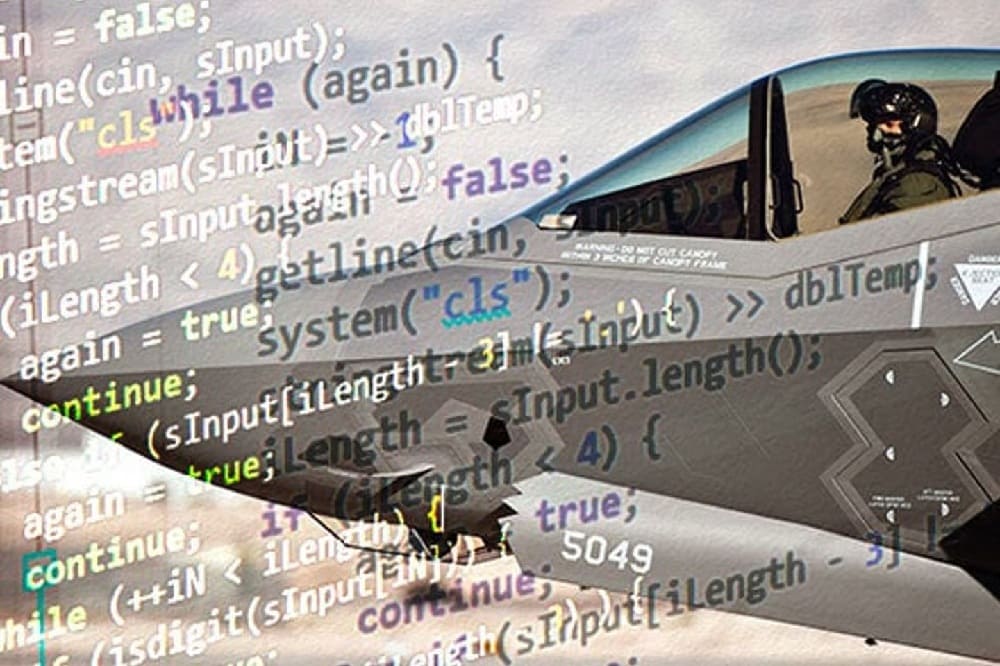
The F-35 programme adopted a block-based approach to software development. It sought to build capability in steps, as it did the F-22. But the sheer size of the F-35 made the task all the more difficult. Block 1A and Block 1B represented more than 78 per cent of the 8.3 million lines of source code required for F-35A warfighting capability. These first blocks provided the fundamental aeroplane functions and the training-focused features.
Block 2A included off-board fusion, initial data links and electronic attack. This moved the aircraft closer to networked combat use. Block 2B added data links, multi-ship fusion and initial live weapons. This gave the aircraft a more realistic early combat capability. The new integrated core processor hardware was in Block 3i. It moved the existing 2B capability to better processing hardware.
Block-Based Approach
Block 3F then delivered 100 per cent of the software required for full warfighting capability. This included improvements to the flight envelope, weapons carriage, sensor functionality, and mission capability. The approach was a sensible staged route. But concurrency disrupted the programme. The software was being written at the same time the USA was building the aircraft.
Such conditions meant that early jets needed to be upgraded, retrofitted and configuration-managed later. By 2011 the vice admiral in charge of Naval Air Systems Command had reportedly called the concurrency in the programme a miscalculation. It was a big test. The F-35 showed how risky it is to scale up planes before the software and testing are complete. Because of concurrency, production continued. But in doing so, it also spread the technical debt across the fleet.
Inside the F-35 TR-3 Crisis
Technology Refresh 3, or TR-3, was the most visible example of the risks inherent in fifth-generation fighter software. The TR-3 was the computer backbone developed for Block 4. It was no small upgrade. That was the hardware and software foundation for the F-35’s future combat growth. The TR-3 Integrated Core Processor was also expected to reduce unit cost by 75 per cent over the existing system.
On paper these factors made the upgrade attractive: more computing power, more memory and lower hardware costs. But the program had difficulty delivering those promises with stable operational software. TR-3 adds 75 hardware and software improvements. It has a new integrated core processor and more computing power. According to the source, the new ICP has 25 times the computing power of its predecessor, the TR-2.
Lockheed Martin and TR-3
Other descriptions say TR-3 is 37 times faster. They also say it can hold 20 times more memory than the current system. TR-3 also offers faster tactical displays and memory-intensive mission functions. These improvements matter because Block 4 needs more weapons and better sensors. It also needs stronger electronic warfare and improved fusion. However, implementation proved very difficult. The F-35 programme did not mature the new Integrated Core Processor. It also failed to stabilise the software on time. That meant TR-3 could not become reliable quickly.
Software Entanglement
Lockheed Martin cited unforeseen problems in hardware and software development. It also cited component integration testing, system integration testing, and qualification testing. Hardware delays affect the software testing schedule. That creates a dangerous cycle. When hardware is late, software teams lose testing time. As test time shrinks, defects remain longer. Remaining defects can affect flight operations and operational testing. So TR-3 became a warning about hardware and software entanglement. A new processor can promise enormous capability. However, it has little combat value until the software is stabilised.
F-35 40R02 and 30R08 Delays
The TR-3 was operationally serious. There was a gap in F-35 deliveries from July 2023 to July 2024. At the time, Lockheed Martin’s Fort Worth plant reportedly had as many as 100 to 120 airframes stacked up. The Pentagon and Lockheed Martin eventually agreed to resume deliveries of a shortened interim version of the software. This enabled aircraft movement but did not provide the TR-3 with full combat capability.
The source’s June 2026 framing was that the truncated configuration merged TR-3 and TR-2 features and capped high-end capabilities. DOT&E reporting shows 158 TR-3-configured F-35s have been delivered to U.S. services as of the end of September 2025, but no combat-capable TR-3 aircraft have been delivered to date. The specifics of the software build are critical.
Delay in being able to fight
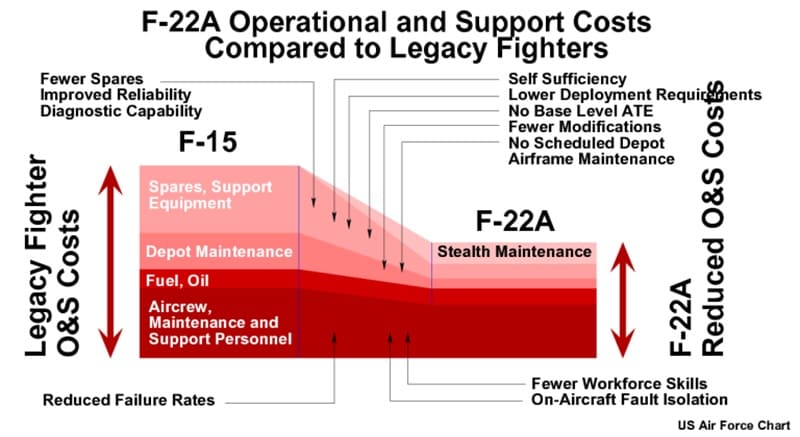
TR-3 build 40R02 was largely unusable for most of 2025 due to software crashes, chronic stability deficiencies, and issues that prevented flight operations and testing. During this period, the system did not develop any new combat capabilities and continued to show new defects that required action from the manufacturer. The previous TR-2, Build 30R08, also had some stability problems. This evidence indicates that the problem extended beyond one future build.
It impacted the larger software baseline test environment. The effect on electronic warfare was especially severe. The TR-3 instability restricted the AN/ASQ-239 suite to detecting less complex threats from targeting radars and precluded full-spectrum electronic attack and jamming capabilities. That constraint is of real operational significance for a stealth fighter designed to operate in contested airspace. And that is why TR-3 was more than a software delay. It was a delay in being able to fight.
F-35 Block 4 Cost Growth
Block 4 aims to keep the F-35 relevant against advanced threats. The plan includes weapons, sensors, electronic warfare upgrades, fusion upgrades, and other mission capabilities. But it relies heavily on TR-3 in Block 4. That dependency was a major scheduling problem. If TR-3 slips, then Block 4 slips. If TR-3 software continues to be unstable, then Block 4 capabilities will not mature properly.
Aircraft cannot fly representative configurations, which hampers operational testing. The financial picture is not rosy either. Prices in Block 4 shot up to more than 50 per cent above the original baseline. That figure had grown to $16.5 billion in 2021 from some $10.6 billion. Further reviews indicated that the revised estimate was not yet firm. Block 4 was at least $6 billion over budget and several years behind schedule by September 2025, the source said.
After NGAD, will the F-35 be irrelevant?
The Department of Defence’s 2024 review stated that the programme would not deliver most of the Block 4 upgrades until the mid-2030s. Dedicated operational testing of the TR-3 is scheduled to commence in mid- to late fiscal year 2026. Full operational capability is not expected until at least 2031. That is important because the F-35 will probably be a major Western combat aircraft for a long time to come.
If Block 4 fails, so does the future weapons and electronic warfare roadmap for the aircraft. The programme response has also affected the procurement plans. The Pentagon has slashed the 2026 procurement of USAF F-35s. As for the 45 per cent reduction, the planned buy has been cut from 48 to 24 aircraft, while funding for the sixth-generation F-47 under the Next Generation Air Dominance programme has been boosted, the source says. This statement suggests that the F-35 is relevant. Decisions on force structure now take into account software and modernisation risks.
Breaking the Software Trap
TR-3’s problem is hardware-software entanglement. If mission software is too tightly coupled to hardware, any change in hardware can require deep reintegration. It delays upgrades and adds to the cost. The answer is open architecture. It is aimed at separating the software and the hardware through common standards, well-defined interfaces and modular design.
It also reduces reliance on a single vendor and allows easy addition of new functionalities. This approach is represented in the Future Airborne Capability Environment (FACE). It allows avionics applications to be independent of the hardware environment. In theory, software developed to common standards can move more easily from plane to plane. The same applies to modernising the F-22.
MOSA, GRACE and Open Mission Systems
As we move to annual releases, MOSA processors, GRACE, and open mission systems will enable more rapid upgrades to the aircraft. It also opens up to more suppliers. And it matters because enemies learn fast. New radar modes, jamming techniques, missile seekers and counter-stealth systems can arrive faster than traditional procurement cycles. A fighter who takes years to update may lose his edge.
Open architecture does not come without risk. Testing and cyber protection, certification and disciplined engineering are still required. But it does give programme managers a better way to add capability without having to rebuild everything. So this area is where the F-22 and F-35 software experience is relevant. Closed, hardware-entangled systems can be brittle. Modular, government-led architectures can increase agility.
The Code That Can Be Stolen
Fifth-generation aircraft are extremely vulnerable to cyberattacks. They must lock down their software, mission files, support systems, logistics networks and development pipelines. Serious cyber worries have already dogged the F-35 programme. In 2007 and 2008, spies reportedly stole several terabytes of data on the design of the aircraft and its electronics systems.
The theft may have resulted in sensitive knowledge and subsequent hardware and software redesigns to make the system more resistant to cyber attack. This is a point of importance. Even if adversaries cannot obtain the full source code or the most sensitive algorithms, stolen design data can still be useful. It can show architecture, assumptions, component choices, sensor relations and vulnerabilities.
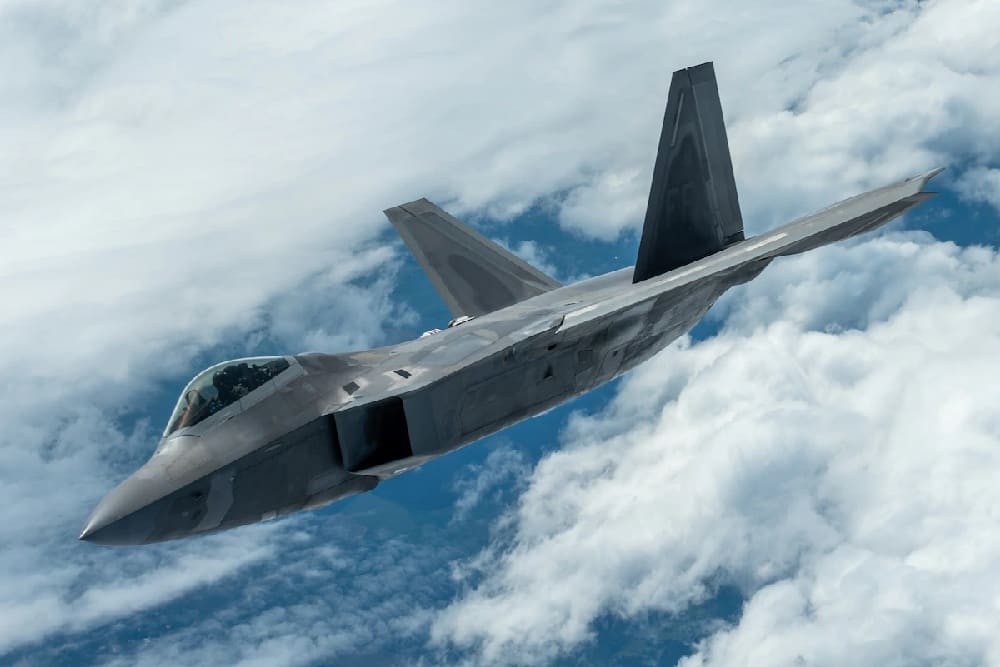
Cyber Defense is the Air Defence.
Cybersecurity also affects testing capacity. For example, Defense Secretary Pete Hegseth reduced funding for Lockheed Martin’s testing office, cutting cybersecurity testing capacity by 66 per cent, the source says. The cut drew criticism from Congress at a time when adversaries were actively probing software-defined military systems. Cybersecurity is an essential component of modern fighters’ preparedness.
The aircraft may look ready on the ramp, but the mission systems can be vulnerable to supply chain or data risks. Software assurance must therefore be a fundamental combat skill. The F-22’s more recent open mission systems will also require strong cyber controls. Faster updates can help the fleet, but insecure updates can hurt it. Code provenance, integrity, configuration and operational safety must be verified in every pipeline. Cyber defense is the air defense of the software-defined age.
NGAD’s Software-Defined Future
The F-22 and F-35 are shaping the future of American airpower. Boeing’s sixth-generation F-47 was selected under Next Generation Air Dominance in early 2025. It is being designed from the ground up around MOSA principles. That matters because the F-47 must avoid fifth-generation software integration failures. Its architecture should let hardware and software evolve independently.
It must also remain multi-vendor compliant. The aircraft must support rapid updates without major reintegration after every component change. The F-22 is helping chart that path. Its open mission systems, GRACE architecture, and continuous delivery experiments provide a practical bridge. They connect fifth-generation lessons with sixth-generation requirements.
Teammates of the future
The fighter of the future will not fly alone. It will likely command or coordinate uncrewed teammates. Moreover, it will use off-board sensors and share data across domains. It will operate in contested electronic environments. That requires software designed for constant change. The F-35 is also instructive. Its fusion engine shows the value of a powerful software-defined combat picture. Its TR-3 problems show how complexity can outpace testing capacity. The F-47’s future depends on how designers treat software. It must be considered the basic architecture, not an afterthought.
Collaborative Combat Aircraft and A-GRA
Crew-uncrew teaming is the next big step. Collaborative Combat Aircraft (CCAs) will be autonomous wingmen for crewed fighters such as the F-35 and F-47. They can be used for sensing, jamming, decoys, escort, strike and weapons carriage. This scenario is a new problem for the software. A pilot is not just flying an aircraft and operating sensors. The pilot can also control robotic teammates.
This capability includes trusted autonomy, secure communications, intuitive interfaces, and mission-level control. The source says a key component of that future is the Autonomy Government Reference Architecture, or A-GRA. A-GRA is government-owned. The system allows the integration and swapping of mission autonomy algorithms from competing vendors without redesigning the aircraft. It also supports multi-platform verification.
Autonomy Government Reference Architecture
It is the architectural equivalent of software loose coupling. A-GRA aims to decouple autonomy from any single vendor or airframe. This enables faster competition, testing and improvement. It’s a different story with TR-3. The TR-3 demonstrated the dangers of becoming entangled in a web of hardware and software dependencies from which it is difficult to disentangle oneself. A-GRA is paving the way for a future where autonomy software can scale with less disruption. If it works, future fighter pilots will not only fly with drones. They will lead dispersed air-combat formations. The pilot will be a mission commander in a network of crewed, uncrewed systems. That future is based on trust in software.
The Human-Machine Interface
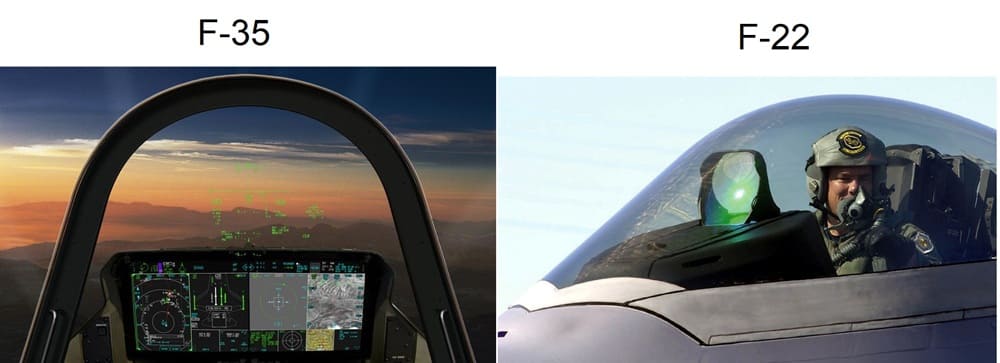
Both the F-22 and F-35 were designed to reduce pilot workload. However, they achieve this goal in different ways. The F-22 gives its pilot a fused picture of air dominance. The F-35 goes further by adding wider sensors and off-board inputs. Tactical clarity is the main goal of the F-35 cockpit and helmet-mounted display. The pilot should not decode every raw sensor feed. The system must show the threat picture and provide actionable intelligence. This task is difficult. Too little information can hide danger. Too much information can overload the pilot. Poor fusion creates false confidence. Poor symbology slows decision-making.
Manual Human Processing
So the cockpit is not just a display problem. It is a software architecture problem. The system must decide which tracks matter. It must judge which warnings deserve attention. It must also decide which sensors to reallocate. The F-35 fusion goal is to keep the pilot focused on tactics. The machine manages the sensors. The human still makes the combat decision. That division is not absolute.
Pilots still need to understand system behaviour, sensor limits, and failure modes. However, the direction is clear. Modern air combat creates too much data for manual human processing. Good fighter software is almost invisible. The best software makes pilots trust the picture. They should not think about the millions of code lines behind it. Defense analysts should closely watch several F-22 and F-35 software indicators.
TR-3 Stability Test
First, TR-3 stability remains critical. Can new builds move from limited training utility to reliable combat utility? That is the central problem. Analysts should track operational test schedules, software failure rates, and electronic warfare recovery. Second, the Block 4 scope matters. The programme has already trimmed and restructured its capabilities. Analysts should track which weapons, sensors, and electronic warfare upgrades enter the near-term baseline. They should also track which capabilities move into the mid-2030s. Third, F-22 open mission systems deserve close attention.
The March 2026 continuous delivery demonstration was important. However, fleet-wide operationalisation will be the real test. If Raptor mission software updates faster, it may remain useful as an NGAD bridge. Fourth, GRACE and FACE should be treated as architectural markers. They show whether the U.S. Air Force can bypass proprietary bottlenecks. Fifth, A-GRA will affect the CCA ecosystem. Competitive maturation of modular autonomy software could accelerate crewed-uncrewed teaming. If closed and platform-specific, future programmes may repeat past mistakes. Finally, cybersecurity testing cannot be optional. Software-defined aircraft require continuous cyber assurance. Without it, fast updates become a new threat.
Software Defines the Fighter
The F-22 and F-35 rewrote the definition of what a fighter is and what air combat is. The F-22 proved integrated avionics and common processing could build a better air dominance platform. Its CIP, HSDB, AOS, ASM and fault-tolerant design made it a true fifth-generation combat system. The F-35 took that model and expanded it into a huge multi-role digital ecosystem.
With its ICP, sensor fusion engine, DAS, APG-81 radar, ASQ-239 electronic warfare suite, CNI system and off-board support architecture, it was the most software-intensive combat aircraft ever fielded. But this same complexity created programme risk. The difficulty was already indicated by the increase in total software lines, from 15 million to 24 million. The TR-3 showed how a new processor, memory upgrade, display refresh and unstable software baseline could hold up combat capability for the fleet.
F-47 and CCA programmes
The figures are grim. TR-3 involved 75 hardware and software changes. It promised 25 times the computing power. It also promised 37 times the processing power and 20 times the memory. Deliveries were stopped for a year. Between 100 and 120 airframes accumulated during the halt. By September 2025, 158 TR-3 aircraft had been delivered in that configuration. However, they still lacked combat-capable TR-3 software. Block 4 offers another warning. Its cost rose from $10.6 billion to $16.5 billion.
Sensors observe the battlespace.
The most crucial capabilities slipped to 2031 or the mid-2030s. Procurement decisions then reflected this risk. That included a 45% cut to planned USAF F-35A buys in 2026. The F-22’s modernisation offers greater hope. Annual releases, MOSA processors, GRACE, OMS compute enclaves, and continuous delivery experiments show this shift. They demonstrate how legacy aircraft can become more adaptable. The same principles now shape the F-47 and CCA programmes. The strategic lesson is clear. Stealth opens the door. Sensors observe the battlespace. Weapons deliver effects. Software decides how fast the aircraft learns, shares, and acts.
Final Assessment
The software in the F-22 and F-35 is not a mere support layer. It is the heart of fifth-generation airpower. The Raptor’s Common Integrated Processor showed a fighter could operate as one computing environment. The F-35’s integrated core processor and sensor fusion engine took the concept further. It turned the idea into a global, multi-role combat network. The benefits are significant. These aircraft can fuse sensors, reduce pilot workload, and share tactical pictures. They can support advanced weapons and act as nodes inside a larger combat cloud.
Conclusion
The dangers are equally serious. Software instability can ground deliveries and degrade electronic warfare capability. It can delay Block 4, raise costs, and weaken operational confidence. Cyber exposures can threaten the systems that make these aircraft powerful. Future air dominance will depend on open architecture and secure software pipelines. It will also require realistic testing, modular autonomy, and rapid update discipline. The F-22 and F-35 did not just change fighter design. They showed that the next air war will partly be fought in code.
References
- https://www.gao.gov/products/gao-25-107632
- https://www.dote.osd.mil/Portals/97/pub/reports/FY2025/dow/2025f35lightning.pdf
- https://www.prnewswire.com/news-releases/defense-unicorns-demonstrates-key-enabler-for-continuous-software-delivery-on-the-f-22-302716831.html
- https://spectrum.ieee.org/f35-program-continues-to-struggle-with-software
- https://www.l3harris.com/sites/default/files/2023-02/F-35-TR-3-Infographic-sas-62431_web.pdf
About the Author


1 thought on “F-22 and F-35 Software: Inside the Code War”