
Why the EA-18G Growler Targets Radars, Not Missiles
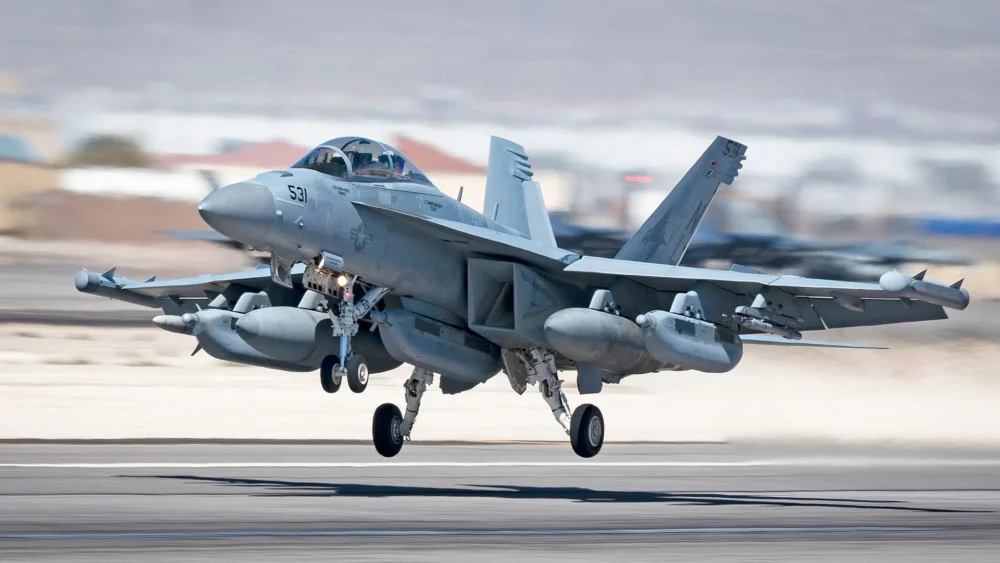
The EA-18G Growler is the U.S. Navy’s only airborne electronic attack aircraft. It is based on the F/A-18F Super Hornet and combines a proven strike fighter platform with advanced jamming systems. The Growler, designed to replace the ageing EA-6B Prowler, is the first purpose-built electronic warfare aircraft in decades. Its mission is simple, but vital—to keep the enemy from seeing, tracking, or striking effectively.
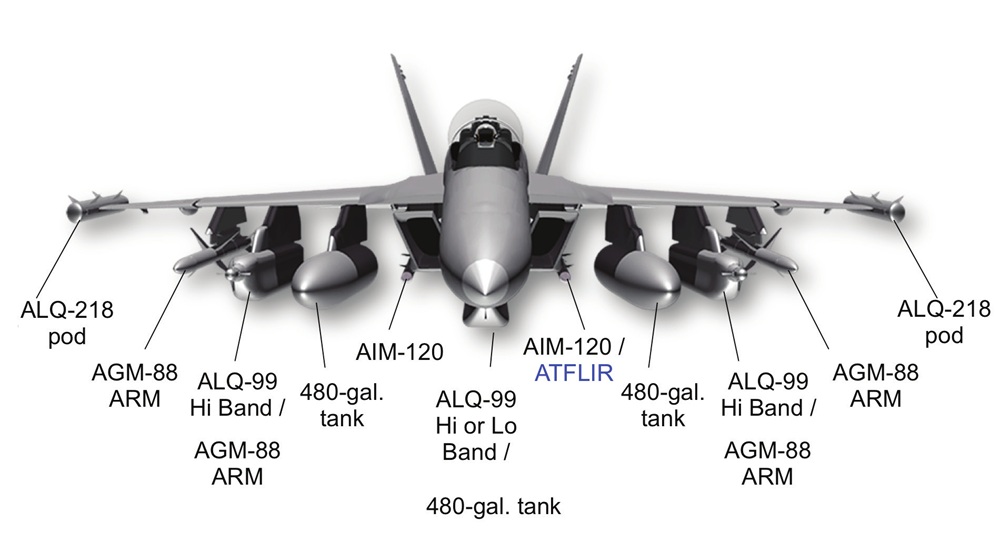
The Growler is armed with an electronic arsenal like the ALQ-218 receiver, ALQ-99 jamming pods, ALQ-227 communication countermeasures and soon the Next Generation Jammer (NGJ) ALQ-249, unlike conventional fighters. The APG-79 AESA radar is also used, giving situational awareness and offensive support. The EA-18G Growler, which is able to attack the seeker of incoming missiles, is instead focused on lower-frequency radars, which many analysts question.
Jamming Power
Electronic attack is about disrupting the enemy’s electromagnetic spectrum. The Growler does this job with six jamming sources, two transmitters in each of its three pods. However, not all transmitters can operate on all frequencies. The Growler has six transmitters, but there are about ten radar bands, and they can’t all be swept at once.
This constraint compels growler crews to make strategic compromises. Missions are planned around the most dangerous threats, typically large surveillance or fire-control radars operating at lower frequencies. These radars are used to control surface-to-air missile batteries, control air defence networks and provide early warning at long range. By suppressing them, the Growler cripples an adversary’s entire defensive structure.
Focuses on Low-Frequency Radars
Large radars generally have large antenna arrays. Larger antennas generally mean operating at lower frequencies, which are important for the early detection and tracking of stealth aircraft. And that’s why the EA-18G Growler spends most of its jamming power on these long-range sensors.
Growler crews go after these systems, blinding enemy networks and freeing friendly aircraft to operate. It’s a strategy thing; you jam the big radar controlling dozens of missile batteries more efficiently than waste your transmitters on individual missile seekers.
Growler jam missiles?
The quick answer: yes, the EA-18G Growler can jam missile radars. Its pods can transmit jamming in the same frequency bands used by missile seekers and fire-control radars. Pilots have at least one transmitter tuned for this purpose. However, the tact carries with it serious risks. Many modern missiles have the ability to home-on-jam (HOJ) or track-on-jam (TOJ).
The Growler can send jamming against a missile; the seeker can lock directly on the source of the jamming. The Growler doesn’t blind the missile but instead becomes a beacon, guiding the weapon right to its fuselage. That’s why pilots don’t jam missiles straight on. A former EA-18G Growler pilot said it would be suicidal. “You would turn yourself into a bright, shining target,” he warned.
The Smart Balance
The growler doctrine thus favours systemic suppression rather than tactical desperation. The aircraft jams long-range radars, preventing enemies from launching missiles first.
. If the missile is already in flight, pilots will use kinetic defences (decoys, manoeuvres, and escorts with AMRAAMs) rather than jamming it.
However, improvements in spoofing technology could mean the Growler still has classified tricks for confusing missiles. But the philosophy is clear operationally: degrade the enemy’s radar networks rather than its individual missiles.
Next Generation Jamming Pods
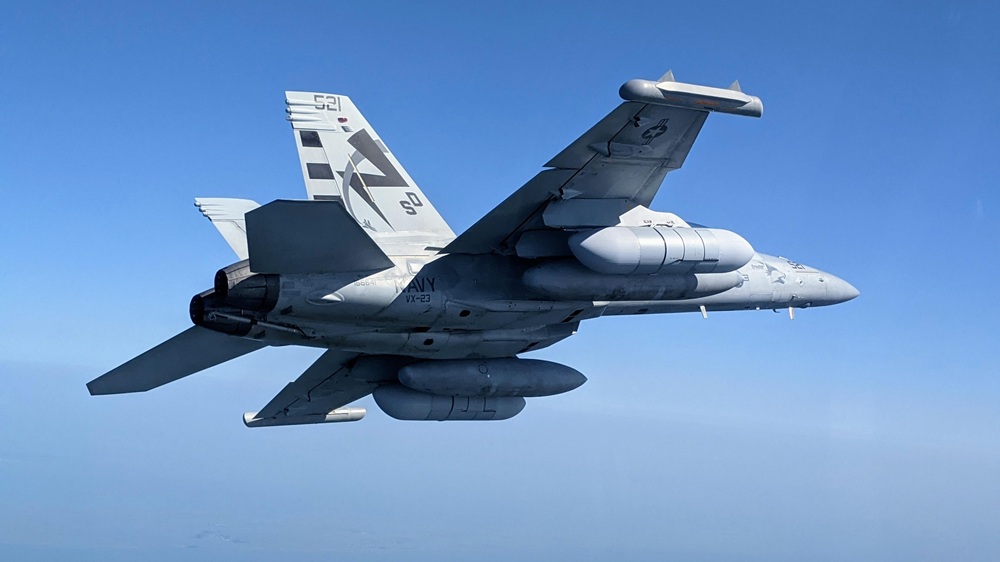
The AN/ALQ-249 Next Generation Jammer will soon replace the decades-old ALQ-99. The NGJ will dramatically increase the Growler’s ability to counter multiple bands at the same time, with higher output power, digital beamforming, and greater frequency agility.
This modernisation will enhance the effectiveness against both low-frequency surveillance radars and high-frequency fire control systems, ensuring the EA-18G Growler remains the backbone of airborne electronic warfare well into the 2030s.
Conclusion
The EA-18G Growler is a living example of the principle that electromagnetic warfare is more important than kinetic warfare. The Growler’s emphasis on low-frequency radar jamming essentially cripples an enemy’s air defence, making its missile systems vulnerable. Aircraft can technically jam missile seekers, but it’s a last resort with a lot of risk due to Home-on-Jam technologies.
In modern air combat, the Growler is less about out-dogfighting and more about out-thinking — denying the enemy the signals it needs to fight at all. And for NATO and allied forces, its presence ensures that air superiority is maintained not only by speed and stealth but also by invisible dominance of the spectrum.
References
- https://www.boeing.com/defense/ea-18g-growler
- https://www.taoglas.com/blogs/countering-gnss-jamming-and-spoofing-for-aerospace-and-defense-applications/
- https://www.navy.mil/Resources/Fact-Files/Display-FactFiles/Article/2169220/ea-18g-growler/
- https://www.afcea.org/signal-media/defense/next-generation-jammer-brings-spectrum-dominance
- https://www.airforcemag.com/electronic-warfare-the-growing-importance-of-spectrum-dominance/
About the Author