Why Tanks Rarely Have Two Main Guns
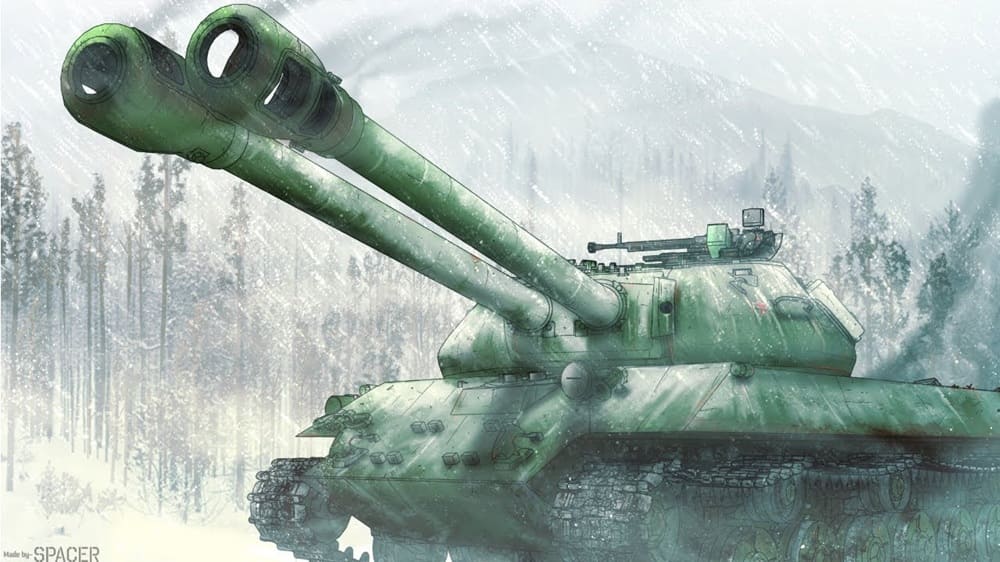
Several prototypes have demonstrated that a tank can carry two main guns. However, designers shape armored vehicles around combat effectiveness per tonne, per cubic meter, and per crewman. By these measures, two main guns are generally worse than one accurate gun with advanced sensors and fire control. It’s not a matter of whether it can be done. It is a tactical fallback. Two guns come with significant penalties in mass, in recoil management, in ammunition capacity, in reliability, and in turret geometry. A second gun does not automatically double a tank’s combat output.
Recoil is a structural issue.
The modern 120 mm smoothbore can fire an armor-piercing shell at about 1,600 to 1,750 meters per second. In a short recoil distance the recoil system has to absorb the momentum of the projectile, the impulse of the propellant gas, and the breech movement. Another gun consists of a barrel, breech, cradle, recuperator, and recoil brake. It also calls for beefier trunnions and turrets.
The experimental XM360 120 mm cannon had a reported system weight of 1,865 kilograms, or about 4,112 pounds. It weighed more than 2,000 pounds less than the 120 mm gun system used on the Abrams, the U.S. Army said. So, that’s a few tonnes to replicate a traditional main gun before you add ammunition and loading equipment. More trouble with offset guns. The recoil force is off the turret’s center line, creating a yawing moment:
M = F \times d
Here (F) is the recoil force and (d) is the distance of the recoil force from the turret axis. If they fire at the same time, the longitudinal recoil load can be doubled. Firing one gun off the turret centerline can twist the turret structure and disturb the alignment of the second weapon. The engineers can add more armor to the turret, but this modification adds weight. The extra mass then demands beefier traverse motors, suspension components, tracks, and powertrain systems.
Two Guns Consume Critical Internal Volume
The inside of a tank is a valuable piece of real estate, and gun breeches take up some of that space. Two breeches require more extensive turret armor, separate recoil paths, and protected loading mechanisms. That might mean more front and roof area exposed to the enemy weapons for the turret. The ammo limit is much more restrictive. The modern 120 mm round is roughly a meter long and can weigh in excess of 20 kilograms. Two autoloaders require magazines, transfer mechanisms, sensors, and blast-protected compartments.
The U.S. Army Science Board noted the problem of volume in its study of the larger 130-mm gun. The proposed weapon reduced the ammo load of an Abrams-type from 40 rounds to 19. The number of “stowed kills” was reduced from 36 to 17, with a modelled probability of kill of 0.90. A twin 120 mm configuration would change the layout, but it would still face the same geometric constraint: weapons and autoloaders push out ammunition, armor, or fuel. The Army study measures the tradeoff between ammunition and firepower.
Fire Control Made Twin Guns Obsolete
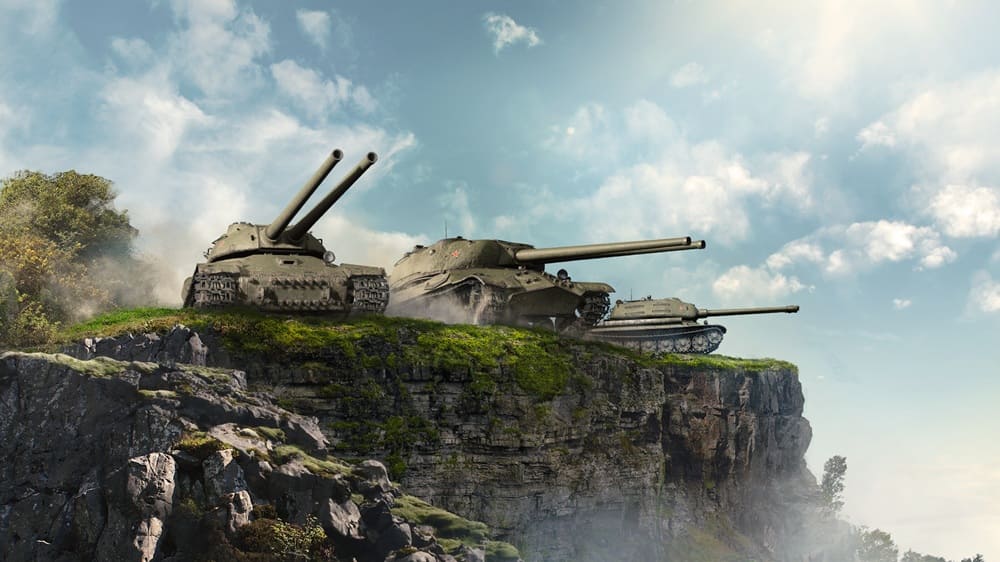
Twin guns appeared most attractive when first-round hit probability remained low. If a single shot has a probability (p) of hitting, then two independent shots produce:
P_{\text{at least one hit}} = 1-(1-p)^2
With p=0.50, firing twice increases the probability of at least one hit to 0.75. That improvement is equivalent to two barrels. But only at p=0.90, two statistically independent shots raise the probability of at least one hit to 0.99—a gain of nine percentage points at twice the ammunition expenditure. Modern stabilization, laser rangefinders, thermal sights, muzzle-reference systems, crosswind sensors, and digital ballistic computers have improved first-round hits.
The benefit of copying the gun is for designers, not so much for better sensors and ammunition. Two guns cannot independently engage two targets without separate stabilized sights and fire-control channels. Independent engagements require two stabilized sighting systems, two fire control channels, and two gunners or sophisticated automation. Otherwise they have the same sights and shoot at the same target.
Case Study: Germany’s VT 1-2
The most serious post-war study of the twin-gun tank was carried out by West Germany. VT 1-1 1974 (Kiel Engineering) 2 x 105 mm guns (hand-loaded) It finished the VT 1-2 in 1975, mounting two Rheinmetall 120mm smoothbore guns and an autoloader. The turretless VT 1-2 would weigh some 43.5 tonnes. The engine is said to be continuously producing around 1,500 PS and up to 2,400 PS for short periods. On roads the vehicle could drive at about 70 kilometres per hour. The guns were intended to provide rapid follow-up fire and a better chance of killing. The guns had very little lateral traverse, so the driver had to steer the whole vehicle to aim them.
The Wedelfahrt technique as proposed was a controlled zigzag motion. When the barrel of the gun reached the point of aim, the fire-control system would fire it. Two prototypes and five test vehicles were used to trial the concept. There was no clear advantage over the Leopard 2 in the comparative evaluation. The Leopard’s turret, stabilization, and sophisticated fire control system gave excellent first-round accuracy without losing the ability to engage all round. The second gun had attempted to perform a task that electronics were already handling.
The Soviet KV-7 Failure
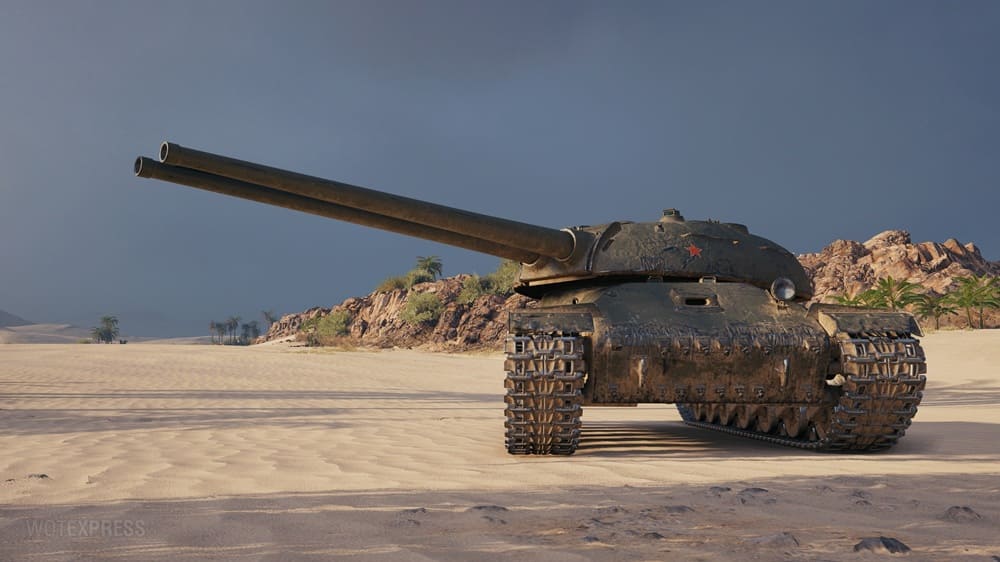
The Soviet KV-7 is an earlier, less publicized example of this type of vehicle. It was commissioned by Stalin in November 1941. In the first configuration it was equipped with a 76.2 mm gun and two 45 mm guns in a fixed casemate. On the third try, during trials on 5 January 1942, all three weapons fired at the same time for the first time. The group wasn’t tight enough at 400 metres. Various loading cycles also hindered coordinated fire. Later engineers added two 76.2mm ZiS-5 guns.
The tests began in May 1942 and achieved a firing rate of six to seven rounds per minute, but the recoil repeatedly knocked the sight out of alignment, prompting engineers to increase the gun elevation. The aiming mechanism was heavy, and the ammunition racks were inconvenient. The Red Army gave up the idea and finally abandoned the prototype. Soviet archival material translated shows these defects.
Why the M50 Ontos Was Different
The American M50 Ontos, armed with six 106 mm recoilless rifles, fought successfully in Vietnam as a direct-fire support vehicle, including at Huế. It was not a conventional main battle tank, however. The weapon vents the propellant gases rearward, greatly reducing structural recoil. This design permitted the Ontos to do away with the huge recoil mechanisms required of tank guns.
The M40 weighed about 438 pounds and could strike a target at roughly 1,365 meters. Its crew also had to risk themselves to reload the external tubes. Specifications for the Ontos and M40 are in the official Marine Corps history. The Ontos proves that it is possible to use multiple large-caliber weapons if designers accept limited ammunition, external loading, light armor, and a specialized mission.
The Better Alternative
A second main gun is provided for redundancy, rapid salvos, and improved hit probability. But it also yields two gun systems that share the same engine, tracks, turret drive, sensors, and crew. A simultaneous fire-control failure or a mobility kill can neutralize both barrels. Another main gun’s mass and volume allow an army to add armor, active protection, drones, more ammunition, or an independent autocannon.
Alternatively, it may require a second tank. Two vehicles equal two observation points, two crews, and two independently maneuvering weapon systems. Technically, twin-gun tanks are feasible. Two barrels are different from two tanks, and they are still operationally unattractive. Modern armored warfare favors the vehicle that sees first, shoots straight, and lives through the reply, not necessarily the one with the most guns.
References
- Krapke, Paul-Werner. Leopard 2: Sein Werden und seine Leistung. Books on Demand, 2004.
- U.S. Army Science Board. An Independent Assessment of the 2040 Battlefield and Its Implications for the 5th Generation Combat Vehicle, 2020.
- Pasholok, Yuri. “KV-7: Lock, Stock, and Three Smoking Barrels,” based on Soviet GAU and factory archival records, 2016.
- Smith, Charles R. U.S. Marines in Vietnam: High Mobility and Standdown, 1969. History and Museums Division, U.S. Marine Corps.
About the Author