
Top 5 Chemical and Biological Weapons — Threat Analysis
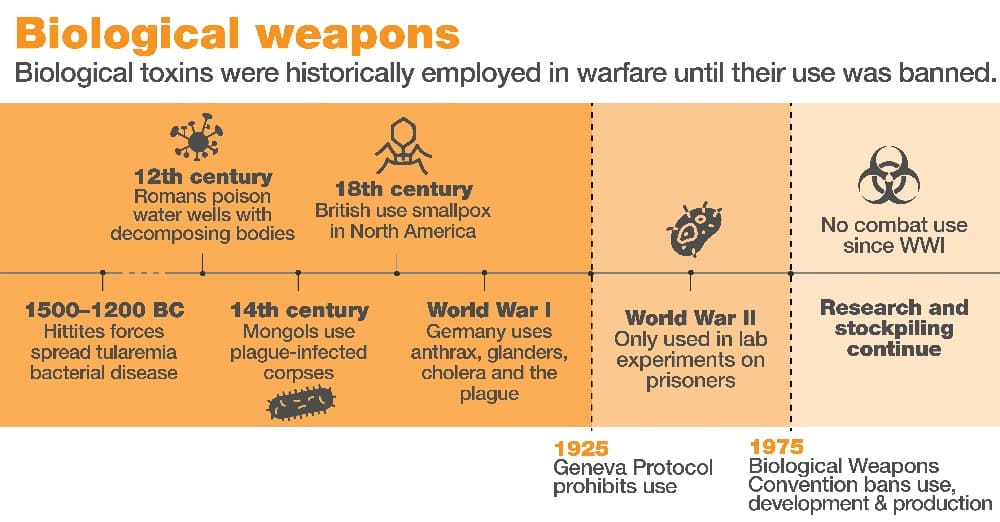
Chemical warfare is much older than the modern armies. Greek and Roman writers sometimes referred to these ancient forces as ‘barbarian hordes.’ They used poisoned arrows, poisoned wells, arsenic smoke and other toxic gases. But the phrase is historically inaccurate, as organised states also used these methods.
The earliest firm archaeological evidence is from Dura-Europos in Syria, AD 256. The Sasanian Persian forces apparently burnt sulphur and bitumen in a tunnel during a siege, killing some 20 Roman defenders with the poisonous smoke. So chemical warfare did not begin with one supposedly barbarian people. It arose independently in several ancient military cultures over many centuries.
Chemical & Biological Synopsis
Toxicity is not a sufficient basis for ranking chemical and biological agents. A military assessment should also consider persistence, transmission, detection, protection and operational disruption. Thus, this analysis ranks the five most deadly chemical and biological weapons in terms of their overall strategic casualty potential. An agent is a weapon only if it has hostile intent and a delivery mechanism.
Any toxic chemical used for a prohibited purpose is defined by the Chemical Weapons Convention (CWC). In the meantime, the Biological Weapons Convention (BWC) bans biological agents and toxins that do not have a peaceful justification. This is important because many of the substances listed have legitimate medical, industrial or research uses. The following ranking is still at the level of threat assessment, historical evidence and defensive planning. It does not address the manufacture and use of weapons.

Top 5 Chemical and Biological Weapons Rank
| Rank | Agent | Class | Primary strategic danger |
|---|---|---|---|
| 1 | Variola virus | Biological | Contagious epidemic and about 30% historical mortality |
| 2 | Bacillus anthracis | Biological | Durable spores, delayed recognition and severe inhalational disease |
| 3 | VX | Chemical nerve agent | Extreme toxicity combined with environmental persistence |
| 4 | Sarin (GB) | Chemical nerve agent | Rapid action and hazardous vapour exposure |
| 5 | Sulphur mustard | Chemical blister agent | Persistent contamination, delayed injury and mass incapacitation |
There is no best agent in all situations. Weather. Terrain. Immunity. Protective equipment and medical preparedness can alter the expected outcome. The top 5 chemical and biological weapons, however, provide the widest combination of casualties, contamination and command disruption.
1. Smallpox: The Leading Strategic Biological Threat
The Variola virus is an orthopoxvirus, which is a double stranded DNA virus. Why it is ranked first is that the infected can propagate an incident far beyond the first exposed group. Thus, its strategic impact depends on the behaviour of the epidemic, not just on the initial release. 30% of unvaccinated patients died of variola major, historically. The incubation period was usually 10–14 days, but it varied from 7 to 19 days. During this time patients were asymptomatic and could not transmit the disease, but the delay could mask the cause while exposed personnel moved through transport hubs, bases and staging areas.
Vaccination wiped out smallpox. The last naturally occurring case was in 1977. There have been no smallpox attacks in modern times. In addition, the World Health Organization has a stockpile of vaccines for emergency use, is responsible for the two approved variola repositories, and the distinctive rash allows for clinical identification once the disease has occurred. But even those great defensive advantages can be swamped by a planned return that overwhelms medical intelligence, contact tracing, isolation capacity and continuity of command systems. Thus, in this ranking, smallpox remains the most strategically disruptive biological agent.
2. Anthrax: Durable Spores Without Contagion
Bacillus anthracis is a gram-positive, spore forming bacteria. Its spores can live in soil or on contaminated material for years. Unlike smallpox, anthrax is not easily transmitted person to person; its danger lies in its persistence, delayed recognition, and severity of the inhalational disease. The bacterium uses an antiphagocytic capsule and two binary exotoxins. The protective antigen promotes the entry of the oedema factor and the lethal factor into cells. These components then interfere with cellular processes and immune signalling. Inhalational anthrax usually starts not like ordinary pneumonia, but usually in the thoracic lymph nodes. Symptoms usually develop within a week but may take as long as two months.
Inhalation anthrax is almost always fatal without treatment. But with aggressive treatment, survival jumps to about 55%. The strategic value of forensic epidemiology is exemplified by the 1979 Sverdlovsk anthrax outbreak, when an agent was released by a Soviet military facility, causing at least 96 infections and 64 deaths. Initially, Soviet authorities blamed the contaminated meat. Later evidence revealed that airborne exposure and a serious verification weakness were involved in the incident. The 2001 letters attacks in the United States involved 22 cases and five deaths, and the response utilised more than 1,500 responders and 500 field personnel. The episode showed how an incident in a single locality can have national costs far exceeding the immediate toll of casualties.
3. VX: Persistent Toxic Terrain
VX is an organophosphorus nerve agent of extreme toxicity and inhibits acetylcholine esterase, resulting in the accumulation of acetylcholine at the muscarinic, nicotinic and central synapses. Cholinergic crisis thus may lead to bronchospasm, seizures, paralysis and respiratory failure. VX is much less volatile than sarin, and the oily liquid can persist for days or months depending on conditions. This means that contaminated ground, equipment and casualties can remain dangerous long after the initial exposure.
The United States once had a chemical stockpile of approximately 30,500 tonnes, of which more than 4,500 tonnes were VX, but verification has since established destruction of declared holdings. In the 2017 killing of Kim Jong-nam, the secret threat of VX and the depth of chemical forensics were revealed, with Malaysian authorities providing 102 samples to the OPCW. Analysts say that various samples contained VX, three precursors, four degradation products, one metabolite, and protein-bound VX, which gave investigators enough information to reconstruct exposure through the parent agent and its chemical signatures. VX is not spread from casualty to casualty. Meanwhile, it is also the most toxic and persistent chemical agent in the combined list.
4. Sarin: Speed and Vapour Exposure
Sarin (GB) is a volatile organophosphorus nerve agent which inhibits acetylcholinesterase (AChE) and evaporates readily enough to be a rapid inhalational emergency. Symptoms can develop within seconds or minutes. Sarin can inflict rapid casualties in confined spaces but is less persistent in contamination than VX or sulphur mustard. Therefore, outcomes are determined by ventilation, weather, detection and respiratory protection.
The most obvious example of mass casualties was the attack on the Tokyo underground in March 1995, in which the OPCW says 13 people died and over 1,000 were seriously injured. Furthermore, secondary contamination and large numbers of worried but unexposed people strain hospitals. In April 2017, the OPCW confirmed that sarin had been used on civilians at Khan Shaykhun in Syria and that nerve agents are still being used despite the global ban. Sarin reduces all warning and response times, but its reduced persistence is still less than VX in this assessment.
5. Sulphur Mustard: Delayed Injury and Incapacitation
Mustard gas, or sulphur mustard, is not a true gas but a persistent oily vesicant that alkylates DNA, proteins and other cellular targets. This may cause damage to eyes, skin, respiratory epithelium and bone marrow. Mustard ranks fifth because it kills less rapidly than nerve agents. However, it contaminates equipment, slows manoeuvres and places long-term pressure on medical services. Eye and airway injuries can remove personnel from duty without causing immediate death.
Several agents are said to have been involved in the attack on Halabja, Iraqi Kurdistan, on 16 March 1988. OPCW estimates about 5,000 dead and 10,000 injured. Others suffered long-term damage to their lungs, eyes and skin. Skin reddening may develop between 2 and 48 hours after exposure, and eye symptoms may develop earlier. The delayed onset allows those exposed to continue functioning until they break down. There is no antidote to reverse the cellular damage. Supportive care is provided by clinicians.
Top 10 Biological-Warfare Agents
| Agent Name | Effect | Country-Associated Weapons Programme |
|---|---|---|
| 1. Anthrax (Bacillus anthracis) | Inhalational disease can cause severe respiratory failure, bloodstream infection and death. Spores remain environmentally persistent. | Soviet Union, United States, United Kingdom, Iraq |
| 2. Smallpox (Variola virus) | Highly contagious infection causing fever, extensive skin lesions and potentially fatal systemic complications. | Soviet Union |
| 3. Pneumonic plague (Yersinia pestis) | Produces rapidly progressing pneumonia, sepsis and respiratory failure. It can spread between people through droplets. | Imperial Japan, Soviet Union |
| 4. Botulinum toxin | Blocks nerve signalling, producing muscular paralysis, respiratory failure and death without intensive treatment. | US, USSR, Iraq |
| 5. Tularaemia (Francisella tularensis) | Causes severe fever, pneumonia, lymph-node inflammation and systemic illness. Primarily considered an incapacitating agent. | US, USSR |
| 6. Marburg virus | Causes viral haemorrhagic fever, internal bleeding, shock and multiple-organ failure. | USSR |
| 7. Ricin toxin | Damages cells and can cause respiratory distress, organ failure and death. It does not spread between people. | US, UK, Iraq |
| 8. Glanders (Burkholderia mallei) | Causes pneumonia, skin lesions, abscesses and frequently fatal bloodstream infection when untreated. | Imperial Japan, USSR |
| 9. Q fever (Coxiella burnetii) | Produces intense fever, headache, pneumonia or hepatitis. It is usually selected for incapacitation rather than mass lethality. | US, USSR |
| 10. Venezuelan equine encephalitis virus | Causes fever, severe headache and neurological disease; primarily valued historically as an incapacitating agent. | US, USSR |
Notable Agents Beyond the Top Five
The combined ranking does not erase other major threats; instead, it weighs contagiousness, lethality, persistence, detection and treatment across both weapon classes.
Other Leading Biological Agents
Yersinia pestis is the bacterium that causes pneumonic plague, a serious respiratory illness. It is transmitted by droplets through close contact, and without immediate antibiotics, the disease progresses rapidly. However, botulinum toxin causes paralysis and respiratory failure. It is compelling, but it is not transmittable. Another large threat group is that of viral haemorrhagic-fever agents, including Ebola, Marburg and some arenaviruses, which can cause severe disease and strain clinical care.
WHO guidance identifies anthrax, botulinum toxin and plague as agents capable of creating major public-health emergencies; moreover, transmissible agents can generate secondary epidemics and initially resemble natural outbreaks. Therefore, a biological-only strategic list would read: smallpox, anthrax, pneumonic plague, botulinum toxin and viral haemorrhagic fever agents.
Other Leading Chemical Agents
VX heads a list of chemicals-only, followed by Novichok-family nerve agents, sarin, soman and sulphur mustard. “Novichok” is a family of highly toxic organophosphorus compounds, not a single chemical compound with a single toxicity value. Soman, or GD, is also fast-acting, and some of its toxic effects can be difficult to reverse shortly after exposure. Sulphur mustard is not as strategically lethal immediately as these nerve agents but is historically far more important and capable of producing casualties.
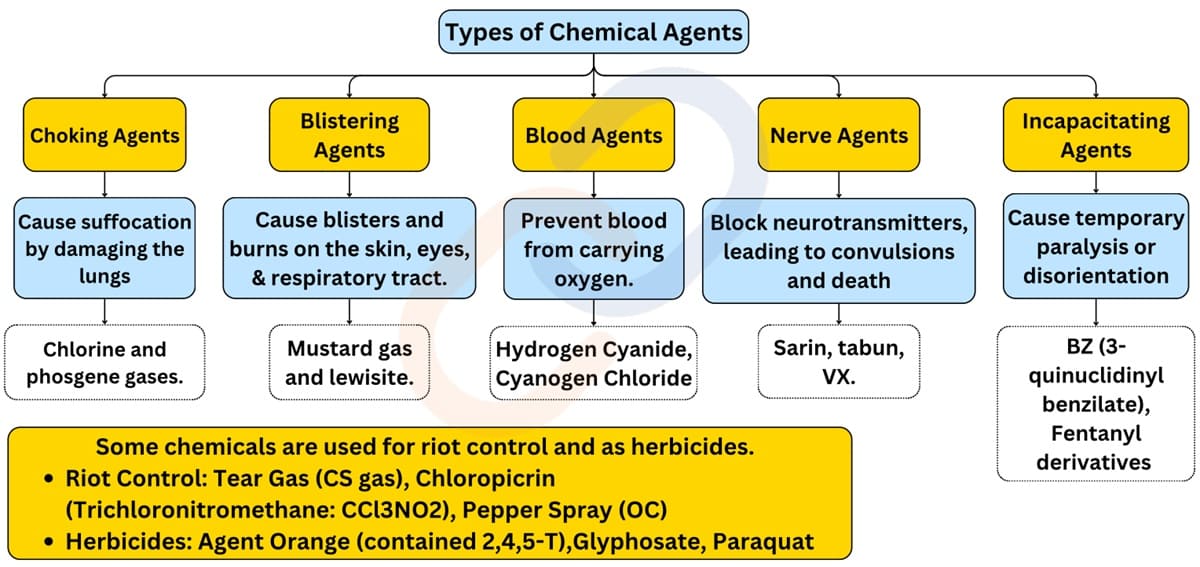
Top 10 Chemical-Warfare Agents
| Agent Name | Effect | Country associated with development |
|---|---|---|
| 1. VX | Persistent nerve agent causing convulsions, muscular paralysis and respiratory failure. Skin exposure can be fatal. | UK, US, USSR |
| 2. Sarin (GB) | Fast-acting nerve agent causing pinpoint pupils, excessive secretions, seizures, paralysis and respiratory failure. | Germany, Iraq, Syria |
| 3. Novichok agents | Highly toxic nerve agents that disrupt muscular and autonomic control, potentially causing seizures and respiratory collapse. | USSR; Russia associated with attributed poisoning operations |
| 4. Soman (GD) | Rapidly acting nerve agent causing seizures, neurological injury, paralysis and respiratory failure. | Germany, the USSR |
| 5. Tabun (GA) | Nerve agent producing breathing difficulty, vomiting, convulsions, paralysis and death following serious exposure. | Germany, Iraq |
| 6. Sulphur mustard | Blister agent causing delayed skin burns, blindness, respiratory injury, bone-marrow suppression and increased cancer risk. | Germany, Italy, Imperial Japan, Iraq |
| 7. Lewisite | Arsenic-based blister agent causing immediate pain, severe burns, eye damage, lung injury and systemic toxicity. | US, USSR, Imperial Japan |
| 8. Phosgene (CG) | Choking agent that damages the lungs and can cause delayed, potentially fatal pulmonary oedema. | Germany |
| 9. Chlorine | Corrosive choking agent causing airway burns, coughing, suffocation and fluid accumulation in the lungs. | Germany and Syria are associated with confirmed modern attacks. |
| 10. Hydrogen cyanide (AC) | Blood agent preventing cells from using oxygen, causing seizures, unconsciousness, cardiac arrest and rapid death. | France: Nazi Germany used an HCN-based pesticide for genocidal killing |
Operational Impact and Defensive Priorities
Smallpox is an agent of force-wide contagion and strategic continuity; anthrax is a combination of environmental durability and delayed, severe disease. Each agent presents a different battlespace problem. VX, however, is a permanent toxic hazard. Sarin causes an immediate vapour emergency. Sulphur mustard causes delayed casualties, contamination and medical attrition. So the top 5 chemical and biological weapons require different warning, protection and care plans.
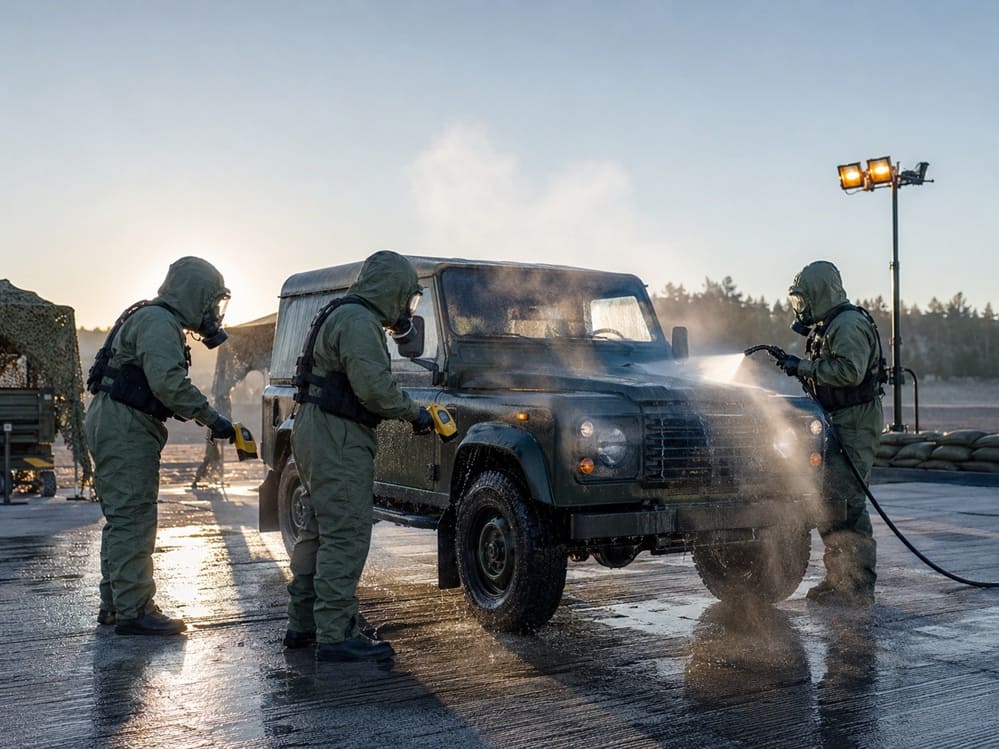
Chemical defence thus covers detection, individual protection, casualty management and contamination control while biological defence includes surveillance, laboratory confirmation, vaccination, isolation and public health command. The Nuclear and Biological section provides related research, while the Comparison section places capability rankings in a wider military context.
Treaties, Verification and the Strategic Bottom Line
By 31 December 2025, the OPCW’s verified total covered all 72,304.34 tonnes of declared chemical-agent stockpiles. The CWC has 193 member states, which comprise about 98% of the world’s population. But you can’t ‘verify’ the non-existence of undeclared assets. The BWC had 188 state parties but lacked a verification organisation like the CWC, making it more difficult to gauge biological compliance.
Credible CBRN assessment must thus incorporate treaty declarations, health surveillance, laboratory evidence, chemical forensics, and disciplined sourcing. None of the top five chemical and biological weapons share a single quality. Smallpox is contagious. It kills. Anthrax kills with durable spores . VX kills by lingering. Sarin kills quickly. Sulphur mustard kills by disabling its victims. In the end, readiness is as important as toxicity, because detection, protection, medical capacity and reliable command systems can turn an incident into a strategic crisis or contain it.
References
- Defense News Today — Nuclear and Biological
- Defense News Today — Comparison
- WHO — Public Health Response to Biological and Chemical Weapons
- OPCW — Destruction of All Declared Chemical-Weapons Stockpiles
About the Author



I Commanded Marines in the Persian Gulf War. I fell on the battlefield leading my Marines, to according to General Norman Schwarzkopf I & we were exposed to Anthrax, Sarin Gas, and additional Chemical, Biological and Neurological Warfare Agents. On the night of 30 January 1991 at Riyadh Airport Saudi Arabia. General Schwarzkopf briefed that the Iraqi were using this CBRN mix on American and Allied troops since the beginning of the Persian Gulf War.
Your demonstrated not including these facts in your report, brings into question your being a self reported ‘expert’ in CBRN?
Thank you
Colonel Jeffrey R. Rath USMC, ret
Thanks for identifying; we will include this part of the information in our next report.