
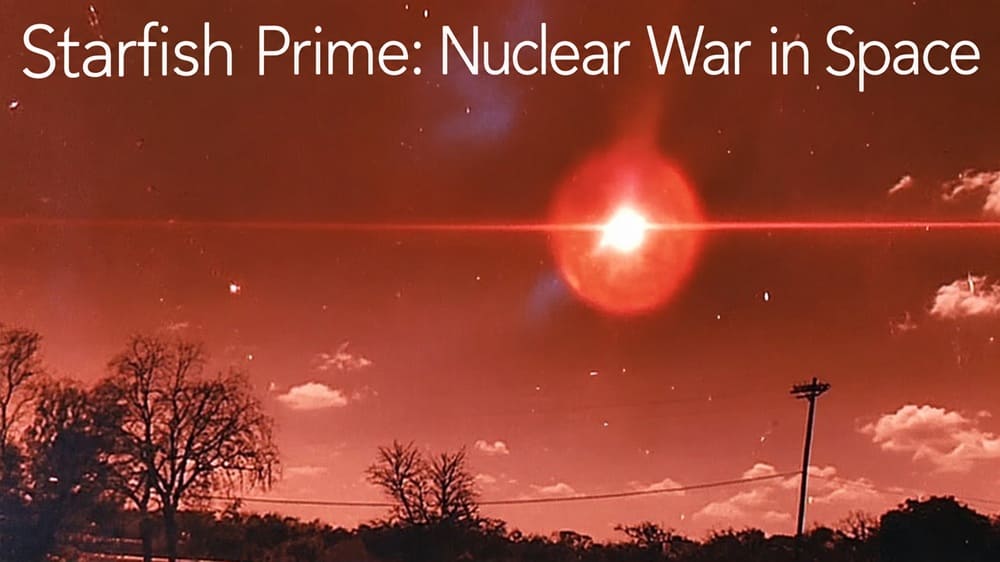
Starfish Prime: Nuclear War in Space
Why Starfish Prime Happened
The test came at one of the most frayed moments of the Cold War. In 1961, the Soviets resumed large atmospheric nuclear tests, culminating in the Tsar Bomba of about 50 megatons. The United States followed up with Operation Dominic in 1962. Operation Fishbowl was for high-altitude nuclear phenomena. According to the Los Alamos National Laboratory records, its objectives are to collect data on electromagnetic pulses, auroral formation, radio-communications disruption and other effects of nuclear detonations at extreme altitude. It was also useful information for understanding how ballistic missiles and defensive systems might operate in a nuclear-disturbed environment.
The experiment was important. A declassified presidential memorandum dated 20 June 1962 shows this significance. Special attention was paid by President John F. Kennedy to high-altitude tests of Starfish and Blue Gill. Starfish Prime was to have a planned yield of 1.4 megatons at an altitude of 400 kilometres, the document stated. A problem with the launch vehicle foiled a previous effort to deploy the Starfish. Starfish Prime was the successful sequel.
Detonation at the Edge of Space
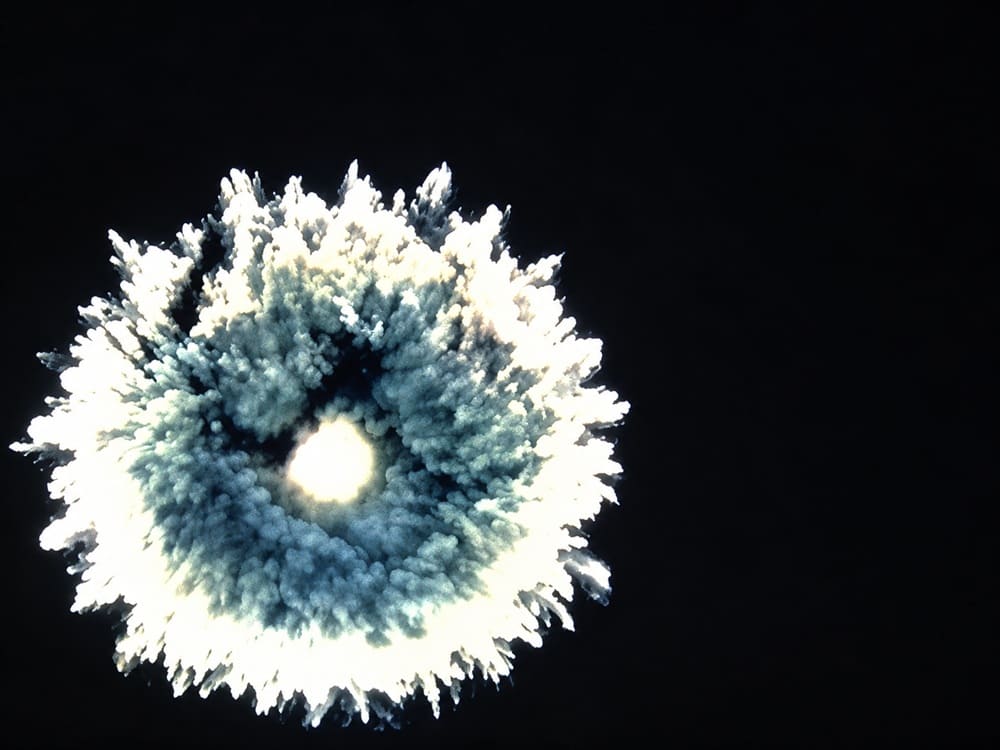
A Thor launch vehicle carried the Starfish Prime experimental package upward from Johnston Island. The United States detonated the nuclear device on July 9, 1962, at about 09:00 UTC, roughly 400 kilometres above Earth. The physical environment at this altitude radically changed the behaviour of the explosion. The air at sea level is dense and absorbs tremendous amounts of energy, turning it into blasts, heat and shock waves. The air at 400 kilometres is extremely thin. Instead, energy was coupled into electromagnetic radiation, ionised particles and the Earth’s magnetic environment.
A declassified analysis from Los Alamos said the Earth’s magnetic field had an immediate effect on the movement of the nuclear debris. Some charged material followed magnetic field lines to conjugate regions of the planet, while other energetic particles followed trajectories around Earth with much longer lifetimes. Effectively, the result was a large-scale magnetospheric physics experiment using a nuclear explosion.
The Unexpected Electromagnetic Pulse
The electromagnetic effects were the most historically significant aspect of Starfish Prime. High-altitude nuclear explosions produce strong gamma radiation. Gamma photons hit molecules in the atmosphere and knock energetic electrons off through the Compton effect. The earth’s magnetic field bends these electrons, creating rapidly changing electrical currents. These currents generate an electromagnetic pulse that can induce voltages in electrical and electronic systems some distance from the blast. The electromagnetic footprint of the detonation spread over a huge geographic area, as it was hundreds of kilometres above the Earth. Electrical disturbances were recorded in Hawaii, about 1,400 kilometres away from the blast.
However, the blast caused electrical disturbances. It extinguished street lights, triggered burglar alarms, and disabled communications equipment. Most of the instrumentation built to measure the pulse saw signals stronger than expected by scientists, and contemporary experience was especially valuable. The Hawaii incident should not be exaggerated into a complete island-wide blackout. Moreover, the infrastructure of 1962 was far less reliant on microelectronics than today’s civilian and military systems. However, Starfish Prime demonstrated experimentally that a nuclear weapon need not produce conventional blast damage near a target to interfere with electrical systems at considerable distances.
Starfish Prime’s Radiation Belt
The greatest scientific achievement came after the flash went out. The explosion pumped large numbers of energetic charged particles into Earth’s magnetosphere. Some of these particles were trapped by the Earth’s magnetic field, creating an artificial radiation belt on top of the natural Van Allen belts. In some areas, NASA measurements of the initial electron fluxes were on the order of 10⁹ electrons per square centimetre per second on the first day of the event.
Particle concentrations fell steeply at first, but a fraction of the artificial population survived for a much longer time. Some magnetic-shell regions show characteristic lifetimes of order ~1.5 yr in later measurements. It was a remarkable discovery. A nuclear blast that had been only fractions of a second had altered the radiation environment about the Earth for months, and in some particle populations, far longer.
Satellites: Unexpected Casualties
Starfish Prime was an early case study in the susceptibility of space systems to the satellite effects. The explosion accelerated the deterioration of solar cells on some spacecraft already in orbit. Later, NASA said the radiation from Starfish Prime caused several satellites to malfunction or fail. Later analyses estimated that seven satellites failed within months of the high-altitude tests, mainly because of radiation-related effects. However, individual spacecraft experienced different failure mechanisms and accumulated different levels of radiation exposure. One famous case was Telstar 1, launched on July 10, 1962, shortly after Starfish Prime. Telstar became the first satellite to support trans-Atlantic television and communications. It repeatedly passed through the enhanced radiation environment created by the test.
Its command system began to go haywire in November 1962. Technical investigations found that increased radiation in the inner Van Allen belt damaged sensitive transistor surfaces in the command decoders of the spacecraft. Engineers were able to restore operation temporarily through modified command procedures, but eventually the satellite failed again. TRAAC and Transit 4B also showed rapid solar-cell degradation. Later, Defence Department analysis reported reductions in solar-cell current of about 22 per cent over several weeks following Starfish Prime for these spacecraft. The most lasting lesson of Starfish Prime for today’s military planners may be that the long-term orbital environment that a high-altitude nuclear event creates can be as operationally important as the instantaneous EMP.
Artificial Aurora and Global Observation
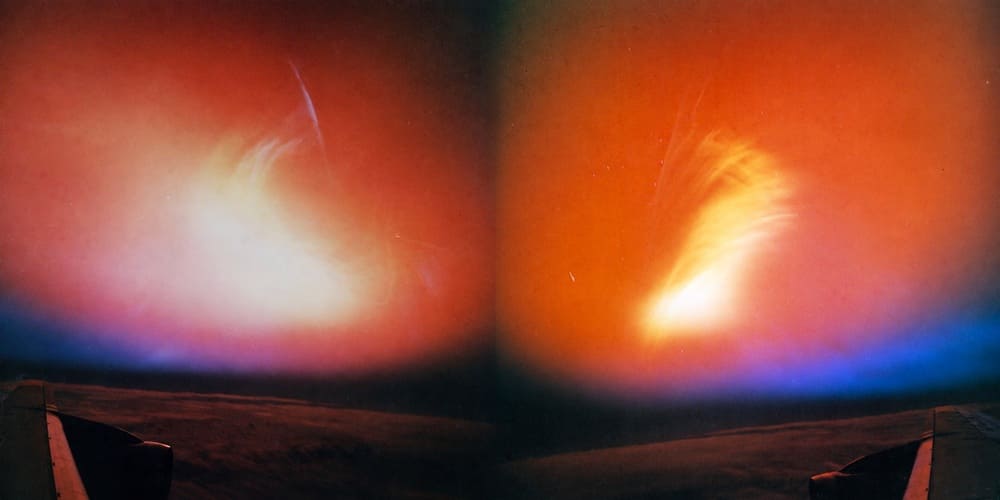
Starfish Prime also created spectacular visual displays. Charged particles travelled along the magnetic field lines of the earth and collided with the atoms of the atmosphere, producing artificial auroral emissions. Observers across much of the Pacific saw spectacular red, green and white displays. Later studies carried out at Los Alamos described nuclear debris moving toward magnetic conjugate points and other material rising to altitudes of about 1,000-2,000 kilometres or more. From these observations, scientists learnt how energetic particles travel and become trapped in the Earth’s magnetic field. Thus, an experiment in weapons became a significant experiment in space physics.
The Strategic Lesson
Starfish Prime proved that military nuclear effects cannot be measured by blast radius, thermal radiation, or ground-level fallout alone. A high-altitude detonation can inject energy across the wider technological environment. Communications, radar, power grids, spacecraft, and sensors, even thousands of kilometres away, can all be part of the battlespace. The test also revealed an important difference between immediate and long-term effects. The EMP occurred almost immediately after the detonation. Artificial radiation belts persisted for months or years, creating a continuing hazard for spacecraft. Satellites making repeated passes through the contaminated region faced prolonged radiation exposure.
That distinction still has strategic relevance for the increasingly space-dependent armed forces. Just over a year after Starfish Prime, the United States, the Soviet Union and the United Kingdom signed the Limited Test Ban Treaty. It was entered into force on October 10, 1963, and prohibited all nuclear test explosions in the atmosphere, underwater, and outer space. Starfish Prime is thus part of a brief, amazing period when nuclear powers were experimentally altering near-Earth space itself. Today, researchers study Starfish Prime’s legacy through EMP protection, satellite radiation hardening, resilient communications, and increasingly vulnerable orbital infrastructure.
References
- Los Alamos National Laboratory — Operation Fishbowl, U.S. Department of Energy/National Nuclear Security Administration. Operation Fishbowl technical report
- W. N. Hess — The Artificial Radiation Belt Made on July 9, 1962, NASA Technical Note D-1687, 1963. NASA Technical Reports Server record
- Lawrence Livermore National Laboratory — 1962: Operation Dominic, historical nuclear-test overview. LLNL Operation Dominic history
- U.S. Department of State — Limited Test Ban Treaty, Treaty Banning Nuclear Weapon Tests in the Atmosphere, in Outer Space and Under Water. Limited Test Ban Treaty text and history
About the Author