Majid Kazemi’s Final Su-24 Mission to Al Udeid
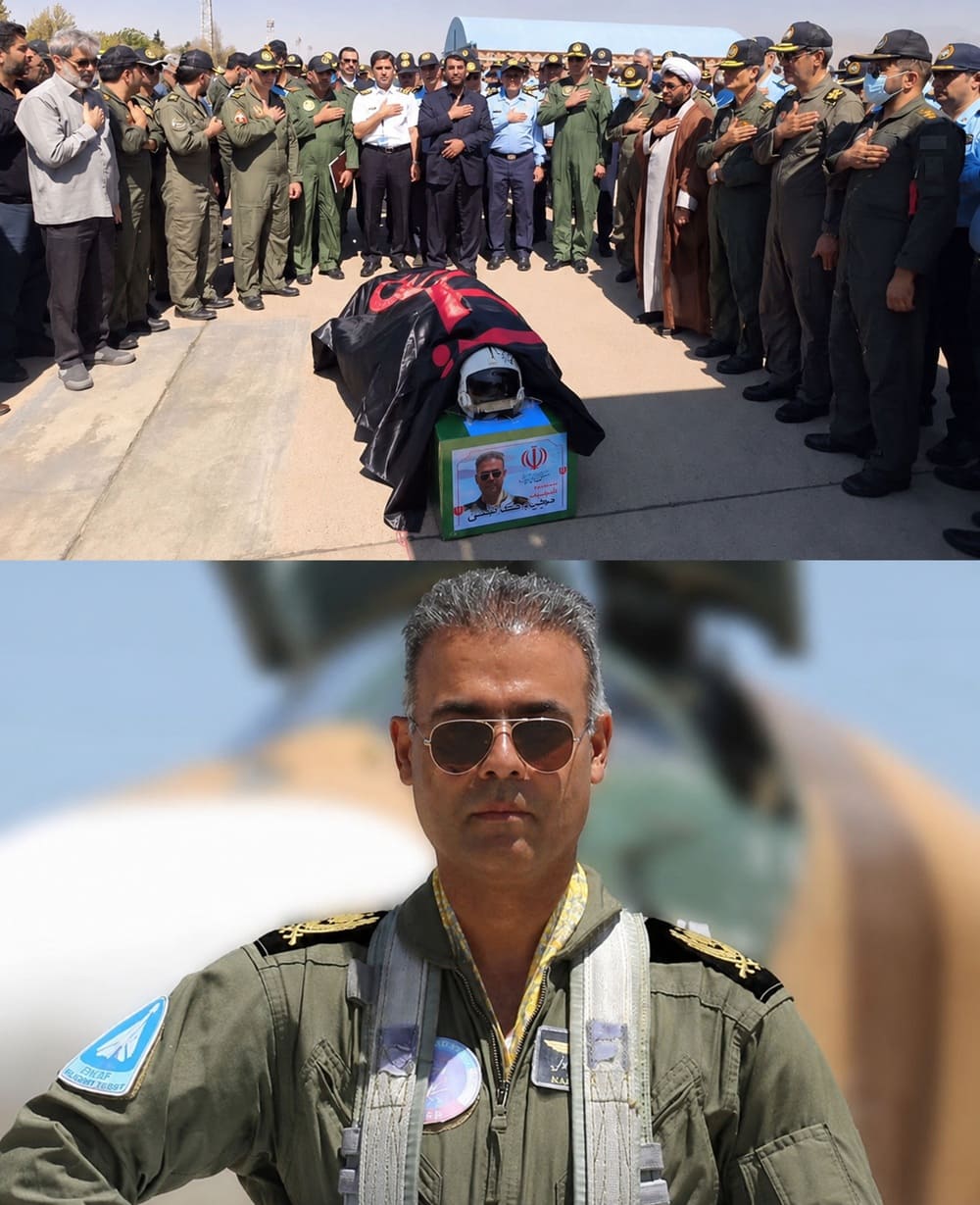
On 2nd March 2026, two Iranian Su-24MK Fencer bombers left Shahid Doran Air Base near Shiraz. They said they were heading to Al Udeid Air Base in Qatar. The two IRIAF strike planes continued on. Five months later, DNA tests identified one of the crew as Second Brigadier General Majid Kazemi. The Iranian Army said he died July 29, 2026. There were two conflicting reports about the mission right away.
Iran said the planes successfully bombed Al Udeid before the fighters shot them down. According to Qatar, its fighter jets shot down both bombers before they could reach their targets. This analysis reconstructs the operation from open-source information. There are no credible sources for the classified radar tracks, missile types, call signs or detailed mission plan.
Majid Kazemi and the Iranian Mission
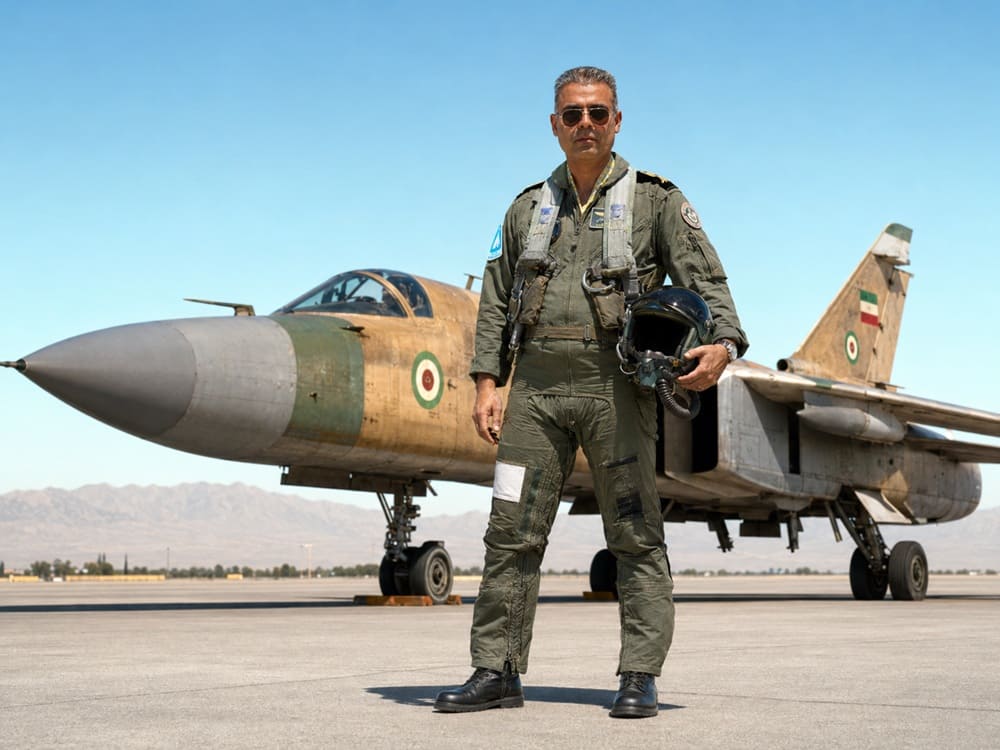
Majid Kazemi was a senior pilot of the Islamic Republic of Iran’s Air Force. Iran has released almost nothing about his previous assignments, flight hours or combat experience. Kazemi was aboard one of two Su-24s that took off from Shahid Doran Air Base on March 2, the Iranian Army said. The crews were two-man teams with one pilot and one navigator-weapons systems officer.
Thus, Iran lost four aircrew in the operation. As of 29 July, Iranian authorities said they had identified Kazemi only through DNA testing. Yet they continued to dig into what had happened to the rest of the crew. Iran said the operation was a response to US and Israeli attacks. The Fencers “broke through several layers of surveillance and struck at Al Udeid,” its official account says. Iran said enemy defences shot down the two aircraft over the Gulf as they were returning.
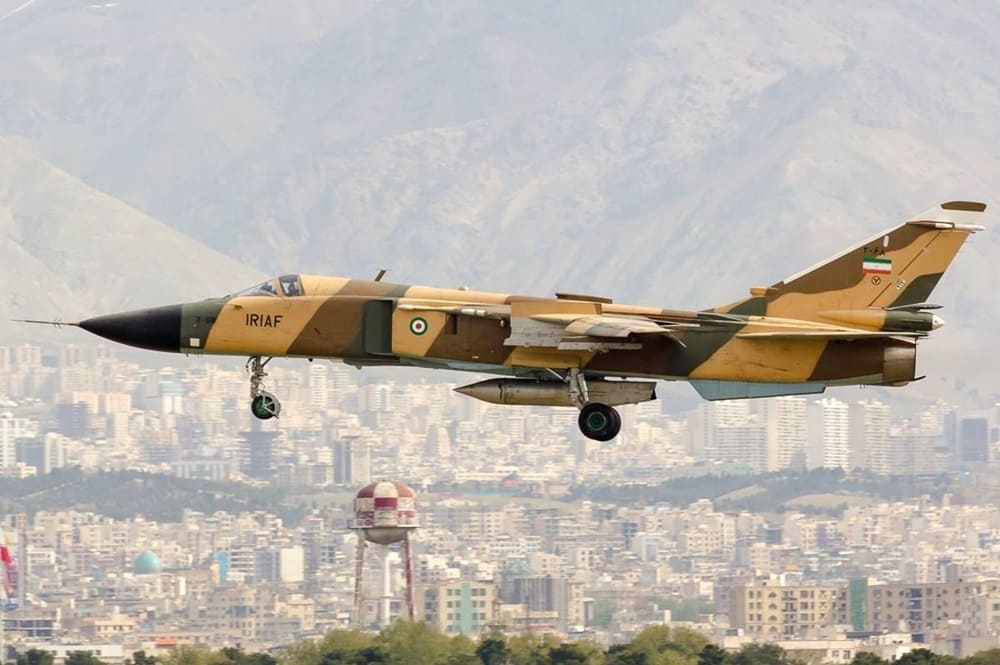
Iran Selected the Su-24MK Fencer
The Su-24 is not an air-to-air interceptor. It was designed by Soviet engineers as a tactical bomber and battlefield interdiction aircraft for all weather conditions. The export Su-24MK is fitted with two AL-21F-3A turbojet engines with afterburner. Variable-sweep wings are used for take-off, cruise and high-speed penetration configurations. The aircraft has a published maximum take-off weight of 43,755 kg. It has a normal ordnance load of about 3,000 kilograms and a maximum load of 8,000 kilograms. It has a clean top speed of about 1,315 km/h at sea level.
However, dense, low-level air and external fuel tanks, along with operational weapon loads, all add to the drag. In most attack profiles, an armed fencer would fly at less than its theoretical maximum rate of advance. The aircraft’s most notable feature is an integrated navigation and attack system. It has terrain-following radar, attack radar and an onboard computer. These systems enable low-level penetration in adverse weather or in the dark. The design was a reflection of Cold War thinking. A strike aircraft would come in under the horizon of the radar, drop its ordnance and leave before any fighters could respond.
The 80-Foot Penetration Profile
Sources familiar with the interception said the Iranian aircraft flew approximately 80 feet, or 24 metres, above the water. It reportedly carried bombs and guided weapons while exploiting the tactical advantages of extremely low-altitude flight. For ground-based radars, the Earth’s curvature limits the radar range against very low targets. The aircraft’s geometric horizon is just 17.5 km away, at 24 metres. The radar height increases the combined detection range, and atmospheric refraction increases it further. However, tracking is difficult because of sea clutter and surface reflections.
Meanwhile, this tactic has significant downsides as well. Flying low means more fuel burn, more turbulence and more workload for the crew. It restricts evasive manoeuvres and reduces the time available for ejection. Furthermore, terrain masking is not effective against elevated sensors. “Airborne radar can look down over the horizon and detect aircraft against the sea surface.” Modern active electronically scanned array radars also have improved processing and clutter rejection. So the Fencers could fly under some ground-radar coverage, but they would not be invisible to Qatar’s broad surveillance network.
Importance of Al Udeid
Al Udeid isn’t your average operating base. The base is the home of the Combined Air Operations Center, which coordinates airpower throughout the US Central Command region. The centre plans and directs combat sorties, intelligence missions, refuelling, airlift and integrated air and missile defence. Its area of responsibility covers 21 countries and well over four million square miles.
In November 2025, US Air Forces Central underwent a major but largely overlooked development. The US and Qatar opened a joint air defence command centre at Al Udeid. The facility established a joint coordination cell for Qatari and U.S. personnel. This probably accelerated the spread of warnings and the classification of threats. However, there is no publicly available evidence regarding which sensors detected Kazemi’s formation.
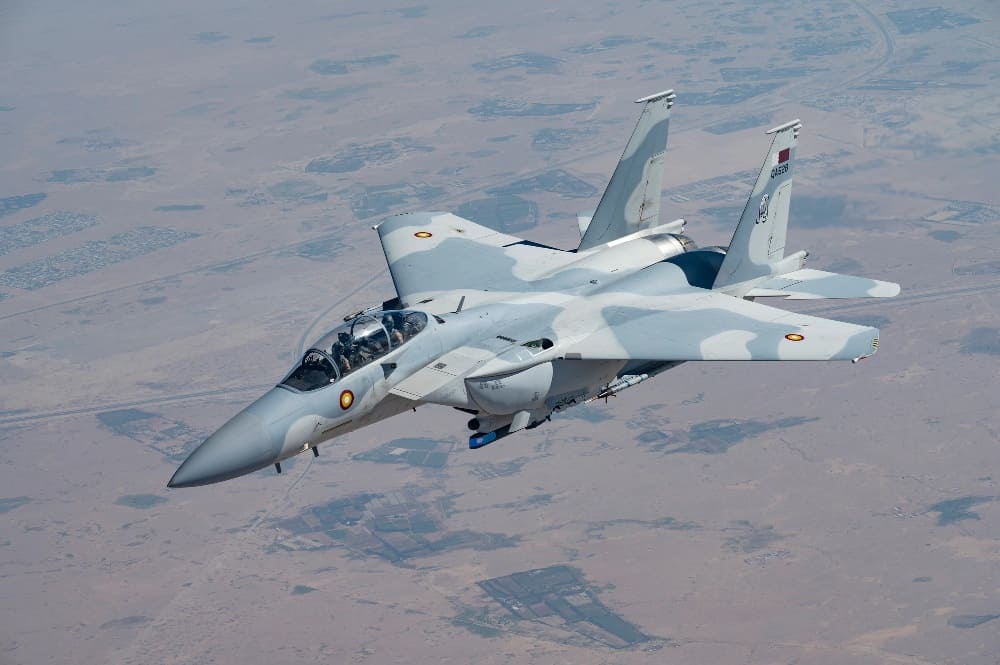
The Qatari F-15QA Interception
The two Su-24 crossed into Qatar’s borders and entered into its national airspace, the statement said. The controllers reportedly picked up their path to Doha and warned the Su-24 pilots. There was no reply from the Su-24 side. Then Qatar approved the interception under its own rules of engagement. Later, the interceptors were identified as F-15QA Ababil fighters. The F-15QA is among the most advanced of the Eagle family’s variants. Qatar has ordered 36 planes and received U.S. approval for up to 72. The fighter is fitted with digital flight controls, Link 16, a Digital Electronic Warfare Suite and the AN/APG-82(V)1 active electronically scanned array radar.
The APG-82 has more processing power, better receiver sensitivity, and improved air target detection than older mechanically scanned systems. It is powered by a pair of F-110-GE-129 engines and has 11 weapon stations on the F-15QA. These features resulted in a serious imbalance of technology. Su-24 was dependent on altitude, velocity and surprise. The F-15QA could fuse radar information, outside tracks and networked command data. Sources said the Iranian aircraft were only two minutes from their targets. The Qatari fighters identified the bombers visually before attacking them, reportedly photographing them. The two Su-24s were then downed over the water. Qatar has not said publicly what weapons it used. Consequently there has been no confirmation of a specific version of the AIM-120 or AIM-9X.
A Wider Saturation Attack
The Fencer mission was part of a far broader Iranian offensive. It wasn’t a penetration attempt. By 9th March 2026, Qatar reported monitoring 127 ballistic missiles, 63 drones, seven cruise missiles and two Su-24 aircraft. Its forces said they destroyed 118 ballistic missiles, 47 drones, all cruise missiles and both bombers.
The figures indicate that Qatar was in a complex saturation environment. Iranian planners may have calculated that the missile and drone attacks would overwhelm or distract defensive sensors while the Fencers approached at extremely low altitude. However, the available timeframe does not prove that Iran deliberately synchronised each of the attacks. Nor does it demonstrate that missile salvoes opened up a viable gap for the bombers.
Did Kazemi Reach Al Udeid?
This is the core of the ongoing question. Iran said the Su-24s attacked Al Udeid and were intercepted on their way back. Qatar said it had intercepted the planes before they could hit their targets. Qatar’s official communication to the United Nations said that two Su-24s from Iran were intercepted. It did not confirm Iran’s claim that a bombing run had been completed. Ministry of Foreign Affairs, Qatar There are no weapon fragments, cockpit recording or independent battle damage assessment that conclusively links munitions delivered by the Su-24 to damage at Al Udeid available to the public. Analysts should consider the detailed narratives of both governments as national claims.
Al Udeid Precision Strike
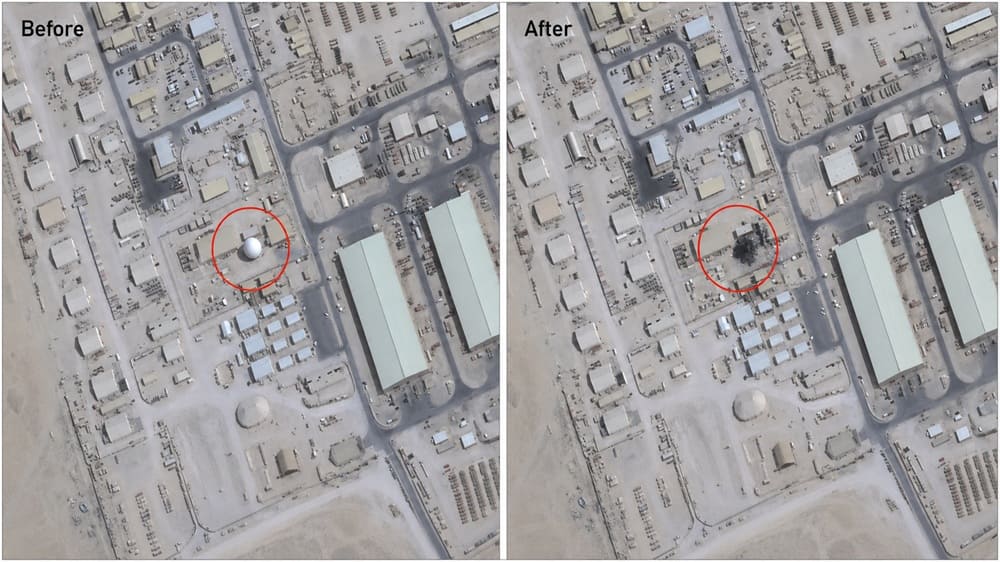
The key question is: was the radar installation at Al Udeid Air Base destroyed with the precision seen in satellite imagery from 3 June 2026, following the reported attack on 2 June? A US report attributes the damage to the Iranian ballistic missile strike. However, the apparent accuracy of the strike is confusing, since ballistic missiles typically have a wider impact than precision-guided cruise missiles or bombs dropped from aircraft.
Minimal collateral damage is also important. One would normally expect a ballistic missile carrying a high-explosive warhead to create a large amount of blast pressure, fragmentation and secondary damage. But the building right next to the radar installation looks mostly intact, with no obvious major structural damage. The pattern of the damage seems more consistent with a precision-guided bomb designed to hit a specific target and limit the impact on surrounding buildings.
Thus the location of the crater and the direct destruction of the radar position may suggest an air-delivered precision strike rather than a conventional ballistic missile impact. One possible explanation is an attack by an Iranian Su-24 Fencer, flying at very low altitude, but there is no publicly available evidence to confirm this scenario, as of now. An incursion would represent a serious operational and reputational failure for the THAAD and Patriot air- defense systems deployed in Qatar. It may also explain the caution of US and Qatari officials in revealing details about the weapon used and how the attack was carried out.
Shahed Kamikaze Drones
A Shahed-series drone also may have carried out the strike. However, despite carrying an approximately 40-kilogram warhead, the drone is more likely to damage the radar system dome than to destroy the entire structure. So Kamikaze drones are no longer a viable option. Though precision is there, the explosive impact is not that substantial. Available evidence suggests that Majid Kazemi’s Su-24 would likely have completed its mission while destroying the radar station at Al Udeid. However, Qatari F-15QAs intercepted and shot down both aircraft while they were returning.
Operational Conclusion
Kazemi’s last mission shows that low-altitude penetration can still be useful but is not protection enough by itself anymore. A non-stealth bomber needs electronic warfare support, fighter escorts, decoys and suppression of enemy air defences. Without those supporting factors, terrain masking is just a detection delay. The operation also showed the benefits of Qatar’s investment in networked command systems and modern fighters. Detection of a target does not guarantee its interception.
One kill chain could be surveillance, identification, command authorisation and weapons employment. Majid Kazemi and the other aircrew performed a very dangerous mission against one of the most secure military sites in the region. Their aircraft followed the original Su-24 design philosophy of low-level flight. But Qatar’s integrated surveillance and F-15QA force ultimately proved more effective against that approach. The mission is now a key case study of the declining survivability of legacy penetration bombers against modern networked air defence.
References
- Qatar Ministry of Foreign Affairs. “Qatar Sends Second Identical Message to the UN and Security Council Concerning the Iranian Attack on Its Territory.” 3 March 2026.
- Reuters. “Number of Iranian Missiles and Drones Fired at Gulf Countries.” 10 March 2026.
- CNN, reported by The Guardian. “Iranian Bombers Came Within Two Minutes of Striking Al Udeid Before Qatari Interception.” 4 March 2026.
- Iran International. “Iranian Army Confirms Su-24 Pilot Majid Kazemi’s Death During the Al Udeid Mission.” 29 July 2026.
About the Author