
Are Supercarriers Becoming Obsolete?
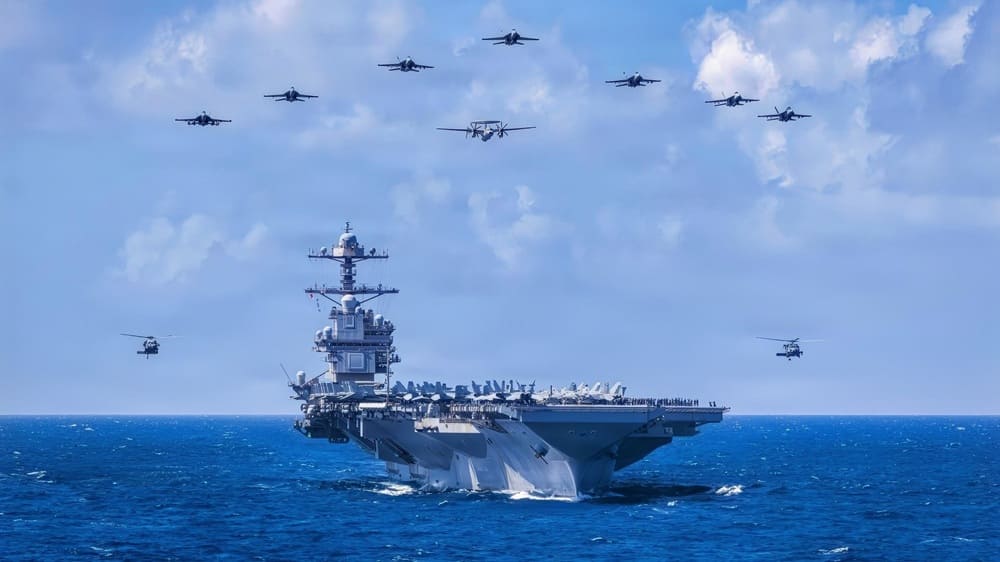
For over eight decades, the aircraft carrier has been the most potent symbol of maritime power projection. It brings together a mobile airfield, command centre, surveillance network and strike force in one protected formation. But strategic obsolescence does not mean a weapons platform is useless overnight. This occurs when the costs of growth, operational limits and vulnerability reduce the military utility a platform can reliably provide.
Now the supercarrier is facing increasing pressure from long-range precision strike, persistent surveillance networks, unmanned systems and finite defensive magazines. Recent operations in the Black Sea, Red Sea and Middle East highlight different facets of this challenge. There is no evidence to suggest that aircraft carriers are becoming extinct. It points to something more narrow and consequential than that: the traditional doctrine of bringing the carriers close to the coastline of a peer adversary is becoming strategically obsolete.
Cost and Concentration Problem
The final procurement cost for the USS Gerald R. Ford was approximately $13.3 billion. The USS John F. Kennedy was priced at $13.2 billion, the USS Enterprise at $14.2 billion and the USS Doris Miller at $15.2 billion, the US Navy said. These numbers do not include much of the carrier air wing, escort force, weapons inventory, and the supporting logistics architecture. A carrier strike group concentrates so much combat power in a relatively narrow operational space. The carrier itself may have more than 70 aircraft, with accompanying destroyers, submarines and supply ships adding military value. A carrier may be expensive to operate, but that doesn’t make it obsolete.
Nuclear submarines, strategic bombers and satellites are also costly. The fear is that relatively cheap weapons could syphon investment away from the decisive battlespace. There are big improvements in the Ford class, as well. Its design provides greater electrical power, greater sortie generation capability, and fewer personnel requirements. The Congressional Research Service estimates that reduced crewing could save $4 billion per ship over a 50-year lifecycle compared to the Nimitz class. The question is not whether carriers are expensive. Can they justify their cost with such offensive output in more contested conditions?
Naval Aviation’s Shrinking Reach
Carrier efficiency is more and more governed by a simple relation: Effective combat range = aircraft range + weapon range – recovery, reserve and refuelling requirements. The F-35C has the ability to fly combat missions for over 600 nautical miles without refuelling. That’s a big improvement over the last generation of carrier aircraft, but it still has limited capabilities against multi-layered anti-access networks. The MQ-25A Stingray should help alleviate some of this constraint.
The MQ-25A will carry more than 15,000 pounds of fuel, alleviating some of the tanker burden from the F/A-18E/F fleet. The programme achieved Milestone C for low-rate initial production in May 2026. Organic refuelling will expand the carrier air wing’s reach. It does suffer, though, in range of combat. Tankers take up deck space, maintenance capacity, fuel, launch cycles and aircraft-control resources in high-tempo, demanding carrier flight operations. Such a device may also be of value as an enemy target.
The Mighty DF-26
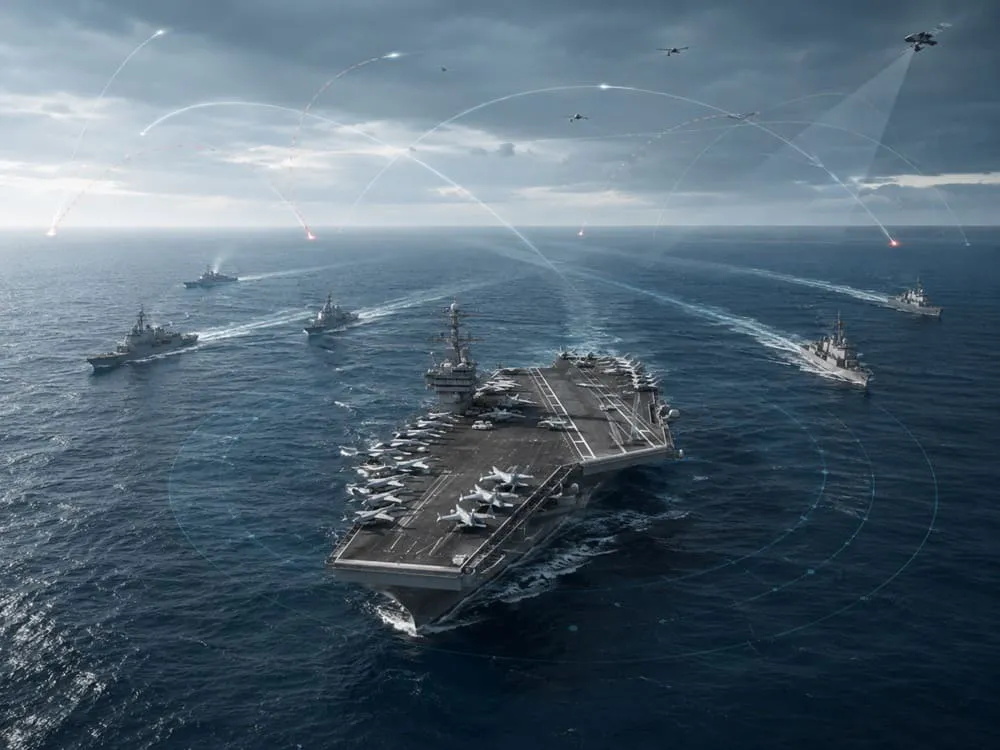
China’s anti-ship missile architecture already covers similar or greater ranges. The Pentagon estimates that the DF-21D anti-ship ballistic missile is ranged at over 1,500 kilometres. The DF-26 is believed to have a range of 3,000 to 4,000 kilometres and has both land-attack and anti-ship roles. In 2020, China fired anti-ship ballistic missiles at a moving maritime object during an exercise. Missile range does not equal automatic hit. The attacker has to find the carrier, correctly identify it, maintain an accurate track, transmit targeting data and update the weapon in flight. During the processing of target information, the carrier may travel hundreds of kilometres.
Deception, electronic warfare, counter-space attacks, false targets, and emissions control can all increase the complexity of the engagement chain. However, a sufficiently dense network of satellites, aircraft, submarines, radars and unmanned sensors negates the protection distance oceans offer. The carrier can stay outside the densest threat area, but such a strategy increases the tanker requirement, mission duration and pilot fatigue and reduces sortie generation. So the missile would have a strategic impact without actually hitting the ship. Pushing a carrier hundreds of km from the launch line can drastically reduce its offensive output.
Saturation Is the Real Carrier Threat
In the public debate, the question is often posed: can a single ballistic or hypersonic missile sink a supercarrier? A peer adversary is more likely to use multiple attack mechanisms:
- Ballistic and cruise missiles
- Submarines and heavyweight torpedoes
- Unmanned Surface and Underwater Vehicles
- Electronic and Cyber Attack
- Deception and false targets
- Air-Launched Anti-Ship Missiles
That wouldn’t necessarily mean instant destruction of the object. Such an attack would mean overloading sensors, using interceptors and 1 successful penetration. The statistical logic matters If each weapon has only a 5 per cent independent chance of penetrating, a 20-weapon volley has about a 64 per cent chance of at least one hit:
P = 1 – (1 – 0.05)²⁰ ~ 0.64
Real engagements don’t have perfectly independent probabilities. Defensive performance requires simultaneous operation of radars, communication links, and interceptors. But the math shows why saturation is more dangerous than the performance of the individual missiles. An attacker might also attempt a mission kill instead of sinking the carrier. Damage to the flight deck, catapults, arresting gear, aircraft elevators, radar arrays or aviation-fuel systems could halt flight operations. The defender has to respond to almost every serious threat. The attacker may only need one hit to be operationally relevant.
The Magazine-Depth Problem
The escorts are essential to the survivability of a carrier. However, their magazines have to perform several missions simultaneously. The Mk 41 Vertical Launching System can launch Standard Missiles, Tomahawks, anti-submarine rockets and Evolved Sea Sparrow Missiles. Thus, the same cells should support air defense, ballistic-missile defense, anti-submarine warfare, and offensive strikes. You cannot have both a land-attack missile cell and an air-defense interceptor cell at the same time.
Furthermore, many incoming threats may require two defensive missiles to improve the probability of interception. Traditionally, reloading their vertical-launch systems has required warships to pull into port. In October 2024, the US Navy held the first open-ocean demonstration of the Transferrable Reload At-sea Method. On the USS Chosin, an empty missile canister was loaded while the cruiser was at sea. The demonstration was an important step, but not yet a widely deployed wartime rearming capability. This limitation is a strategic weakness for magazine drawdown. A carrier strike group can deliver the first blow, but in time, repeated strikes will begin to erode its defensive capabilities.
Ukraine’s Black Sea Drone War
When Ukraine entered the full-scale war in February 2022, it did so without a conventional fleet able to directly challenge Russia’s Black Sea Fleet. Instead, it has combined coastal missiles, long-range strike weapons, unmanned surface vessels and outside intelligence. Shore-based R-360 Neptune anti-ship missiles sank the cruiser Moskva, indicating that even a major surface combatant is vulnerable. Ukraine then struck ships, submarines, repair facilities and naval headquarters across occupied Crimea. By September 2025, CSIS estimated that Ukraine had sunk or destroyed eight major Russian surface vessels and one submarine. They also moved much of the Russian naval activity out of Sevastopol to bases farther away. The campaign validated that maritime denial is possible without a conventional blue-water navy.
Cheap unmanned craft were particularly useful for reconnaissance, attacks on harbours and coordinated strikes against isolated vessels. However, analysts should not overgeneralise the Black Sea experience. Russian ships often operated in tight waters, in recognisable ports, and without the defensive depth of a modern American carrier strike group. Moskva was an old cruiser, lacking the layered protection of a U.S. supercarrier. Thus, the episode does not show what would happen to a modern carrier supported by its air wing and escorts, warns CSIS. But Ukraine’s campaign makes another point. A technologically innovative force can achieve strategic effects without matching the enemy ship for ship. It can lock out ports, limit movement and force retirement of an ageing fleet.
Red Sea Defensive Attrition
The Red Sea campaign is a better example for the depletion of magazines and economic imbalances. U.S. and allied warships repulsed Houthi missiles and drones. According to CSIS, there were approximately 400 encounters with Houthi missiles, with no successful attacks against U.S. warships during the review period. However, these were comparatively small sales. They lacked the scale, the electronic assault and the multi-directional coordination of a major power. US forces reportedly fired some 200 defensive missiles during a 15-month period. About 180 were SM-2 or SM-6 interceptors. That purchase was about a year and a half of recent annual purchases at previous production rates.
Apparently the Red Sea taught two important contradictory lessons. First, modern naval air defense systems are effective against multiple missiles and drones in combat. Secondly, a successful defense could be economically and logistically unsustainable. In a peer-to-peer disagreement, the imbalance is even worse. China could employ larger stocks, coordinated salvoes, sophisticated decoys and attacks on regional ports and logistics infrastructure. The sinking carrier may not be the worst-case scenario. It could be a strike group that is dropping below operationally acceptable levels of defensive magazines and is pulling back.”
Carrier Power in the 2026 Iran Conflict
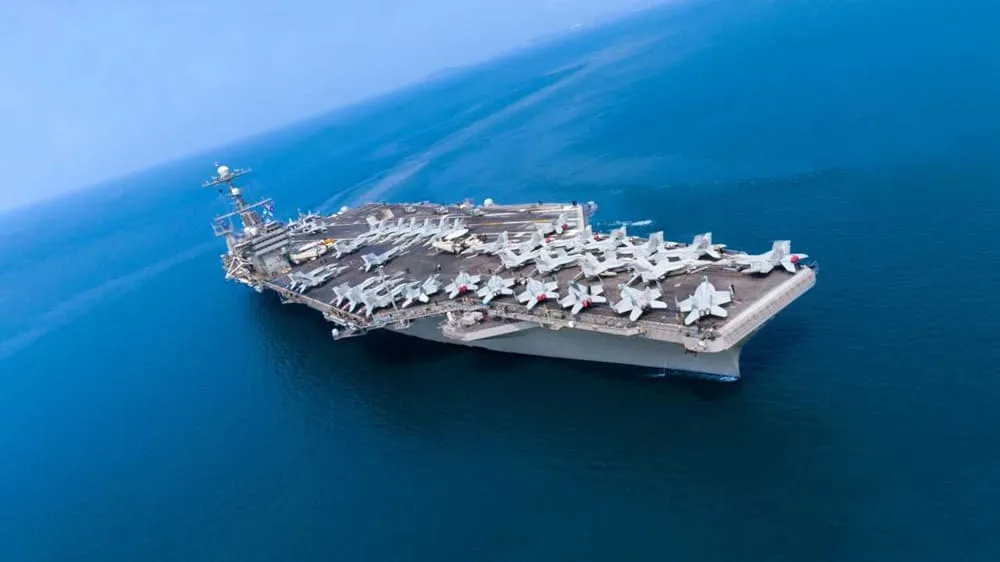
The 2026 war with Iran demonstrated the utility of aircraft carriers as a strategic asset. USS Gerald R. Ford and USS Abraham Lincoln, along with land-based fighters, bombers, aerial tankers, submarines and other joint forces supported Operation Epic Fury. The carriers provided mobile aviation, command functions and strike capacity without total reliance on regional airfields. There is no public evidence to support the initial claim that the two carriers were generating around 800 sorties a day.
That number was in prewar estimates of the larger regional air force, not confirmed carrier production. Carrier Air Wing Eight wasn’t flying all the time on its operations against Iran, but for Ford’s entire deployment of 326 days, it recorded more than 5,760 flight hours and 12,200 sorties. The strike group steamed more than 57,700 nautical miles and conducted 23 underway replenishments. Material readiness also figured in the deployment.
Tragedy at Ford
On 12 March 2026, a non-combat fire broke out in Ford’s main laundry spaces. Three sailors were injured, and nearly 200 people were treated for smoke-related problems. On the way to Split, Croatia, Ford made a short stop at Souda Bay for repairs and maintenance. After a five-day port visit, it resumed full mission tasking and returned to operations. The incident did not result in any lengthy loss of life in battle. But it indicated that an aircraft carrier’s value is based on thousands of linked systems and a large crew that must maintain them all the time.
The Iran operation is still a major counter-example to the obsolescence thesis. Theatres changed hands, aviation persisted, and reliance on politically vulnerable land bases diminished. Iran, however, did not employ the comprehensive surveillance and concentrated anti-ship capabilities that one would expect in a Western Pacific conflict. The operation was a demonstration of carrier utility but not a decisive demonstration of survivability against a peer anti-access network.
China’s Carrier Paradox
China’s naval programme seems contradictory at first glance. Beijing is arming itself to keep American carriers at a distance, even as it expands its carrier fleet. China now has three carriers with catapults: Liaoning, Shandong and Fujian. The 2025 Pentagon assessment says the People’s Liberation Army Navy wants to have nine carriers in the water by 2035. It is an assessed aim and not an assured outcome of construction.
Against an opponent who does not have an extensive long-range targeting network, carriers still have utility in operations against him. China could use them in the Indian Ocean and the western Pacific for humanitarian missions or in wars against weaker maritime forces. Chinese carriers could also rely on land-based fighters, missiles and surveillance systems for protection. So Beijing is not abandoning the aircraft carrier. It’s trying to deny an opponent carrier freedom and create some carrier freedom for itself.
America Reassesses Its Carrier Fleet
The U.S. has a statutory force of at least 11 aircraft carriers. Originally, there were to be six Ford-class ships, CVN-78 through CVN-83. But, in April 2026, Navy Secretary John Phelan announced a review of Ford-class costs, systems, and aircraft-generation performance. The review specifically questioned the two later planned ships, CVN-82 and CVN-83, but the Navy did not announce their cancellation. This review addresses a broader issue of force structure. Every dollar spent on another supercarrier reduces funding for subs, unmanned systems, long-range missiles, escorts, logistics ships, and hardened shore infrastructure. The proper comparison is therefore ‘carrier vs. non-carrier’. The question is whether another carrier has more combat value than a more dispersed mix of the other platforms.
The Future Carrier Air Wing
We won’t be seeing the back of aircraft carriers any time soon. Meanwhile, the doctrine of employment will change radically. In future, carrier operations will increasingly employ:
- Unmanned air-to-air refuelling
- Team-Based Combat Aeroplane
- Weapons to attack land and ships at longer ranges
- Maritime distributed sensing
- Counter Space and Electronic Warfare
- Unmanned Platforms for Reconnaissance and Deception
- Improved at-sea missile replenishment
- Inexpensive Directed Energy Defensive Weapons
Carriers will operate farther from defended coasts. Their aircraft will be sensors and weapon controllers in a network, not just dropping every weapon on the target. Unmanned systems can also take the most dangerous missions away from the cockpit. There could be a phased transition of tanking, reconnaissance, electronic attack and some strike missions to autonomous or remotely supervised aircraft. This change will not solve the range problem. But it would still leave the carrier operationally relevant and limit its exposure.
Strategic Assessment
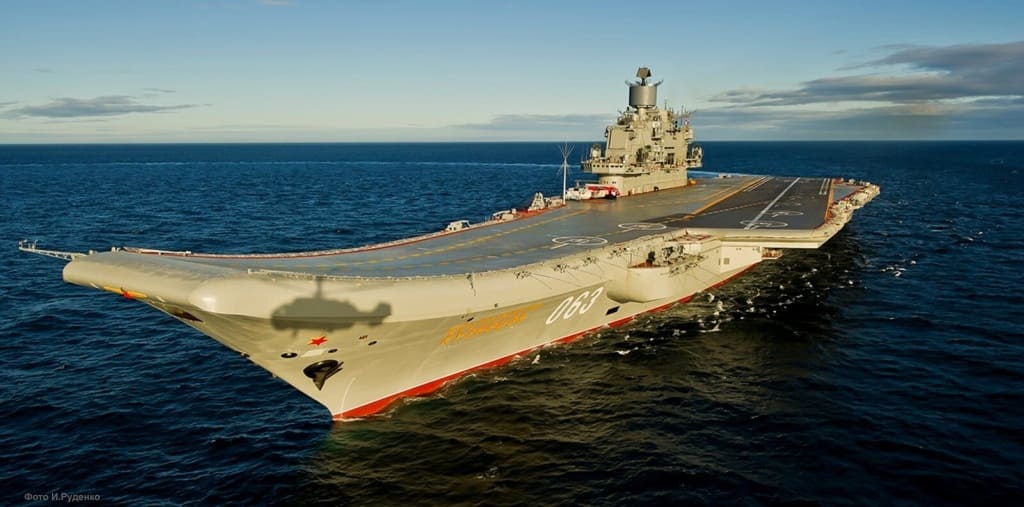
The aircraft carrier will not go physically obsolete like a sail-powered warship. It cannot be replaced by land-based aircraft and missile ships and subs. A carrier can redeploy, maintain combat air patrols, identify uncertain targets, support evacuations, fight limited wars and signal political commitment. It is still especially effective against adversaries lacking persistent maritime surveillance. But the doctrine of placing a carrier near a peer adversary and performing sustained, short-range strikes is becoming increasingly difficult to sustain. The question now is not whether an enemy can sink the carrier, but whether it can be pushed away from the line of launch. The more relevant questions are the following:
- How far can the enemy push the carrier away from the line of launch?
- How far does that distance cut sortie production?
- How many aircraft will have to be removed from combat to do the tanking?
- How fast do escorts eat their interceptors?
- Is it possible to reload and repair damaged ships without leaving the theatre?
- Can the carrier break the enemy’s targeting network?
This will determine if the carrier is a major offensive platform or a heavily defended support node.
Conclusion
Aircraft carriers are not going anywhere overnight. No other navy has assembled another platform that integrates mobile airpower, surveillance, command functions and sustained flight operations at this scale. However, precision strike warfare increasingly limits their freedom of manoeuvre. Constant surveillance, unmanned systems and long-range missiles can push carriers farther away from contested coastlines. Repeating defensive engagements could also deplete the magazines of interceptors. Ukraine demonstrated that dispersed weapons can deter a stronger navy in maritime domains. Red Sea Operations further highlighted the financial, logistical and operational expenses of maintaining a continuous defense against recurring threats over time.
The 2026 Iran war demonstrated that carriers still offer mobile and politically flexible combat power. Taken together, these cases allow a limited but important conclusion. The supercarrier is not yet obsolete. That made it the dominant capital ship of the post-1945 era, but the close-in operating doctrine is going out of fashion quickly. The future of the carrier is in longer-ranged aircraft, unmanned systems, resilient logistics and the ability to break apart an adversary’s targeting chain. If those changes do not occur, the supercarrier may survive physically but lose its pre-eminence at the centre of high-intensity naval warfare.
References
- Congressional Research Service — Ford-Class Aircraft Carrier Program
- US Department of Defense — China Military Power Report 2024
- Center for Strategic and International Studies — The Future of Seapower
- US Naval Sea Systems Command — At-Sea VLS Reloading Test
About the Author