Phillips Screw on F-15 Nose Explained
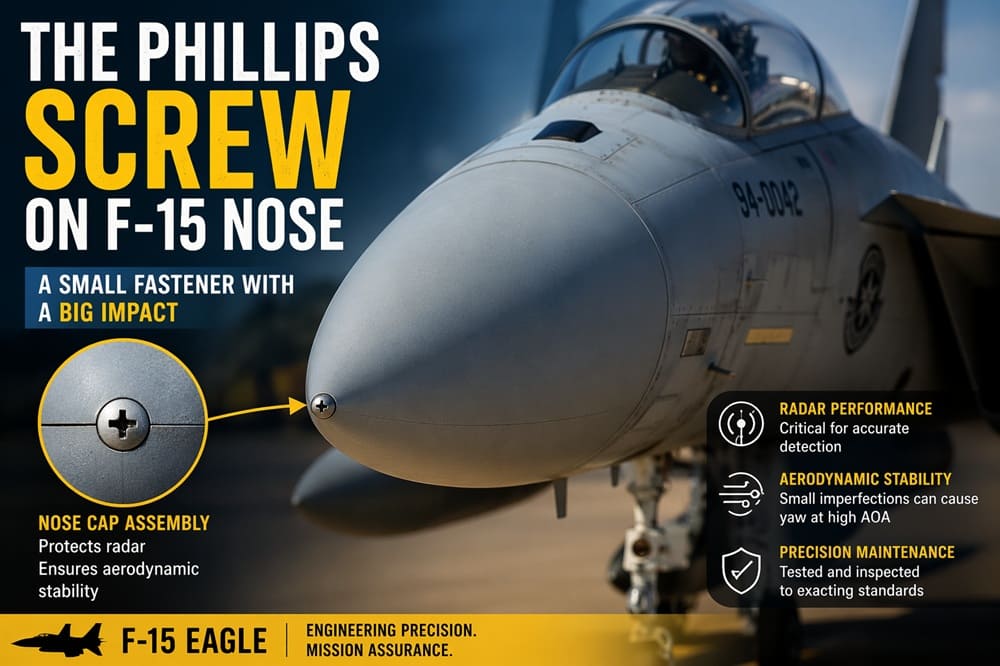
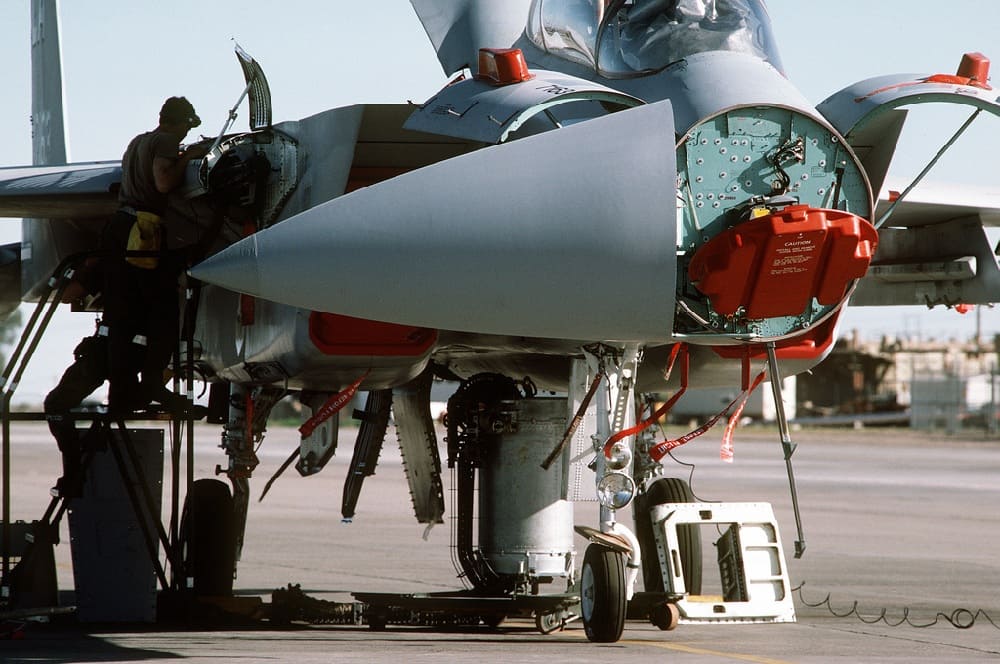
Fans of aviation have been wondering about the Phillips screw on the nose of the F-15 for a long time. It looks normal. But it is on the radome, which is one of the jet’s most sensitive parts. The radome on the Eagle is more than just a nose cover. It protects the radar and keeps the front shape clean. That means that even small mistakes can be important. The U.S. Air Force says that the radome is the fiberglass nose cone that protects the radar array.
Why the Nose Tip Matters
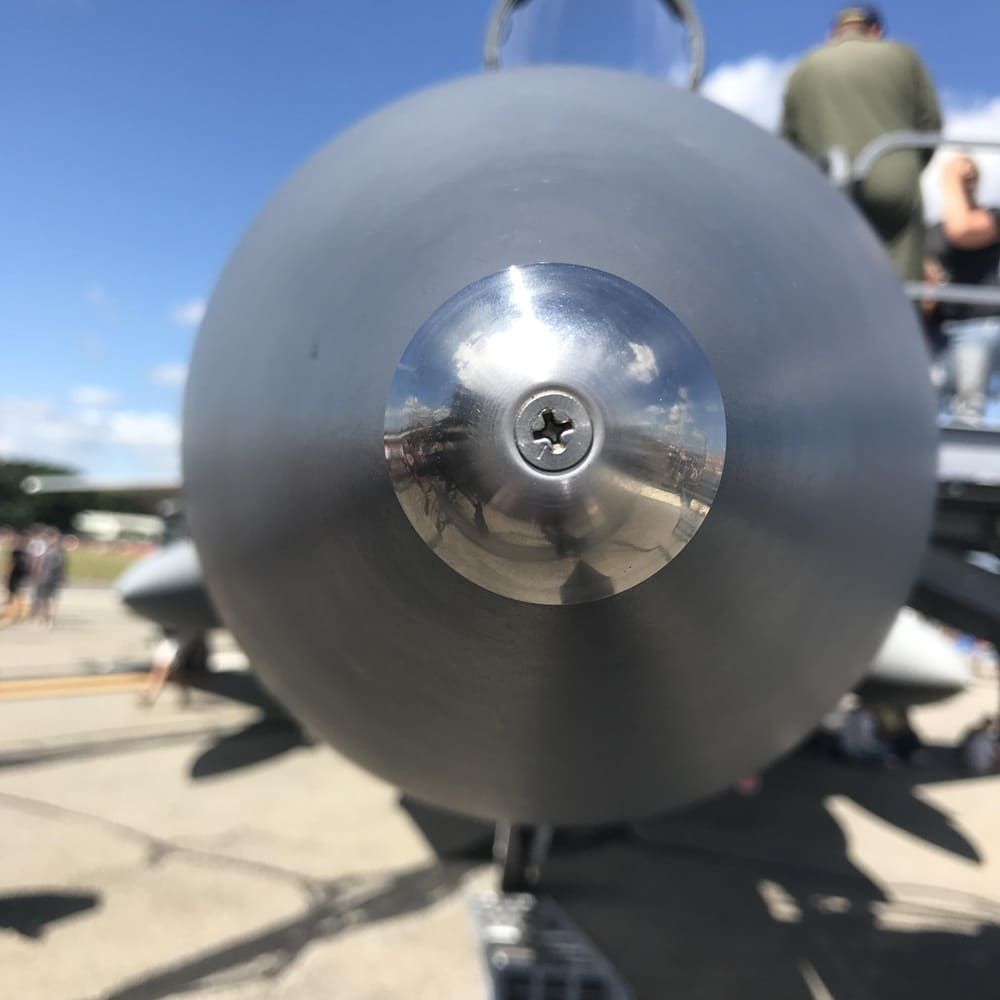
Many people think that the Phillips screw on the nose of the F-15 is just random hardware. That perspective is wrong in real life. The visible fastener is located on or near the nose cap assembly of the radome at the front of the aircraft. This area experiences a lot of wind, rain, and heat stress. So, engineers see it as a precision zone, not just a cosmetic detail. The investigation into the F-15D crash publicly linked problems with the nose cap assembly of the radome to a death.
Dual job of Radome
The nose of the F-15 does two things at once. First, it has to let the radar work right. Second, it has to keep the airflow at the front of the plane smooth. That is why the Phillips screw located on the nose of the F-15 is more intriguing than a standard screw. According to reports from Robins Air Force Base, technicians are cautious when testing F-15 radomes because even small shape errors can affect how well the radar works. In short, a bad radome can make the radar “see” badly.
Small Surface Errors Affect Flight
At this point, the story gets more technical. According to a report from the U.S. Air Force, problems with the forward 8 to 10 inches of the radome, such as bent or misaligned nose caps or damage to the rain erosion boot, can cause strong yaw at very high angles of attack. A small bump at the front of the plane can significantly affect the flight because the nose is located far forward of the aircraft’s center of gravity. So, a small flaw on the outside can turn into a big problem with handling.
2014 F-15D Crash Lessons
The F-15D crash near Spalding in the UK on October 8, 2014, is the most clear public evidence. The official investigation identified two interconnected causes. First, the pilot put the plane in a very steep angle of attack. Second, problems with the nose cap assembly of the radome made it so that there was enough yaw force to cause spin entry and slow recovery. The report on the investigation also mentioned a space between the radome body and the nose cap, as well as extra sealant that made the surface uneven.
Is It Actually a Phillips Screw?
It’s not clear from public sources what the exact fastener standard is at the tip of the radome. This is important because fans often use the term “Phillips screw” to refer to any cross-head fastener. The safer conclusion is that the Phillips screw on the nose of the F-15 is just a Phillips-looking fastener that is part of the nose cap assembly.
It doesn’t mean that the plane uses a simple shop screw in a critical spot. In aerospace work, even small visible fittings are chosen based on how much weight they can hold, how well they resist corrosion, how long they last, and how well they fit together. So, the screwdriver pattern isn’t the main problem. The assembly below them is responsible for it.
Phillips screws that hold the F-15 costs
The Phillips screws that hold the F-15 nose cone (radome) together can cost anywhere from $20,000 to $40,000 each. They look like regular fasteners, but their high price comes from military-grade engineering that can handle a lot of pressure and speed. This is often called “specialized, high-cost maintenance” for the aircraft.
Why Radome Maintenance Is Critical
Most people don’t know how challenging it is to keep a radome in good shape. The U.S. Air Force says that specialists check F-15 radomes to make sure they still work as they should. That work is important because the radome changes the shape of the nose and how radar signals are sent.
If the thickness, shape, or surface condition goes out of range, the quality of the radar can go down. Furthermore, the airflow around the front of the jet can change when it is doing challenging maneuvers. Consider the Phillips screw on the F-15’s nose as a sign of a critical maintenance area rather than a strange design choice.
How This Became Aviation Folklore
The F-15 is a well-known, big, and powerful fighter. People expect its main parts to look very cool. Instead, the tip of the nose may have a simple cross-head fastener. That difference helped make the “million-dollar screw” myth. But the real lesson is more profound. Fighter jets often hide big dangers in parts that look simple. The nose cap, sealant line, rain boot, and radome contour may not seem like a big deal on the ground. They can be crucial in the air, especially when the angle of attack is high.
Conclusion
The Phillips screw on the F-15’s nose is vital because it points to the radome nose cap assembly, one of the plane’s most sensitive parts. It affects radar performance, surface accuracy, and high AOA stability. Official reports and accident reports indicate that small problems at the tip of the nose can have effects that are much bigger than their size. The famous fastener isn’t intriguing because it looks like any other one. It matters because it is on a crucial part of an airplane.
References
- https://www.afmc.af.mil/News/Article-Display/Article/153877/radome-techs-work-ensures-pilot-precision
- https://www.lakenheath.af.mil/News/Article-Display/Article/727773/air-force-releases-investigation-results-on-f-15d-accident/
- https://www.airandspaceforces.com/PDF/AircraftAccidentReports/Documents/2015/100814_F15D_Lakenheath.pdf
- https://www.airandspaceforces.com/PDF/AircraftAccidentReports/Documents/2011/102411_F-15C_NV_full.pdf
About the Author