
Drones and AI Disrupt Top 100 Defense Firms
Drones, AI and robotics challenge Top 100 defense firms
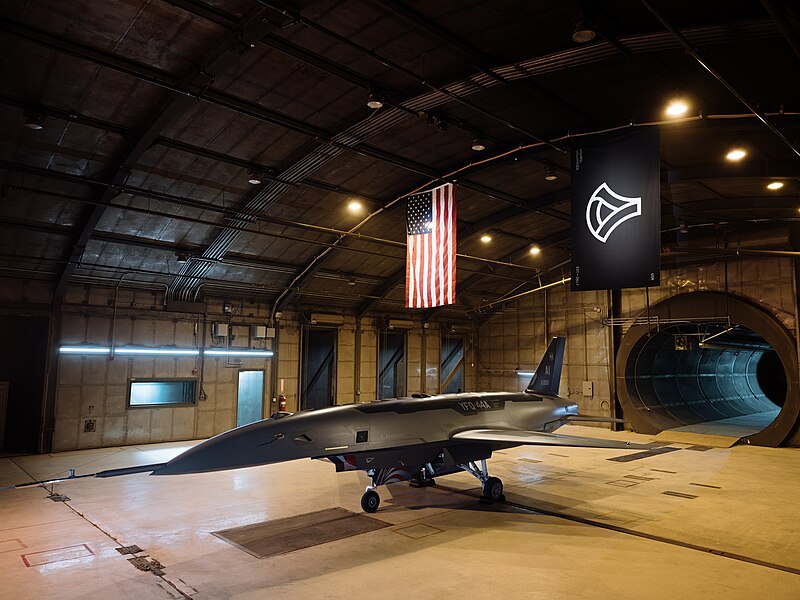
Drones, AI and robotics are challenging the top 100 defense firms in ways few imagined just five years ago. The quiet revolution suddenly looked visible as hangar doors opened in Costa Mesa and the YFQ-44 appeared on screen. The announcement began ground testing of a joint strike fighter designed to fly alongside piloted fighters. As a result, the focus of innovation in defense is changing rapidly.
It’s not just about platforms, though. It is also about who builds them, how they are procured and where value now accumulates. Software-led entrants and agile integrators are unsurprisingly scaling into prime-level relevance at pace. Drones, AI and robotics threaten the defense firms because they upend supply chains and reward quick iteration.
Defense revenues for the world’s largest contractors also climbed to about $661 billion in 2024, an 11% increase over the previous year. That growth is part of a larger global spend of over $2.7 trillion. As budgets grow, defense ministries are turning to digital autonomy, swarming and loitering munitions and integrated air defense. Drones, AI and robotics threaten the top 100 defense companies as these priorities favour non-traditional vendors.
CCA: A case study
The Air Force’s collaborative combat aircraft (CCA) programme is a case study in the new procurement logic. Instead of going with just the legacy primes, the Air Force talked to some new players and tried to obtain some new ideas. Anduril and General Atomics brought the YFQ-44 and YFQ-42 test vehicles, respectively, to expedite teaming concepts with crewed fighters. The CCA cares as much about autonomy stacks, open architectures and software cadence as airframes.
In practice, autonomy makes aircraft compute nodes. Therefore, victory depends on sensing, fusing and tasking at machine speed across contested electromagnetic environments. That’s where software-defined kill chains beat hardware-bound design cycles.
Why software cadence wins
Autonomy should be data-driven, not just documentation-driven. Release cycles matter because threat libraries, counter-EW techniques, and cooperative behaviours update weekly. So OTA style prizes and spiral development have become standard. Drones, AI and robotics threaten the 100 biggest defense contractors. Success is about continuous integration now, not one-off deliveries.
The macro picture
Structural drivers – a grinding war in Ukraine, hardening major-power competition and the proliferation of affordable strike systems – are driving spending increases. Global military spending jumped in 2024, the biggest annual increase since the Cold War. Budgets are rising in Europe, the Middle East, and the Indo-Pacific, driven by demand for artillery, air defense, and uncrewed systems, which is increasing the use of drones, AI, and robotics. This shift poses a challenge to the top 100 defense firms, as many nations now prioritise quantity and speed over exquisite platforms alone.
Besides, the mix in the portfolio is changing. Costly items now compete for financial resources against stockpiles of munitions, ISR constellations and loitering unmanned systems. That has made software analytics, command-and-control and AI-enabled decision support must-have capabilities. These lines now appear on balance sheets that once privileged metal-heavy programmes.
Who stays on top
Lockheed Martin, RTX, Northrop Grumman and General Dynamics stayed among the top earners. The state champions of China were still on top, and CASIC was the big star highlighting the strength in revenues. But the real action is in the composition below the top tier. Helps defense firms by creating channels for digital entrants and niche integrators.
Palantir’s defense revenue neared the billion-and-a-half mark, driven by demand for AI-assisted command tools, sensor fusion, and targeting. Kratos, a name often linked with cheap tactical drones, reported rapid growth driven by demand for loyal wingmen and target systems. Anduril is new to the ranking, with defense revenues more than doubling. The fastest risers are selling speed, software and autonomy at scale.
Lessons from the climbers
There are four things the climbers have in common. First, they send out working prototypes early. Second, they iterate on the pitch. Third, they encourage open architectures that are friendly to third-party effects. Fourth, they set prices to encourage mass adoption rather than maximising profit. This supports defence companies by providing contracts and momentum that reward these behaviours.
Israel’s wartime surge
Operations in Gaza and tensions with Hezbollah drove procurement, leading to a sharp expansion of Israel’s defense sector in 2024. Elbit, IAI and Rafael all reported solid defence-revenue gains, with Iron Dome-related resupply and upgrades in the mix. These companies develop integrated end-to-end defensive webs that incorporate sensors, effectors and command software. Layered air defense now relies on the real-time software choreography of interceptors and shooters.
Israel in particular sharply lifted its spending more than it has in decades, citing not only immediate wartime needs but future readiness as well. Thus, production of interceptors, precision munitions and multi-mission UAVs is rising. The rise of drones, AI and robotics challenges the top 100 defense firms. Learning cycles in wartime shorten timelines and reward agile systems.
Europe’s Zeitenwende 2.0
Germany’s new posture – sometimes called Zeitenwende 2.0 – has been translated into orders for ammunition, air defense, armoured vehicles and artillery. Rheinmetall’s defense revenues rose by about 50% to more than $8 billion as new lines for shells and key subsystems became operational. States across the continent have rebuilt their stockpiles and accelerated air defense purchases. European customers want resilient supply chains and modular upgrades, not just unit deliveries.
In addition, European primes are reinventing themselves as orchestrators of sovereign ecosystems. They are seeking joint ventures in propellants, fuses, seekers and rocket motors. At the same time, they are looking for software partners to integrate into the battle network. 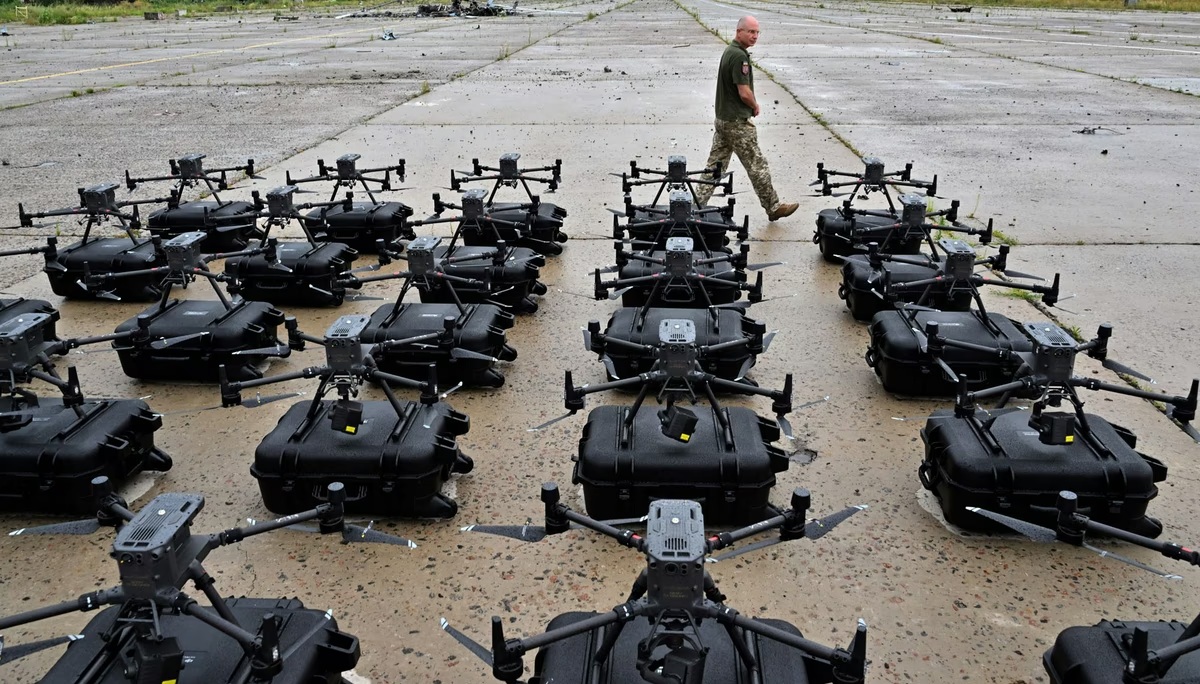
Drones close to the frontline near Avdiivka, Donetsk region
The shell-factory moment
Artillery is still a barbarous schoolmaster. Ukraine has shown that attrition is about massed fires combined with drones and counter-battery sensors. So Europe is investing in 155mm shell plants, propellant lines, and fuse production. Artillery is no longer just about barrels but also about ISR swarms and AI assisted fire missions.
The UK’s ascent and Boeing’s path
BAE Systems jumped into sixth place ahead of Boeing thanks to the F-35, Typhoon, Dreadnought submarines and Australia’s Hunter-class frigate. Boeing, though still a giant, slipped as defense revenues weakened and programme pressures persisted. But a major sixth-generation fighter award and a reset of marquee programmes could restore momentum. Even aerospace icons must master autonomy, teaming and digital design.
Digital engineering has become a key aspect of modern defense operations. Model-based systems engineering, rapid software drops and open mission systems define competitive advantage. As prime reset processes, they compete on code quality, integration speed, and cyber-hardening. Drones, AI, and robotics are turning software engineering into a key differentiator for the top 100 defense firms.
Transforming Procurement
The Pentagon’s increasing use of Other Transaction Authority (OTA) agreements speeds up contracting with non-traditional vendors. OTAs are catching up with software development, overcoming some legacy hurdles. At the same time, initiatives like Replicator and the Air Force’s CCA are reducing timelines from concept to fielding. Drones, AI, and robotics are forcing changes to acquisition models that favour speed, iteration, and modularity.
NATO customers do the same internationally. They want interoperable kits that fit NATO data standards and sovereign command networks. So, integrators who understand both software and sovereignty are the ones who succeed. The defense firms face challenges from drones, AI and robotics, with openness and exportability now as important to procurement as performance.
The data advantage
Autonomy performance is not just about data capture but about data curation. There are compounding advantages to companies that build secure pipelines from sensor ingest to model retraining. Data gravity will weigh on valuation as much as hardware backlogs: best training data trumps marginal hardware gains.
The battlefield physics have changed
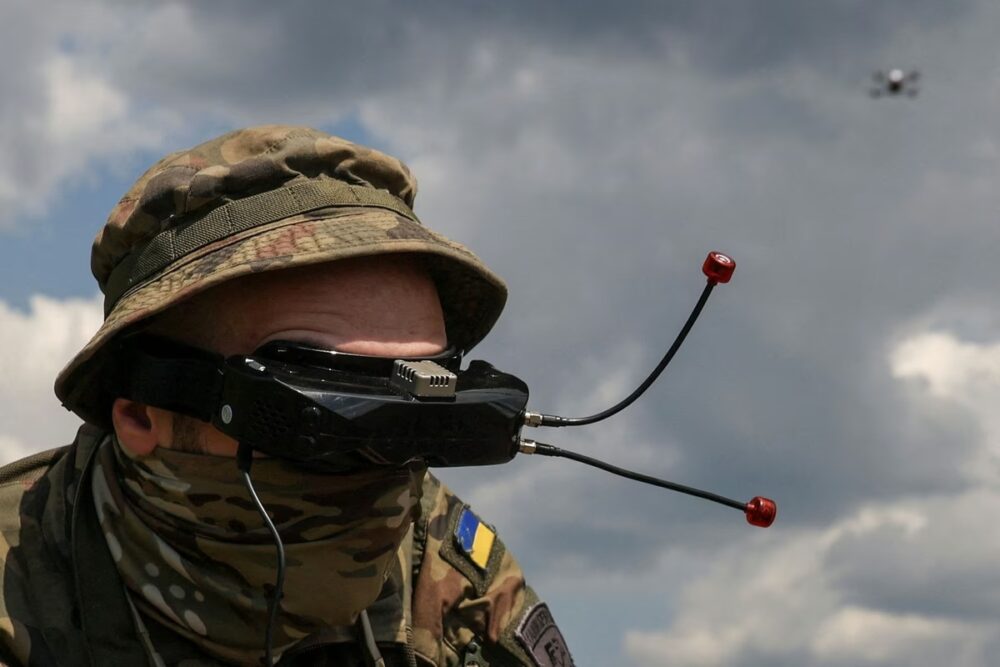
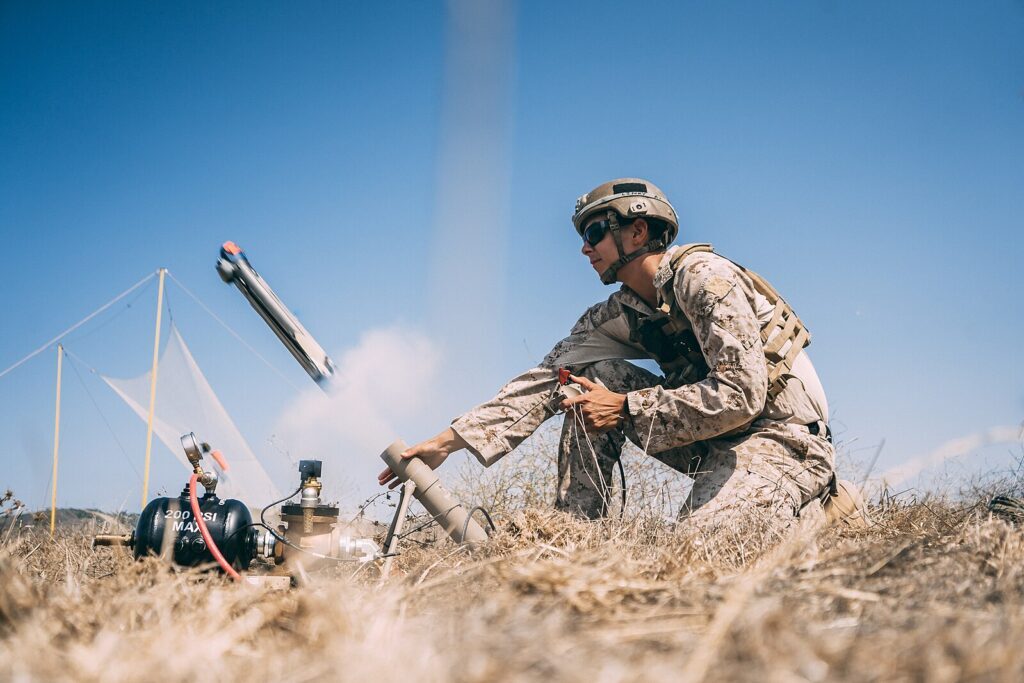
“The war in Ukraine has demonstrated to us that many small, smart units can outpace fewer large, sophisticated ones. Quadcopters, first-person view drones (FPVs), and long-range, one-way attack unmanned aerial vehicles (UAVs) overwhelm enemy defences and hunt armoured vehicles. Counter-UAS networks, EW traps and multispectral decoys, meanwhile, fight back. Heavy tonnage isn’t the key; rapid OODA loops are.
In addition, autonomous undersea systems are scaling up from mine countermeasures to long-endurance ISR. Navies are now seriously investing in maritime autonomy, looking for distributed sensing and denial options. Undersea autonomy needs AI navigation, low-probability comms and resilient mission planning.
Quantity with quality
“Good enough” is no longer coarse. Rather, it means swappable seekers, modular airframes and OTA-capable software. The best kits are those that combine low cost per unit with high tactical utility. Drones, AI and robotics force defense firms to compete on effects per dollar, not sticker price.
Winners’ playbook for coming years
Build open systems first. Partners and allies need to plug in with minimal friction.” Second, ships are updated continuously. Third, de-risk supply chains by industrialising them both at home and abroad. “Fourth, build in cyber resilience throughout the stack. Drones, AI and robotics are disrupting the 100 largest defense companies. Openness, speed and resilience are the new yardsticks.
Fifth productised training data. Feed operations back into model improvements in a closed loop. Sixth, prepare for attrition. Watch for losses and replace them fast. Finally, develop sovereign options for the critical components. Drones, AI and Robotics challenge the top defense companies as governments reward those who deliver capability, not just equipment.
Risks to watch
Export controls, component chokepoints, and workforce gaps can slow momentum. Rules of engagement and AI assurance will also affect deployment timelines. But companies that bring engineering and policy together will move faster. Drones, AI and robotics are turning strategy and compliance into a daily engineering task.
Why it’s important for planners and operators
For planners, the main message is to plan for diversity in systems and technologies. Combine beautiful platforms, assignable drones and software services into one resilient enterprise. Human-machine teaming for operators: a core skill, not a show. The forces that train to use the network will win in combat.
Sustenance leaders should adopt digital twins and predictive maintenance for fleets, including uncrewed systems. For logisticians, stock smart munitions and batteries as carefully as shells and fuel. Sustainment now includes software pipelines and secure update channels.
The new industrial map
This decade’s map is a mix of primes, digital natives and mid-tier specialists. The primes still combine and attest to scale. “Digital natives” bring AI, autonomy, and agile C2. The specialists offer seekers, power systems, EW payloads and advanced materials. defense companies are rewarding coalitions that can deliver faster than any one giant.
Importantly, allies are building regional capacity. Factories, propellant lines and drone assembly hubs are sprouting all across Europe and Asia. The higher the capacity, the lower the delivery risk. A distributed industry is harder to disrupt and surges faster.
Conclusion
The Top 100 is no longer a fixed pantheon. It is instead a living index of who can connect sensors, shooters and decision-makers at machine speed. As budgets grow and threats evolve, nations will buy effects, not just platforms. Drones, AI and robotics threaten defense companies because they turn computing into combat power.
The winners of tomorrow are those who can code fast, integrate openly and make Thus, expect to see more digital natives rising in the rankings and more legacy giants behaving like software companies. Drones, AI and robotics are challenging the top 100 defense firms, and that challenge is already changing how the world deters, fights and wins.
References
- Defense News—Drones, AI, and robotics challenge the order of the Top 100 defense firms (2025). https://www.defensenews.com/top-100. Defense News
- SIPRI—Trends in World Military Expenditure, 2024 (Fact Sheet). https://www.sipri.org/publications/2025/sipri-fact-sheets/trends-world-military-expenditure-2024. SIPRI
- U.S. Department of Defence—DoD Innovation Fact Sheet (Replicator). https://media.defense.gov/2024/Aug/07/2003519333/-1/-1/0/dod-innovation-fact-sheet-august-2024.pdf. U.S. Department of Defense
- The Rheinmetall financial figures for FY 2024 have reached new all-time highs, according to a press release dated 12 Mar 2025. https://www.rheinmetall.com/en/media/news-watch/news/2025/03/2025-03-12-rheinmetall-financial-figures-fical-year-2024.rheinmetall.com
About the Author

Farhan J. Satti (Chief Editor)
Administrator
Mr. Farhan J. Satti is a defense analyst and HR leader with 15+ years covering weapons, arms control, and operations. UN Disarmament Affairs-trained (WMD missiles, lethal autonomous weapons) and firearms-safety trained (Washington State), he explains hard problems with clarity and impact.