
Israeli Iron Dome in UAE: Sharjah Autonomy Test
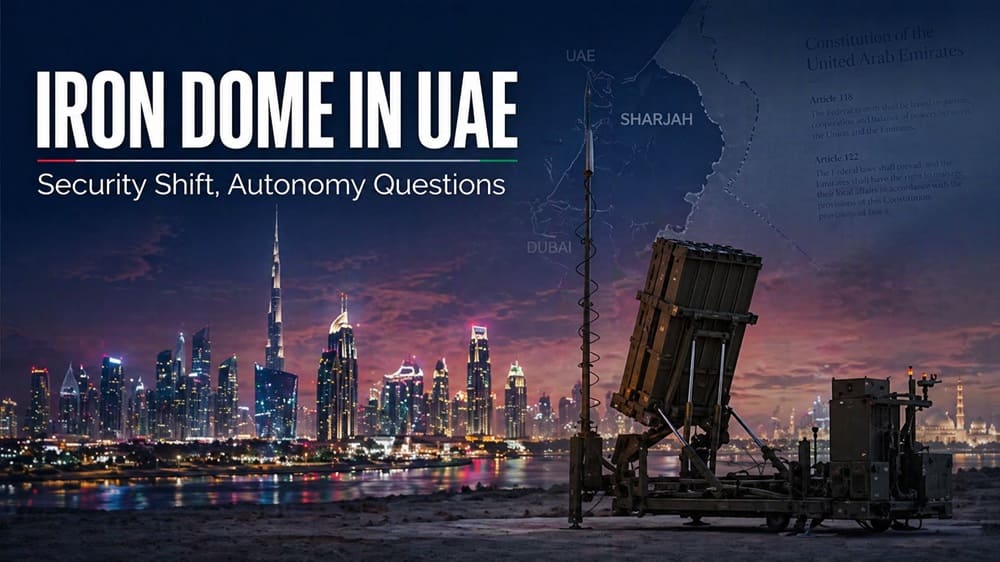
The Israeli Iron Dome story in the UAE is real enough to justify serious defense analysis. Israel sent an Iron Dome air defense battery and troops to the United Arab Emirates during the Iran war, Axios reported on April 26, 2026. The report cited two Israeli officials and one U.S. official. However, the same evidence does not indicate that Dubai specifically hosted the system. The reporting available says ‘UAE,’ not ‘Dubai.’ The Sharjah claim of independence needs more care. Sharjah has made a significant move toward judicial independence. It began to apply Law No. 7 of 2025 on June 1, 2025, which resulted in a stronger local judicial structure within the emirate.
However, this evidence does not totally support that Sharjah is actually preparing to leave the UAE. UAE constitutional law still provides for federal authority over foreign affairs, defense, federal security, nationality, and core sovereignty. However, OSINT sources acknowledge that unrest is present within the states.
Some support the Israeli presence in the UAE, while others are dissatisfied and consider it a revolt against Muslim countries and a betrayal of Palestinians. Experience suggests that where there is smoke there is fire. Sharjah has moved closer to greater independence by establishing an independent judicial authority for the Emirate outside the Federal Judicial Structure.
Iron Dome in UAE: Strategic Shift
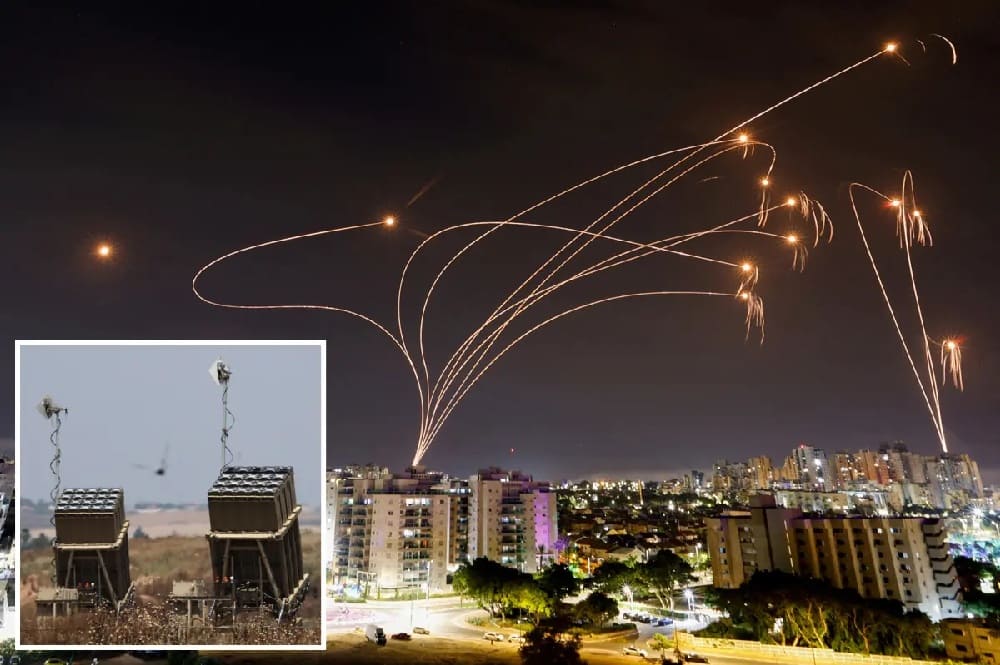
Israel’s Iron Dome’s deployment in the UAE marks a dramatic shift in Gulf security. For decades, the UAE has depended primarily on American and Western systems for high-end air defense. But the Iran war seems to have nudged Abu Dhabi into more operational collaboration with Israel.
Iran fired around 550 ballistic and cruise missiles and over 2,200 drones at the UAE during the conflict, Axios reported. The majority were intercepted, but some are said to have hit military and civilian targets. Israeli Prime Minister Benjamin Netanyahu also directed the Iron Dome battery and several dozen Israeli operators to the UAE after a call with UAE President Mohammed bin Zayed, according to Axios.
The Economic Times also reported similarly, stating that the system had reportedly intercepted dozens of incoming missiles. The move also marked the first operational use of Iron Dome outside of Israel and limited U.S. deployment. And so, the story of the Israeli Iron Dome in the UAE, is not just another diplomatic headline. It marks a wartime air defense partnership between Israel and one of the Gulf’s most important military and commercial states.
Iron Dome’s Role in UAE Defense
Iron Dome is a short-range, multi-mission air defense system. Rafael describes it as designed for rockets, artillery, mortars, drones, cruise missiles, UAVs, and guided munitions. The company says it has more than 5,000 rocket interceptions and a more-than-90% success rate, though that’s a manufacturer-stated figure. Though the ground realities are different.
The system matters because the Gulf threats have changed. Iran and its partners no longer rely solely on conventional ballistic missiles. Now they use drones, cruise missiles, rockets, and mixed saturation attacks. Such threats can stress even modern air defense networks.
But Iron Dome is not a substitute for Patriot or THAAD. Instead, it fills a lower-level gap. It can help protect ports, airbases, logistics nodes, airports, and urban areas from shorter-range threats. Iron Dome can operate independently or as part of a wider layered air defense network, Rafael says.
The UAE-Israel-India nexus is a wake-up call for the Islamic bloc as it connects Abu Dhabi with two states that are seen critically by many Muslims: Israel over Palestine and India over Pakistan and Bangladesh-related concerns. Alignment could deepen resentment in parts of the Arab and Muslim world, particularly among those who view normalization with Israel as a break from Islamic solidarity.
We have not substantiated claims that Saudi Arabia is fostering Emirati autonomy or independence, so we should view them with caution. The larger problem, though, is clear. Security partnerships entered into without public legitimacy can generate political unease, mistrust, and regional backlash.
UAE-Israel Ties: Security First
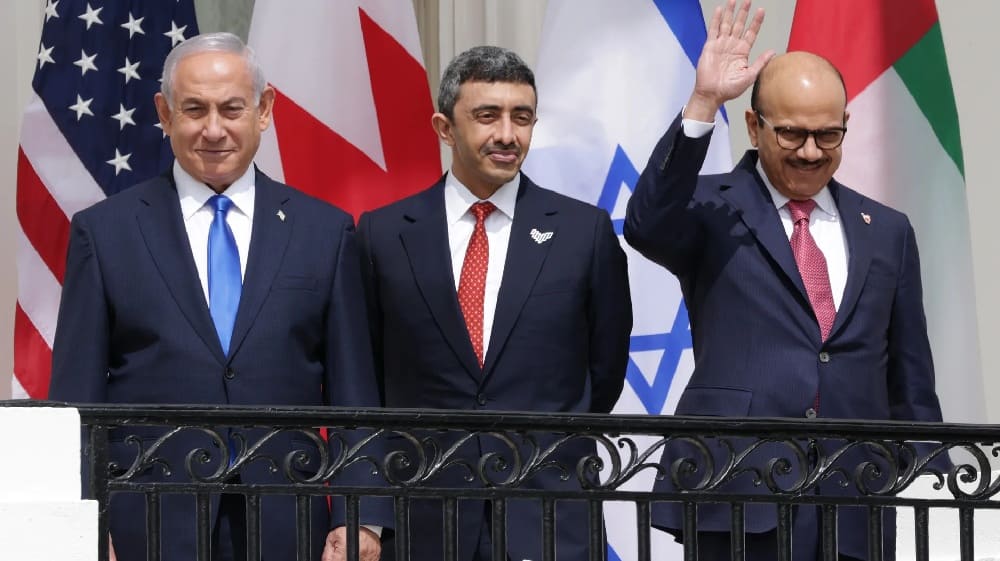
In 2020, the UAE normalized relations with Israel under the Abraham Accords. Since then, the relationship has grown to include trade, technology, logistics, tourism, and security. The UAE-Israel Comprehensive Economic Partnership Agreement (CEPA), which entered into force on 1 April 2023, allows UAE goods broader access to Israeli markets on more than 96% of tariff lines.
This development indicates that the Israeli Iron Dome issue in the UAE was not a sudden one. It followed years of political and economic normalization. Now the wartime deployment indicates that normalization has entered a more difficult military phase. The reasons are strategic for Abu Dhabi. The UAE wants reliable protection for its ports, energy infrastructure, financial centers, and airbases. It sees Iran as a present danger. It also sees the United States and Israel as pragmatic security partners.
But this policy comes at a considerable image cost. For many Muslims, open military cooperation with Israel is viewed in the context of Gaza, Jerusalem, and Palestinian statehood. And the presence of Israeli troops and air defense systems on Emirati soil can stir intense anger across the Islamic world.
Sharjah: Autonomy, Not Secession
The evidence that supports the Sharjah debate is legal, not revolutionary, and it is the strongest. Sharjah has issued Law No. This document is number 7 out of 2025 in the series on the regulation of judicial power. WAM said the law strengthens judicial independence, fair litigation, powers of public prosecution, court structures, and legal governance in the emirate. Lexis Middle East identifies the law as Sharjah Law No. The document was issued on 6 May 2025, with a validity period until 7/2025, and the jurisdiction is Sharjah.
It also says the law would have taken effect on June 1, 2025. It is evident that Sharjah is beefing up the local judicial authority. That’s a significant autonomy signal. It brings Sharjah closer to the emirates that have local judicial systems.
Legal autonomy in a federation, however, is not political independence. The UAE Constitution states that the UAE is a sovereign federal state made up of Abu Dhabi, Dubai, Sharjah, Ajman, Umm Al-Quwain, Fujairah, and Ras Al-Khaimah. It also says the UAE will not give up its sovereignty or any of its territories or waters.
Why Sharjah Breakaway Claims Are Weak
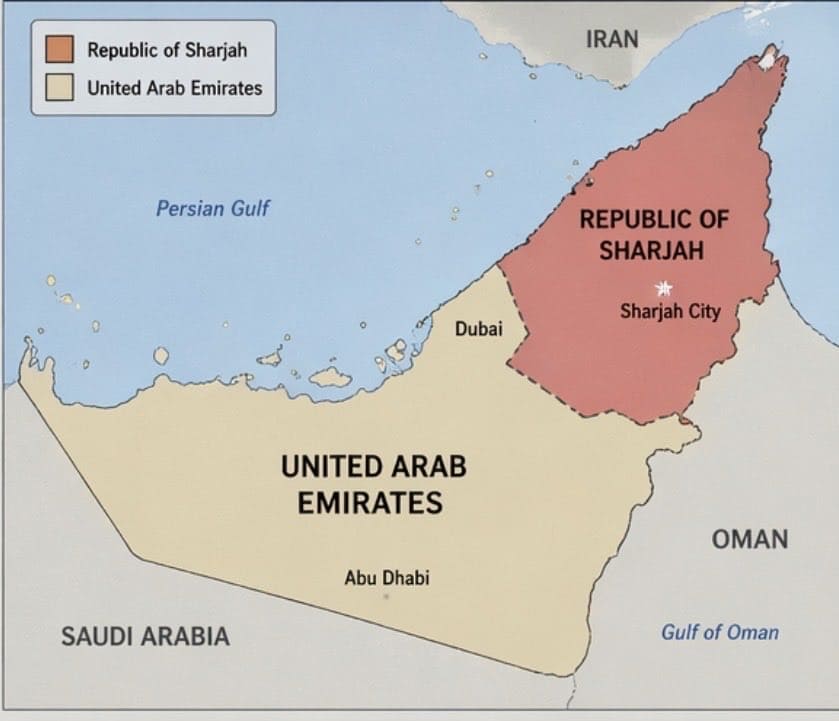
Several OSINT and social media have circulated claims that Sharjah could secede from the UAE or become a “Republic of Sharjah.” Such posts are proof that the rumor is taking hold. Nor do they prove that the ruler of Sharjah, the Sharjah Executive Council, the UAE federal Supreme Council, or any recognized state apparatus has declared secession, but something is burning deep inside.
That’s an important distinction. Sharjah can expand local courts without leaving the federation. The UAE Constitution provides for the emirates’ authority in matters not exclusively assigned to the federal government. It also states that judicial matters not assigned to UAE courts fall under the jurisdiction of local judicial authorities.
The federal government has exclusive powers over foreign affairs, defense, federal armed forces, protection against internal and external threats, nationality, passports, residence, and immigration. Consequently, the judiciary law of Sharjah does not confer sovereign powers of foreign policy or military on it.
Why Muslim-World Backlash Matters
Israel’s Iron Dome deployment in the UAE may still cause a political storm. Critics can charge that the UAE is too close to Israel and the United States. Iran is likely to exploit this narrative. Islamist movements and pro-Palestinian activists will also use it to assail the legitimacy of Abu Dhabi. But the UAE has not completely abandoned the Palestinian file.
Reuters reported in September 2025 that UAE official Lana Nusseibeh had warned Israel that any annexation of the West Bank would cross a “red line” and seriously damage the Abraham Accords. That doesn’t take away the public anger. But it shows that Abu Dhabi continues to look for a balance between normalization and diplomatic support for Palestinian statehood. The problem is that military cooperation with Israel makes it harder to sell this balance.
Strategic Assessment
The case of the Israeli Iron Dome in the UAE shows how Gulf security has evolved. Now the UAE seems ready to accept direct Israeli military aid when Iranian missiles and drones are heading its way. That’s a big strategic development. Judiciary reform in Sharjah is also important. It signals more institutional autonomy at the emirate level. It does not, however, provide a plan of secession.
The right way to look at it is that Sharjah is moving towards more legal self-administration within the UAE, not confirmed independence from it. The best reading is therefore balanced. The UAE is not falling apart. Sharjah leaving is not proven, though there are hints. However, the federation is showing outward signs of internal complexity and rifts as Abu Dhabi’s foreign policy becomes more closely aligned with Israel and the United States.
Conclusion: Shift, Not Breakaway
The Israeli Iron Dome is a real security milestone in UAE deployment, according to current reporting. It enhances the UAE’s multi-layered missile and drone defense against Iran. It also indicates that the UAE-Israel military cooperation is no longer symbolic.
Sharjah’s judiciary law of 2025 is a real marker of autonomy at the same time. This development is worth mentioning. But the law is still a legal reform within the constitutional framework of the UAE, not proof of independence. However, internal struggles that didn’t surface much explain a different story.
References
- https://www.axios.com/2026/04/26/israel-iron-dome-uae
- https://habibalmulla.com/events/breaking-news-the-emirate-of-sharjah-establishes-independent-judiciary-authority/
- https://www.moet.gov.ae/en/cepa_israel
- https://uaecabinet.ae/en/federal-supreme-council
About the Author