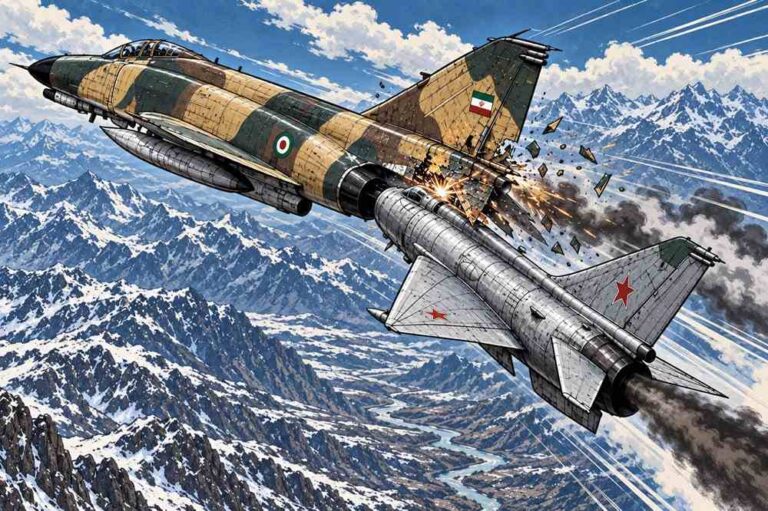

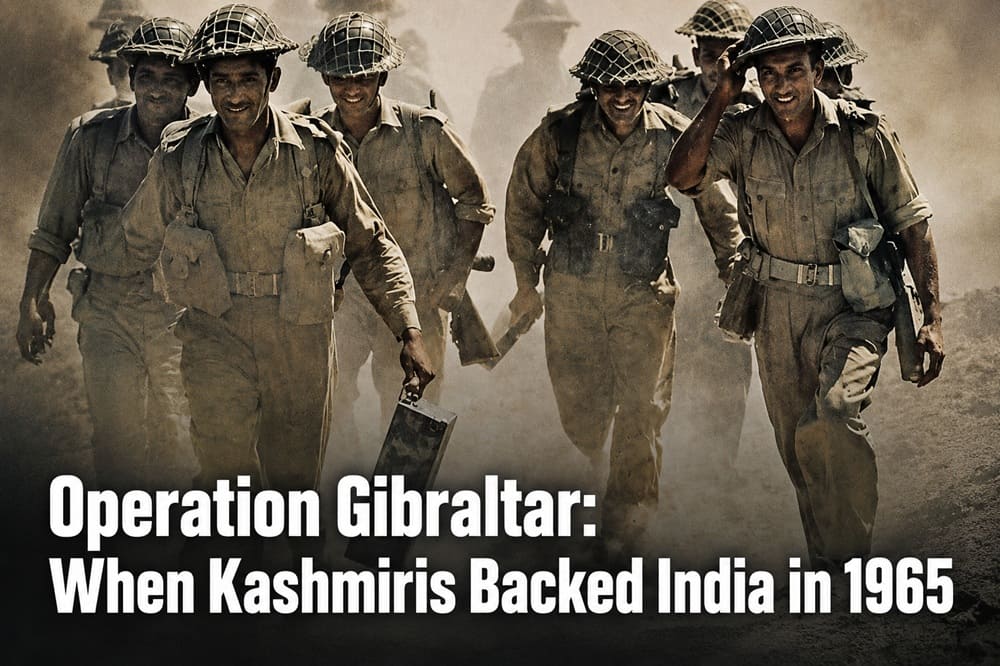
Operation Gibraltar: When Kashmiris Backed India in 1965
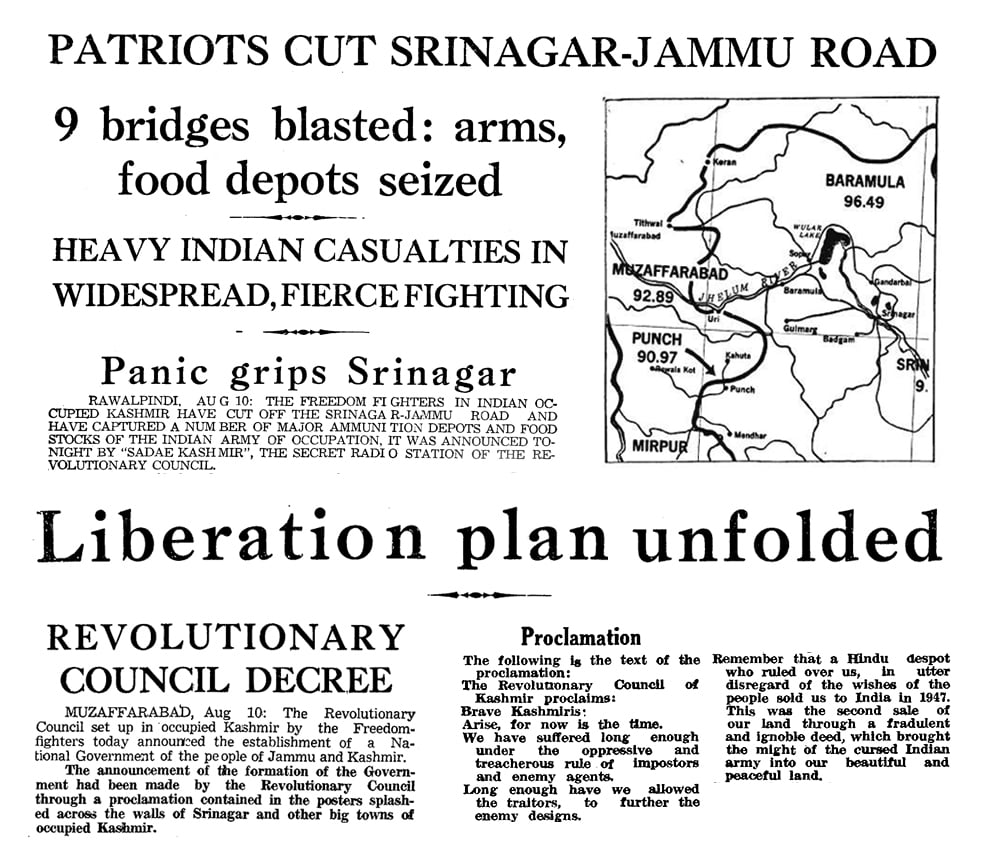
In August 1965 Pakistan initiated a clandestine military operation, codenamed Operation Gibraltar, to incite insurgency in the Indian-held part of Jammu and Kashmir. Thousands of Pakistani soldiers disguised as Kashmiri rebels infiltrated the region anticipating broad support from the regional Muslim population.
But the operation turned out to be a failure, in part because Pakistan felt betrayed by the people it was trying to ‘liberate’. The whole operation was futile and led to the Second Indo-Pakistani War of 1965 as many Kashmiris informed the Indian troops about the infiltrators.
The Pakistanis believed that the Kashmiris had betrayed the cause, and their failure to stand by it had led to a disastrous chain of events that has come to define the agony of the region ever since.
A Calculated Gamble
After the Kashmir War of 1947–48 and a United Nations-brokered ceasefire, the princely state remained divided between India and Pakistan, with India controlling most of the area and Pakistan controlling a smaller part. When China had weakened India in 1962 and was going through its own political turmoil, Pakistan saw a chance to strike in 1965. It was time for Pakistan to ‘liberate’ Kashmir, as Zulfikar Ali Bhutto had strategically directed during Ayub Khan’s presidency.
And it was this perception that led to Operation Gibraltar, which sought to infiltrate trained guerrillas across the ceasefire line to trigger a popular revolt. After this operation was to come Operation Grand Slam, aimed at the capture of the strategic Akhnoor bridge in Jammu and thus severing India’s land link to Kashmir.
Gibraltar Betrayed
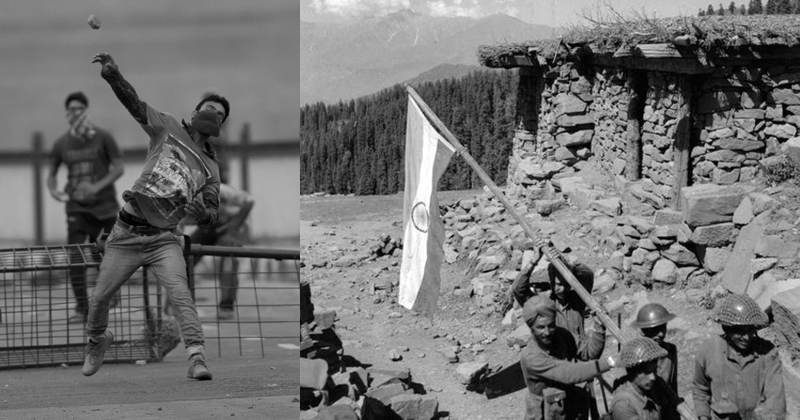
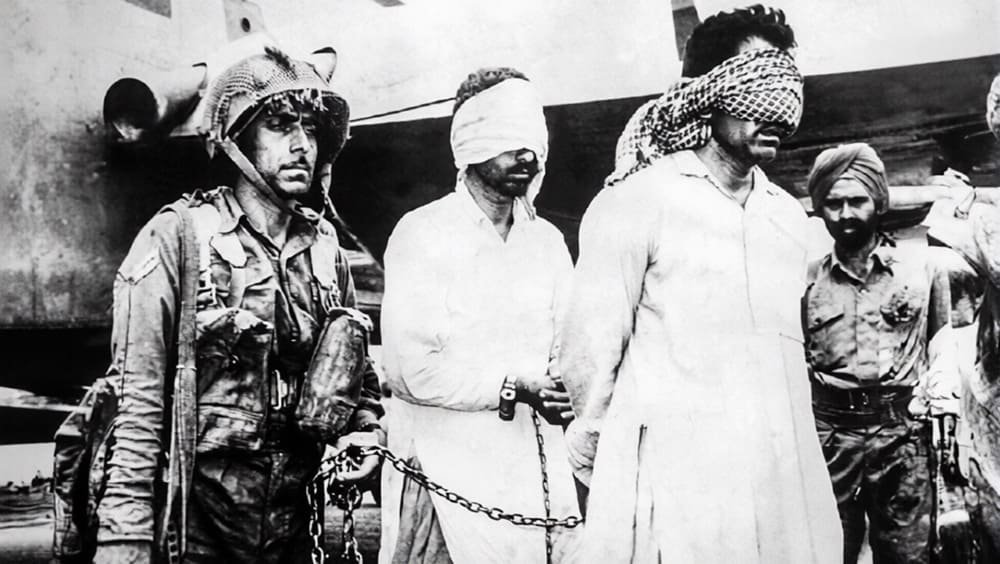
In Pakistan, the local Kashmiri response to the failure of Operation Gibraltar felt like a deep betrayal. The infiltrators were identified, and many Pakistani soldiers were killed in encounters with Indian forces. Some others were reportedly captured after locals tipped off Indian authorities. Others never made it back home.
It impacted the military leadership of Pakistan very deeply. The operation was launched on the assumption that the Kashmiris would rise in support of the infiltrators. But many civilians shunned the mission and, in some cases, turned over suspects to Indian security forces. This unexpected response shattered Pakistan’s assumptions and turned Operation Gibraltar into one of her most painful strategic miscalculations.
Execution and Collapse
In early August 1965, Pakistani troops disguised as Kashmiri civilians crossed into Indian-held Kashmir. Their aim was sabotage, ambuscades, and the stirring up of rebellion. Pakistan hoped to rally the Muslim population in the region behind these so-called “freedom fighters” and launch an insurgency.
However, the situation was quite different. Most Kashmiris did not welcome or accede to infiltrators. In most cases, they themselves reported to Indian authorities that they were there. This act not only led to the swift collapse of the infiltration effort but also exposed Pakistan’s misreading of the mood in Kashmir.
To these military and civilian factions in Pakistan, the lack of support was a betrayal, an egregious example of Kashmiris passively allying themselves with their oppressors rather than taking the opportunity to be free.
Indian Response and Escalation
India quickly mobilised its military forces to halt infiltration and prevent the outbreak of an insurgency. Following the failure of Operation Gibraltar, India crossed the international border into Pakistan’s Punjab province and mounted a counteroffensive against Lahore and Sialkot. Thus, the Second Indo-Pakistani War started in full swing.
After fierce fighting and heavy losses on both sides, the Soviet Union and the United States negotiated a ceasefire, resulting in the Tashkent Agreement in January 1966. Pakistan’s strategic gamble failed, and it had a significant impact on its foreign affairs, the war front, and the Kashmir front.
What If Kashmiris Had Supported Pakistan?
A basic question is raised in Pakistan: what if the Kashmiris had supported the operation? The locals might have made a difference if they had joined the Pakistani forces. A joint revolt might have overwhelmed the Indian forces, who were unprepared for a full-scale uprising.
The Indian Army would have struggled to manage an insurgency and an invasion at the same time. The result might have left Pakistan in possession of much of Kashmir. At the very least Pakistan could have put herself in a better position for a U.N. plebiscite.
If India had put down a popular freedom movement, it would have faced diplomatic isolation. Mostly, support from Kashmir could have put an end to decades of suffering, brutalities, disappearance and torture. Had India lost the Valley, it would have faced the kind of guerrilla warfare it once blamed on others.
The Kashmiri people could have enjoyed lasting freedom instead of remaining trapped in a protracted geopolitical conflict. Instead, their neutrality and, in some instances, their alliance with India, led to increased militarisation and oppression. Kashmir has been under a state of emergency ever since. The lost opportunity of 1965 was the doom of generations.
Reasons for the Operation’s Failure
- A Profound Disconnection: Even if hindsight bias colours a virtual victory, there are real reasons why the operation failed deep within its own structures.
- Faulty Assumptions: Pakistan military strategists had assumed that religious identity would automatically translate into political rebellion. The assumption was grossly simplistic about the complex political sentiments of Kashmiris who might have had a grievance against India but did not necessarily believe in Pakistan’s motives.
- Lack of Ground Intelligence: The infiltrators were mostly ignorant of the Kashmiri language and culture and easy to spot for locals. The failure to build grassroots support in advance proved fatal.
- Fear of Indian Reprisals: Local civilians were afraid of the consequences if they supported foreign troops. Most Kashmiris kept silent or were careful because of the Indian army’s presence.
- Distrust in Pakistan’s Commitment: Some Kashmiris felt that Pakistan was using them for its own geopolitical ends. The lack of an absolute assurance of sovereignty after liberation hampered support.
Consequences
Pakistan adopted a more cautious approach in the Kashmir policy after the failure of Operation Gibraltar. Operation Gibraltar failed and also revealed the cracks within the Pakistani command structure. The war in India swelled nationalist feelings and its grip on the valley.
The impact on the Kashmiris was enduring and profoundly debilitating. The region witnessed an exponential rise in military presence, and the Indian state grew increasingly intolerant of opposition. The Kashmiris lost credibility on either side. Pakistan viewed them as untrustworthy; India viewed them as possible insurgents.
Effects of Kashmiri Betrayal
The 1965 failed events became a prelude to the later unrest, especially the 1989 rebellion, when militancy exploded, leading to brutal human rights violations, population dislocation and prolonged occupation.
Conclusion
The launch of Operation Gibraltar in August 1965 is a stark, clear example of how mistakes and wrong assumptions can lead to long-term calamities. The operation’s failure was not just a military failure but a broken dream of pan-Islamic unity and faith. A bitter disappointment to Pakistan was the failure of the Kashmiri people to rally to the mission.
For the Kashmiris, they were fighting a war they had not started. Had they chosen differently, had they revolted in 1965, the history of the region would have been different and less tragic, and Kashmir would have been spared decades of conflict, repression and suffering. But in the tangled web of identity, fear and political manipulation, such what-ifs continue to haunt the masses, reminders of a war long ago that is still keenly felt.
References
- U.S. Department of State – The India-Pakistan War of 1965
https://history.state.gov/milestones/1961-1968/india-pakistan-war - United Nations Security Council Resolution 209 (4 September 1965)
https://digitallibrary.un.org/record/90488 - United Nations Security Council Resolution 211 (20 September 1965)
https://peacemaker.un.org/sites/default/files/document/files/2024/05/in20pk650920security20council20resolution202112028196529.pdf - United Nations Treaty Series – Tashkent Declaration (10 January 1966)
https://treaties.un.org/doc/Publication/UNTS/Volume%20560/volume-560-I-8166-English.pdf - Institute for Defence Studies and Analyses – “Operation Gibraltar: An Uprising that Never Was”
https://www.idsa.in/system/files/jds/jds_9_3_2015_OperationGibraltar_0.pdf
About the Author