

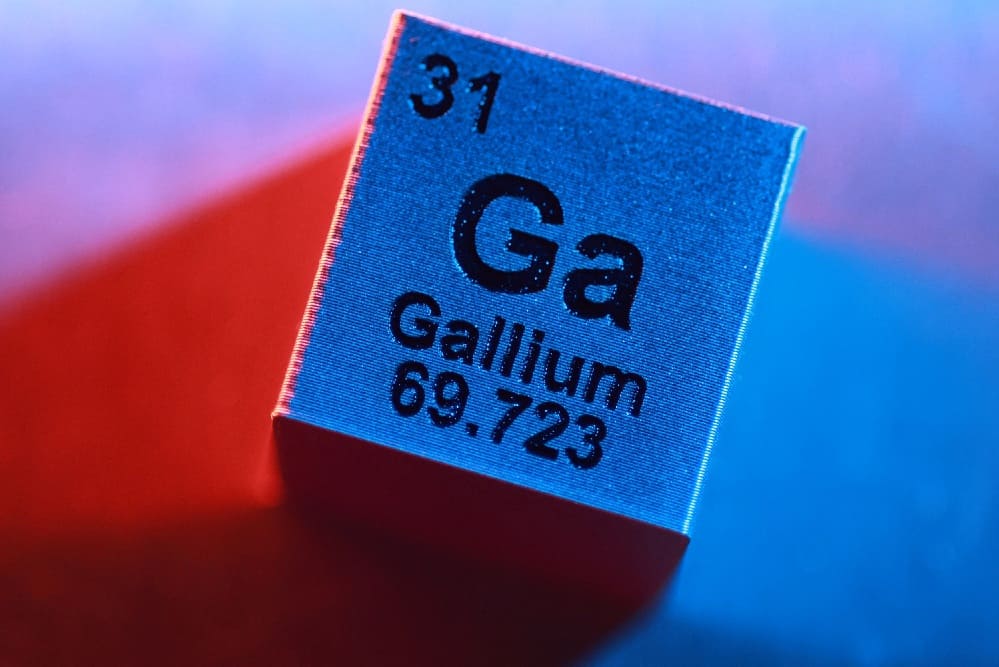
China’s Gallium Grip Erodes US Military Edge
At first glance, gallium does not appear to have strategic importance. It is a soft metal, mainly produced from the processing of bauxite and zinc ores. But some of the most powerful radio-frequency electronics in the U.S. are based on gallium compounds. Thus, China’s hold on gallium threatens the production of radar, electronic warfare power, satellite communications, and missile seekers.
An embargo would not have an immediate impact on weapons already in the field. Existing chips and inventories are a cushion. The real danger is in repairs, new platforms, and wartime surge production. These functions require qualified materials, epitaxial wafers, trusted foundries, specialised packaging, and proven designs.
Gallium in Military Semiconductors
Elemental gallium is not widely used in defence systems. Manufacturers combine it with nitrogen or arsenic to create gallium nitride and gallium arsenide. The bandgap of GaN is 3.4 electron-volts compared with 3.2 eV for silicon carbide. A large bandgap allows high electric fields and effective high-frequency switching. GaN high-electron-mobility transistors offer higher densities of radio-frequency power than GaAs devices did previously. This is a plus for smaller-sized amplifiers and better thermal tolerance.
For active electronically scanned arrays, these characteristics are significant because each transmit-receive module amplifies phases and steers its portion of the radar beam. Higher module power can increase the effective radiated power or reduce the array size. However, the range of a radar is not proportional to the power of the transmitter. In the simple monostatic radar equation, the range for detection scales approximately as the fourth root of the transmitted power. GaAs continues to matter. Its electron mobility is suitable for low-noise amplifiers, microwave circuits, optoelectronics, and radiation-tolerant communications. GaN is typically for high power transmission. GaAs is often used for sensitive receiver functions.
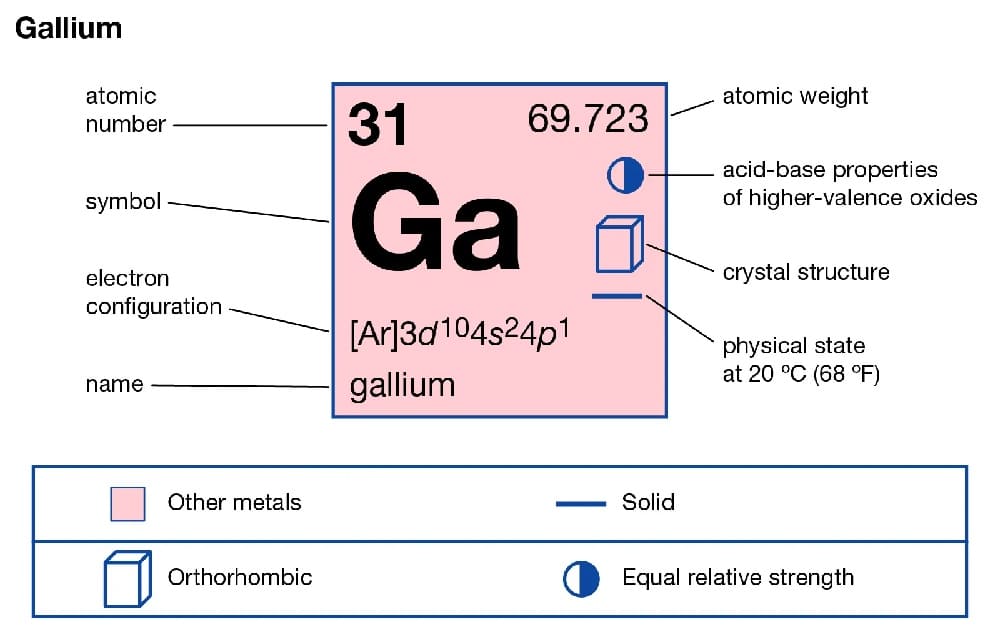
China’s Gallium Chokepoint
China accounted for 99% of global primary low-purity gallium production in 2025, the U.S. Geological Survey’s 2026 assessment said. The U.S. has been 100% net import-dependent on gallium since at least 2021. There are no primary gallium mines outside of the domestic market that produce low-purity gallium. The USGS averaged the 2025 price at $580/kg, or about 30% higher than 2024 levels. Radar is more costly than gallium.
Without it, a whole module can still be wrecked. USGS gallium is usually a by-product. It requires that producers have a large number of hosts and install special recovery circuits. China can scale supply faster than competitors can finance and qualify new capacity. Imports from China to the U.S. don’t provide a complete picture. Materials could pass through refiners, wafer suppliers and device makers in allied countries. A Chinese ban means it is pricier for any buyer further down the line and a smaller global pool.
Export Controls as a Strategic Weapon
In August 2023, China introduced export licensing restrictions on gallium. Beijing banned the relevant dual-use exports to the US in December 2024. In the US, the ban was only effective until 27 November 2026. China lifted it in November 2025. But the licensing architecture remains in place. That is an example of coercion in the real world. Beijing has shown it can shut down, ban or temporarily restore supply through administrative decisions. The one-year suspension eases some immediate pressure while keeping China’s gallium leverage as a bargaining chip.
The USGS model estimates a possible economic shock. China’s total export ban on gallium is estimated to have cost the US gross domestic product $3.1 billion. Semiconductor and related-device manufacturing accounted for 46.5% of the drop. The model also suggested that if there was an outright ban, gallium prices would rise by more than 150%. USGS Economic Impact Study These are numbers on economic output, not unclassified effects of readiness. Military parts require traceability, trusted processing, radiation performance and long qualification. “You do not simply take commercial stuff and put it into a missile seeker or AESA radar.

AN/TPY-2 Radar Upgrade
A little-niced, unclassified budget document from the Missile Defence Agency illustrates the material burden. The agency’s fiscal year 2025 request included fast-tracking development of GaN transmit-receive integrated microwave modules for AN/TPY-2 radars. Each radar needs almost 3,200 of these modules. The budget included $28.711 million to speed up procurement, replace obsolete GaAs inventory and enhance radar capability. The same document also refers to operational support in Japan, South Korea and Guam.
Missile Defence Agency Budget Justification: This is an example of the multiplication effect. Each module incorporates controlled epitaxy, lithography, metallisation, packaging, testing and thermal management. Any shortfall at any stage can restrict the entire array. The impact on operations would be gradual. They could push units forward and cannibalise parts from them. Maintainers. Modernisation would falter. The depots would run out of stock, and production lines would lack resources. In a high-loss conflict this pressure could be severe.
Why Alternatives Cannot Close the Gap
Silicon carbide is not a replacement for GaN for all radio frequency applications. GAO found that GaN provided higher switching efficiency for radars. Possible alternatives are still boron nitride, aluminium nitride and diamond. It will take more than a decade to replace realistic semiconductors. Recycling helps, but only to a certain degree. In 2026, one US company was recycling and refining gallium from scrap generated during semiconductor manufacturing.
But there is no commercial-scale recovery of discarded electronics. Gallium is present in trace amounts and binds to complex matrices, making it difficult to separate. The opportunity remains significant The Department of Energy estimates that in the manufacture of semiconductors, more than 50% of its raw material can be wasted. So capturing concentrated production scrap is a better near-term route than processing mixed consumer waste.” Government Accountability Office (GAO)
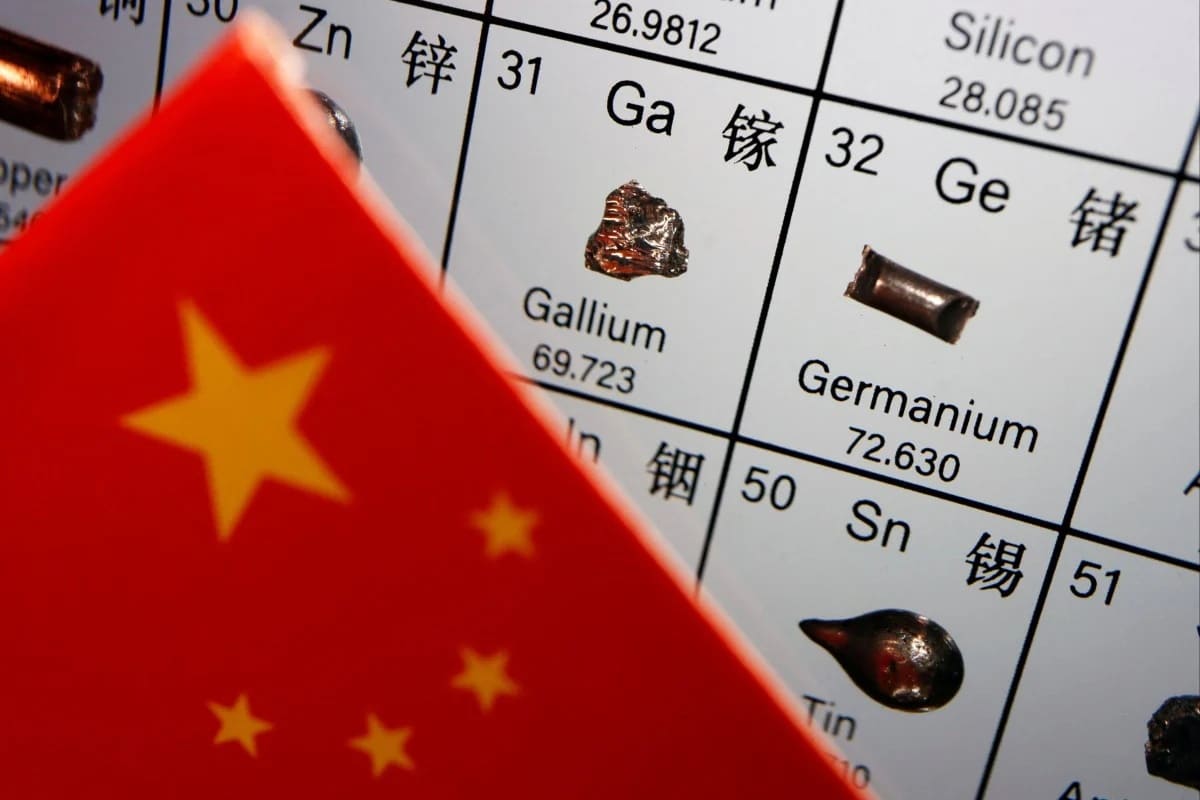
Restoring Strategic Resilience
Washington will have to respond at many levels. Stockpiles must be identified by chemical form, not by kilogram. Long-term agreements should be the basis for allied recovery facilities. Secure supply chains must include manufacturing scrap in contracts. The Pentagon also needs to establish trusted GaN epitaxy, wafer fabrication, packaging, and testing. Raw gallium is of little value in wartime without qualified downstream capacity.
Although the cost of duplicate suppliers is higher in peacetime, programme offices must fund second-source qualification before a crisis. The radio-frequency modules shall be replaceable and produced by multiple qualified processes. This does not remove the need for gallium. It can cut down the redesign time in case of supplier failure.
Conclusion
China’s grip on gallium doesn’t negate U.S. know-how on semiconductors. And it erodes the industrial depth that underpins that expertise. The US remains ahead in many radar architectures, electronic-warfare systems and compound-semiconductor designs. However, China controls the upstream volume that helps turn those designs into deployable hardware.
The test is one of endurance. Once the supplies are used up, advanced weapons must be constantly produced and kept in working order. Washington must link mineral recovery to trusted fabrication and programme-level qualification. If not, gallium could have a disproportionate effect on U.S. combat power.
References
- US Geological Survey — Mineral Commodity Summaries 2026: Gallium
- US Geological Survey — China’s Gallium and Germanium Export Restrictions
- US Government Accountability Office — Reducing US Import Reliance
- US Department of Defense — FY2025 MDA Procurement Justification
About the Author