Zumwalt-Class DDG-1000 — Costly Innovation, Hard Lessons
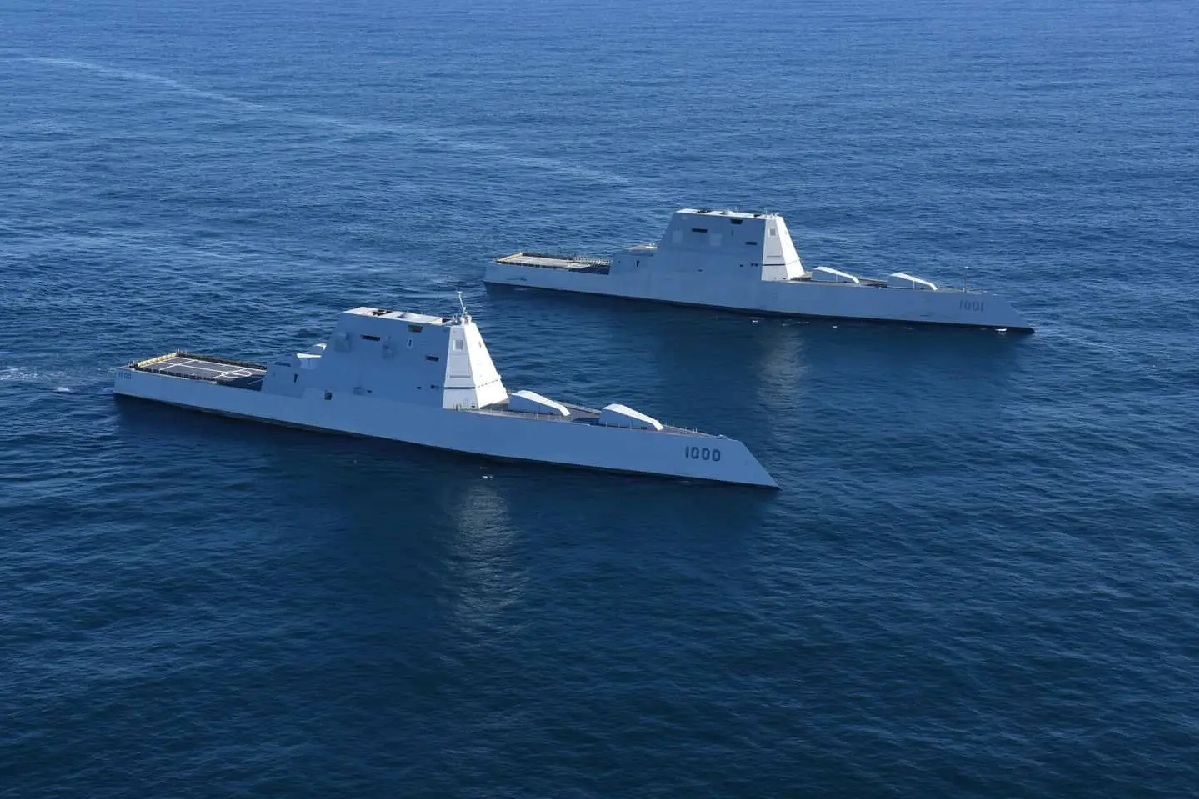
The Zumwalt program set out to reshape US Navy surface warfare. It aimed to combine stealth, automation, electric power growth, and long-range land attack into one hull. However, the class became a cautionary tale because production collapsed, the core gun mission lost its ammunition, and the fleet gained three highly unique ships.
In practice, the ships did not “fail” in their intended functions. They sailed, deployed, and continued to evolve. Instead, the program failed to deliver the original mission at a sustainable cost. Moreover, the Navy then had to spend again to re-role the platform for modern strike missions.
Why Zumwalt Still Matters
Zumwalt matters because it shows how quickly a sound engineering vision can lose its business case. It also shows how requirements churn can turn a promising design into a boutique fleet. Therefore, defense planners should treat it as a live case study for DDG (X), frigate upgrades, and future “optionally crewed” surface combatants.
Zumwalt’s Promise and Pivot
Early planning treated Zumwalt as a land-attack destroyer optimized for littoral operations. The concept leaned on stealth shaping, reduced signatures, and heavy naval surface fire support. At the same time, it pursued an advanced combat system and a power architecture sized for future weapons.
However, operational priorities shifted. The Navy’s day-to-day demand is centered on air and missile defense, ballistic missile defense, and integrated fleet networking. Consequently, the service pushed more money into the Burke line and reduced the Zumwalt purchase. That single decision changed almost every cost curve.
The procurement reality became brutal: a design shaped around economies of scale suddenly had none. Moreover, each unique subsystem became harder to justify when only three ships would ever carry it.
For more defense related articles on the global Naval Power, please visit Defense News Today.
Zumwalt’s “Epic Failure” Numbers
The most damaging statistic is not a single defect. It is the combination of cost growth and quantity collapse. When a program shrinks, unit cost rises even if engineering performance improves.
One figure dominates public reporting: an overall acquisition cost of mid-$20 billion for three hulls, combining R&D and procurement. That produces an “all-in” average that looks shockingly high per ship. However, that average includes development spending that would have been amortized across a larger class.
Schedule performance also shaped perception. First-of-class programs often slip because software, sensors, and combat-system integration mature slowly. However, when a class is tiny, any slip looks like a structural problem rather than a learning curve. Therefore, delays hurt the narrative more than they would in a 20-ship line.
Crew assumptions also moved. The program aimed for reduced manning through automation, but later adjustments increased crew size. Consequently, the sustainment and operating-cost advantages became smaller than advertised.
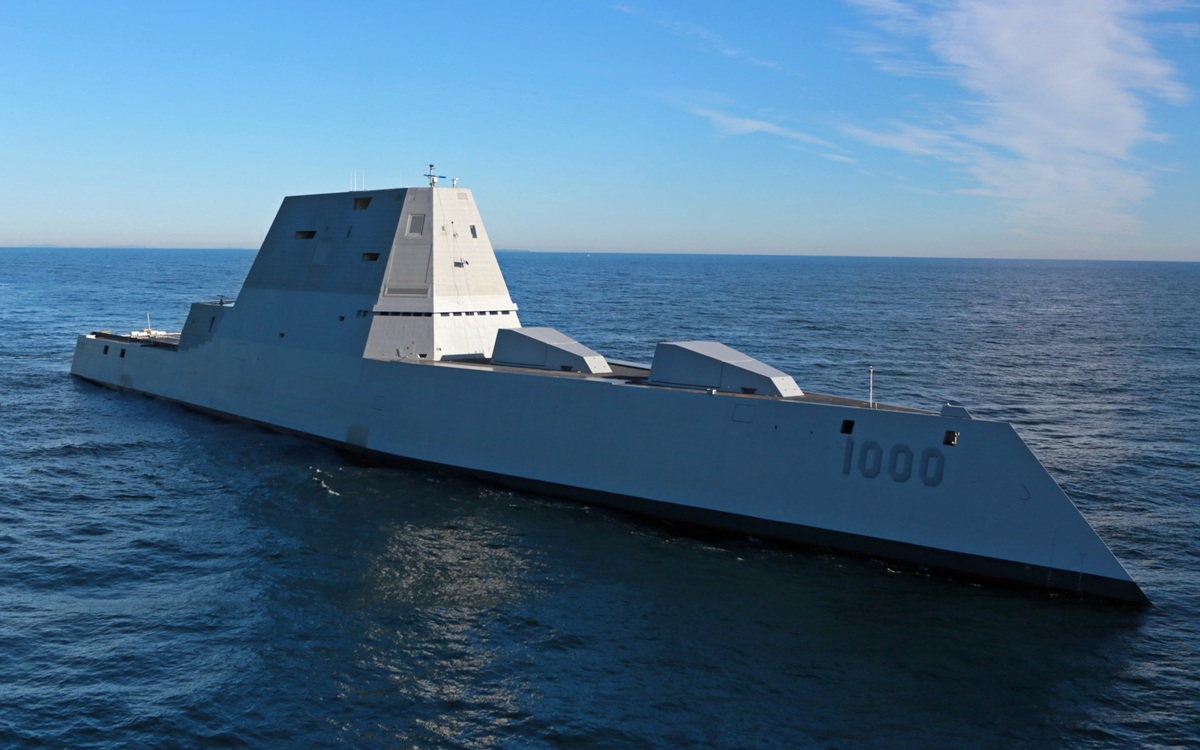
Zumwalt-Class (DDG-1000) Specifications
| Category | Zumwalt-Class (DDG-1000) specification |
|---|---|
| Type | Guided-missile destroyer (multi-mission surface combatant) |
| Ships in class | USS Zumwalt (DDG-1000); USS Michael Monsoor (DDG-1001); USS Lyndon B. Johnson (DDG-1002) |
| Builder | General Dynamics Bath Iron Works |
| Hull form | Wave-piercing tumblehome design |
| Length | 610 ft (186 m) |
| Beam | 80.7 ft (24.6 m) |
| Navigational draft | 27.6 ft (8.4 m) |
| Displacement (full load) | 15,995 metric tons |
| Speed | 30 knots |
| Power/propulsion architecture | Integrated Power System (all-electric drive) |
| Turbine generators | 2× Main Turbine Generators + 2× Auxiliary Turbine Generators |
| Motors | 2× advanced induction motors (~33.6–34.6 MW each, as commonly reported) |
| Installed power | 78 MW |
| Primary radar/combat system | AN/SPY-3 (X-band) radar with Zumwalt combat system |
| Vertical launch system | Mk 57 Peripheral VLS: 80 cells |
| As-built close-in guns | The ship is equipped with 2 Mk 46 30 mm gun systems. |
| As-built main guns | 2× 155 mm Advanced Gun System (AGS) |
| Aviation facilities | Flight deck and hangar for up to two MH-60–class helicopters (plus VTUAV capacity) |
| Standard crew (commonly cited) | 197 (programme manning has varied) |
AGS: The Gun Without Ammo
The most visible capability setback involved the Advanced Gun System (AGS). AGS was built around a specialized precision munition intended for long-range land attack. That round’s unit cost rose sharply as planned quantities dropped. Once the economics broke, the Navy effectively lost the ammunition pipeline.
That decision hit the class hard because it removed the headline mission justification. Moreover, it left the ships carrying two large gun mounts that no longer served their intended role. In simple terms, a premium platform lost its signature payload.
This incident is why critics call Zumwalt an “epic failure.” They are not mocking stealth shaping. They are pointing at a program that spent heavily on a tailored fire concept but then could not field affordable rounds to use it.
Combat System Uniqueness Costs
Zumwalt also carried a different combat-system path than the fleet mainstream. While the Navy modernized Aegis iteratively, Zumwalt ran a parallel architecture with different integration burdens. That uniqueness mattered because it raised training, spares, software maintenance, and upgrade complexity.
While fleet commonality may not be glamorous, it plays a crucial role in winning wars through readiness. Therefore, even if a unique system performs well, the Navy pays a continuing tax if only three hulls carry it. Moreover, each update must be tested and certified across a smaller user base, which increases cost per hour of benefit.
This is where the Zumwalt-Class DDG-1000 debate becomes less emotional and more mathematical: sustainment efficiency comes from scale, and this class never had scale.
Electric Drive: Right Idea, Hard Debut
Zumwalt’s strongest technical achievement is its integrated electric architecture. The design can shift power between propulsion and ship systems. That flexibility supports future radars, electronic warfare growth, and high-demand weapons.
However, putting so many new technologies into one class increased integration risk. A first-of-class electric drive, a new combat system, and a new mission package create compounding complexity. Consequently, the program faced a long path to stable configurations and repeatable readiness.
Even so, the power architecture remains strategically relevant. It teaches the fleet how to manage high electrical loads, thermal margins, and combat-system growth. Therefore, the “failure” label misses that the program did generate valuable engineering data.
Survivability Tests Keep the Debate Alive
The public debate stayed hot because people wanted a simple answer: “Is it combat-ready or not?” Yet, modern surface combatants rely on software-defined capabilities that mature over time. Testing, live-fire events, and evaluation cycles take years, especially when configurations change.
Moreover, survivability narratives often become political. Some critics focus on stealth claims and shock survivability concerns. Others focus on practical readiness and mission fit. The truth sits in the middle: the class required time and money to reach a stable state, and that is always harder to defend when only three ships exist.
Pivot to Strike: Salvaging Value
The Navy’s practical response has been to reroll the class toward long-range strikes. The plan to install Conventional Prompt Strike hardware effectively turns the forward section into a modern strike battery. Simultaneously, removing the unused gun mounts creates additional space and reduces weight for new payloads.
This pivot changes the class’s logic. Instead of a littoral fire platform, it becomes a niche strike asset with high-end deterrence value. Moreover, the stealth shaping and power margin become more relevant when the ship’s mission shifts to surviving long enough to deliver expensive, strategic weapons.
In that future, the Zumwalt-Class DDG-1000 remains a viable option. It becomes a small, specialized “strike destroyer” force that complements other platforms rather than replacing them.
Lessons for Future Warship Builds
Three lessons stand out.
1) Avoid Single-Munition Dependence
If the round dies, the mission dies. Therefore, future surface-fire concepts should ensure alternative ammunition paths exist.
2) Don’t Field Boutique Systems Without Scale
Unique systems can be excellent. However, without scale, they impose a lifetime sustainment tax.
3) Control requirements; plan upgrades early.
The Navy can manage innovation, but it must manage change. Consequently, future designs should plan upgrades that reuse fleet-common components whenever possible.
Conclusion: Failure or Pathfinder?
The Zumwalt DDG-1000 Destroyer Program became a symbol because it combined ambitious technology with unstable requirements and a shrinking buy. That mix produced painful statistics and a high-profile mission collapse around AGS. However, the class also delivered meaningful power-system and signature lessons and now offers a path to high-end strike.
Therefore, did it fail? It failed as a scalable, cost-effective land-attack destroyer program. Nevertheless, it succeeded as a technology pathfinder and could still deliver deterrence value as a re-roled strike platform.
References
- https://www.esd.whs.mil/Portals/54/Documents/FOID/Reading%20Room/Selected_Acquisition_Reports/FY_2022_SARS/DDG_1000_SAR_DEC_2022_final.pdf
- https://www.navy.mil/Resources/Fact-Files/Display-FactFiles/Article/2391800/destroyers-ddg-1000/
- https://www.dote.osd.mil/Portals/97/pub/reports/FY2024/navy/2024ddg1000.pdf
- https://news.usni.org/2016/11/07/navy-planning-not-buying-lrlap-rounds
About the Author