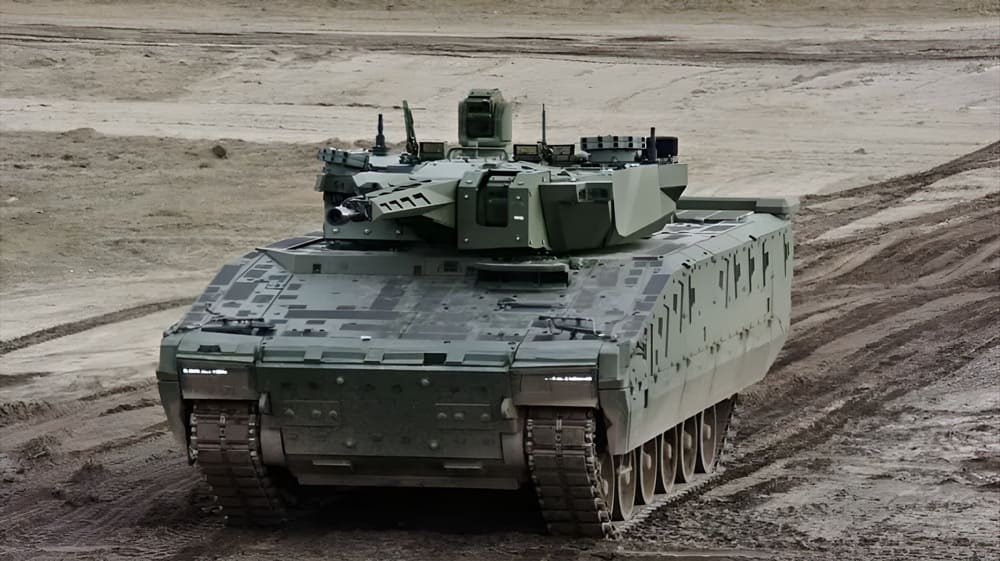
XM30 Infantry Fighting Vehicle Starts Bradley Replacement
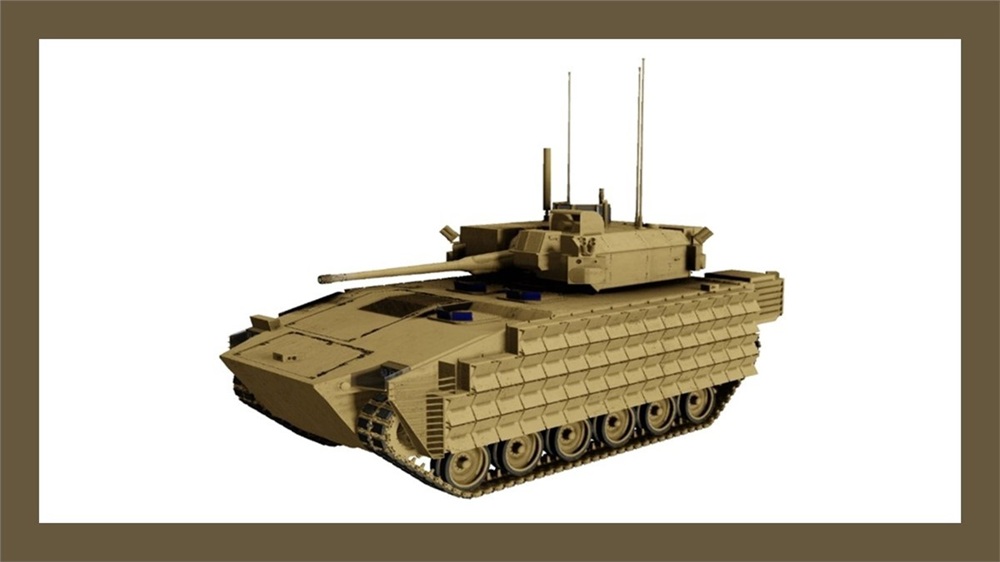
The XM30 infantry fighting vehicle has entered a more serious procurement phase after years of uncertainty around the Bradley replacement. The U.S. Army’s FY2027 budget request includes $546.990 million, rounded off to $547 million, for the first production-linked batch of the programme. Official budget documents cite 19 vehicles in FY2027, describing the funding as a step from prototyping to operational fielding.
However, the language is important. The Army said the funding will enable production of up to 19 XM30 vehicles, including hulls and turrets. So the number should be taken as a planned low-rate procurement number, not a fully completed fleet. The request still needs congressional approval before it becomes final funding.
Urgent Bradley Replacement
The Bradley, introduced in 1981, is still a capable fighting machine. It transports infantry, supports troops on foot and fights alongside tanks. But its design now hits limits in terms of armour growth, electronics, power generation and digital integration. Congressional research says the Bradley has reached the technological limits of adding new electronics, armour and defensive systems.
Modern conflicts have sharpened that concern. Drones, loitering munitions, top-attack weapons, and precision artillery threaten armoured vehicles from multiple directions. As such, the XM30 infantry fighting vehicle has to be more than a new hull. It must give armoured brigades a better chance of survival, faster data links and room for future upgrades.
XM30 Advantages
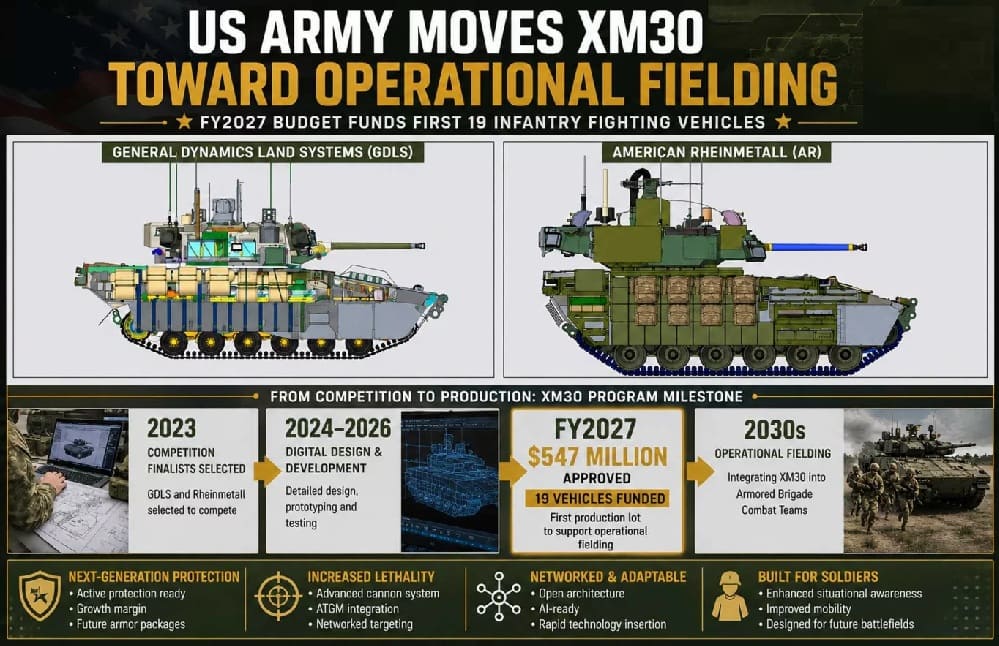
The XM30, also called the Optionally crewed Fighting Vehicle, will replace the Bradley Fighting Vehicles in Armoured Brigade Combat Teams. The Army says it will increase lethality, soldier survivability and upgrade capacity beyond the physical and economic limits of the Bradley.
The vehicle’s main strength continues to be its modular open-systems architecture. ‘This design should allow the Army to add new sensors, software, counter-drone tools, electronic warfare systems and weapons over time,’ he said. In addition, the open architecture should cut down on costly redesigns every time battlefield technology shifts.
The XM30 infantry fighting vehicle is also capable of optionally manual operations. Put simply, commanders can employ it with crew and soldiers in armour or in some remote-controlled roles. That flexibility is critical as the Army ties together manual vehicles and robotics and semi-autonomous systems.
Contractor Selection
The Army has not yet selected the final prime contractor. Award decisions will be based on contractor performance during the Middle Tier Acquisition-Rapid Prototyping phase, preproduction testing and soldier feedback, according to its budget document.
Two industry teams are still in contention. In June 2023, the Army awarded Phase III and IV contracts to General Dynamics Land Systems and American Rheinmetall Vehicles. The contracts, worth about $1.6 billion in all, included detailed design, prototype build and testing.
The Army also needed up to 11 prototype vehicles, two ballistic hulls and turrets, armour coupons and digital engineering data. The service plans to conduct a limited competition and downselect near the end of FY2027, following testing. The first unit is still planned to be fielded in FY2029.
Delivery Timelines
The first low-rate vehicles will be validated before they go directly into combat units. The Army says these LRIP vehicles will undergo Production Qualification Testing and Initial Operational Test and Evaluation. If successful, they will be assigned to an Active Component Armoured Brigade Combat Team and reach First Unit Equipped status. The planning table provides a clearer schedule for the programme. It shows a September 2027 award date and July 2029 first delivery for the vehicle end item, hull/chassis and turret.
Growth Through FY2031
The FY2027 request also includes a larger production ramp. The Army has 19 vehicles listed in FY2027, 48 in FY2028, 65 in FY2029, 86 in FY2030 and 108 in FY2031. That growth is reflected in funding, with the line item receiving more than $2.15 billion in FY31.
So the first 19 vehicles represent a starting point, not the end state. The larger blueprint provides a look at how the Army intends to build momentum after two decades of failed efforts to replace the Bradley IFV.
Comclusion
The XM30 infantry fighting vehicle provides a viable way out of the Bradley-era box for the U.S. Army. It allows more space for digital development, improved upgrade paths and a stronger foundation for high-intensity warfare. However, the programme is still at risk in cost, schedule and testing.
For defense watchers, the big question isn’t whether the Bradley still works as a vehicle. It does. The real question is whether it can get the Army through the 2030s against drones, sensors, anti-armour weapons and electronic warfare. The XM30 exists because the Army thinks the answer is no.
For related reading, see Defense News Today’s Army coverage and North America defense updates.
References
- https://www.asafm.army.mil/Portals/72/Documents/BudgetMaterial/2027/Discretionary%20Budget/Procurement/Procurement_of_Weapons_and_Tracked_Combat_Vehicles.pdf
- https://www.army.mil/article/267920/army_announces_contract_awards_for_omfv
- https://www.everycrsreport.com/files/2025-06-16_IF12094_0767235aeb07e1219f83eefbdhttps://www.asafm.army.mil/Portals/72/Documents/BudgetMaterial/2027/Discretionary%20Budget/Procurement/Procurement_of_Weapons_and_Tracked_Combat_Vehicles.pdf?utm_source=chatgpt.com23ee97033cb3a6b.html
- https://defensenewstoday.info/defense-branches/army/
About the Author