
X-62A VISTA AI Fighter: Future Air Combat Testbed
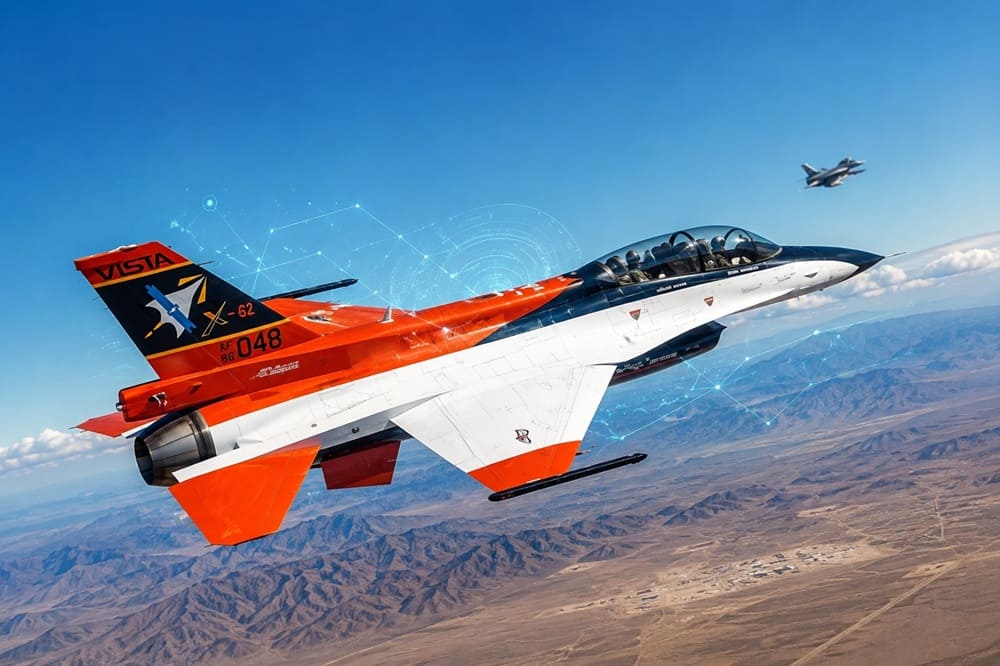
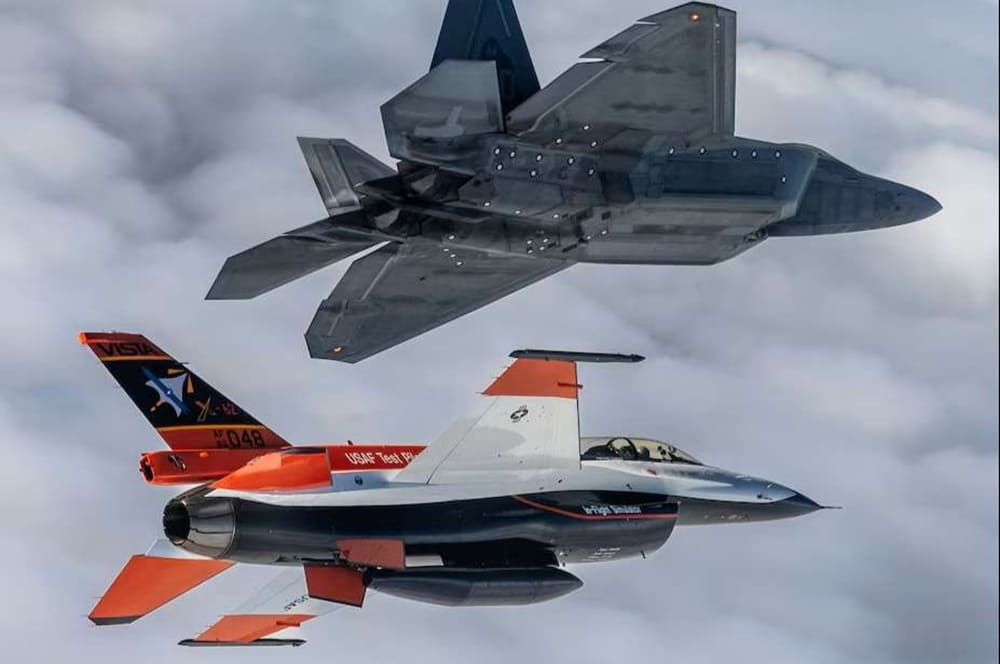
The X-62A VISTA AI fighter appears to be a familiar F-16. But its purpose is much more than just normal fighter training. It now is one of the premier flying labs for testing artificial intelligence, autonomous control and future air combat.
VISTA is short for Variable In-flight Simulator Test Aircraft. The aircraft can change its flight-control behaviour in flight using advanced software. This lets engineers test the handling of future aircraft before they build full prototypes.
Importance of X-62A VISTA
The X-62A VISTA AI is a two-seat F-16D variant flown by the U.S. Air Force Test Pilot School at Edwards Air Force Base. Lockheed Martin Skunk Works and Calspan helped evolve it into a flexible airborne testbed. The plane formerly was known as the NF-16D. On 14 June 2021, it was redesignated the X-62A.
The change reflected its growing role beyond variable-stability training and in autonomy research. Its value lies in controlled experimentation. You can have safety pilots onboard while engineers test advanced AI agents in real flight. Thus, the aircraft bridges the gap between digital simulation and real-world combat aviation.
For related coverage, read Defense News Today’s analysis on drones, AI and robotics challenging defense firms.
Simulation to Live AI Flight
The X-62A VISTA AI fighter didn’t immediately jump into dogfighting. First, AI agents in DARPA’s Air Combat Evolution programme progressed from computer-simulated F-16s to the real thing. The ACE developers uploaded AI software to the X-62A at Edwards in December 2022. The aircraft then flew several sorties over several days.
The flights proved the ability of AI agents to control a full-scale fighter aircraft under test conditions. That was an important step because simulation can’t reveal all real-world issues. Live trials are subject to weather, the aircraft’s response, the sensor’s behaviour and human oversight. As a result, VISTA provided engineers with faster feedback than a purely virtual test environment.
VISTA Mimics Other Aircraft
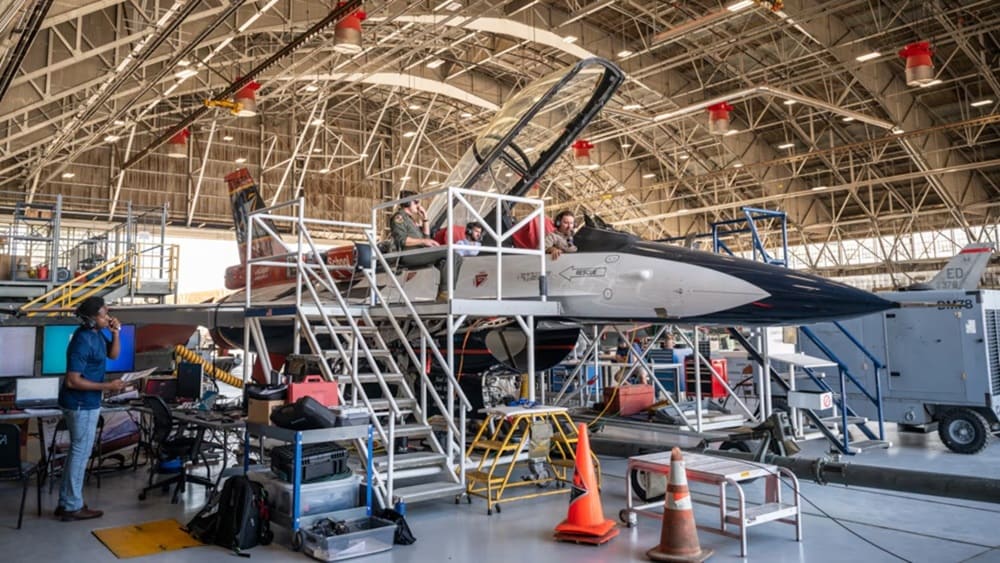
The X-62A VISTA AI fighter can mimic the flight-handling qualities of various aircraft types. It does not mean it physically becomes another aircraft. Instead, it modifies how the pilot or AI feels its control response through software. The capability allows engineers to test future designs without having to build each platform.
Besides, it enables the study of advanced control laws, autonomy behaviours and handling qualities of pilots and researchers inside one reusable aircraft. This makes VISTA more than a modified F-16. It is a flying laboratory for airborne software. It can support fighter research, uncrewed aircraft development and human-machine teaming experimentation.
1st AI-Vs-Human Dogfight
The aircraft drew world-wide attention during the DARPA ACE trials. In 2024, DARPA announced the first in-air tests in which AI algorithms autonomously flew an F-16 against a human-piloted F-16 in within-visual-range combat. During those tests, the X-62A VISTA AI fighter carried the AI agents. An F-16 with a pilot aboard was the opposing aircraft. Safety pilots remained inside VISTA and could disengage the AI if necessary. The programme was managing the situation.
The test crews first used defensive manoeuvres. Then they moved into offensive, high-aspect, nose-to-nose encounters. During the trials, the aircraft came within a few thousand feet of the ground at a speed of about 1,200 miles per hour. The software workload was also large. The team made more than 100,000 lines of flight-critical software changes over 21 test flights. Importantly, the safety pilots did not need to hit the safety switch during the dogfight tests.
Beyond Dogfighting
Dogfighting made headlines, but it was just the test problem. The real aim was trusted autonomy. Engineers wanted to demonstrate that systems based on machine learning could be safely flown in flight-critical aerospace environments. That distinction matters. The U.S. Air Force isn’t just building a robot dogfighter.
Instead, it’s learning how AI performs under pressure, how pilots trust it and how engineers can responsibly validate it. This work enables future crewed-uncrewed teaming. In future operations, a crewed fighter may lead several autonomous aircraft. The platforms can also scout, jam radars, carry sensors or support missile attacks under human control.
For wider airpower coverage, visit Defense News Today’s Air Force section.
Upgrade Expands AI Testing
The X-62A VISTA AI fighter is now moving into a higher-fidelity phase. In December 2025, the Air Force Test Center announced that the aircraft had begun a Mission Systems Upgrade. The upgrade will include the latest in radar and sensor integration. It will also let VISTA experiment with integrating AI systems, interacting with airborne agents and making decisions in real time in more complex environments.
This change is important because air combat is more than just flying the aircraft. Modern combat aircraft must be able to identify threats, process sensor data, share information and react faster than the enemy. Consequently, VISTA is transitioning from flight-control testing to mission-level autonomy testing.
AI Missile Evasion
Survivability is the next major step. In 2026, Lockheed Martin said the X-62A VISTA carried a Lockheed Martin AI that demonstrated sim-to-real autonomous missile-evasion capability. This does not mean the aircraft became an operational combat drone. That meant AI trained in simulation had its behaviour translated into real-world flight tests.
This is an important step for future autonomous aircraft. Missile evasion is a matter of quick judgement. The aircraft has to deal with energy, geometry, sensors and timing. AI could assist future platforms in rapidly responding while relieving the pilot’s workload. But human command authority will continue to be at the core of combat operations.
Strategic Impact
The X-62A VISTA AI fighter is the future of air warfare. Future air combat will be about software, sensors, autonomy and trusted human/machine teaming. The aircraft also provides a rare testing edge for the U.S. Air Force. It can test new AI behaviours in real flight without the immediate risk of a new operational aircraft.
And safety pilots and independent controls ensure that they conduct trials responsibly. VISTA still looks like an F-16 from the outside. However, its real value is in its software, computing systems and test architecture. It’s not only flying today’s planes. It is helping to shape the air combat model of tomorrow.
Conclusion
The X-62A VISTA AI fighter is no gimmick, and it is not a current combat replacement for human pilots. It’s a serious autonomy testbed with defined milestones. 2022 was the year AI went from simulation to live flight. It worked in the first air-to-air dogfighting tests of AI vs humans. And now it has advanced tests in radar, sensors and missile evasion. That makes VISTA one of the most important aircraft in the future combat-air ecosystem for defence planners.
References
- https://www.darpa.mil/news/2023/ace-program-transition
- https://news.sky.com/story/first-known-test-dogfight-between-ai-and-human-pilot-carried-out-us-military-says-13118545
- https://www.darpa.mil/news/2024/ace-ai-aerospace
- https://www.afrl.af.mil/News/Article-Display/Article/3745032/usaf-test-pilot-school-and-darpa-announce-breakthrough-in-aerospace-machine-lea/
- https://www.aftc.af.mil/News/Article/4364122/x-62-vista-begins-upgrade-program-expanding-boundaries-in-flight-testing-of-aut/
- https://www.armyrecognition.com/news/aerospace-news/2026/u-s-air-forces-x-62a-aircraft-hosts-lockheed-martins-tactical-ai-for-autonomous-missile-evasion-tests
About the Author