
Why the F-35 Doesn’t Fit the Indian Air Force
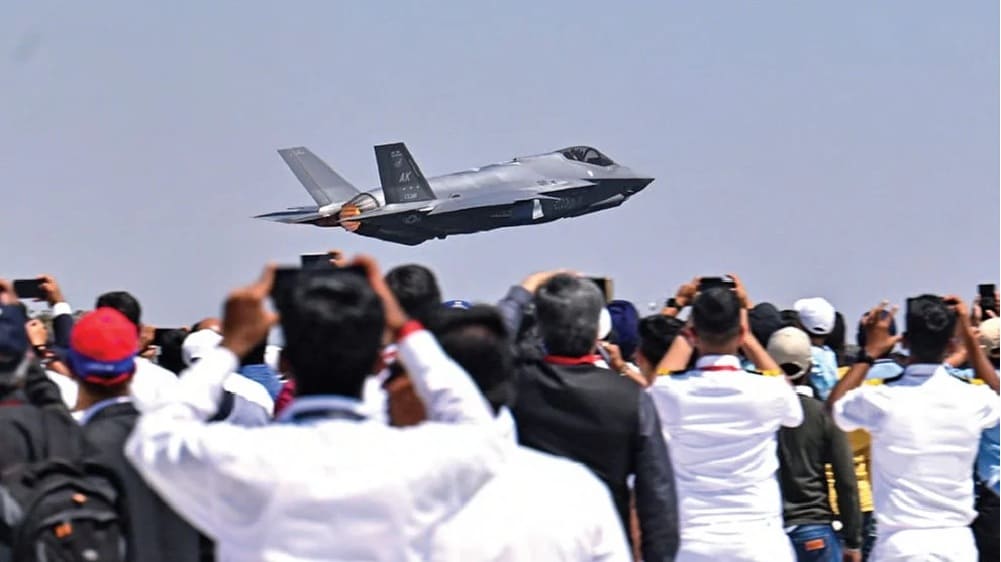
The F-35 debate in the Indian Air Force has resurfaced as India urgently needs fighter planes. The Indian Air Force is under tremendous pressure from China and Pakistan. They are also facing problems making planes in India, and their older planes are becoming very outdated. “So when somebody offers a fifth-generation fighter plane, it is very intriguing to them. Just because people are talking about something doesn’t mean they’re going to buy it.
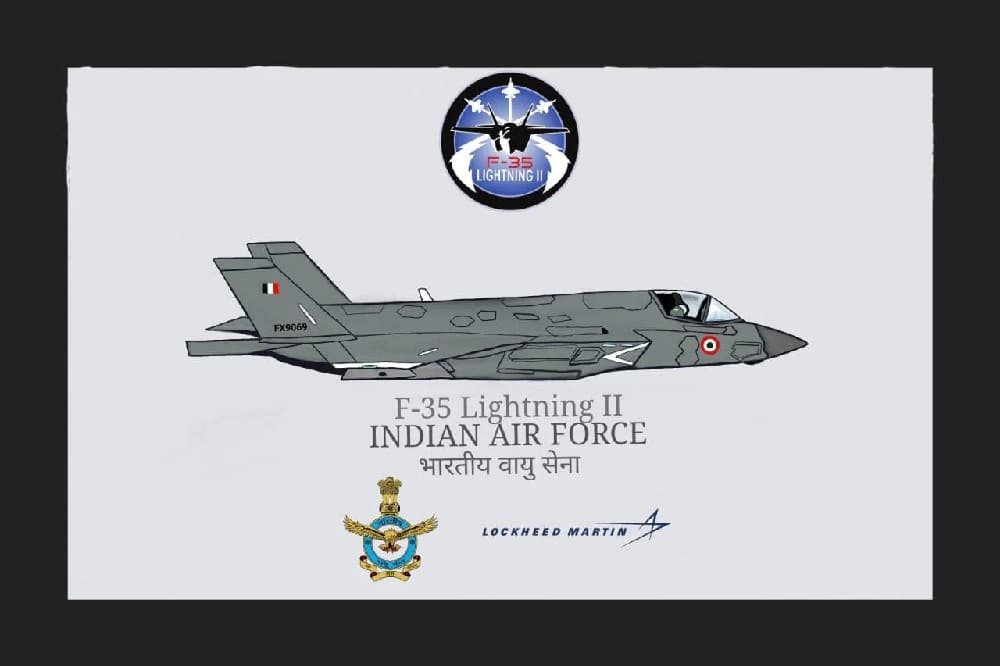
In August 2025, India’s Ministry of External Affairs told Parliament that there had been no talks about buying the F-35. That’s even though India and the United States said in February 2025 they’d consider letting India have fifth-generation fighter planes, like the F-35. For India, the F-35 is not an aircraft. The F-35 is a political issue, involves complex computer software, and is difficult to keep operational. It can also work with other plans and systems.
F-35 Strengths and Limits
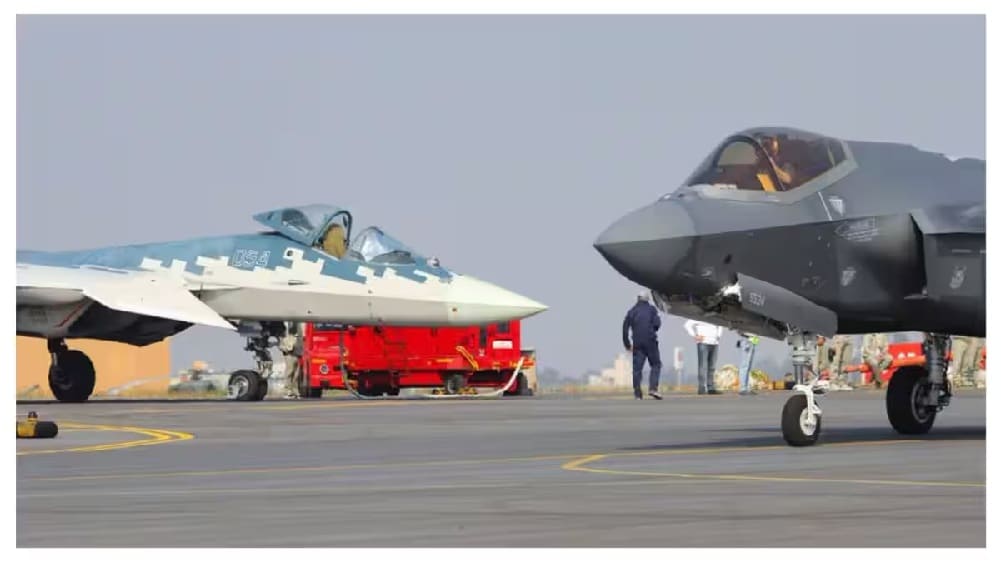
The F-35 Lightning II has some remarkable features, like stealth shaping, advanced sensor fusion, electronic attack capability, and a strong battle-management role. The F-35 Lightning II is capable of collecting data and relaying information on targets in US-led networks. Other Platforms Guide. The situation is different for the F-35 and the Indian Air Force. India does not belong to a US-commanded ecosystem. The Indian Air Force operates a fleet of Russian, French, Israeli, Indian, and Western systems.
So stealth is just as important as integration for the F-35 Lightning II. India has its Integrated Air Command and Control System, or IACCS which connects radars, air defence assets, command nodes, and airborne sensors. If India were to acquire the F-35 Lightning II, it would require gateways, sanctioned data-sharing rules, and tightly controlled mission-data arrangements. The U.S. is also unlikely to provide software access or full integration rights for the F-35 Lightning II.
Readiness Remains Critical
The F-35 is a super-sophisticated plane but has some serious problems keeping it operational. In 2024, the U.S. Government Accountability Office said that the cost of sustaining the F-35 would be much higher than they had expected. The sustainment cost for the F-35 has increased from $1.1 trillion in 2018 to $1.58 trillion in 2023. The F-35 also had some problems with its ability to fly when needed. All three versions of the F-35 plane failed to meet their targets for readiness to fly. Things didn’t get any better for the F-35 in 2025.
The US Department of Defence Inspector General said the F-35 planes were only able to fly for about half the time in 2024. Half the time, the F-35s were unable to fly. The Pentagon paid Lockheed Martin $1.7 billion for the F-35 planes, even though they were not meeting the requirements to be ready to fly. It is a good deal for India.” The Indian Air Force needs platforms like the F-35 that can fly a lot and be ready to fly at a moment’s notice. The Indian Air Force also needs the aircraft to operate from bases. The Indian Air Force requires aircraft that require little maintenance and are always flight-ready.
Costs Challenge India’s Plans
The Indian Air Force is mulling over the F-35 option. It will have to compete with a lot of other needs in India right now. India needs fighter planes, more tankers, more systems to defend the air, better drones, new missiles, and a stronger industry that can make these things in India. The people who make the budget for the US government say it will cost more than $5 billion to keep the F-35s flying in 2023. They also learned that the F-35 planes are not available to fly as often as they once were, and they are not as good as some of the older planes.
India can’t just look at how much it costs to buy the F-35 plane. So India has to think about all the things that come with the F-35 like special machines that can simulate flying, secret places to keep the planes, people to fix the engines, systems to help the planes on their missions, training for the pilots, and extra parts and people to help fix the planes. Add all these costs together, and the F-35 option becomes very expensive, and there are planes that are cheaper and easier to use with what India already has.
Rafale Better Fits India
India has invested heavily in the Rafale system. India has signed a deal to buy 26 Rafale Marine aircraft for the navy, and the Indian Air Force already has 36 Rafales. The deal is worth $7.4 billion. Reuters reported it. The deal includes 22 single-seaters and 4 two-seaters. By 2030, India will be handed these planes. And that’s a deal because Rafale aircraft integrate well with Indian weapons and Indian bases. India also closely collaborates with France on these plans.
There’s a good system for training people to fly them.” If India wishes, it can also get Rafale planes quickly. “This is better than going back to ground zero with a new system like the F-35. The Rafale is not a modern stealth aircraft. It is very good at being ready to fly when India needs it. ” The Rafale can also employ different weapons, and it does not cause a lot of problems with other countries. For the Indian Air Force, these could be more important than an aircraft. The Rafale gives India what it needs. India likes the Rafale because it is a plane.”
Strategic Autonomy Matters Most
India buys weapons from countries but doesn’t want to depend on them fully. The F-35 is an aircraft with a lot of secret American software and systems. So India will have to think about whether it can use the F-35 the way it wants in a difficult situation. This is where the Advanced Medium Combat Aircraft or AMCA comes in. India’s AMCA program is a while away. It is helping India to build its own advanced fighter aircraft.
The AMCA program is also helping India to learn to design and build its aircraft and make its own weapons. So the argument about the F-35 and the Indian Air Force is not about which aircraft is better. The question is, who really has the controls of the F-35 once it is handed over to India? India wants to be in the driver’s seat of the Advanced Medium Combat Aircraft, or AMCA because it is India’s project.
Conclusion: Advanced but Unsuitable
The F-35 remains one of the best fighter jets in the world. Its features and abilities, such as stealth, good sensors, and the ability to connect with other systems, make it very hard to defeat. India has different needs. The Indian Air Force requires many aircraft, easy maintenance, freedom to operate as desired, easy refuelling of aircraft, team support, and control over the aircraft.
The F-35 is problematic for many of these needs. So the idea of India buying the F-35 is interesting from one point of view, but difficult to make work in reality. India will likely focus on buying Rafale jets, making more Tejas aircraft, upgrading its Su-30MKI jets, and developing the AMCA fighter.
References
- https://www.mea.gov.in/lok-sabha.htm?dtl/39906/QUESTION_NO_2084_RELATIONSHIP_WITH_USA_ON_MILITARY_ASSISTANCE=
- https://www.gao.gov/products/gao-24-106703
- https://www.dodig.mil/In-the-Spotlight/Article/4367145/press-release-audit-of-the-dods-oversight-of-contractor-performance-for-the-f-3/
- https://www.reuters.com/world/india/india-signs-74-billion-deal-with-france-buy-26-rafale-fighter-jets-2025-04-28/
About the Author