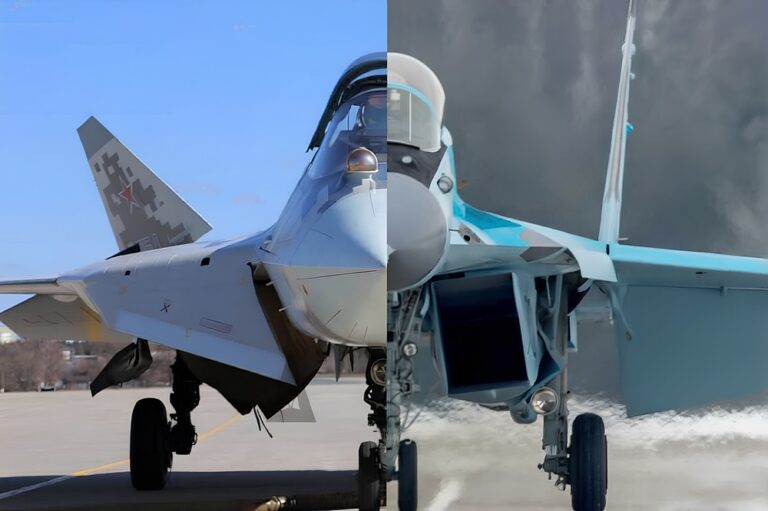

Why Soviet Aircraft Have Glass Noses & Western Jets Don’t
One of the most recognizable features of Cold War aviation is the clear noses on aircraft such as the Ilyushin Il-28, Tupolev Tu-16, Tu-95, and a number of early Soviet bombers. They are sometimes cited as evidence of the rudimentary state of Soviet avionics. But that’s not the whole story. The transparent nose was the outcome of crew organization, optical bomb doctrine, navigation philosophy, and radar placement.
Western bombers had similar arrangements during and after the Second World War but generally moved their bombing radars and electronic navigation systems to the nose of the aircraft earlier. Many Soviet designers kept a dedicated navigator-bombardier with a direct downward view but put the radar elsewhere in the fuselage. So it wasn’t just a choice between glass and electronics. It was another way of integrating the human pilot into the plane’s attack system.
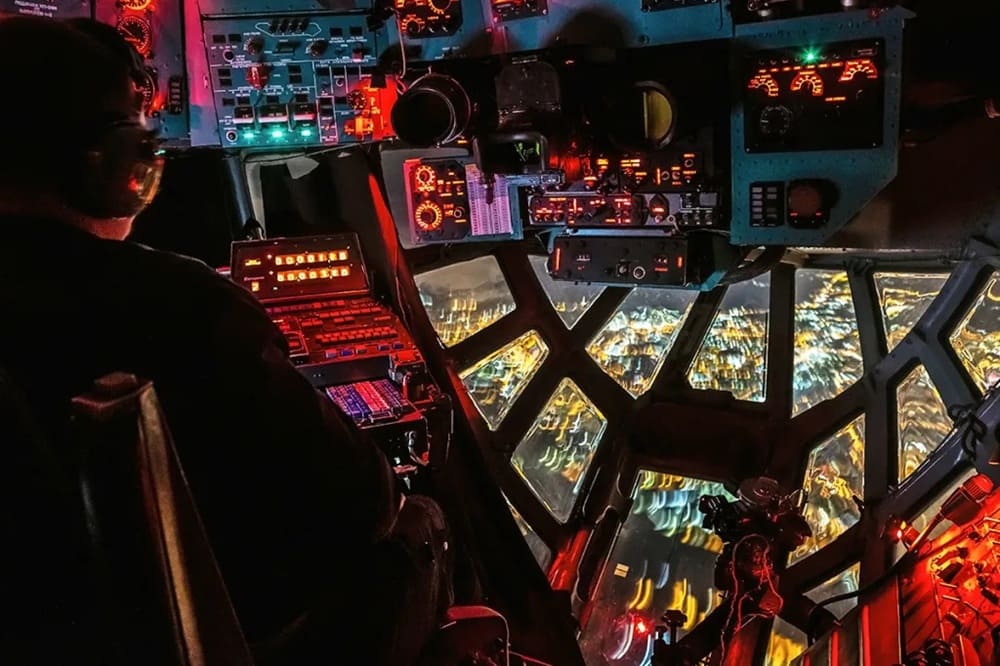
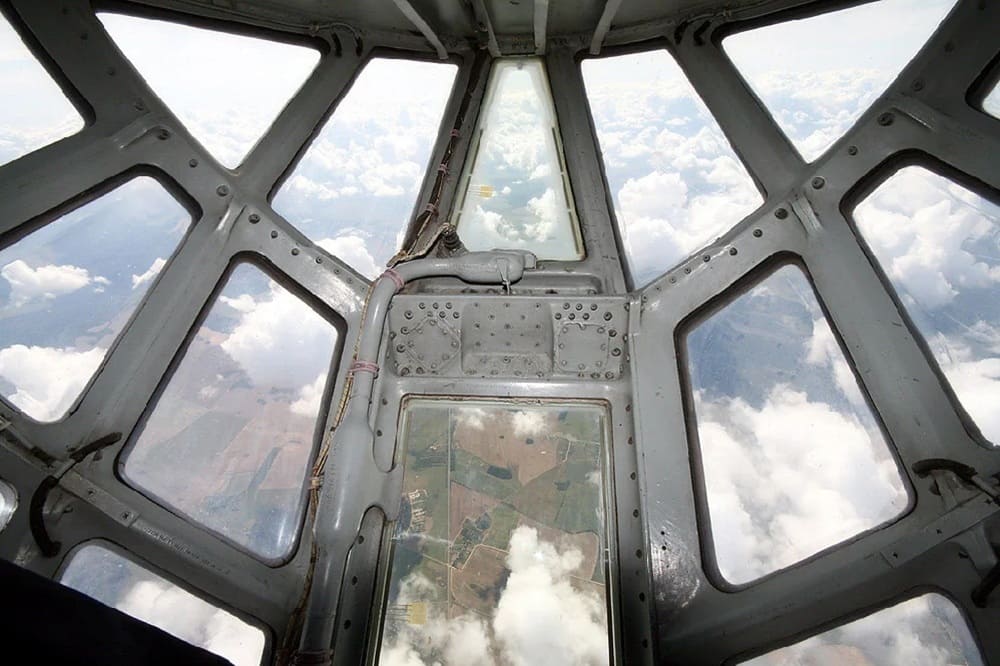
The Glass Nose Was a Bombing Station
Usually the cockpit was not the glazed part of the Soviet bomber. It was the station of the navigator or navigator-bombardier. From this position the crewman could see landmarks to determine drift, acquire the target, and operate an optical bombsight. Of particular importance were the large windows facing downwards, since a bomber attacking a target from several kilometres above it required a clear view well below the aircraft’s longitudinal axis.
This design philosophy dates back to a time when radar bombing wasn’t accurate and reliable enough. The American B-17, B-24, and B-29 were all basically on the same principle. Consider Thomas Ferebee, bombardier on the Hiroshima mission in August 1945. He worked the Norden bombsight from the forward, glazed compartment of the B-29s, visually acquiring the aiming point prior to bomb release. The idea didn’t occur to the Soviets. They just pushed it further on a few key bomber families.
Soviet Bombers: Optical & Radar Bombing
It was also wrong to assume that a clean nose meant no bombing radar aboard the plane. Declassified U.S. intelligence reports from the early Cold War show that Soviet bombers were capable of visual and radar bombing. The CIA assessment said Soviet Tu-4 and Il-28 bombers were equipped with blind-bombing/navigation radars generally similar in capability to U.S. counterparts of the day. The same assessment rated Soviet radar bombing accuracy at about 3,000 ft CEP, or about 914 meters. The CIA did acknowledge considerable uncertainty as to what the actual operational accuracy might be.
That difference matters. The Soviet answer was often ‘optical bombsight + navigator + separate ground-mapping radar + radio navigation gear.’ So, the glass nose was an additional sensor channel, not a sign of a lack of electronic sensors. The bombardier had an optical system for visual acquisition if the weather was suitable. When cloud, darkness, or poor visibility prevented visual bombing, radar and radio-navigation systems became increasingly important. This redundancy was especially valuable militarily at a time when vacuum tube electronics were heavy, unreliable, and far less precise than modern digital navigation systems.
Tu-16: Soviet Bombing Philosophy
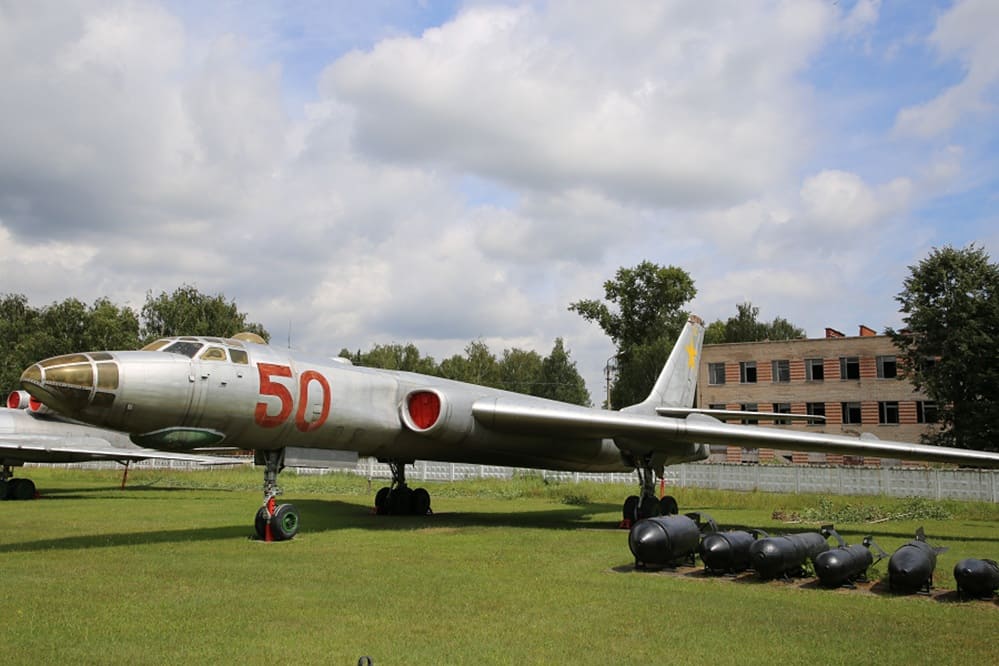
Perhaps the most obvious of all is the Tupolev Tu-16 Badger. The original Tu-16 bomber of the 1950s featured a heavily glazed forward station, with a small radar fairing under its nose. Modern Western technical reporting described the Badger-A as having a seven-man crew, a glazed nose, and a maximum internal bomb load of about 9,000 kg. That maximum bomb load gave it a range of about 4,800 km according to published Western estimates.
With a normal bomb load of 3,000 kg, estimates of range increased to about 6,400 km, with a cruising speed of around 770 km/h. “It’s crucial where the radar is located. Soviet engineers managed to place the ground-mapping radar under the forward fuselage instead of sticking a big antenna in the nose, which would have obstructed the navigator’s field of vision. The bombardier could still see, but radar provided another means of targeting.
Radar Eventually Killed the Glass Nose
Very few modern combat aircraft have glazed noses, and there is an important electromagnetic engineering reason for their absence. A powerful radar usually requires an antenna that has a large forward field of view. Usually the most aerodynamically convenient place is the very extreme nose. The radar signals do not efficiently pass through structural material. Modern aircraft therefore use a dielectric radome designed specially for the purpose. The materials, thickness, and electromagnetic properties are chosen to minimize attenuation and distortion at the radar operating frequencies.
So the large forward radar and the transparent bombardier’s compartment are competing for the same space. Though Radar won, it became more important than visual bombing. One such example was the development of the Tu-16. Missile-carrying and reconnaissance versions sometimes replaced the classic glazed nose with a much larger radar installation. For example, the Tu-16K-10 had a large radome in the nose instead of the original glazing, as noted by Western intelligence at the time. It was not superficial. This modification was a whole new manner of attack on the target.
Why Western Aircraft Changed Earlier
Western bombers followed a similar technological trajectory. However, electronic navigation and bombing gradually replaced direct optical sighting. The B-52 was especially critical. During the Vietnam War, B-52s flew missions with radar navigators who never saw the target with their own eyes. Radar and computer-generated bombing data could tell the weapon to release even if there were clouds, darkness, or poor visibility. Subsequent operations elaborated on this idea.
The B-52 had inertial navigation, terrain-avoidance radar, electro-optical systems, and eventually GPS-guided precision weapons. Later versions may have targeted pods equipped with infrared and electro-optical sensors. In 2003, a Litening II targeting pod was employed operationally by a B-52 to designate targets for laser-guided bombs. The bombardier did not need the big window anymore. His “window” was a radar screen, an infrared picture, or a digital targeting screen.

The West Had Glass-Nosed Jets Too
Therefore, the so-called Soviet-Western divide is a spurious one. The English Electric Canberra of England is a particularly relevant counterexample. The first bomber versions were modern jet aircraft but employed many old-school navigator techniques. In RAF history, Canberra crews were still using mechanical air plotting, radio compass bearings, and beacon navigation. The optical distortion of the cockpit glazing limited celestial observations. Attempts to make celestial observations faced hindrances.
Likewise, many US bombers kept optical bombing gear as they moved to radar navigation. The real difference was thus chronological, not ideological: the optical era mixed with the optical/radar era, the radar/inertial era, and the electro-optical/GPS/networked era. Soviet aircraft retained the mixed stage on several famous designs for a very long time.
There Was Also a Human-Factor Advantage
A navigator looking straight out has something early radar could not do very well: contextual awareness. Rivers, coastlines, railroad junctions, bridges, mountain ranges, and towns may provide immediate confirmation of position. The Soviet emphasis in the air force was on the specialist navigator. A declassified 1968 U.S. intelligence assessment pointed to the extensive navigation training given to Soviet aviation units and the importance Soviet doctrine gave to the accomplishment of operational objectives in adverse conditions.
So visual navigation was still a viable option. That was especially important in the case of expected electronic warfare. In a NATO-Warsaw Pact war, both sides expected to jam heavily navigation aids and radar systems. Of course the weather, darkness, smoke, and camouflage could defeat an optical system, but it could not be electronically jammed in the traditional way. So the glazed nose was a crude but very hard-to-jam sensor: the human eyeball.

Why Soviet Supersonic Bombers Abandoned It
- The faster it went, the less attractive the arrangement.
- Big windows have all sorts of engineering penalties: Additional framing and reinforcement Discontinuities in the structure of the pressure vessel Optical distortion sealing problems
- Thermal stresses: greater manufacturing complexity
- Aerodynamic limitations: At high subsonic speeds, these penalties could be absorbed.
- They were harder to justify sustained supersonic speeds.
- Later Soviet planes followed the same design approach as Western ones.
For example, the Tu-22M Backfire replaced the greenhouse bombardier compartment of the Tu-16 with a streamlined, pointed-forward fuselage and relatively small crew windows. Western descriptions stressed the narrow nose, small windows, and the focus on reducing transonic and supersonic drag. By then, radar, inertial navigation, and missile guidance had taken over the functions that glass had once performed.
Glass Noses Were Not Backward Technology
For example, the Soviet glazed nose can be interpreted as a human-machine interface of a previous generation of weapons delivery technology. The Il-28 and Tu-16 were designed in a time when optical bombsights still had some military utility, radar was not as accurate as it is today, electronic reliability was not perfect, and navigators routinely did calculations that are now done automatically by mission computers. The glass nose gave the navigator a passive, virtually unjammable means of looking at terrain and targets, independent of any active system. Western aircraft had used the very same principle.
The difference was that Western designers put more and more powerful radar systems in the nose and moved navigation, terrain avoidance, and weapon aiming to electronic displays. Soviet designers held on to the optical navigator station on several aircraft families until sophisticated radar, high-speed aerodynamic requirements, and missile warfare made it unnecessary. So the famous Soviet glass nose wasn’t just for show, nor was it just old technology. It was the last remnant of an age when one of the bomber’s most important sensors was a trained human looking out a window.
References
- Central Intelligence Agency, Soviet Capabilities for an Attack on the United States—a declassified assessment discussing Soviet optical and blind-bombing capabilities and estimated bombing accuracy. CIA
- Air Force Magazine, technical survey of Soviet aerospace weapons—Tu-16 configurations, glazed nose, radar arrangements, and bomber variants. Air & Space Forces Magazine
- Royal Air Force Historical Society / RAF Museum, The Canberra in the RAF—detailed discussion of Canberra navigation techniques and optical/navigation limitations. RAF Museum
- Air & Space Forces Magazine, Navigation: From Dead Reckoning to Navstar GPS—development of radar bombing, computer navigation, and all-weather B-52 operations. Air & Space Forces Magazine
About the Author