

Western Firms Fuel Russia’s Su-57, Despite Sanctions
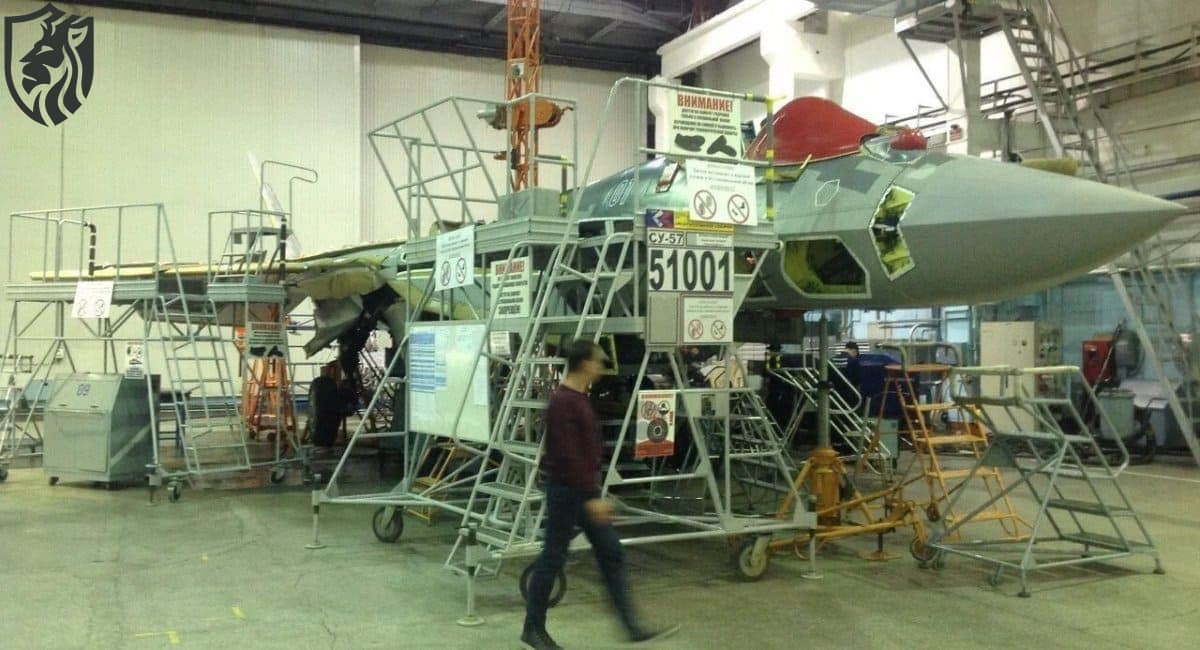
Despite Moscow’s assertions of defense self-sufficiency, the Su-57 fighter jet is dependent on Western technology. Open-source intelligence (OSINT) investigations increasingly expose how Russia continues manufacturing cutting-edge combat aircraft despite heavy international sanctions. Frontelligence Insight researchers examined export data, company records, and procurement trails. According to their findings, Russian aerospace companies continue to use indirect supply networks to obtain essential foreign components. The Su-57 program thus demonstrates the limitations of contemporary export regulations.
Sanctions Drive Adaptation
After Russia invaded Ukraine in 2022, Western sanctions hit the country’s defense sector, but Russian industry quickly adjusted. The Su-57 fighter jet uses a lot of Western technology that comes from civilian markets and is classified as dual-use equipment. For instance, Mikropribor, a major Russian electronics company, got special equipment for automated calibration workstations.
These systems help test MPPU-50 modules that are used in radar and satellite communications. Additionally, procurement records show that Russia bought a Siemens KLE 360 precision CNC machine in July 2022. The equipment made in Germany makes production processes very precise. Therefore, despite Russia’s political isolation, its manufacturers continue to rely on Western industrial tools.
Why MPPU-50 Matters
The Su-57 fighter jet uses some Western technology because modern fighters need very advanced communication calibration systems. The MPPU-50 works in the L-band and X-band frequency ranges, which are necessary for data links and radar synchronization. In modern air combat, reliable communication is still essential. For sensor fusion, target tracking, and working together with ground or air assets, pilots need a connection that doesn’t stop. Because of this, even small calibration systems are now mission-critical parts. Advanced avionics performance quickly goes down without accurate testing equipment.
Western Chips in Russian Fighters
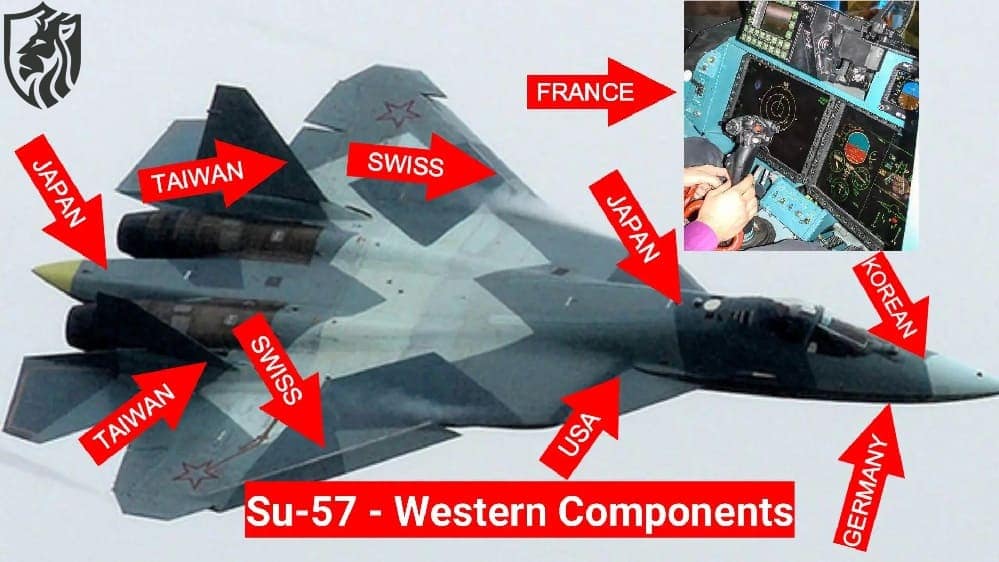
Further research shows that Western technology is built directly into the Su-57 fighter jet’s avionics hardware. Microchips from the West keep showing up in Russian military aircraft systems. Parts from companies like Texas Instruments, Analog Devices, and Japan’s Murata Manufacturing are said to help with radar processing, signal amplification, and flight electronics.
For example, Murata’s Radisol radiation-interference solution makes antennas work better by cutting down on electromagnetic interference. Foreign subsystems, such as WA36 attenuators, EA-PS 3150 power supplies, and PLR7 60-12 power systems, also help with navigation, missile guidance, and electronic warfare. These imported technologies show how deeply globalized defense supply chains still are.
Su-57 Supply Chain: Western Companies Involved
| Company name | Component Provided | Country of Origin |
|---|---|---|
| Mikropribor | Acquired machinery for automated workstations to calibrate/test MPPU-50 devices | Russia |
| Siemens | Siemens KLE 360 (German high-precision CNC machine) | Germany |
| Texas Instruments | Microelectronics used in Su-57 avionics/radar | United States |
| Analogue Devices | Microelectronics used in Su-57 avionics/radar | United States |
| Murata Manufacturing | Radisol (radiation interference solution) improving antenna performance | Japan |
| Krasnoe Znamya Plant | Partner route used to obtain equipment for MPPU-50 testing | Russia |
| Almaz-Antey | Parent group of Krasnoe Znamya Plant (corporate link) | Russia (implied) |
| ARC Group | Purchased Thales/Safran supplies under Kazakh cover and redirected them | Kazakhstan |
| Thales | Military supplies acquired via ARC Group | France |
| Safran | Military supplies acquired via ARC Group | France |
| iFact | Investigative outlet exposing Georgia route (not a supplier) | Georgia |
Sanctions Evasion Networks
Due to limited direct imports, Russian companies are increasingly relying on indirect procurement channels. The Su-57 fighter jet relies on Western technology obtained through foreign partnerships and purchases labeled as civilian. In August 2022, Mikropribor worked with the Krasnoe Znamya Plant, which is part of the Almaz-Antey defense group, to get equipment that was officially meant for non-military uses.
But investigators think these tools helped with MPPU-50 testing for military systems. At the same time, the Kazakhstan-based ARC Group is said to have bought equipment from French defense companies Thales and Safran under the guise of civilian aviation. Reports say that these things helped with the integration of Russian Su-30SM aircraft in the end. Engineers who have trained abroad also continue to bring technical knowledge back to domestic manufacturing ecosystems. Consequently, human expertise continues to be a conduit through which foreign technology impacts Russian aerospace manufacturing.
Georgia as a Transit Hub
Georgia’s iFact did some journalistic research and found another important link in the supply chain. Evidence shows that the Su-57 fighter jet depends on Western technology that moves through regional logistics hubs with little enforcement oversight. Undercover reporters pretending to be couriers found that sending drones, processors, and electronic parts out of Georgia was surprisingly easy. Even though many exports are still legally unclear, loopholes let technology keep flowing to Russia’s defense industry. The situation makes it challenging to impose penalties on commercial networks that are adaptable and cross multiple jurisdictions.
Strategic Ripple Effects
Russia’s ongoing production of fighter jets shows that international sanctions aren’t very effective. The Su-57 fighter jet relies on Western technology, contradicting claims that Russia built the aircraft entirely at home. Modern military platforms rely on electronics ecosystems that work together around the world. Even countries with advanced technology have trouble quickly replacing specialized microelectronics. Therefore, sanctions often slow programs rather than halt them entirely. This interconnected world also brings up moral problems. When dual-use products end up in the wrong hands through secondary markets, Western manufacturers may unintentionally help their enemies’ military capabilities.
Limits of Economic Warfare
The continued production of Su-57 aircraft shows how difficult it is to keep technology contained. The Su-57 fighter jet uses Western technology, but enforcement systems can’t keep track of all the parts that move around the world. To make export controls stronger, we probably need better end-user verification, stricter monitoring of intermediary states, and more cooperation between governments and businesses. Without coordinated action, advanced supply chain adaptation will continue to make sanctions less effective.
Conclusion
The Su-57 story shows more than just clever buying; it also shows how modern defense industrialization really works. Advanced fighters are no longer produced in isolated national ecosystems. Instead, they demonstrate the global connectivity of technologies, knowledge bases, and logistics networks. Russia’s ability to keep making fighter jets even though it is under sanctions shows how strong its industries are and how weak its export systems are. For defense analysts, the lesson is still clear: it’s much harder to control the flow of technology than it is to limit financial transactions or energy exports.
References
- https://frontelligence.org
- https://www.reuters.com/world/europe
- https://www.defensenewstoday.info
- https://www.iFact.ge
About the Author