
USS Gerald R. Ford as Floating Power Plant
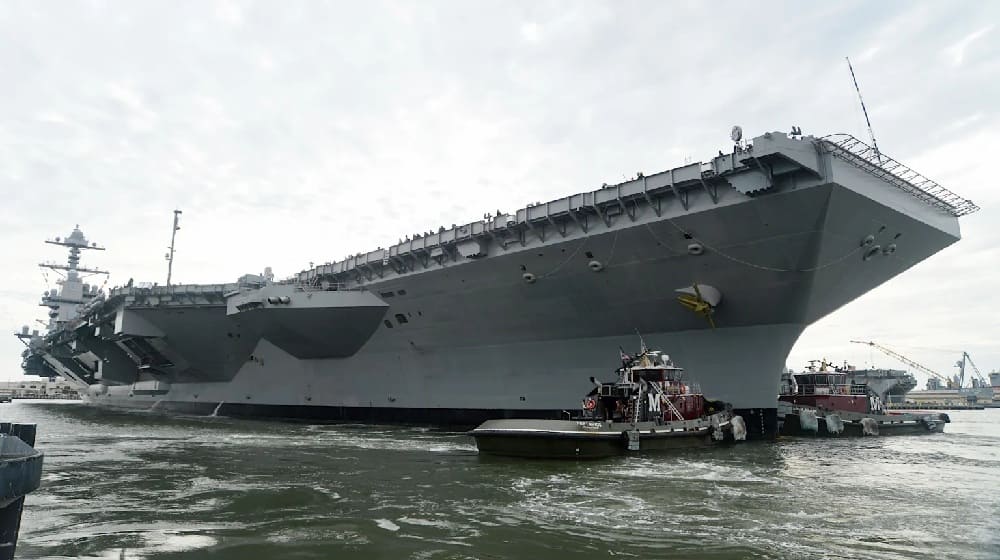
The U.S. Navy is gearing up to test the USS Gerald R. Ford this summer. The aircraft carrier will send power from its onboard plant to Naval Station Norfolk in a demonstration of how a nuclear-powered warship could provide support to shore-based infrastructure during emergencies or unexpected disruptions. The trial shows that the USS Gerald R. Ford can do much more than just be an aircraft carrier. It also demonstrates how large naval platforms can operate as floating power stations, providing resilience and operational continuity far beyond traditional shipbuilding considerations.
Norfolk Power Test
The U.S. Navy plans to use an aircraft carrier to help power Naval Station Norfolk, Virginia, Acting Secretary of the Navy Hung Cao told lawmakers on May 14. The Navy later explained that the demonstration will test a Ford-class carrier’s ability to transmit electricity from the ship’s onboard power plant to shore-based infrastructure designed to accept it. Officials see the test as part of a broader effort to build operational resilience and ensure mission continuity in the face of disruptions. At the heart of the trial is a crucial defence problem: how can the Navy continue essential land-based operations when conventional power sources are compromised or unavailable?
Big bases, like Norfolk, need power from the electricity grid, and they need substations and cables and fuel to keep everything running. But there are many things that can go wrong, like cyberattacks, sabotage, drones, missiles, or big storms that can stop the power from working. If the power goes out at a naval base, it can cause many problems rapidly, like command centres and repair shops and places where ships can get fuel and communicate with each other. The idea of using the USS Gerald R. Ford as a floating power plant gives the people in charge another option to rely on.
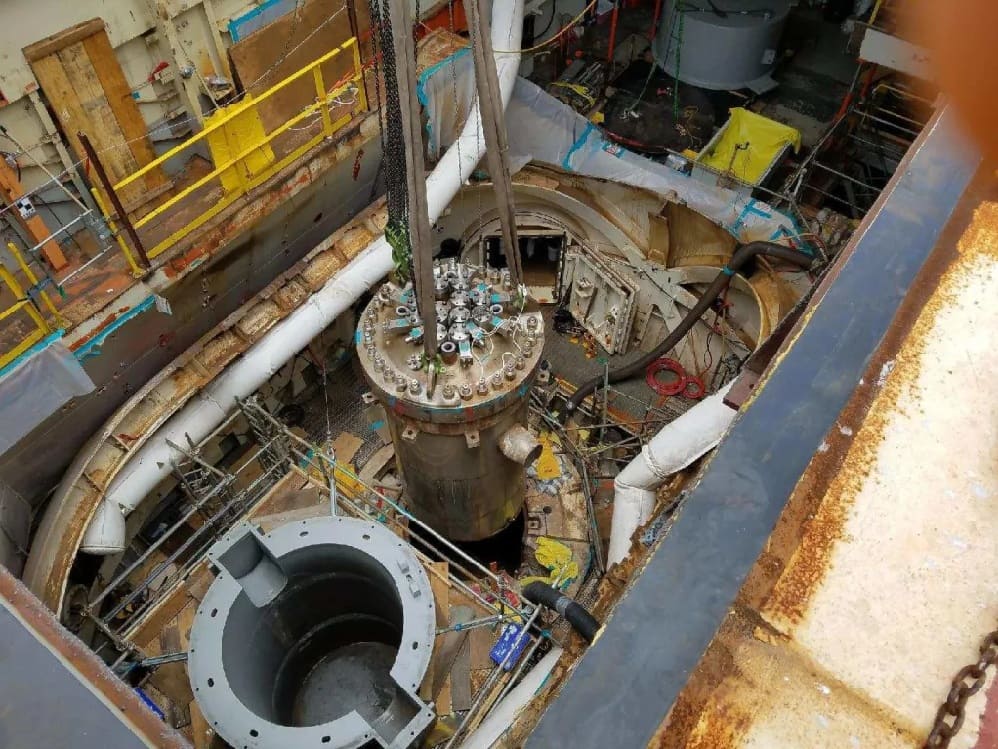
A1B Reactor Power
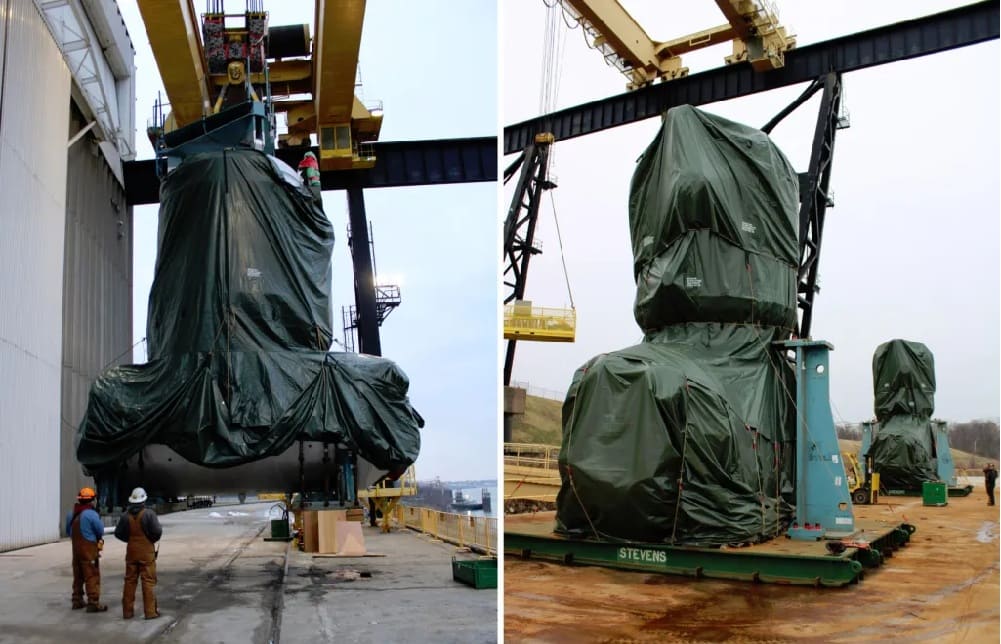
USS Gerald R. Ford has two A1B reactors. The Navy does not share how much power they produce. Some people estimate that each reactor produces around 700 MWt. So the ship has 1,400 MWt of power. The A1B reactors give more power than the older A4W reactors used on Nimitz-class carriers. They offer 25% more power. A nuclear power plant on a ship is different from one in a city. A city plant provides power to homes and businesses. A ship’s plant powers systems.
These include air operations, medical support, security systems, and command networks. During a crisis, having power matters. A military base may not need to power every office light. It needs to power the systems that are crucial to its operations. The ship’s power supports selected mission loads. The A1B reactors are used on the USS Gerald R. Ford. The A1B reactors provide power to the ship. The ship uses the power for its operations.
Ford’s Deployment Context
The timing is critical. The USS Gerald R. Ford came back to Norfolk on 16 May 2026 after being away for a long time. 326 Days. The U.S. Fleet Forces said the USS Gerald R. Ford sailed many miles. Than 57,713 nautical miles. It did 23 replenishments at sea. It helped with more than 5,760 flight hours and 12,200 launches.
These numbers show why the USS Gerald R. Ford matters much. The USS Gerald R. Ford is not something that provides us power. It is an important part of our strategy. If we want to use the USS Gerald R. Ford as a power plant on land, we have to ensure it does not hurt our ability to use it as a carrier. The U.S. Navy only has 11 aircraft carriers, like the USS Gerald R. Ford. We need to ensure they are available at all times.
Old Ship-to-Shore Power
The Navy has used ships as emergency power plants before. For example, the USS Lexington was used to supply electricity to Tacoma, Washington, in December 1929. This event was during a time when there was a problem with the hydroelectric power. The USS Lexington was connected to the city grid with heavy cables.
For a month, Tacoma received assistance from the USS Lexington. The Navy also used a ship called the STURGIS, which was a kind of ship that made electricity. The STURGIS was a ship that the Navy used during the Second World War. It was changed so it could hold a special kind of reactor. This reactor was called the MH-1A. The MH-1A reactor was used to make electricity in the Panama Canal Zone from 1968 to 1976. The reactor made a lot of electricity, 10 MWe. It was used for both military and civilian needs.
The Navy and the Royal Navy also used ships called Buckley-class destroyer escorts as floating power plants during the Second World War. One example is the USS Donnell. After it was damaged in a battle, the USS Donnell served as a power plant. It was too expensive to repair. So what Ford is doing now is not an idea; it is just an updated version of something that has been done before.
In the past, the Navy has used ships as power plants. Ford is just trying to make this idea work with new technology. The Navy has used the USS Lexington and the STURGIS and the USS Donnell as power plants. Now Ford is trying to do the same thing.
Disaster Relief Power
The USS Gerald R. Ford is not just useful in combat. The USS Gerald R. Ford can also be helpful after disasters like hurricanes or earthquakes or floods. When these things happen, people usually need electricity. Hospitals and water plants and shelters and communications systems and recovery centres all need the USS Gerald R.
Ford to give them power. Cao also discussed water that’s safe to drink. The USS Gerald R. Ford can produce a large amount of water while it is at sea. So when the USS Gerald R. Ford is helping people after a disaster, it can give them water and electricity. Such efforts will not fix a drought. The USS Gerald R. Ford can help people who are providing emergency services during the first few days when they need it the most.
Port Vulnerability
The idea of a carrier at sea has dangers. A carrier that can move around in the water uses that movement to stay safe. When a carrier ties up to a dock, it loses a lot of that safety. Things like power cables and switches also become targets for enemies to attack. An enemy could attack the carrier itself, the link to the shore, or even the place where the power is sent.
So protecting the carrier would become critical. The Navy would need layers of protection, including systems to protect against air attacks and drones, security for the harbour against cyberattacks, and backup systems in case something goes wrong. The people working on the carrier would also need to have steps to follow for things like keeping the nuclear power safe, moving electricity around, and disconnecting everything in an emergency.
Carrier Availability Challenge
The United States Navy cannot easily take a supercarrier out of the rotation. Supercarriers like these provide a range of capabilities, including power projection, air defence, strike capacity, and deterrence. If the Navy uses a supercarrier for something like providing power, it could limit what the Navy can do. This problem is getting worse because the Navy decided to keep the USS Nimitz in service until 2027 while waiting for the new USS John F. Kennedy to be ready. This decision shows that the Navy does not have a lot of supercarriers to work with.
The Navy can still use supercarriers in ways without disrupting things too much. If there is a national emergency, the Navy might consider things differently. For example, if the city of Norfolk loses power, a supercarrier that is sitting in the port could become the option for getting power back quickly. The supercarrier would be a choice because it can produce a lot of power. The Navy might use the supercarrier to help the people in Norfolk, which would be a significant action for the United States Navy and its supercarriers, such as the USS Nimitz and the USS John F. Kennedy.
SMRs in the Strategy
The carrier test also happens alongside the U.S. military’s work on modular reactors and microreactors. Project Pele, led by the Department of Defence, aims to demonstrate that a transportable reactor can produce between one and five megawatts of electricity. The goal here is to power remote and difficult-to-reach areas.
Ford and small modular reactors solve issues. A microreactor can power a fixed place for years. A carrier can move to where a crisis is happening. Together they prove that having a supply of energy has become a key need for the military. The military needs energy resilience. Small modular reactors and carriers provide that. For more naval context, see Defense News Today’s Navy coverage and Strategic defense coverage.
Floating Power Models
The idea of floating power plants is critical everywhere in the world. Russia has a floating nuclear power plant called Akademik Lomonosov. On the other hand, Turkey has a company called Karpowership that makes non-nuclear power ships to generate electricity for people to use. Samsung Heavy Industries has also thought about making floating nuclear power stations. All these examples show that making electricity on water is becoming a believable idea.
When we talk about using this technology for the military, it gets considerably harder. A system for the Navy has to be able to withstand an attack, keep the power safe, work with secret bases, and be able to move around when told to. This is what makes the test that Ford did really useful from a practical point of view. Ford’s test is important because it helps us see if floating power generation can work for the Navy. The Navy needs floating power generation to be safe and strong. Ford’s test is an important step toward making that happen.
Strategic Assessment
The USS Gerald R. Ford is being tested to see if it can be used as a floating power plant. This test does not mean that every carrier will become a utility station. It will not replace things like grids, diesel generators, batteries, microgrids, or future small modular reactors. It could show that a nuclear carrier can help with critical shore loads when the normal power is not working. For people who plan for defence, the point is straightforward.
In war, the enemy targets the things that are needed to keep an army working, like logistics, power, ports, and command networks. If a base loses electricity, it can lose its combat power quickly. If the USS Gerald R. Ford can safely export power, then the Navy will have a useful tool for emergencies. In a war, the USS Gerald R. Ford could help keep a major installation running. In a disaster, the USS Gerald R. Ford could help restore essential services more quickly.
References
- https://www.twz.com/nuclear/supercarrier-uss-gerald-r-ford-to-act-as-floating-nuclear-power-plant-for-facilities-on-land
- https://www.usff.navy.mil/Press-Room/News-Stories/Article/4494275/worlds-largest-aircraft-carrier-strike-group-return-from-historic-11-month-depl/
- https://www.historylink.org/File/5113
- https://www.nab.usace.army.mil/Missions/Environmental/Sturgis/
- https://www.iaea.org/newscenter/news/what-are-small-modular-reactors-smrs
About the Author