

QUAD Without India — Philippines In, What Changes?
Overview
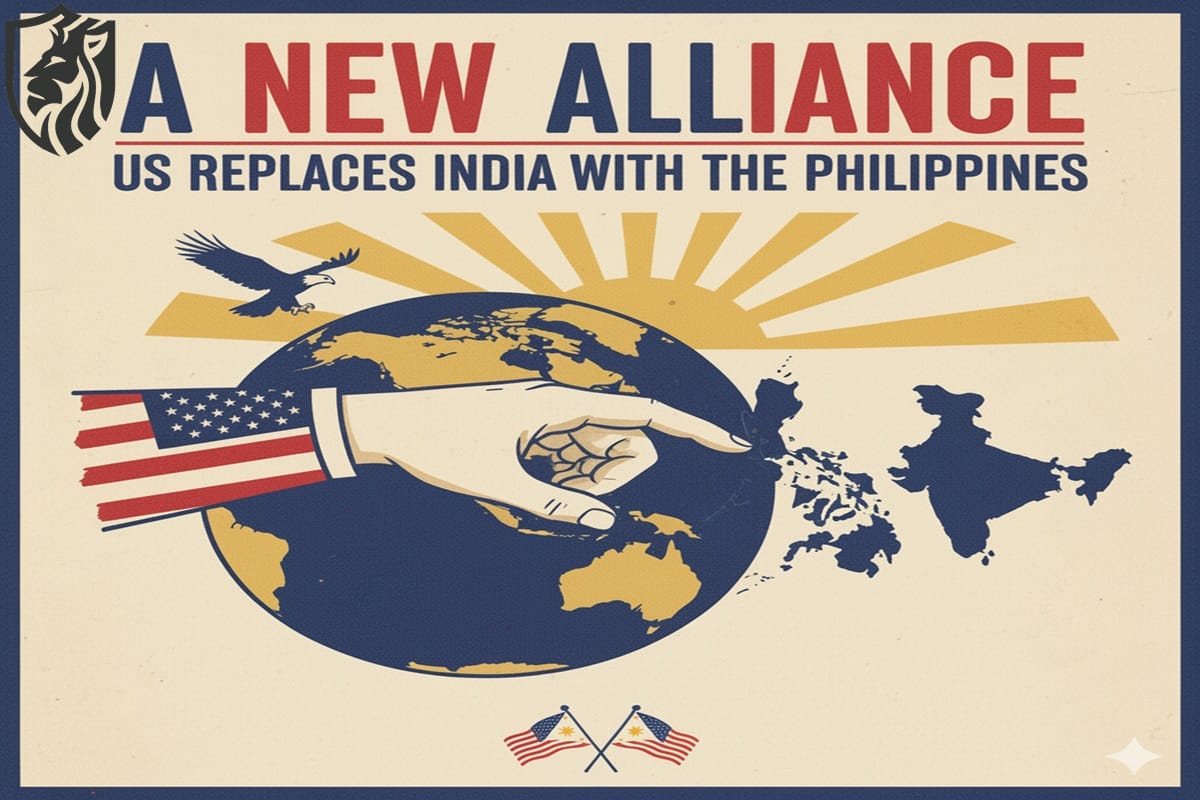
This thought experiment, titled “QUAD without India and with the Philippines“, examines how the balance of power in the Indo-Pacific changes if New Delhi reduces its involvement while Manila increases its role. Although unlikely as a clean swap, the scenario clarifies what each partner contributes, where deterrence tightens, and where gaps appear. It also helps planners stress-test maritime operations, legal messaging, and logistics under pressure.
India Might Step Back
India’s QUAD posture blends strategic autonomy with selective alignment. A more serious border crisis, issues with sanctions, or the belief that being part of small groups limits their options could lead New Delhi to prefer quieter partnerships and coalitions in the Indian Ocean. If that happens, QUAD without India and the Philippines would focus more on sea-related issues, while India continues to influence events from the Arabian Sea to the Malacca Strait through agreements on shipping, disaster response exercises, and specific technology partnerships.
India’s Superpower Dream Stumbles
Operation Sindoor, which felt like a reality check, shook Western confidence in India’s military might. A rival, seven times smaller, outthought, outmanoeuvred, and quietly exposed soft spots in India’s grand story. Supply lines faltered, headlines soured, and investors flinched. Ambition remains, but timelines slip. Pride hurts most; lessons, if absorbed, can still turn embarrassment into renewal and credibility.
Philippines Fits the Front Line
Manila occupies a pivotal position in the South China Sea. Geography, coastguard praxis, and the 2016 UNCLOS arbitral award give it leverage. Therefore, a QUAD seat would amplify:
- Operational presence: Regular law-enforcement patrols, evidence capture, and transparency operations.
- Maritime domain awareness (MDA): Fusion of AIS, radar, satellite, and acoustic feeds for faster cueing.
- Access and logistics: EDCA sites enable pre-positioning, rapid repair, and resilient comms.
However, Manila must schedule modernisation budgets, protect trade, and mitigate coercion. Consequently, capacity-building should prioritise constabulary tonnage, C4ISR hardening, and distributed sustainability.

The Strategic Centre of Gravity Shifts
With the exclusion of India and the Philippines from QUAD, the grouping shifts focus from continental to maritime operations:
- Indian Ocean depth narrows. India’s absence reduces anti-submarine coverage and chokepoint assurance in the west. Mitigation demands stronger Australia–France–India–Ocean Island State links and UK/French presence.
- Typhoons rise in the west Pacific. Exercises concentrate on interdiction, multilateral patrol patterns, and the documentation of incidents.
- The narrative tightens. Manila’s legal standing strengthens rules-based messaging, although ASEAN unity management becomes vital.
Risks vs Trade-offs
Every redesign creates seams. A perceived India “downgrade” could slow sensitive co-production timelines and tempt grey-zone tests in the eastern Indian Ocean. Meanwhile, elevating Manila invites cyber, economic, and lawfare pressure; thus, partners need ready-to-use economic backstops, cyber response teams, and sanctions-evasion monitoring. Ultimately, credibility hinges on predictable membership; too much churn dilutes deterrence.
QUAD-Plus vs Not QUAD Swap
The most workable path is a QUAD-plus lattice. Keep India in core tech, supply chains, and Indian Ocean security while hard-wiring the Philippines into maritime workstreams. This structure preserves mass and adds frontline acuity. In practice, QUAD without India and the Philippines becomes a planning lens, not a policy blueprint.

Practical Workstreams to Priorities
- Coast Guard integration: Common procedures, shared evidence standards, and rapid transparency packages.
- Subsea resilience: Cable mapping, repair surge capacity, and route redundancy.
- Munitions and spares: Interoperable stocks, forward repair, and shared diagnostics.
- Information ops: coordinating the release of imagery and incident timelines to raise costs of coercion.
India still matters—Even Outside the QUAD Frame
Still India retains decisive weight. Its fleet, satellite capacity, shipbuilding, and Global South credibility all matter. Therefore, expect expanded Indo-Pacific Oceans Initiative pillars, more white-shipping agreements, and tight mini-lats on anti-piracy and HADR from the Mozambique Channel to the Andamans. In effect, India remains the Indian Ocean balancer while Manila sharpens western Pacific deterrence.
Conclusion
Please proceed with the drill while maintaining the core. QUAD without India and the Philippines clarifies complementary strengths: Indian Ocean depth versus frontline maritime leverage. The smarter design is layered—preserve the QUAD’s geometry, plug the Philippines into mission-centric cells, and build flanking coalitions that cover the seams. Redundancy, not rotation, is the real edge.
References
- https://defensenewstoday.info/category/space-cyber/
- https://defensenewstoday.info/category/industry-procurement/
- https://pca-cpa.org/en/cases/7/
- https://www.state.gov/quad/
About the Author