

US Navy South China Sea Salvage Race with China
US Navy salvage in South China Sea
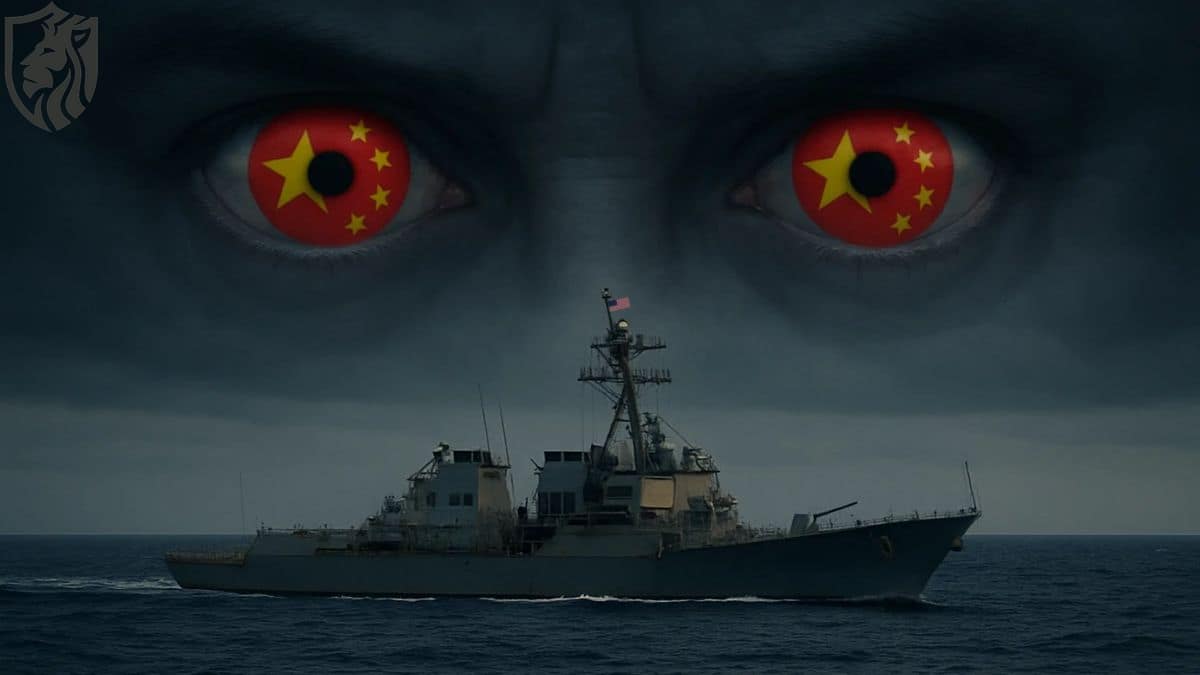
The US Navy is trying to pull a crashed aircraft from the floor of the South China Sea. It is more than a simple recovery story. The mission has become a live test of how Washington protects sensitive technology. Chinese forces watch closely in one of the world’s most contested waterways. Two aircraft went down within half an hour in the same operating area. The losses involved an F/A-18 Super Hornet and an MH-60 Seahawk helicopter.
They were flying from the carrier USS Nimitz during routine operations. All crew members survived, which removes the most immediate human tragedy. However, the wreckage itself has become the strategic prize. In this region, every incident carries heavy political significance. Therefore, the salvage mission now feels like a silent technological competition. It unfolds quietly beneath the ocean’s surface, far from public view.
What the US is trying to recover
The US is deploying the salvage ship USNS Salvor, a Safeguard-class vessel operated by Military Sealift Command, to the crash site. The ship can lift objects of up to 300 tonnes from the seabed, more than enough for the F/A-18, which has a maximum take-off weight of around 33 tonnes, and the MH-60, which weighs roughly 11 tonnes.
Navy officials have not disclosed the exact crash location or the current position of Salvor, which is unsurprising. Nevertheless, it is clear that the United States will not abandon advanced combat systems on the ocean floor in waters that China claims almost entirely.
US President Donald Trump has hinted that contaminated fuel may have contributed to the crashes, although the Navy has not published an official cause. Regardless of why the aircraft went down, the focus now revolves around what adversaries could learn from the wreckage.

Wreckage matters to China
Analysts point out that China has never had access to a crashed F/A-18 from a US carrier. For Beijing, gaining even partial access to an airframe and surviving avionics would be a significant intelligence win. It could reveal radar signatures, structural design choices, materials, and elements of electronic warfare architecture.
China fields its own carrier-borne fighter, the J-15T, which is widely considered less advanced than the US Navy’s Super Hornet. If Beijing obtained pieces of a crashed jet, engineers could benchmark Chinese designs against US standards and adjust tactics, sensors, or countermeasures accordingly. That is one reason why the US Navy trying to pull crashed aircraft from the bottom of the South China Sea has implications that go far beyond a simple accident report.
The MH-60 Seahawk is equally sensitive. It carries anti-submarine warfare (ASW) systems that many observers judge more advanced than current Chinese equivalents. Hull-mounted and dipping sonar, sonobuoy interfaces, acoustic processing hardware, and data-link components would all be of high interest to any navy trying to close the ASW gap.
US replacing India with Philippines in QUAD
Singapore Multi-Role Combat Vessel — AI Mothership
US Military Buildup Near Venezuela — Signals, Options, and Risks
South China Sea: home-field advantage
From a pure geography perspective, China holds the advantage. Its bases and artificial islands across the South China Sea place ships, aircraft, and potentially salvage assets closer to the wreck site than US forces sailing in from Guam, Japan, or beyond. If Beijing chose to treat the incident as a race, it could move quickly and attempt to shadow, monitor, or even complicate American efforts.
Beijing already claims sovereignty over almost the entire waterway, despite an international tribunal ruling against those claims in 2016. Over the past two decades, China has built runways, radars, missile batteries, and hardened facilities on disputed reefs and islets. US freedom of navigation operations, carrier patrols, and bomber flights challenge those claims, but they also create a steady stream of close-contact military encounters.
In that context, any US Navy trying to pull crashed aircraft from the bottom of the South China Sea becomes part of a wider narrative: who really controls what happens in these waters, both on the surface and at depth?
Salvage operations
This is not the first time the US Navy has had to retrieve a high-value jet from deep water before rivals arrive. In 2022, an F-35C crashed while attempting to land on the USS Carl Vinson. The aircraft sank to a depth of about 3,700 metres. A special recovery team eventually hauled the fighter to the surface using a complex rig, preventing its potential exploitation by China or Russia.
That successful recovery demonstrated that the US can execute deep-ocean salvage under difficult conditions. However, every operation is unique. Bathymetry, currents, weather, and the presence of foreign naval or coastguard units all affect timelines and risk. In the South China Sea, those variables sit on top of an already tense strategic backdrop.
For readers wanting a broader context of carrier operations in contested waters, Defence News Today has previously examined US and Chinese naval manoeuvres in the South China Sea and regional naval modernisation trends.

China and diplomatic cover
Officially, Chinese diplomats have offered “humanitarian assistance” if needed, framing the crashes as the result of American military activities near Chinese waters. At the same time, Beijing continues to argue that frequent US naval and air patrols are the root cause of instability in the region.
This dual message is familiar. On one hand, China signals that it is a responsible actor willing to help in emergencies. On the other, it uses incidents like this to reinforce its claim that US presence, not Chinese expansion, drives risk. For Washington, accepting Chinese “help” in a salvage operation that involves sensitive aircraft would be politically toxic and operationally unacceptable.
Strategic signals
Ultimately, the salvage effort is about far more than broken metal on the seabed. It indicates that the United States will go to extraordinary lengths to shield critical military technology. Washington also wants to deny rivals any chance to strip these machines for secrets and reverse-engineer them. Every crash in the South China Sea therefore becomes a quiet test of resolve, reach, and resilience.
US forces keep a steady presence to reassure allies and partners across the wider Indo-Pacific region. China, meanwhile, exploits geography, island bases, and coastguard fleets to press its version of control. The full story of this recovery will probably never reach the public record. Yet defence planners know that such episodes quietly chart the balance of power beneath these contested waters. The next major strategic contest may therefore unfold in silence, far below the waves we usually watch.
References
- https://www.defensenewstoday.info/air-power/us-china-carrier-operations-south-china-sea
- https://www.defensenewstoday.info/naval-forces/indo-pacific-fleet-modernisation
- https://www.navy.mil
- https://www.cnn.com
About the Author