
US LUCAS Drone — America’s Answer to the Shahed-136
US LUCAS Drone: A Shahed-Inspired Design
When analysts say the US copied the Shahed suicide drone and made LUCAS, they are describing a clear strategic shift, not a meme. Washington has embraced the very logic that made Iran’s Shahed-136 so disruptive: a cheap, expendable loitering munition that can be built in volume and fired in swarms.
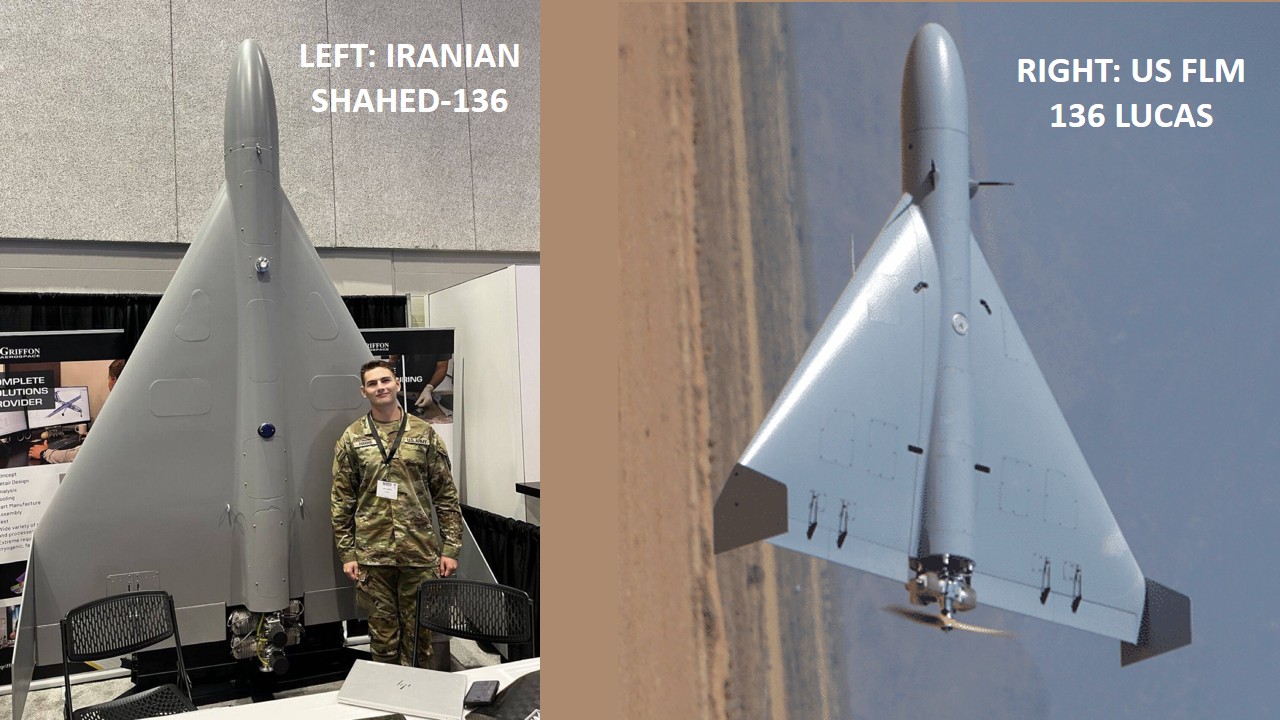
LUCAS, short for Low-Cost Uncrewed Combat Attack System, is a one-way attack drone built by US firm SpektreWorks and unveiled at the Pentagon in July 2025 as a functional analogue to the Shahed-136.
Shahed-136 to LUCAS: The US Adopts the Model
Iran’s Shahed-136 loitering munition has stalked Ukrainian and Middle Eastern skies since 2022, striking power plants, depots, and airbases at ranges of up to roughly 1,500–2,000 km, albeit with modest accuracy. Its impact came from numbers and cost, not elegance.
The US copied the Shahed suicide drone and made LUCAS in response to that reality. Instead of relying solely on million-dollar cruise missiles, Pentagon planners now want a mass-produced, attritable strike option that can saturate enemy air defenses in the same way Iran and Russia have done.
Design: Same Silhouette, Smarter Brain
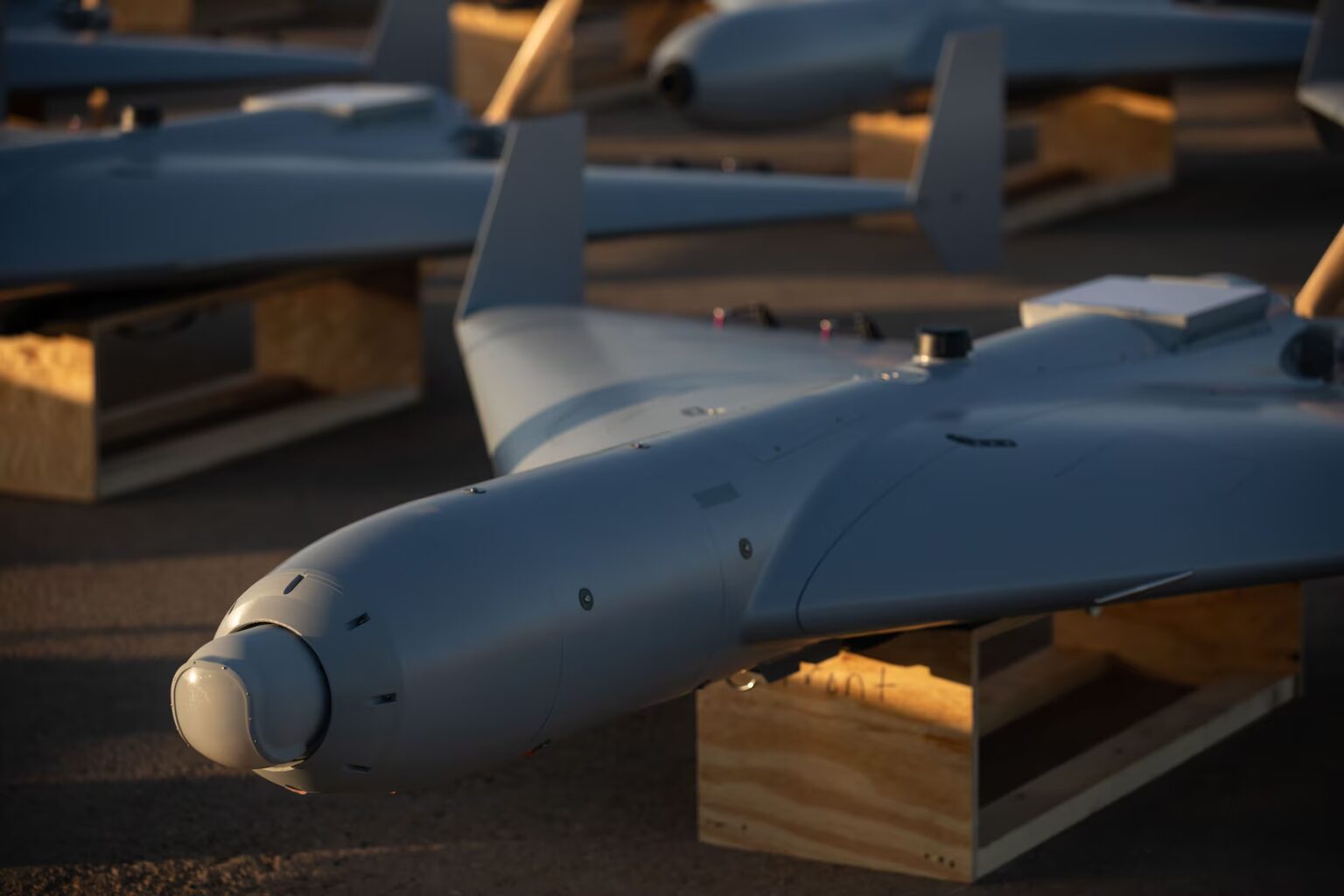
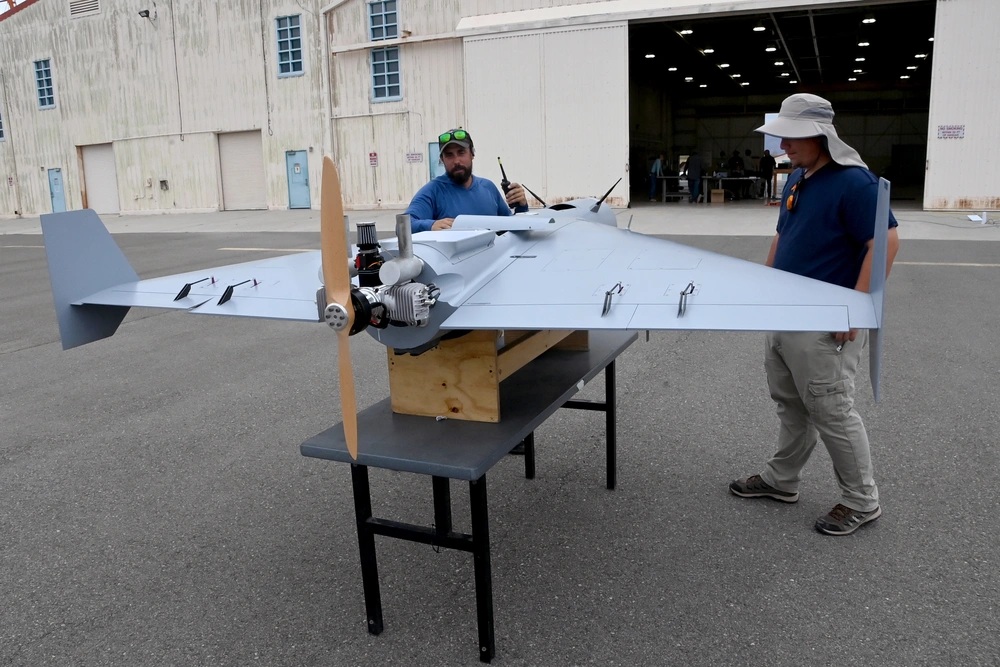
At first glance, LUCAS looks like a Shahed-style clone: a delta wing, fixed canards, and a rear pusher propeller mounted on a simple fuselage. That layout is no accident; it offers low manufacturing complexity, acceptable range, and stable flight at relatively low subsonic speeds.
Internally, however, LUCAS reflects American priorities. Open sources point to satellite datalinks, autonomous routing, and swarming features, allowing several drones to coordinate flight paths and deconflict targets in real time. Such capability is a step beyond many baseline Shahed-136 configurations, which typically rely on pre-programmed waypoints and cheaper navigation packages.
Shahed-136 vs LUCAS FLM-136 Specification
| Parameter | Shahed-136 (Geran-2) | LUCAS (FLM-136-based) |
|---|---|---|
| Type | Loitering munition / one-way attack (“suicide drone”) | Low-Cost Uncrewed Combat Attack System (one-way attack / threat emulator) |
| Origin | Iran; also produced in Russia as Geran-2 | United States (SpektreWorks, for US DoD / CENTCOM) |
| Length | ≈3.5 m | ≈3.0 m (based on FLM-136) |
| Wingspan | ≈2.5 m | ≈2.4–2.5 m (delta-wing) |
| Maximum take-off weight | ≈200 kg | ≈80–90 kg (FLM-136 baseline; LUCAS similar order) |
| Warhead/payload | Around 30–50 kg HE warhead (some reports up to ~90 kg) | Around 18 kg payload in FLM-136; exact LUCAS warhead not public |
| Range | Roughly 1,000–2,500 km (variant dependent) | Roughly 650–700 km (about 350 nmi), based on FLM-136 data |
| Speed (cruise/max) | About 180–185 km/h | Roughly 100–185 km/h (similar class to Shahed) |
| Endurance | Approximately 8–11.5 hours | Up to about 6 hours (FLM-136 baseline) |
| Guidance/navigation | Inertial navigation plus GNSS; pre-programmed waypoints; some upgraded versions with extra sensors/links | Shahed-style airframe with upgraded electronics, autonomous coordination, and beyond -line-of-sight datalinks reported |
| Engine | Small piston engine with two-blade pusher propeller | Small piston engine with pusher propeller (exact model not public) |
| Launch method | Rail or rack launch with rocket-assisted take-off from trucks or containers | Ground- or truck-mounted launch rails/trolleys on airstrips, adaptable to other platforms |
| Unit cost (approx.) | Widely estimated around USD 20,000–50,000 per drone | Roughly USD 35,000 per drone (public estimate) |
| Primary roles | Long-range strikes on fixed infrastructure and airbases; saturation attacks in swarms | Low-cost one-way strike, swarm employment, and realistic threat emulation for training |
| Operational users | Iran, Russia, and Iranian-aligned groups in Ukraine and the Middle East | US Central Command (Task Force Scorpion Strike) and potentially wider US use |
Performance and intended role
LUCAS is derived from the SpektreWorks FLM-136 target drone family, re-roled from “threat emulator” into a one-way attack system. US sources describe a range measured in hundreds of kilometers, endurance in the multi-hour bracket, and a warhead suitable for damaging radars, fuel farms, and soft-skinned vehicles.
Crucially, unit cost reportedly sits in the tens of thousands of dollars rather than hundreds of thousands. That price point enables the very doctrine implied when the US copied the Shahed suicide drone and made LUCAS: commanders can accept losses and still fire enough drones to tax hostile air defenses.
For additional context on how cheap but fast strike systems are reshaping deterrence, readers may want to revisit Defense News Today’s coverage of the first real image of Russia’s Zircon hypersonic missile, which sits at the opposite, high end of the cost spectrum.
Scorpion Strike: Theory Turned into Operations
In late 2025, US Central Command announced Task Force Scorpion Strike (TFSS), a dedicated one-way attack drone unit in the Middle East equipped with LUCAS. Official imagery shows rows of drones on a desert ramp, ready for deployment from an undisclosed base.
The purpose of TFSS is to challenge Iran and its allies, who have employed Shahed-type drones to exert pressure on US forces, Gulf infrastructure, and Israeli assets. Rather than responding solely with costly interceptors, Washington now has the ability to counter with LUCAS salvos, supported by superior ISR and electronic warfare.
Industrial Warfare and the Mathematics of Drones
The arrival of LUCAS confirms that loitering munitions are no longer niche tools for special operations; they are moving to the core of campaign-level planning. The war in Ukraine already showed that defenders can face mixed packages of cruise missiles and hundreds of one-way attack drones in a single night.
Therefore, the US shift matters far beyond the Middle East. If American industry scales LUCAS production, allies may adopt similar systems, while adversaries field their clones. The arithmetic of air defense becomes a permanent, high-tempo struggle between cheap attackers and increasingly stressed interceptors, radars, and jammers.
For a broader look at how airpower choices ripple through long wars, see Defense News Today’s analysis of Ukraine’s Gripen fighter roadmap, which explores how fighter selection interacts with missile and drone threats over time.
Escalation Risks and the New Normal
When the US copied the Shahed suicide drone and made LUCAS, it removed Tehran and Moscow’s monopoly on cheap, long-range kamikaze drones. That leveling may restore deterrence in some theaters; however, it also normalizes one-way attack drones as a standard, legitimate instrument of state power.
In the coming years, we should expect more actors—state and non-state—to reverse-engineer existing designs, mix them with commercial components, and flood the skies with attributable platforms. Air defense will no longer be episodic; it will be a constant, industrial-scale mission, from front-line brigades to national command centers. LUCAS is simply the latest, and perhaps most visible, sign that this future has already begun.
References
- https://www.twz.com/air/american-shahed-136-clones-sent-to-middle-east-have-satellite-datalinks-swarming-capabilities
- https://armyrecognition.com/news/army-news/2025/us-develops-lucas-kamikaze-drone-to-surpass-iranian-shahed-136-as-loitering-munitions-become-core-to-future-warfare
- https://defencesecurityasia.com/en/us-lucas-drone-reverse-engineered-shahed-136-iran-counter/
- https://www.defensenews.com/unmanned/2025/12/04/centcom-launches-new-suicide-drone-attack-force-in-middle-east/
About the Author