

US Army NGC2 Jam Test Proves EW Resilience
Modern formations do not just fight tanks and drones. They fight the spectrum. In that context, the US Army has started treating electronic warfare (EW) as a baseline condition, not a special scenario. That mindset drove the latest Fort Carson live-fire iteration of Next Generation Command and Control (NGC2), where soldiers deliberately jammed their links to see what broke—and what quietly kept working.
Army Stress-Tests Its Network
Ukraine has turned constant jamming into a daily reality. As a result, the Army now trains for “denied, degraded, intermittent, and limited” connectivity—because commanders still need to pass intent, cue fires, and move logistics when the cloud goes dark. Therefore, this NGC2 work focuses on two questions: how long can units keep fighting when links fail, and how fast can they reconnect when the interference stops?
Fort Carson: The Impact of Activating Jammers
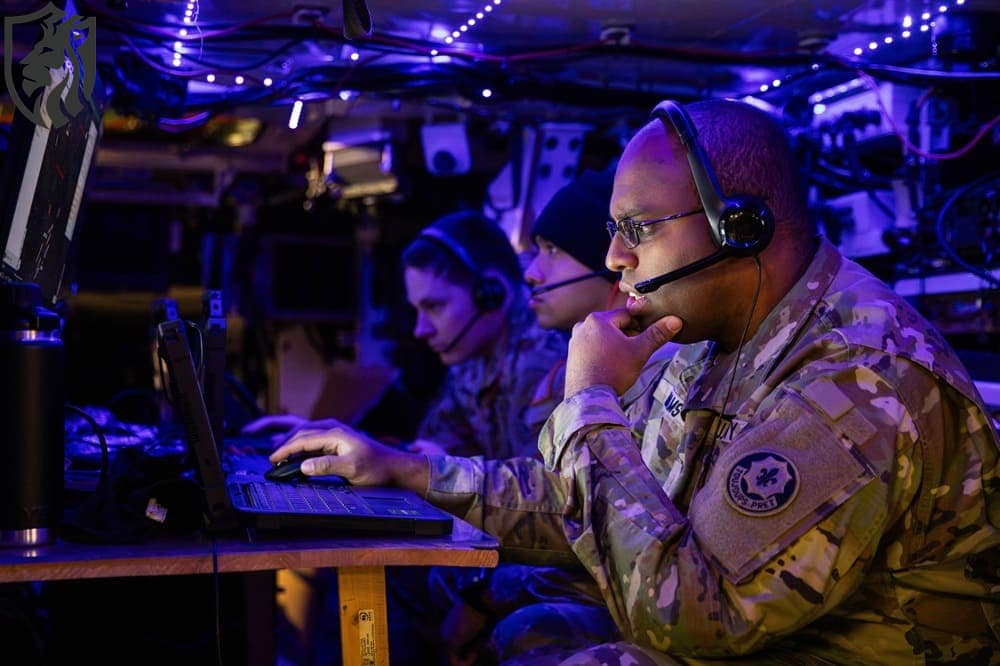
During the most recent Ivy Sting event at Fort Carson, Colorado, the Army’s 4th Infantry Division set out to pressure NGC2 with EW. Initially, the team struggled to apply any pressure to the system. Maj. Gen. Patrick Ellis said the network re-routed internally and effectively “healed itself,” so the division had to disable features to recreate the friction soldiers would feel in a real fight. That detail matters. A resilient system can hide failure modes until the worst moment. Consequently, the exercise team chased more realistic failure states rather than accepting a clean demo.
When Satellites Go Dark: Back to Radios
Once the test team tightened their controls, soldiers in the field lost their connection to satellite services. They did not pause the mission. Instead, they shifted to backups such as radio while they hunted the jamming source. After they located it, they eliminated the threat with a mortar strike and then began the reconnection drill.
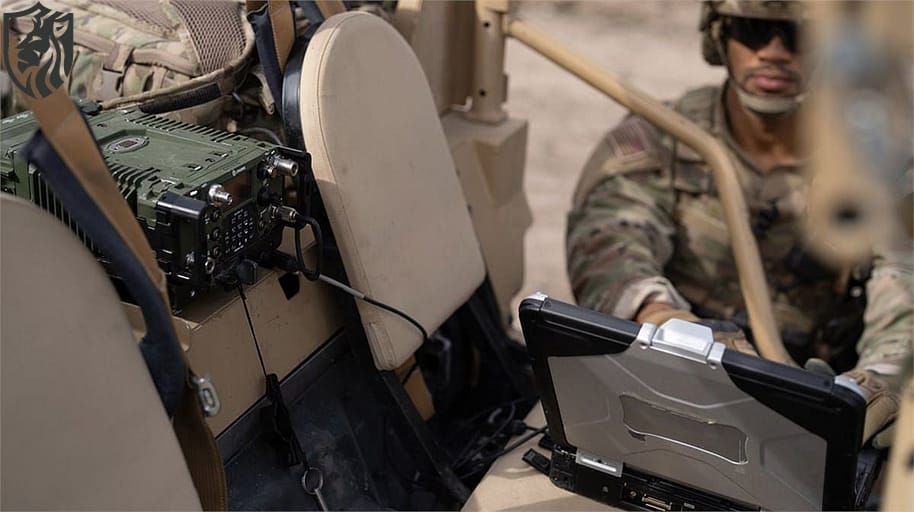
Lt. Col. Shawn Scott, who commands 4th Squadron, 10th Cavalry Regiment, 3rd Brigade Combat Team, described the reconnection as “quite seamless.” However, he also flagged a very real problem: retransmission management becomes harder in complex terrain, especially when dispersed elements need to relay traffic across distance and dead ground.
What DDIL Training Proves
Scott’s description of a “denied, degraded, intermittent, and limited” environment captures the point of the drill. The squadron lost access to the division cloud, yet it still tracked the fight and executed tasks independently. Then, once the simulated jamming ended, the unit restored connectivity upward to brigade and division—and watched data flow back down the chain again. In other words, NGC2 aims to support mission command even when the network behaves like a wounded organism: alive, unstable, and constantly adapting.
Cross-Service Sensor-to-Shooter Loop
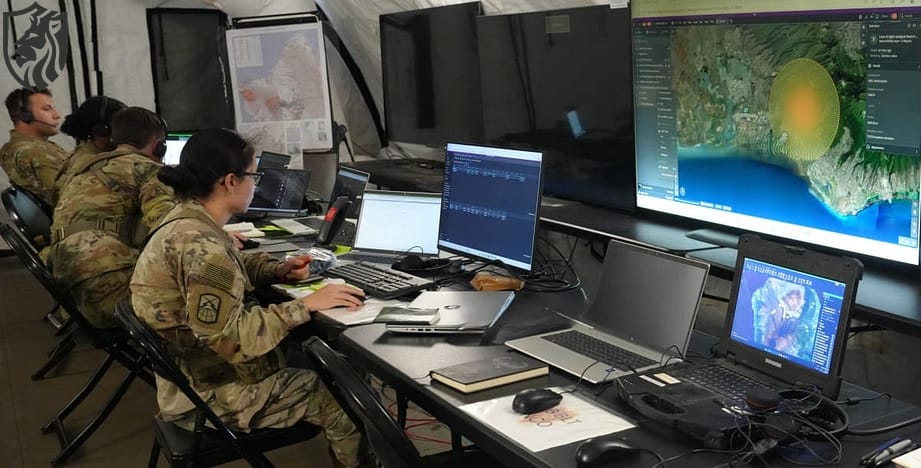
The Fort Carson event did not treat NGC2 as a chat app. It treated it as a kill chain and a logistics engine. The Army fired 155mm rounds from an M777 howitzer at a Marine-provided target, and it pushed strike data back into Marine Corps systems. Meanwhile, 20 different types of sensors fed information into NGC2, including drones, EW systems, and Stryker vehicles. The combination of sensors and shooters mirrors the current trend: commanders seek a unified operational picture that integrates reconnaissance, targeting, deconfliction, sustainment, and medical reporting, eliminating the need for manual stitching.
The Commercial Build: Why It Matters
Joe Welch, who oversees Army command-and-control and counter-communications efforts, emphasized that most NGC2 components use off-the-shelf tech and standard commercial software practices rather than bespoke, military-only stacks. That approach enables rapid iteration. Moreover, the Army says it implements soldier feedback quickly—sometimes overnight or within days—so the software evolves at operational tempo. This feature matters because EW adapts fast. A slow acquisition cycle hands the initiative to the jammer.
Why Divisions Need to Differ
The Army also admits one size will not suit every unit. At Fort Carson, the 4th Infantry Division works with an Anduril-led industry team. They aim to expand NGC2 features and add more vendors over time. In Hawaii, the 25th Infantry Division is building a data-and-apps layer. Lockheed Martin leads this effort with a group of partners. The Army expects to link it with the broader program. Next, officials are weighing a move from prototypes to production. The Army plans funding for one division to receive a full NGC2 production stack. That delivery is expected in fiscal year 2027.
Analyst Takeaways for a Jammed Battlespace
- Self-healing is not the same as invulnerability. The team had to switch features off to expose real stress points. That suggests commanders should demand “failure drills,” not just uptime claims.
- Fallback comms still win battles. Radios, retransmission discipline, and terrain-aware network planning remain decisive when satellites drop.
- Interoperability is the real test. Passing artillery data into Marine systems shows the Army is testing beyond internal plumbing.
- EW thinking now spans drones and identity, not only radios. If you want a deeper spectrum lens, compare this NGC2 story with Defense News Today’s Cyber Security coverage and its EW/Remote ID analysis, which highlights how interference and spoofing shape modern operations.
References
- https://www.army.mil/article/290401/4th_infantry_division_showcases_ivy_sting_4_a_leap_forward_in_command_and_control
- https://www.businessinsider.com/us-army-jammed-new-tech-ngc2-electronic-warfare-2026-2
- https://breakingdefense.com/2026/02/army-plans-for-division-to-receive-ngc2-production-ecosystem-in-fy27/
- https://www.anduril.com/news/anduril-awarded-usd99-6m-for-u-s-army-next-generation-command-and-control-prototype
About the Author