
Uralvagonzavod Layoffs — Strain in Russia’s War Economy
What’s happening at Uralvagonzavod
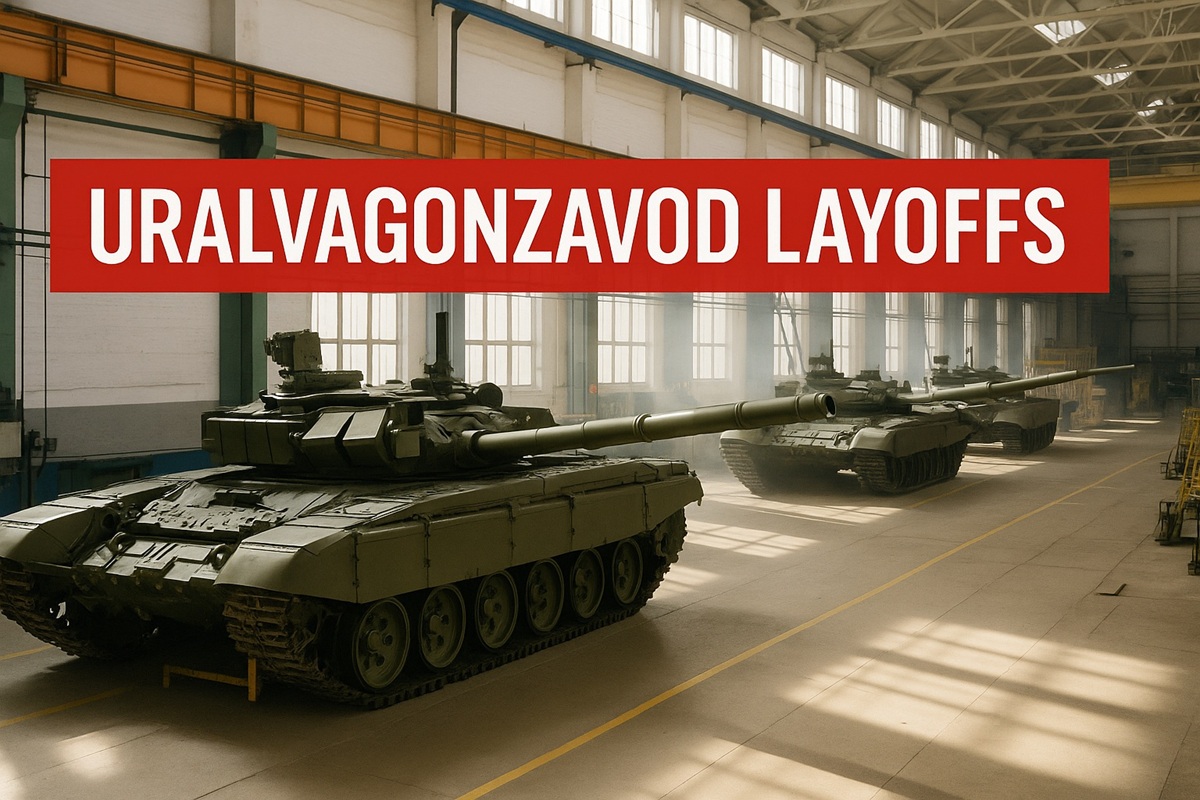
Russian tank builder Uralvagonzavod layoffs point to an unusual contraction for the flagship producer of the T-72/T-90 families. Management plans to trim roughly 10% of headcount by February 2026, pause hiring, and offer severance up to three average monthly salaries. However, insiders fear deeper cuts, with some units reportedly facing up to 50% reductions. These measures suggest demand volatility and tighter cash flow than wartime rhetoric implies.
Civilian versus military lines
The company straddles two worlds: railcar production and armoured vehicles. If downsizing targets the civilian branch, a straightforward redeployment to tank lines is logical. Yet the Uralvagonzavod layoffs indicate barriers—funding ceilings, bottlenecked sub-suppliers, or capped state orders. Therefore, even if the military segment needs people, budgets and material inputs may not support rapid transfers at scale.

What the cuts reveal about funding
Despite a surge in Russia’s defence spending after 2022, plants still rely on scheduled orders, advanced payments, and component flows for survival. The scale and timing of Uralvagonzavod layoffs imply that managers expect flatter order books or slower payments into 2026. Moreover, severance plans and special dismissal commissions point towards a structured, prolonged optimisation rather than a short, reactive dip.
Supply chain warning signs
Another data point matters: on 26 October the Ashinsky Metallurgical Plant announced production and staff reductions. AMP supplies speciality alloys, plates, and electrical steel related to defence, aviation, and energy. Seen together, Uralvagonzavod layoffs and metallurgical slowdowns hint at upstream softness—whether from sanctioned inputs, price pressures, or lower throughput. Consequently, even a priority defence plant can struggle if the metal, electronics, and machine-tool pipeline falters.
Industrial risks for the war effort
Layoffs are not just headcount statistics; they are skill losses. Highly qualified welders, machinists, NDT inspectors, and planners are difficult to replace. If the reductions indeed reach 50% in some shops, Russia risks longer cycle times, quality variance, and maintenance debt on legacy tooling. In turn, field forces could see delivery delays, lower spares availability, and thinner overhaul capacity—classic symptoms when a military-industrial complex moves from surge to strain.
Conclusion
Layoffs at Uralvagonzavod aren’t just numbers; they’re skilled lives paused mid-project. If funding tightens and supply lines sputter, output will follow. Russia’s war economy may endure, but resilience has limits. Keeping welders, machinists, and planners engaged now could decide whether factories hum tomorrow—or echo with preventable silence for years ahead.
References
- https://defensenewstoday.info/category/industry-and-procurement/
- https://defensenewstoday.info/category/geopolitics-strategy/
- https://www.e1.ru/
- https://www.csis.org/
About the Author