
U.S. Reopens Puerto Rico Naval Base — Signal to Venezuela
U.S. Reopens Naval Base in Puerto Rico
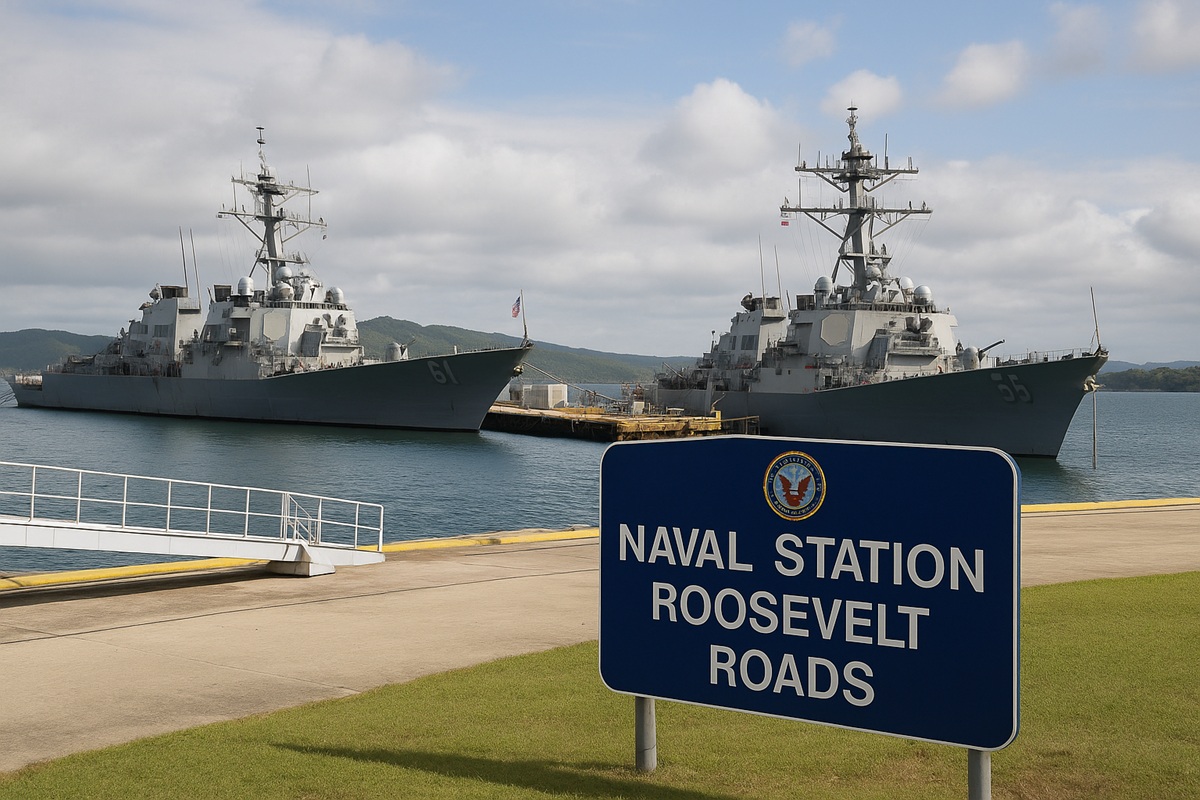
The U.S. reopens the Puerto Rico naval base at Roosevelt Roads after more than two decades, as Washington builds up forces in the Caribbean. The move comes amid rising tension with Venezuela and growing concern over drug-trafficking routes that run close to American territory. According to defense analysts, the decision signals a shift from symbolic pressure to tangible military options.
Naval Station Roosevelt Roads, established in 1943 and closed in 2004, now returns as one of five U.S. operating locations in Puerto Rico. Because Puerto Rico sits just north of Venezuela and astride key sea lanes, the U.S. reopens the Puerto Rico naval base not only for logistics but also for rapid power projection into the wider region.
Roosevelt Roads Back in Operation
By bringing Roosevelt Roads back online, the U.S. reopens the Puerto Rico naval base as a multi-domain hub rather than a Cold War relic. The base offers deep-water access, airfield facilities, and command-and-control infrastructure for joint and combined operations.
Local leaders in Ceiba, the base’s location, are already feeling the tempo. Mayor Samuel Rivera Baez says the roar of F-35s now wakes him in the morning and describes a sense of security from hosting the world’s most powerful military. Yet other residents report anxiety, unsure whether this buildup increases protection or invites retaliation.
F-35s Target Cartels, Signal Caracas
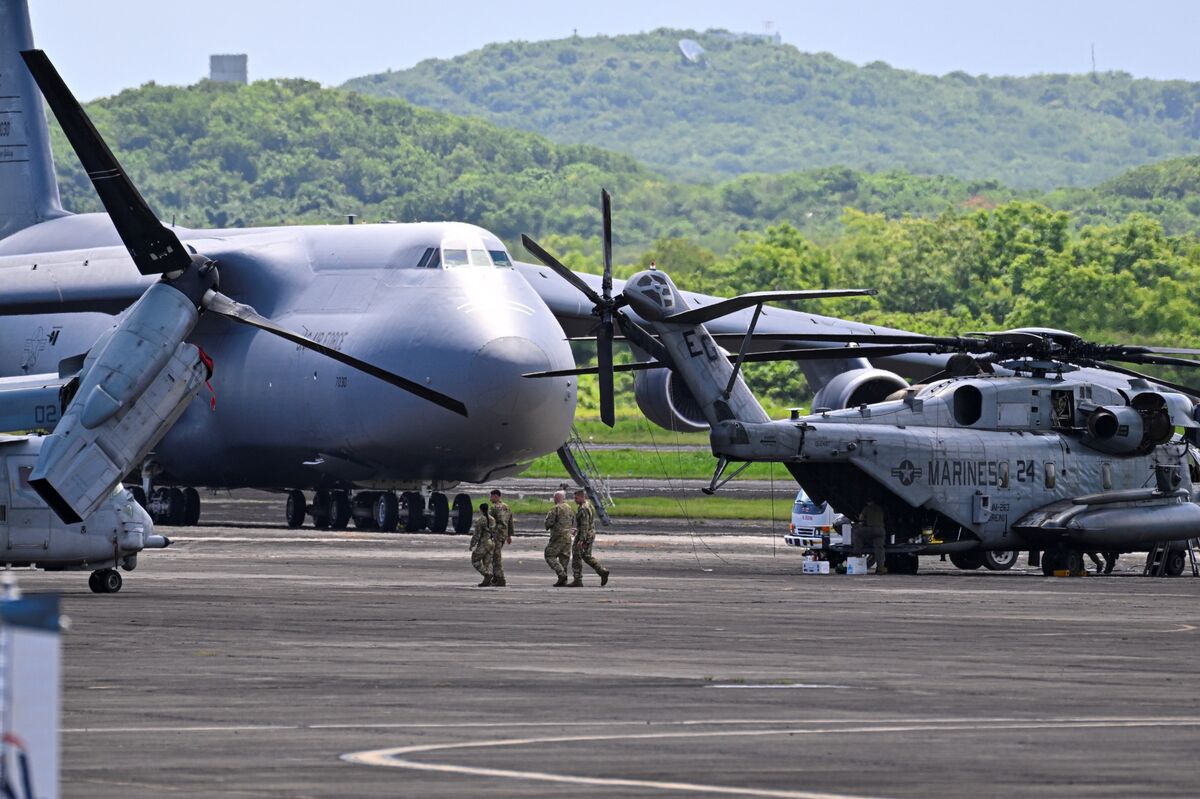
In early September, the U.S. quietly sent ten F-35 jets to Puerto Rico. The stated mission was to hit drug cartels and key maritime trafficking routes. With the U.S. reopening the Puerto Rico naval base, those F-35s now anchor a forward, fifth-generation air presence. They sit within striking range of crucial smuggling routes and Venezuelan territory.
The jets support counter-narcotics missions, yet they also deter Venezuelan grey-zone moves. Some Puerto Ricans, like resident Damien Leon, admit they feel tense and uncertain. They worry a single miscalculation could drag any future conflict dangerously close to their homes.
For more profound context on U.S. air power and regional balances, readers can explore Defense News Today’s detailed analysis. That article focuses on American carrier and bomber operations in contested littoral waters. The article looks at how American naval might affects regional stability in high-threat waters.
Carrier Group and B-52s Show U.S. Resolve
The U.S. reopens the Puerto Rico naval base as part of a wider maritime and air posture. New Pentagon imagery shows a B-52 long-range bomber flying over the aircraft carrier USS Gerald R. Ford as it steams toward the Caribbean. This pairing exemplifies the strategic reach and conventional strike power of the U.S.
According to U.S. Navy reporting, four military ships are currently in the western Atlantic, including the Gerald R. Ford and three guided missile destroyers. Another seven operate in the Caribbean: two guided missile destroyers, two guided missile cruisers, one amphibious assault ship, and two amphibious transport docks. Live-fire exercises in the region are designed to sharpen readiness while sending a clear message to Caracas and its allies. For background on Ford-class carriers and their evolving role, see the U.S. Navy’s official carrier fact file on Ford-class aircraft carriers.
Pressure on Maduro and Shifting Rules
The U.S. reopens the Puerto Rico naval base at a moment when Washington openly seeks the removal of Venezuelan President Nicolás Maduro, citing alleged links to major drug cartels. Maduro, in turn, frames the buildup as preparation for an invasion and asks crowds whether they want Venezuela turned into a “Yankee colony.”
Dating back to early September, U.S. forces have carried out at least 20 strikes against suspected drug-trafficking boats in the wider region, reportedly killing at least 80 people. Although officially framed as counter-narco missions, these operations test targeting processes, logistics, and escalation management under live conditions.
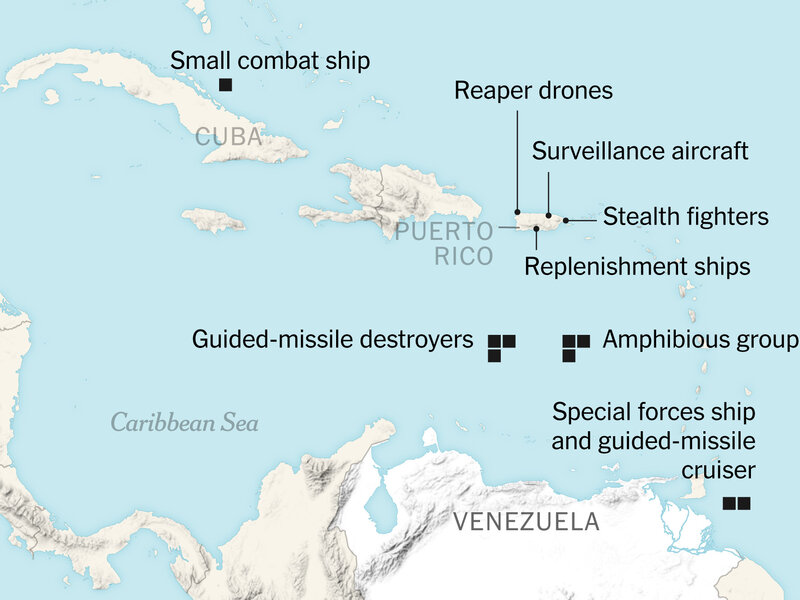
On Wednesday, senior U.S. military leaders briefed President Trump on updated options for potential operations in Venezuela, including land attacks. By Friday, the President had held at least three consecutive days of high-level meetings on Venezuela, attended by Vice President JD Vance, Defence Secretary Pete Hegseth, Secretary of State Marco Rubio, and Chairman of the Joint Chiefs of Staff Dan Caine. For a wider policy backdrop, analysts may consult the U.S. Congressional Research Service’s overview of U.S. policy toward Venezuela at CRS Venezuela reports.
Strategic Risks to Caribbean Security
As the U.S. reopens the Puerto Rico naval base, the Caribbean again becomes a frontline rather than a periphery. The concentration of a carrier strike group, B-52 bombers, F-35s, and amphibious forces creates a strong deterrent posture. However, it also raises the risk of miscalculation if an incident at sea or in the air escalates quickly.
Venezuela’s leadership, already under sanction pressure, may seek asymmetric responses through proxies, cyber activity, or closer ties with extra-regional partners. Regional states, meanwhile, must balance fear of instability against the reassurance of a U.S. security umbrella. For a detailed survey of Venezuelan air and coastal defenses, readers can consult the profile of Caracas’s integrated air defense network published by Defense News Today.
Ultimately, when the U.S. reopens the Puerto Rico naval base, it does more than restart an old facility. It resets the operational geometry of the Caribbean and tightens military pressure on Venezuela while forcing regional actors to rethink how they manage both deterrence and escalation control.
References
- https://www.airandspaceforces.com/f-35s-navy-caribbean-deployment/
- https://www.csis.org/programs/americas-program/venezuela
- https://www.navy.mil/Resources/Fact-Files/
- https://crsreports.congress.gov/
About the Author