U.S. in Balochistan Secures CPEC and Oil, Reshaping Geopolitics
The US’s entry into Balochistan with China’s silent approval is one of the most significant changes in the region’s politics since the Cold War. For a long time, Balochistan was considered a security risk because of insurgencies, foreign proxies taking advantage of it, and a lack of economic attention. Balochistan is quickly becoming the best example of Pakistan’s geo-economic potential.
The U.S. presence in Balochistan protects CPEC, keeps Indian-backed militants linked to BLA at bay, balances Iranian pressure, and opens up long-hidden oil and rare earth reserves. This is a big chance for Islamabad because it is now at the center of cooperation between China, Russia, and the United States, all of which are interested in Pakistan’s strategic location.
Proxy War Era Ends
Pakistan has been secretly accusing India of supporting separatist groups in Balochistan for years. These groups often attacked pipelines, highways, and CPEC infrastructure, which slowed down economic projects. The U.S. presence in Balochistan protects CPEC by making these kinds of operations less likely. Washington now has a stake in regional stability, and the QUAD alliance is quietly but firmly telling New Delhi not to use proxies against Pakistan.
China and Russia, two important members of BRICS, also support this perspective. Because their business is growing in Balochistan, they also can’t stand disruptions. This unusual coming together of QUAD and BRICS means that no major power will allow instability. The message is clear: no peace means no progress, and no superpower wants to lose the money it has already put in.
How U.S.-Iran Tensions Boost Pakistan
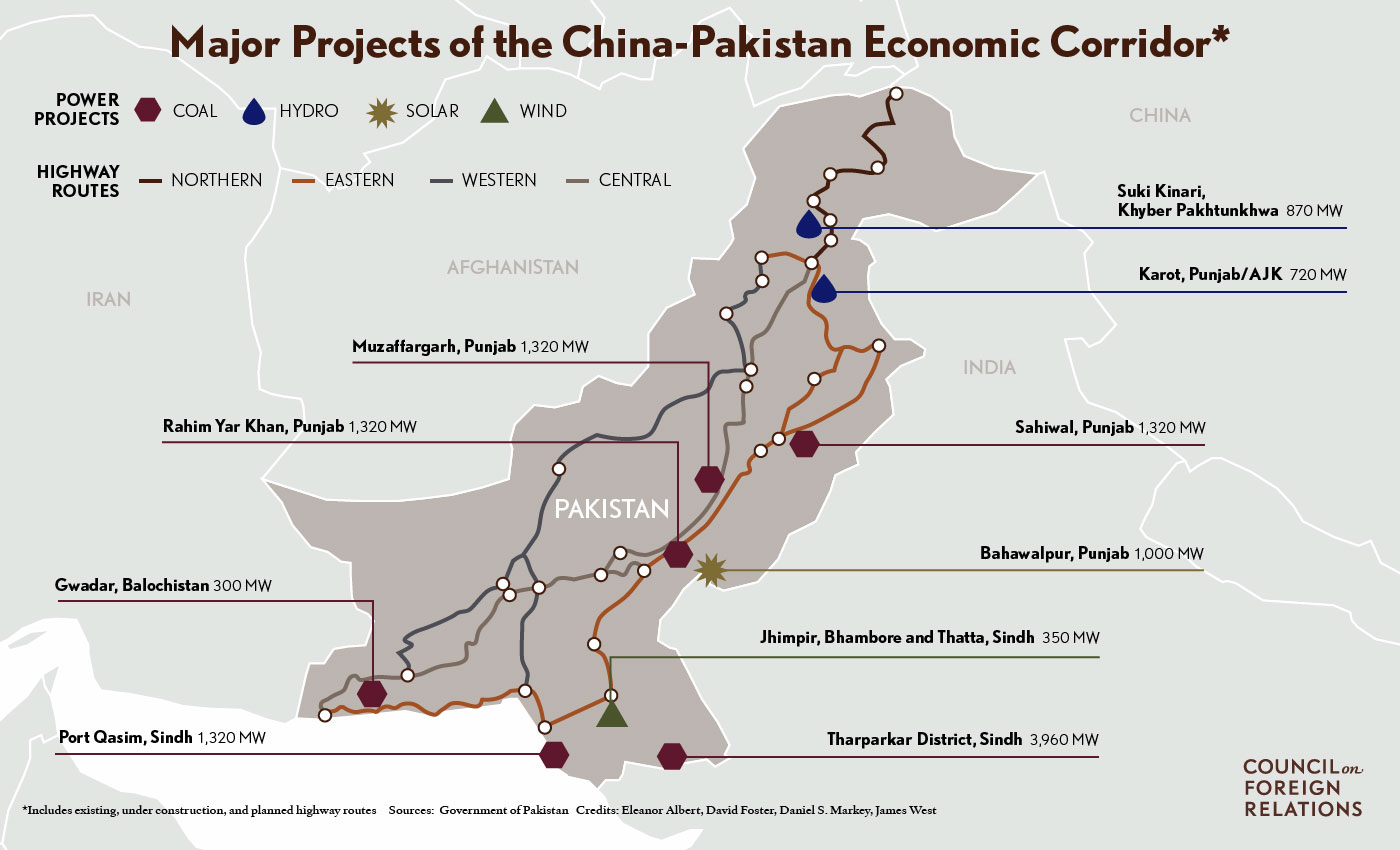
Pakistan’s role in helping to keep the current U.S.-Iran ceasefire has boosted its diplomatic standing. Islamabad has scheduled talks, and the markets are responding positively. Islamabad’s renewed reputation as a hub for transit, mediation, and logistics may benefit Gwadar.
Officials are also working on new plans for trade, tourism, and connectivity around the port. Chabahar could also benefit, since Iran says that expansion will speed up after the war and India still sees it as an important regional route. But neither port is “the new Dubai” yet; they both need stable infrastructure, investment, and predictable trade flows first.
U.S. as a Regional Stabiliser Near Afghanistan
The U.S. presence in Balochistan protects CPEC and also makes Pakistan’s western border safer. Along with China, Washington is now on Afghanistan’s back door, determined to stop Tehreek-e-Taliban Pakistan (TTP) rebels from damaging Pakistani property. This unprecedented cooperation even includes intelligence: the American, Chinese, Russian, and Pakistani services are quietly working together to stop extremist threats.
This kind of cooperation is new for Pakistan. It turns the Afghan border from a constant problem into a security frontier that both sides manage. It is a practical deal for the U.S. and China because it keeps militant violence from threatening their trade routes and investments.
Unlocking Oil Under Gulf Pressure
It’s not new to find oil in Balochistan. Decades ago, geological surveys confirmed the reserves, but political pressure prevented their utilization. Arab countries, especially Saudi Arabia, tried to stop Pakistan from developing its oil wealth. Their reasoning was simple: if Pakistan became a major oil producer, prices around the world would go down, which would hurt Gulf profits.
This lobbying made international oil companies less likely to invest. Pakistan didn’t have the technical know-how to get reserves on its own; it needed help from outside experts. So, its resources sat unused while Islamabad kept buying expensive oil from the Gulf.
The U.S. presence in Balochistan protects CPEC and ends this stalemate. Pakistan can finally use its oil wealth thanks to American money and technology. It’s ironic that the Gulf allies who helped Pakistan were also the ones who made it dependent on energy.
Rare Earths: A New Geoeconomic Front
Balochistan is thought to have large deposits of rare earth minerals, such as lithium and copper, in addition to hydrocarbons. These minerals are essential for electric vehicles, advanced electronics, and modern weapons systems. The U.S. presence in Balochistan protects CPEC and makes Pakistan a supplier to industries around the world in the future.
China is already in charge of the supply chains for rare earths. If American companies start mining minerals in Pakistan, Islamabad will be able to balance its interests in a way that no other country can. Islamabad will finally be able to take advantage of the rivalry between Washington and Beijing instead of giving in to either side’s demands.

Gwadar and Chabahar
People used to think of Gwadar (Pakistan) and Chabahar (Iran) as rival ports. But the U.S. presence in Balochistan protects CPEC and makes room for cooperation. If Pakistan remains stable and free from Iranian pressure at the border, both ports can serve as twin gateways to Central Asia.
Turkmenistan and Uzbekistan, which are landlocked, will be able to send gas and electricity through CPEC pipelines and ship goods through Gwadar and Chabahar. This twin-port system makes them less reliant on Russian routes and makes Pakistan more important as the only place to stop for trade and energy.
Russian Oil and the Trump Prediction
The U.S. presence in Balochistan protects CPEC, but it also opens up new ways for energy to move around the region that were never possible before. For instance, Russian oil is now expected to go to India through the CPEC corridors.
This news brings to mind what former President Donald Trump said: that Pakistan would one day sell oil to India. People didn’t believe the prophecy at the time, but it seems to be coming true, with Pakistan as the only country that can connect South Asia’s energy map.
It’s easy to see why Moscow wants to do so: it wants to get to “warm waters,” which was a dream during the Cold War. Russia’s recent investments in Pakistan’s energy and economy show how serious it is. It’s ironic for India that it will need Pakistan’s geography more and more for energy transit, even though it is still a member of the BRICS and QUAD groups.
Superpowers Align Behind Pakistan
What makes the U.S. presence in Balochistan extraordinary is the convergence of three great powers—the United States, China, and Russia—around Pakistan. Each has different motivations, yet all find stability in Balochistan essential:
- The U.S. wants secure oil and rare earth supply chains.
- China needs CPEC to safeguard its Belt and Road flagship.
- Russia seeks long-dreamed-of access to warm waters.
The two forces coming together gives Pakistan a unique geopolitical edge. Pakistan’s geography makes it necessary for superpowers to deal with it, whether it’s during the Cold War, after 9/11, or now.
The U.S. presence in Balochistan not only protects the China-Pakistan Economic Corridor (CPEC), but it also indicates that Islamabad is still attractive to global powers, making it an important part of their strategic plans.
India’s Fading Strategic Value
The U.S. presence in Balochistan protects CPEC while quietly making India less important. Washington has come to the conclusion that India can’t compete with China in terms of military power. Operation Sindoor clearly demonstrated China’s superiority. It is now less appealing for the U.S. to support India as a counterweight.
Pakistan is a better partner for Washington because it has indicated that it can keep India from attacking. This new assessment makes China feel better because it no longer fears an unchecked U.S.-India military alliance. It also makes Pakistan feel better because it knows that its role is once again central to American strategy.
Benefits to Pakistan
The cumulative gains for Pakistan are profound:
- Pakistan has achieved energy independence through the extraction of oil and gas.
- The country has undergone economic transformation through the creation of jobs, the development of infrastructure, and the export of minerals.
- As a transit hub for CAS electricity, gas, and trade, it holds significant regional influence.
- Strategic leverage exists between the U.S., China, and Russia.
- The combined intelligence pressure checks the TTP proxies, ensuring security consolidation.
In short, the U.S. presence in Balochistan secures CPEC and finally allows Pakistan to unlock its long-denied potential.
From Battleground to Crown Jewel
For a long time, people thought that Balochistan was Pakistan’s most troubled province. Insurgency plagued Balochistan, development ignored it, and so-called allies in geopolitics kept it down. Today, it is once again the engine of Pakistan’s growth and the center of attention for the world’s superpowers.
With Beijing’s permission, the U.S. presence in Balochistan protects CPEC, stops proxies, opens up oil and rare earth minerals, and makes Pakistan the only link between Central Asia, the Middle East, and South Asia. When you add Russia’s need for warm waters, America’s need for stability, and China’s dependence on Gwadar, it’s clear that Pakistan is once again at the center of world power politics.
The way that Pakistan’s geography makes it a desirable place to live is not just a gift from nature. That’s why Islamabad is still a superpower, regardless of what time or place it is.
References
- U.S. to explore cooperation with Pakistan on critical minerals, hydrocarbons—Reuters, 14 August 2025
https://reut.rs/3ZcPECb - U.S. designates Baloch separatists as a terror group over role in attacks in Pakistan – AP News, 12 August 2025
https://apnews.com/article/8d4c6ceca522ffb6c52ece98b2597ff7 - After taking $60 billion from China, Pakistan offers critical mineral assets in Balochistan to U.S. during Asim Munir–Trump Economic Times, Times, 2025
https://bit.ly/3CPECdeal - What went wrong with Pakistan’s Dubai? Inside the Chinese initiative that is prompting terror attacks—The Guardian, 26 January 2025
https://theguardian.com/pak-dubai
About the Author