
U.S. Builds Pantsir-S1 Mock-Up to Train F-16, F-18 Pilots
Lockheed Martin showed off an unusual Pantsir-S1 simulator for training soldiers. Instead of using a military chassis, Lockheed installed the system on a Peterbilt 320 garbage truck. When the project came out in late 2024, defense experts called it “Peter Pantsir.” The tests aim to enhance the Sniper Advanced Targeting Pod on U.S. fighter jets. The F-16 and F-18 use this targeting pod in battle. The fake Pantsir-S1 from Lockheed shows how the U.S. looks at enemy systems. This method helps the military come up with better strategies and ways to fight back.
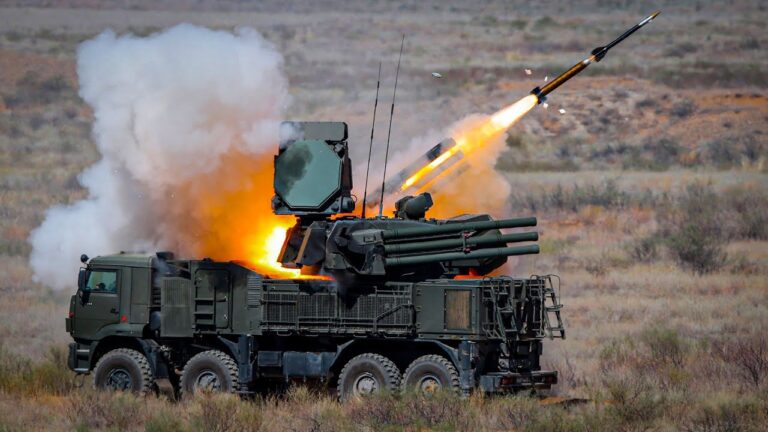
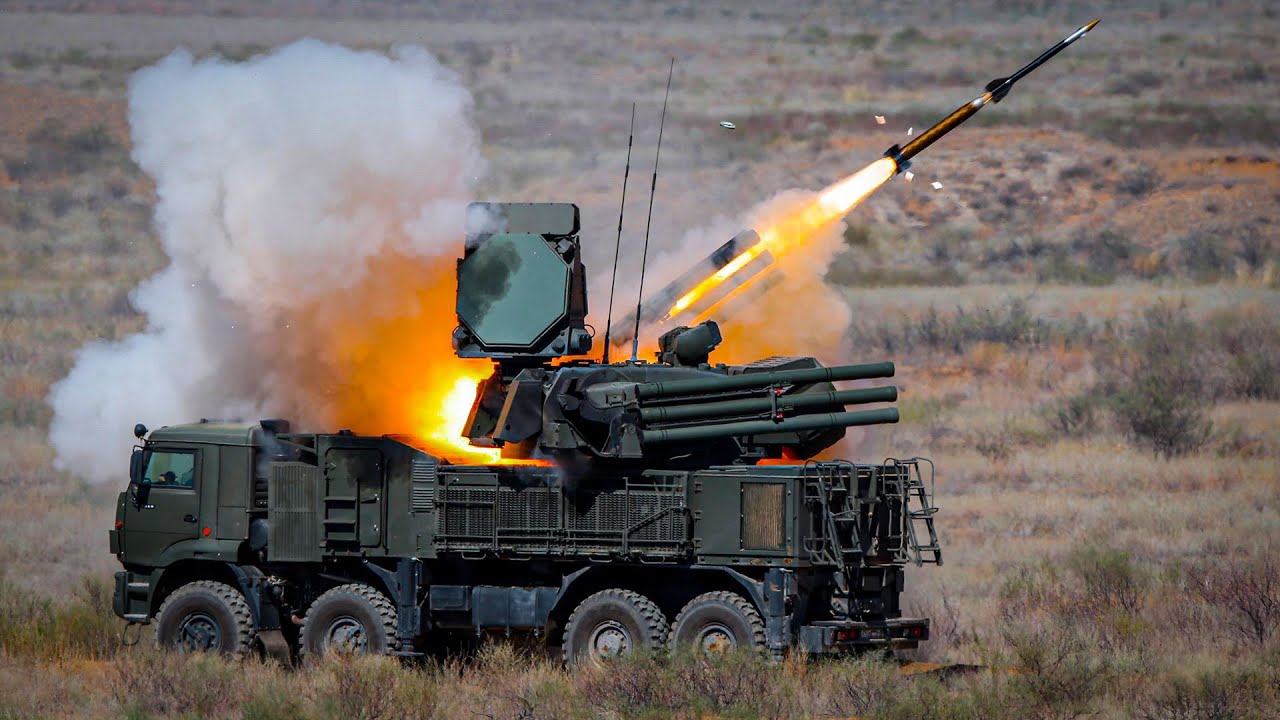
Russia’s Pantsir-S1 is a short- to medium-range defense system that protects important places from planes, drones, and guided missiles. In real-time combat situations, it also protects ground troops by stopping aerial threats before they reach them. Rebuilding this system in a cost-effective way lets U.S. forces test new targeting technologies on real-world targets. The Pentagon wants to improve pilot readiness and the performance of systems like the Sniper pod, which is important for reconnaissance, target acquisition, and precision attacks, by using this mock-up in training and research projects.

Sniper Advanced Targeting Pod
The Sniper Advanced Targeting Pod is a cutting-edge system that simultaneously utilizes infrared and TV sensors, laser rangefinders, and precise tracking devices. When installed under fighter planes, it lets pilots find, identify, and hit targets with amazing accuracy.
Engineers can better understand how well this pod works in different situations, like flying during the day and at night and in bad weather, by testing it against a simulated Pantsir-S1. The goal is to figure out how to make the technology work so that it can correctly find and categorize enemy defense systems in real-life combat situations.
Approach to Threat Simulation
Some people might not like using a Peterbilt 320 as the base for the mock-up. But it gives you a useful way to get a Pantsir-S1 without having to buy one. Engineers can put important parts on the Peterbilt 320 to make it look like the real thing. People know that the truck is tough and can do many different things. This method is strange, but it gives U.S. pilots realistic training value. It also stops people from getting too sure of themselves before a fight. At the same time, it cuts down on big costs and logistical problems.
The United States has historically employed analogous methodologies in the analysis of foreign military systems. During the Cold War, the US took apart Soviet planes and tanks to learn more about what they could do. The Pentagon keeps this tradition alive by using systems it has acquired, purchasing them on the open market, and making copies, such as the Peter Pantsir, to develop countermeasures.
Tactical Applications
One of the main uses for the Pantsir-S1 mock-up is in training exercises with “opposing forces” (OPFOR) troops. These trained soldiers use enemy weapons and tactics to make realistic battlefield simulations for U.S. forces.
The National Training Center in California and Nellis Air Force Base in Nevada are two examples of units that do large-scale exercises with fake enemy systems on a regular basis. The Pantsir-S1 model, which is based on Peterbilt, adds a crucial level of realism to these exercises by making pilots find, avoid, or neutralize air defense threats.
Experts’ Reactions
Military strategists and defense hawks have been arguing about the decision to use a garbage truck chassis for this project. Some people think it’s a sign of American creativity that they turned an unlikely vehicle into a useful training tool. Some people think that the choice shows that there were budget problems or that it was a creative solution because they couldn’t get real Russian equipment.
Lockheed Martin hasn’t said much about the project, but military experts agree that it is crucial. A retired U.S. Air Force colonel who has worked on these kinds of programs says, “It’s important to know how our systems stack up against the Pantsir-S1.” “It’s not about technology; it’s about strategy, tactics, and being ready. “You would rather not see a Pantsir for the first time in a real fight.
Global Implications
The initiative has effects that go beyond the U.S. military. Russia and Iran have used the Pantsir-S1 a lot and sent it to Syria, Algeria, and the UAE. Conflict zones heavily utilize the Pantsir-S1, making it a prime target for Western airpower strategies. The latest operator of Pantsir-S1 is Saudi Arabia, and Pakistan showed strong interest in such a system.
In 2023, the Congressional Research Service reported that Russia’s heavy reliance on air defenses prompted the U.S. to take action. The U.S. has focused on stealth, electronic warfare tools, and precision-guided missiles to stay ahead in response.
The Sniper pod was recently improved so that it could better and more accurately deal with modern threats like the Pantsir-S1. Defense officials said that tests of the Peter Pantsir mock-up used in advanced targeting exercises went well.
Defense officials hinted at the ongoing production of additional mock-ups to prepare aircrews for real-life encounters with Russian air defenses. Lockheed Martin hasn’t given all the details, but they did say that the system is essential for training. These kinds of projects are important for making sure that U.S. fighters like the F-16 and F-18 stay on top in enemy airspace.
Conclusion
The making of the Peter Pantsir shows how creative and flexible the U.S. military is when it comes to dealing with new threats. The Peter Pantsir may look strange, but its main goal is clear: to improve pilot training, targeting technology, and readiness for real-world combat. As wars get more complicated, projects like this one will keep changing the way battles are fought, keeping U.S. troops one step ahead of their enemies.
References
- CRS (2023)—Russia’s Air Defense Systems and U.S. Countermeasures
https://crsreports.congress.gov/product/pdf/RL/RL32665 - BulgarianMilitary.com (2025) – Lockheed Martin’s Unconventional Pantsir-S1 Mock-Up
https://bulgarianmilitary.com/2025/lockheed-martin-pantsir-s1-mock-up - DoD (2024) – Annual Defense R&D Report
https://media.defense.gov/2024/Annual-Defense-RD-Report - Defense News Today (2025)—F-16 and F-18 Targeting Enhancements
https://www.defensenewstoday.info/f16-f18-targeting-2025 - NTC, U.S. Army (2024) – Realistic Opposing Forces in Training
https://www.army.mil/ntc-opfor-2024
About the Author