Türkiye tests ROKETSAN 300 ER Air-Launched Ballistic Missile
Türkiye’s Stand-Off Strike Next Step
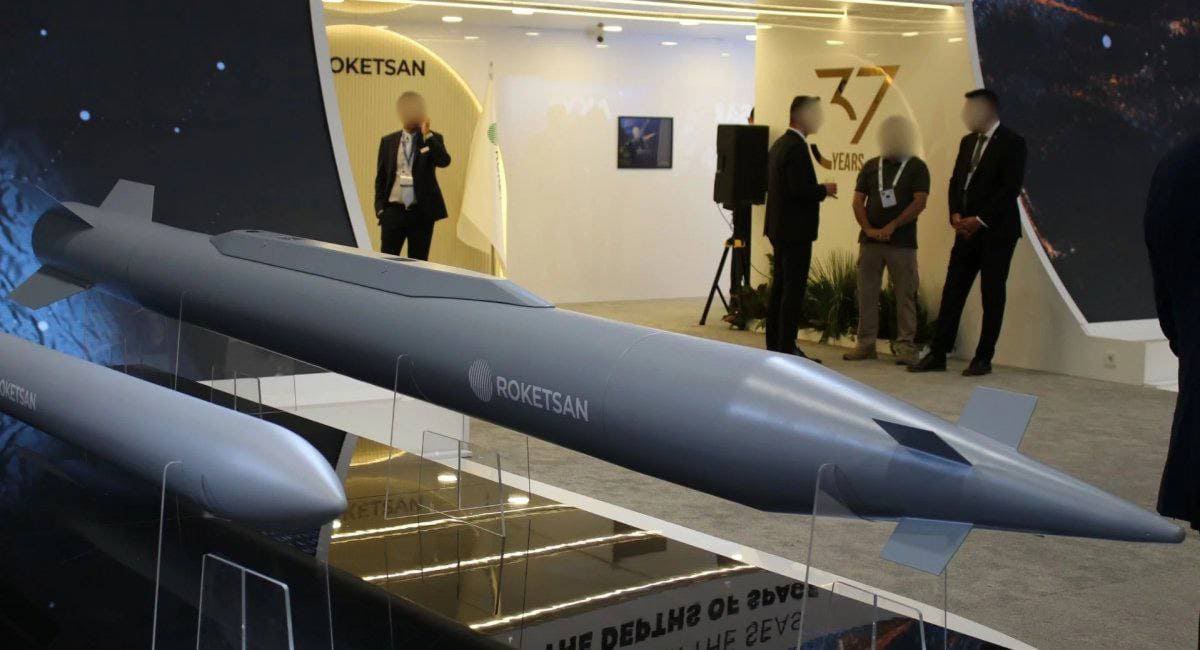
Later in 2026, Türkiye will conduct its first flight test of the ROKETSAN 300 ER air-launched ballistic missile. This will turn a trade show reveal into a real capability milestone. If all goes as planned, Ankara will have access to a unique “aeroballistics” option: swift, rocket-powered aircraft capable of striking targets beyond the reach of contemporary air-defense systems.
300 ER vs Cruise Missiles
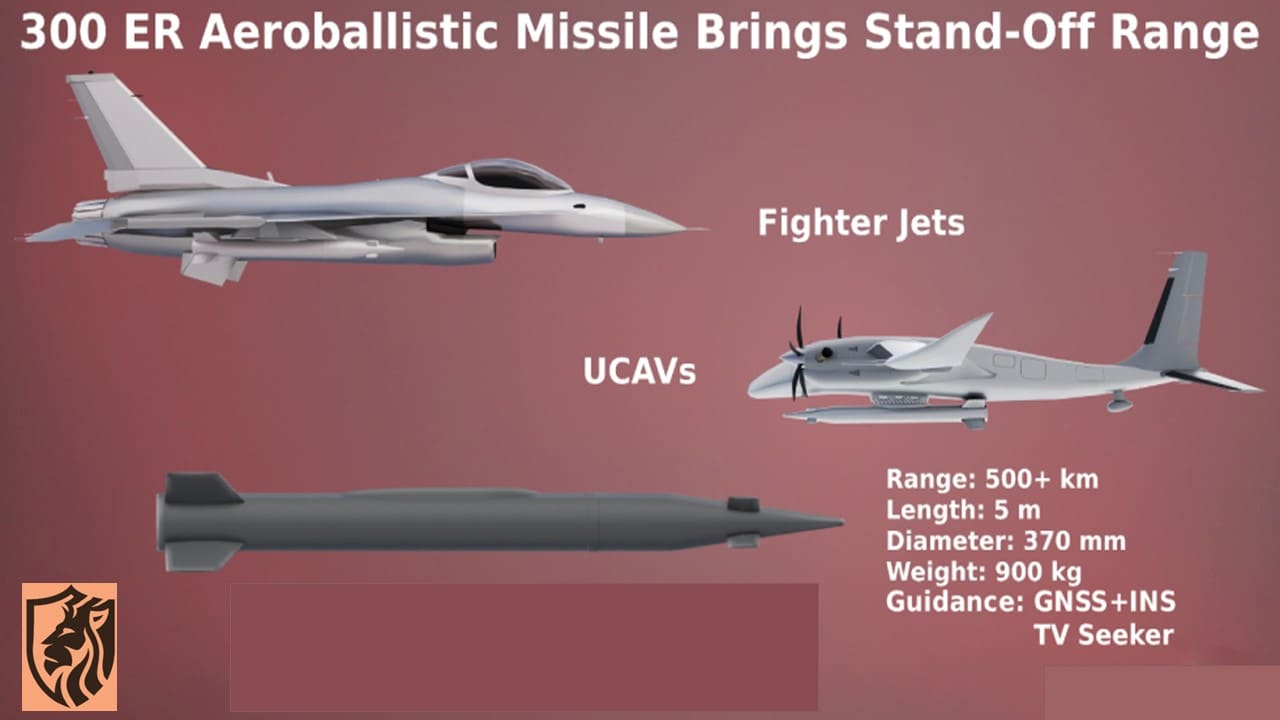
The ROKETSAN 300 ER air-launched ballistic missile doesn’t fly a long, low route like a regular subsonic cruise missile. Instead, it rides a ballistic-like arc after it is released. That shape is important. It can shorten the time it takes to reach a target and the time it takes to react, especially when used with high-altitude, high-speed launch conditions. TurDef says that the design targets 500+ km, depending on the release parameters. This puts it in a very different class than the earlier UAV-122 and UAV-230 derivatives.
300 ER: Size, Weight & Warhead Options
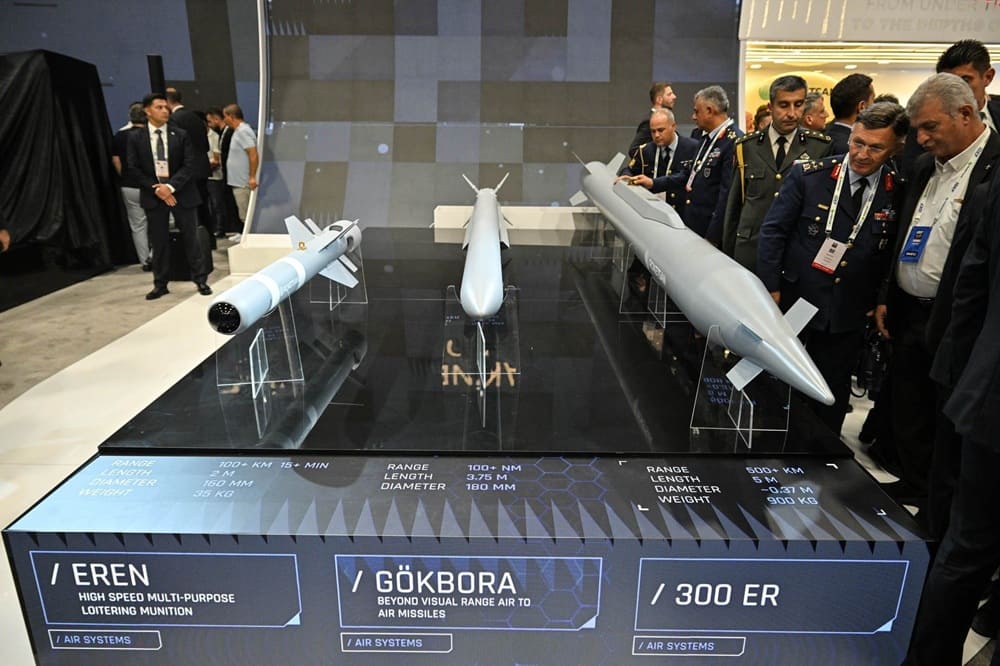
The ROKETSAN 300 ER air-launched ballistic missile is a big score when you look at the numbers. According to reports from IDEF 2025, it is about 5 meters long, 370 mm wide, and weighs about 900 kg when it is launched. TurDef also talks about modular lethality options, like HE-fragmentation and a follow-through penetration configuration that uses a shaped-charge idea for tough targets. That modularity lets it do everything from DEAD/SEAD missions to strikes on bunkers and important nodes.
300 ER Guidance for GPS-Denied Battles
More than just mid-course navigation affects precision. According to reports, the ROKETSAN 300 ER air-launched ballistic missile uses INS/GNSS in flight and then adds a TV seeker for terminal guidance and target confirmation. TurDef points out that modern TV seekers can automatically recognize stored images, which can help reduce the need for satellite navigation when there is a lot of electronic attack.
A key engineering detail backs up that goal. TurDef talks about an aerodynamic nose fairing idea that keeps optics from getting too hot at high speeds and then drops off before the seeker is used. Although it’s a minor detail, it demonstrates that the design prioritizes speed over marketing slides.
300 ER Integration: F-16s to Unmanned Strike
Capability only matters if the force can handle it. According to IDEF coverage, an F-16 could carry two missiles, but a Bayraktar Akıncı might only be able to carry one because it is bigger and heavier. This capability is important for operations: two rounds per fighter can make a real opening wave package without putting planes into thick SAM envelopes.
Meanwhile, the CEO of ROKETSAN has emphasized the connection between the missile family and Baykar’s jet-powered unmanned fighter. TurDef says that Murat İkinci said Kızılelma will use UAV-230, 300 ER, and EREN. The report suggests that there is a “crewed-unmanned” strike ecosystem in Turkey that keeps high-value pilots farther away from the threat ring.
Why 500+ km Reshapes the Eastern Med
A 500-kilometer-class, air-launched weapon redraws the battlespace. The ROKETSAN 300 ER air-launched ballistic missile lets aircraft threaten targets from beyond many layered air-defense engagement zones. As a result, rivals must defend deeper and react faster. Moreover, defenders face a tougher tracking problem. They must cue interceptors against a ballistic-style path, not a predictable cruise route.
At sea, the risk picture may also shift. TurDef notes the TV seeker could support attacks on ships. However, the missile would likely need fresh coordinates until terminal lock-on. That matters when ships maneuver at long range. Even so, it increases pressure on high-value vessels operating in contested waters.
Serial Production & Export Signals
The 300 ER story is part of a bigger push to “scale up.” Murat İkinci told Anadolu Agency (via Daily Sabah) in January 2026 that 2026 should be the year when earlier efforts “bear fruit” and serial production starts on key lines. Work on 300 ER will continue “at full speed.” The same report says that the industrial base behind programs like 300 ER will have a turnover of more than $2 billion in 2025 and exports of nearly $750 million.
The export strategy also seems to fit with recent deals. At IDEF 2025, Breaking Defense said that ROKETSAN signed a deal to transfer technology related to the Çakır cruise missile. This suggests they will pair capability with industrial partnership. Therefore, it may attract F-16 operators and buyers of Turkish UCAVs.
2026 Test Phase: Key Things to Watch
Early flight work usually shows that the separation is safe, the motor works well, the vehicle is stable, and the guidance works in real life. For the ROKETSAN 300 ER air-launched ballistic missile, the most important things to look for are the ability to be released repeatedly at fighter speeds, a reliable boost without dangerous plume/flow effects near the aircraft, and terminal seeker performance after thermal stress. If ROKETSAN keeps up the pace, the program could go from a 2026 test headline to a near-term service pathway. Turkish reports have already talked about when the service would start in 2026.
References
- https://turdef.com/article/idef25-roketsan-unveils-300-er-aeroballistic-missile
- https://turdef.com/article/300-er-aeroballistic-missile-gets-tv-seeker-for-precision
- https://www.dailysabah.com/business/defense/turkiyes-roketsan-eyes-reaping-investment-rewards-in-2026
- https://www.trtworld.com/article/128d7a0a1d4d
About the Author