
Turkey's Yildirimhan ICBM—Ankara’s 6,000km Leap
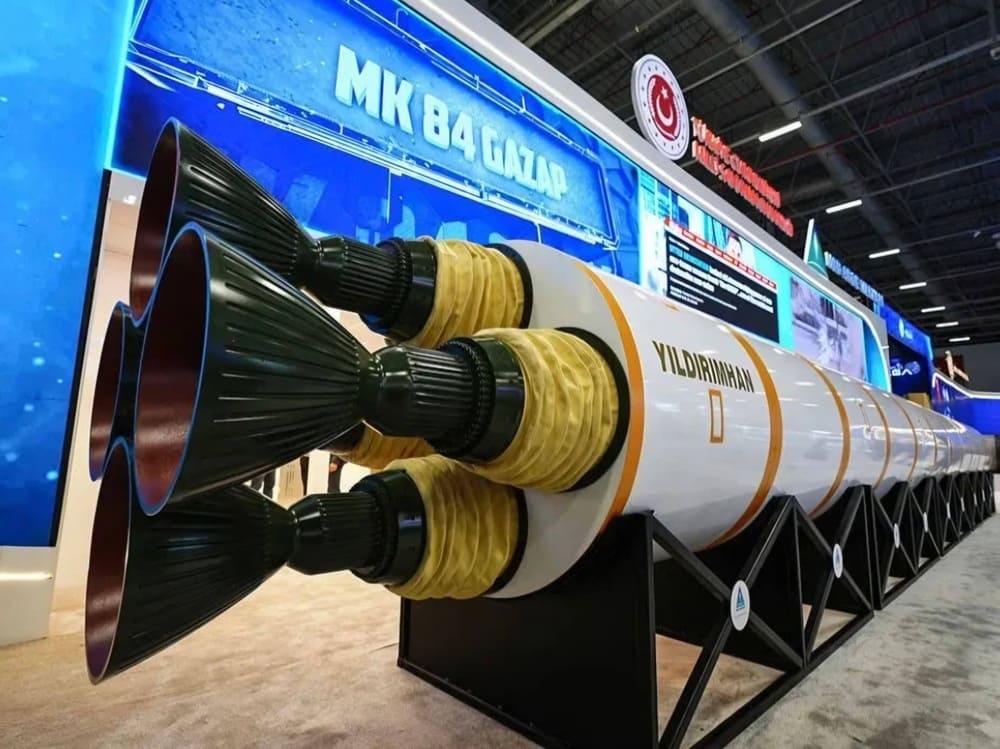
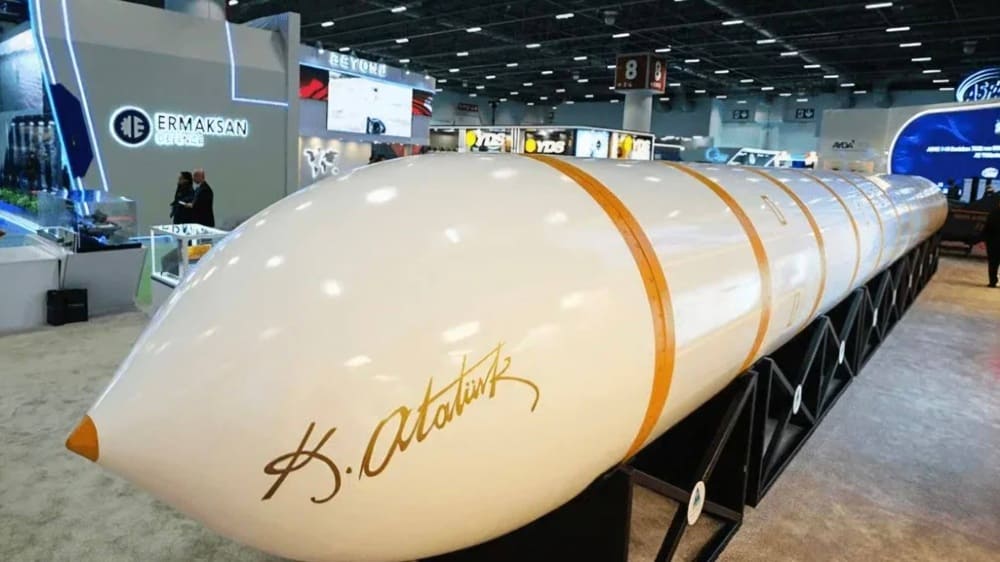
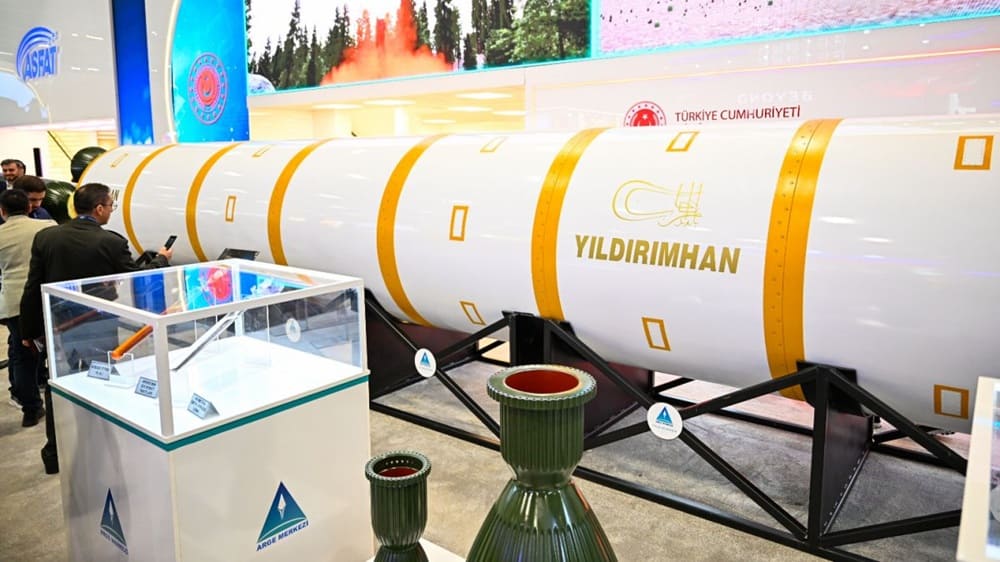
Turkey has unveiled the Turkish Yildirimhan ICBM, a major step for Ankara’s long-range missile ambitions. Senior Turkish commanders and Defense Minister Yaşar Güler attended the SAHA 2026 defense exhibition in Istanbul, where the missile was unveiled. Turkish and regional reports say the system is a ballistic missile with a 6,000 km range developed by the Turkish Defense Ministry’s research and development center.
That range moves the conversation. A 6,000km missile fired from Turkish soil could strike most of Europe, much of Africa, and large parts of Asia. Yildirimhan is not just a weapon system. It’s also a political message to rivals, allies, and potential export customers.
Missile Range and Design
The Turkish Yildirimhan ICBM is said to be powered by four rocket engines and uses nitrogen tetroxide. Some reports also indicate that it can travel at hypersonic speeds, ranging from Mach 9 to Mach 25. However, Turkey has not provided a full operational test record, and analysts should regard the specifications presented as declared capability rather than proven combat performance.
The missile’s liquid-fueled design is important. Liquid propulsion can provide high-energy performance but often needs solutions for storage, fueling, and launch readiness. But many modern road-mobile ballistic missiles, by contrast, use solid fuel, because crews can move and fire them faster. Therefore, its deployment doctrine, survivability, and launch procedures will determine the real military value of Yildirimhan.
Why 6,000km Range is significant
Turkey already has one of NATO’s largest conventional militaries. However, Yildirimhan places Ankara in a different strategic category. An intercontinental-class missile will give Turkey a stronger deterrent posture and make it more capable of threatening high-value targets well beyond its immediate neighborhood.
Moreover, the disclosure strengthens Turkey’s broader defense-industrialization narrative. Ankara has built momentum through drones, precision-guided weapons, armored vehicles, naval systems, and electronic warfare tools. The Turkish Yildirimhan ICBM adds some long-range strike prestige to that portfolio.
Traces of Pakistan Input in Yildirimhan
Some Indian and Israeli OSINT networks speculate about the direct Pakistani technical input in the Yildirimhan missile. But analysts may still see the program in the context of the broader Turkey-Pakistan defense relationship.
Pakistan has decades of experience in ballistic missiles with systems such as the Ghauri, Shaheen, Ghaznavi, Abdali, and Ababeel. Turkey has developed strong expertise in rockets, guided munitions, drones, and military electronics. Any Pakistani “input” must therefore be carefully described as indirect influence, doctrinal familiarity, or strategic dialogue rather than verified design assistance.
Pak-Turk Deeper Defense Ties
They have enhanced defense-industrial cooperation with naval projects, technology transfer, training, joint forums, and discussions on co-production. These links are channels for strategic knowledge sharing. Moreover, both states see long-range precision strikes as a form of deterrence against more formidable conventional competitors. The reported 6,000km range of the Yildirimhan also aligns with Turkey’s ambition to move beyond tactical systems and into a higher strategic category.
That said, no Turkish official, Pakistani official, or credible technical source has confirmed that Pakistan helped design its propulsion, guidance, warhead, staging, or launch architecture. The safest assessment is this: Yildirimhan could reflect a wider strategic atmosphere created by Turkey–Pakistan defense ties, but any claim of direct Pakistani engineering input remains speculative.
NATO and Regional Deterrence
Yildirimhan also criticizes NATO. Turkey is a member of NATO but has often pursued an independent security line. It balances relations with the west, Russia, Ukraine, the Middle East, and Central Asia. Thus, a Turkish long-range missile program has deterrent value and alliance complexity.
The regional context is important too. Turkey is close to conflicts in Syria, Iraq, Ukraine, the Black Sea, and the wider Middle East. Ankara has dodged direct large-scale fallout from several conflicts but comes under pressure from missiles, drones, and air-defense systems around its borders. Turkey Looks At Domestic Long-Range Strike Capability As Part Of National Resilience.
Exports and Affordable Firepower
Turkey also wants to sell defense technology, not just buy it. “Turkish precision-guided munitions comply with NATO standards while being cost-effective compared to many foreign alternatives,” Güler said. The message is directed at nations seeking weapons that are inexpensive, can be mass-produced, and are politically flexible.
An ICBM, however, is not the same as a drone or a guided bomb. Export controls, missile technology restrictions, and political pressure would limit direct foreign sales. But Yildirimhan helps shape Turkey’s image as a nation that can design sophisticated strategic systems.
What to Watch Next
Now analysts should watch three areas. Turkey has to prove the missile first through flight tests. Second, it must clarify whether Yildirimhan will carry just conventional payloads. Third, observers should watch for Ankara to build hardened launch sites, mobile launchers, and associated command-and-control systems.
For a wider background, readers can connect this development with missile defense coverage on Defense News Today and regional air defense analysis. You can also compare the external technical context with SAHA 2026 reporting and coverage of the Turkish defense industry.
Conclusion: Reach and Deterrence
The Turkish Yildirimhan ICBM provides Ankara with a potent strategic symbol. Reports claim a 6,000km range, liquid-fuel propulsion, and hypersonic speed, suggesting a serious ambition. But declared specifications are only the first step. Whether Yildirimhan becomes a true operational deterrent or predominantly a strategic messaging tool will depend on flight testing, deployment doctrine, and survivability.
References
- https://www.thenationalnews.com/news/mena/2026/05/05/turkey-unveils-6000km-ballistic-missile-at-defence-show/
- https://www.trtworld.com/article/8b7bc7eab2c1
- https://www.aa.com.tr/en/economy/turkiye-unveils-advanced-intercontinental-ballistic-missile-with-over-6-000-km-range-at-saha-2026/3927870
- https://www.hurriyetdailynews.com/defense-ministry-unveils-intercontinental-ballistic-missile-yildirimhan-at-saha-2026-221846
About the Author